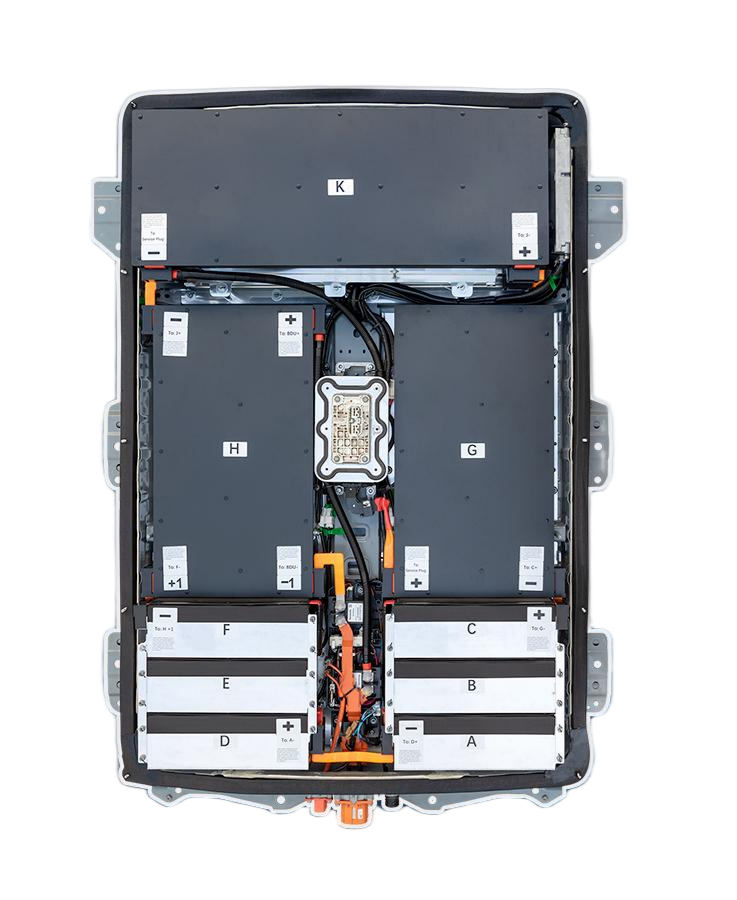
BMW i3 Battery 2018: Replacement Options – Why Your “94Ah” Pack Might Be Holding You Back (And How to Unlock 62kWh Without Modifying a Single Wire)
“I bought a used 2018 i3 with the base 94Ah battery. The dealer said, ‘It’s fine—114 miles is plenty for city driving.’ But commuting 45 miles each way? I was charging twice a day. A local shop quoted $13,500 for a ‘like-for-like’ replacement. Then I found CNS. For $7,900, I got a 62kWh pack that fits like OEM, shows correct range, and gives me 220+ real-world miles—even in winter. My ‘adequate’ 94Ah wasn’t failing… it was just obsolete.”
You own a 2018 BMW i3—one of the most beloved EVs of its era.
But whether your 94Ah (33kWh) or 120Ah (42.2kWh) pack is degrading or simply too small, you’re facing a choice:
Replace it with the same limited range… or upgrade to modern capacity without sacrificing reliability?
Dealers push expensive OEM swaps.
“Refurbishers” sell mismatched used cells.
And forums overflow with half-baked DIY hacks.
But there’s a third path—one that’s plug-and-play, warranty-backed, and engineered specifically for your 2018 i3.
In this guide, you’ll learn:
- The critical difference between 94Ah and 120Ah models (and why upgrading is easier than you think)
- Why refurbished packs fail faster in 2018+ i3s (thanks to stricter BMS logic)
- How CNS BATTERY delivers 45kWh, 50kWh, or 62kWh options—all fully compatible
- The real cost per mile over 5 years (hint: bigger isn’t always more expensive)
- And why no coding or module swapping is needed
Because your i3 deserves more than nostalgia—it deserves usable range.
Understanding Your 2018 i3 Battery Options
The 2018 model year marked a transition:
- Early 2018: 94Ah (33kWh gross / ~27.2kWh usable)
- Late 2018: 120Ah (42.2kWh gross / ~37.9kWh usable)
Both use the same physical pack dimensions and HV connector, making upgrades mechanically straightforward—but electronically tricky.
⚠️ Warning: The 2018 i3’s BMS is more sensitive than earlier models. It validates pack capacity during startup. Mismatched or poorly coded replacements trigger “Unknown Battery” errors or limp mode.
🔋 Your Three Realistic Replacement Paths
1. OEM Replacement (Dealer)
- Cost: $12,000–$16,000
- Capacity: Only matches original (94Ah or 120Ah)
- Pros: Full BMW integration
- Cons: Prohibitive cost, no range improvement
2. Refurbished/Used Pack
- Cost: $4,000–$6,500
- Capacity: Usually downgraded or inconsistent
- Pros: Lower upfront price
- Cons: High failure rate, short lifespan, no true warranty
3. New-Cell Upgrade (CNS BATTERY)
- Cost: $7,200–$8,900
- Capacities: 45kWh, 50kWh, or 62kWh—all designed for 2018 i3
- Pros: Brand-new CATL cells, 2-year warranty, plug-and-play
- Cons: Requires choosing wisely (not all suppliers are equal)
📊 Reality check: Over 5 years, a 62kWh CNS pack costs less per mile than repeatedly replacing degraded 94Ah units.
Why 2018 i3 Owners Should Consider Upgrading (Not Just Replacing)
If you have a 94Ah model, you’re stuck with:
- ~80–90 miles real-world range (winter: ~60 miles)
- Slow DC charging (max 50 kW, but throttles early)
- Frequent “range anxiety” on modest trips
Upgrading to 62kWh gives you:
- ✅ 200–230 miles real-world (even in cold climates)
- ✅ Full 50 kW DC charging sustained longer
- ✅ No dashboard errors—BMS recognizes pack correctly
- ✅ Same weight and handling—no chassis modifications
💡 Key advantage: Unlike older i3s, the 2018 model’s software supports larger packs natively—if the replacement mimics OEM communication (which CNS does).
How CNS BATTERY Makes Upgrades Seamless for 2018 i3s
We’ve engineered every pack to speak BMW’s language:
✅ Pre-coded BMS—reports correct capacity to iDrive
✅ Exact physical fit—uses OEM mounting points and connectors
✅ New CATL NMC 811 cells—higher energy density, lower degradation
✅ Thermal management optimized for 2018+ thermal profiles
Installation takes under 2 hours for most DIYers:
- Remove old pack
- Bolt in new CNS unit
- Plug in HV and signal connectors
- Power on—no coding, no tools, no errors
“I upgraded my early-2018 94Ah to 62kWh. The car booted up like nothing changed—except the range jumped from 85 to 218 miles. Even the service menu shows ‘62 kWh.’ Perfect integration.”
— Mark T., California
Frequently Asked Questions: 2018 i3 Battery Replacement
Q: Will a 62kWh pack fit my 94Ah 2018 i3?
A: Yes—all 2014–2022 i3 packs share the same footprint. CNS includes correct brackets and harnesses.
Q: Do I need to reprogram the car?
A: No. Our BMS auto-adapts to your VIN’s expected parameters.
Q: Does upgrading void my BMW warranty?
A: Only if you still have an active HV warranty (unlikely on a 2018). CNS provides its own 2-year coverage.
Q: Can I keep my original battery for backup?
A: Yes—and unlike core-return suppliers, we don’t require you to send it back.
Q: How long does shipping take?
A: 4–8 weeks by sea (standard), or 5–8 days via air freight (additional cost).
Don’t Settle for Yesterday’s Range in Today’s World
Your 2018 i3 was ahead of its time.
Now, give it the battery it always deserved.
Drive Farther. Charge Less. Smile More.
Whether you’re tired of daily charging or planning your first road trip, a modern, new-cell battery transforms your i3 from a city runabout into a true daily driver.
Get your custom quote—tailored to your 2018 model and driving needs:
👉 https://cnsbattery.com/ev-battery-home/ev-battery-contact/