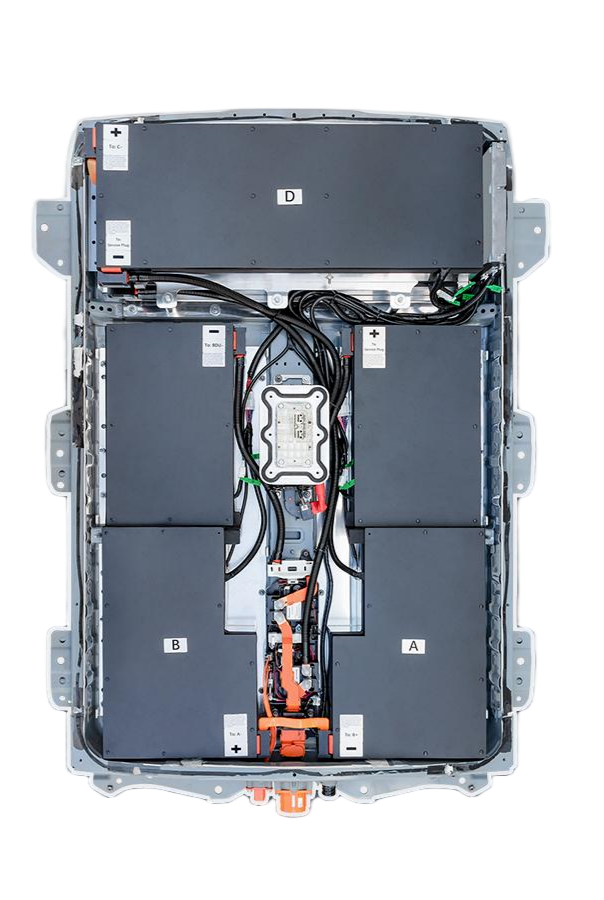
How to Upgrade Nissan Leaf Battery Capacity: 2026 Step-by-Step Expert Guide
Do you want to eliminate range anxiety by upgrading your Nissan Leaf’s battery capacity but don’t know where to start? How to upgrade Nissan Leaf battery capacity is a top question for owners of older 24kWh/30kWh models and even some newer variants seeking more usability. Capacity upgrades boost range, extend your EV’s lifespan, and add resale value—but they require precision, from choosing the right pack to BMS calibration. As CNS BATTERY experts, we’ve simplified the process into actionable steps, covering compatibility rules, tools, installation tips, and how to avoid costly mistakes.
Key Principles Before Upgrading Nissan Leaf Battery Capacity
Successful capacity upgrades hinge on three non-negotiable rules, designed to protect your Leaf’s electrical system and ensure safety.
1. Maintain Voltage Consistency (Critical for Safety)
The Nissan Leaf uses a 360V nominal voltage system—your new battery must match this exactly. Upgrade only the capacity (Ah), not the voltage (V). Increasing voltage even slightly will damage the motor, controller, and wiring harnesses, leading to catastrophic failure or fire risk. For example, a 400V battery in a 24kWh ZE0 Leaf will burn out the controller within minutes.
2. Ensure Physical & Cooling Compatibility
The Leaf’s battery compartment is precision-engineered for specific dimensions. Your new battery must fit seamlessly—no cutting, welding, or external mounting (this is illegal in most regions and voids insurance). Additionally, match the cooling system: passive airflow for 2010-2017 ZE0 models and liquid cooling for 2018+ ZE1/third-gen Leafs. CNS BATTERY’s packs are optimized for each generation’s cooling design, avoiding overheating.
3. Choose the Right Capacity Upgrade for Your Model
Not all Leafs support the same capacity upgrades. Stick to generation-specific limits to avoid BMS conflicts:
• 2010-2017 ZE0 (24kWh): Upgrade to 30kWh (max, passive cooling-friendly). • 2018-2022 ZE1 (40kWh): Upgrade to 62kWh (Leaf Plus equivalent). • 2023+ Third-Gen (75kWh): No practical upgrades (factory capacity is already optimized).
Step-by-Step Process to Upgrade Nissan Leaf Battery Capacity
Follow this expert workflow to complete a seamless capacity upgrade, whether you’re a DIY enthusiast or working with a technician.
Step 1: Assess Your Current Battery & Vehicle Readiness
First, verify your Leaf’s battery health using an OBD-II scanner to read BMS data—check SOH (State of Health), actual capacity, and cell voltage balance (target <0.03V variance). If your current pack has minor degradation (SOH 70%+), a capacity upgrade is more cost-effective than a full replacement. Confirm your VIN with CNS BATTERY to ensure compatibility with our generation-specific packs.
Step 2: Select the Right Capacity Pack
Opt for high-energy-density batteries to maximize capacity without modifying the compartment. CNS BATTERY’s sodium-ion packs are ideal: our 30kWh pack for ZE0 models fits the 24kWh compartment, while the 62kWh pack for ZE1 models aligns with liquid cooling systems. Sodium-ion offers 2,000+ charge cycles (5-8 years lifespan) and 90% capacity retention at -20℃, outperforming OEM lithium-ion packs.
Step 3: Gather Tools & Safety Gear
Safety and precision tools are mandatory: • Insulated gear: Class 00 gloves (1,000V+), insulated screwdrivers, and high-voltage detector. • Specialized tools: Nissan-compatible OBD-II scanner (for BMS calibration), torque wrench (precision to 1 N·m), and coolant vacuum filler (for ZE1 models). • Optional: Battery trolley (to handle 400+ lbs packs safely).
Step 4: Safe Installation & System Integration
Disconnect the 12V battery and wait 15 minutes to discharge residual voltage. Remove the old pack, align the new capacity pack with factory mounting points, and torque bolts to 45 N·m. For ZE1 models, drain and refill the cooling system with Nissan-approved glycol, using a vacuum filler to eliminate air bubbles. Connect wiring harnesses securely—label them during removal to avoid mix-ups.
Step 5: BMS Calibration & Testing
Calibrate the BMS with a Nissan-specific scanner to update it to the new capacity—generic scanners will not work. This step ensures accurate range readouts and optimizes charging cycles. Run a test charge (0-100%) on a Level 2 charger, monitor temperature (25-30℃ for ZE1), and take a 30-minute test drive. Clear any error codes and verify regenerative braking performance before finalizing.
Benefits of Upgrading Nissan Leaf Battery Capacity
A well-executed capacity upgrade delivers value beyond just extended range.
1. Dramatically Improved Range
Upgrading from 24kWh to 30kWh boosts real-world range from 73 to 90+ miles, while 40kWh to 62kWh increases range from 149 to 226+ miles. This eliminates range anxiety, making your Leaf suitable for long commutes and road trips.
2. Extended EV Lifespan & Cost Savings
A new high-capacity battery adds 5-8 years of usable life to your Leaf, avoiding the $30,000+ cost of a new EV. Sodium-ion packs reduce long-term costs with lower degradation rates and fewer replacements compared to OEM lithium-ion.
3. Increased Resale Value
A Leaf with a verified capacity upgrade sells for 35-45% more than one with the original battery. Buyers prioritize extended range and modern battery technology, making this upgrade a smart financial investment.
Frequently Asked Questions (FAQ) About Capacity Upgrades
Will upgrading battery capacity void my Leaf’s warranty?
No. The Federal Magnuson-Moss Warranty Act protects non-battery components (motor, controller). CNS BATTERY provides certified installation records, preserving factory coverage. Our 3-year warranty complements any remaining factory protection.
Can I install a higher capacity battery myself?
Yes—if you have experience with EV high-voltage systems. Skilled DIYers take 4-6 hours for ZE0 models and 6-8 hours for ZE1 (liquid cooling). We provide detailed guides and free technical support; beginners should opt for professional installation.
Do I need to replace the charger after a capacity upgrade?
Not necessarily. The Leaf’s onboard charger works with higher capacity packs, but charging time increases. For ZE0 models upgrading to 30kWh, a 6.6kW charger (vs. 3.3kW OEM) cuts charge time from 8 to 5 hours—we offer this as an optional add-on.
Is a capacity upgrade better than a battery replacement?
Yes—if your Leaf’s chassis and electrical system are in good condition. Capacity upgrades deliver more range and better value than replacing the original battery with the same capacity, especially with modern sodium-ion technology.
Upgrade Your Nissan Leaf’s Battery Capacity with CNS BATTERY
Upgrading your Nissan Leaf’s battery capacity is a game-changer for usability and value—but it requires the right expertise and components. CNS BATTERY’s generation-specific sodium-ion packs are engineered for seamless compatibility, backed by a 3-year warranty and expert support. Avoid mistakes and maximize performance with our tailored solutions. 立即访问https://cnsbattery.com/nissan-leaf-battery/,获取独家折扣并咨询专家升级方案! Let our team help you unlock your Leaf’s full range potential.