Here is the SEO-optimized article tailored for Nissan Leaf owners in the USA, written from the perspective of a CNS BATTERY expert.
🚗 The Strategic Downgrade: Why Nissan Leaf 62kWh Owners in the USA are Switching to 50kWh Packs
Last Updated: May 16, 2026
If you own a Nissan Leaf 62kWh model, you likely purchased it for the extended range—originally boasting over 200 miles of EPA-rated driving. However, as the years have passed, many owners in the United States are facing a harsh reality: battery degradation has significantly reduced that range, and replacing the pack with a new OEM unit is prohibitively expensive.
Surprisingly, a growing trend among savvy Leaf owners is not to replace their degraded 62kWh pack with another 62kWh unit, but to strategically “downgrade” to a 50kWh lithium-ion battery pack. This isn’t about settling for less; it’s about optimizing value, reliability, and daily usability. As a specialist in Nissan EV battery solutions, I will explain why this specific switch makes perfect financial and practical sense for the average American driver.
📉 The Reality of the 62kWh Pack: Degradation vs. Cost
When the Nissan Leaf 62kWh was released, it was a game-changer. However, Lithium-ion chemistry, especially in early high-capacity EVs, is subject to the laws of physics and time.
The “Turtle Mode” Trap
Many 62kWh Leaf owners are now experiencing severe capacity loss. What was once a 200-mile car might now only manage 80-100 miles on a good day. The battery management system (BMS) often throws the car into “Turtle Mode” (reduced power) even when the state of charge (SOC) appears half full. This happens because the individual cells have degraded unevenly, causing the voltage to sag under load.
The Financial Barrier
Nissan’s official replacement cost for a 62kWh pack can exceed $16,000 USD (plus installation). Even refurbished units from salvage yards are risky and can cost upwards of $5,000-$7,000, often with no warranty.
Expert Insight: As a battery engineer, I often tell clients that chasing the original 200+ mile range often isn’t worth the investment unless you are a long-haul commuter. For 90% of US drivers, a 50kWh pack offers the perfect “sweet spot” of range and cost.
💰 The Economic Argument: Saving 50%+ on Battery Replacement
The primary driver for this trend is simple economics. By switching to a 50kWh pack, owners are saving a massive amount of money while still getting a “like-new” driving experience.
| Metric | OEM 62kWh Replacement | Upgraded 50kWh Solution (CNS BATTERY) |
|---|---|---|
| Estimated Cost | $14,000 – $18,000+ | ~$7,000 – $8,500 |
| Savings | $0 | Over 50% Saved |
| New Technology | Older Generation Cells | Brand New CATL Grade-A Cells |
| Warranty | Standard Manufacturer Terms | 2 Years / 80,000 km |
Why the 50kWh is the “Goldilocks” Zone:
A brand new 50kWh pack, built with modern CATL (Contemporary Amperex Technology) cells, typically delivers around 160-180 miles of real-world range in the USA. This is more than sufficient for the average American commute (under 30 miles per day) and even weekend trips. You regain 90% of your original usability for less than half the price.
⚙️ Technical Advantages: New Cells vs. Old Chemistry
Beyond the price tag, there are technical reasons why a 50kWh upgrade is superior to repairing or replacing the old 62kWh unit.
1. Superior Cell Chemistry
The original 62kWh packs used early formulations of NMC (Nickel Manganese Cobalt) chemistry. Modern replacement packs, like those engineered by CNS, utilize the latest Grade-A CATL lithium cells. These new cells have:
- Higher Energy Density: More power in a potentially lighter package.
- Better Thermal Management: Reduced risk of overheating.
- Longer Cycle Life: New cells start with a full health bar, whereas a “repaired” 62kWh pack might be using mismatched or degraded cells.
2. Compatibility and “Plug-and-Play”
One of the biggest fears for Leaf owners is compatibility. Will the car’s software accept the new battery? Will the BMS communicate correctly?
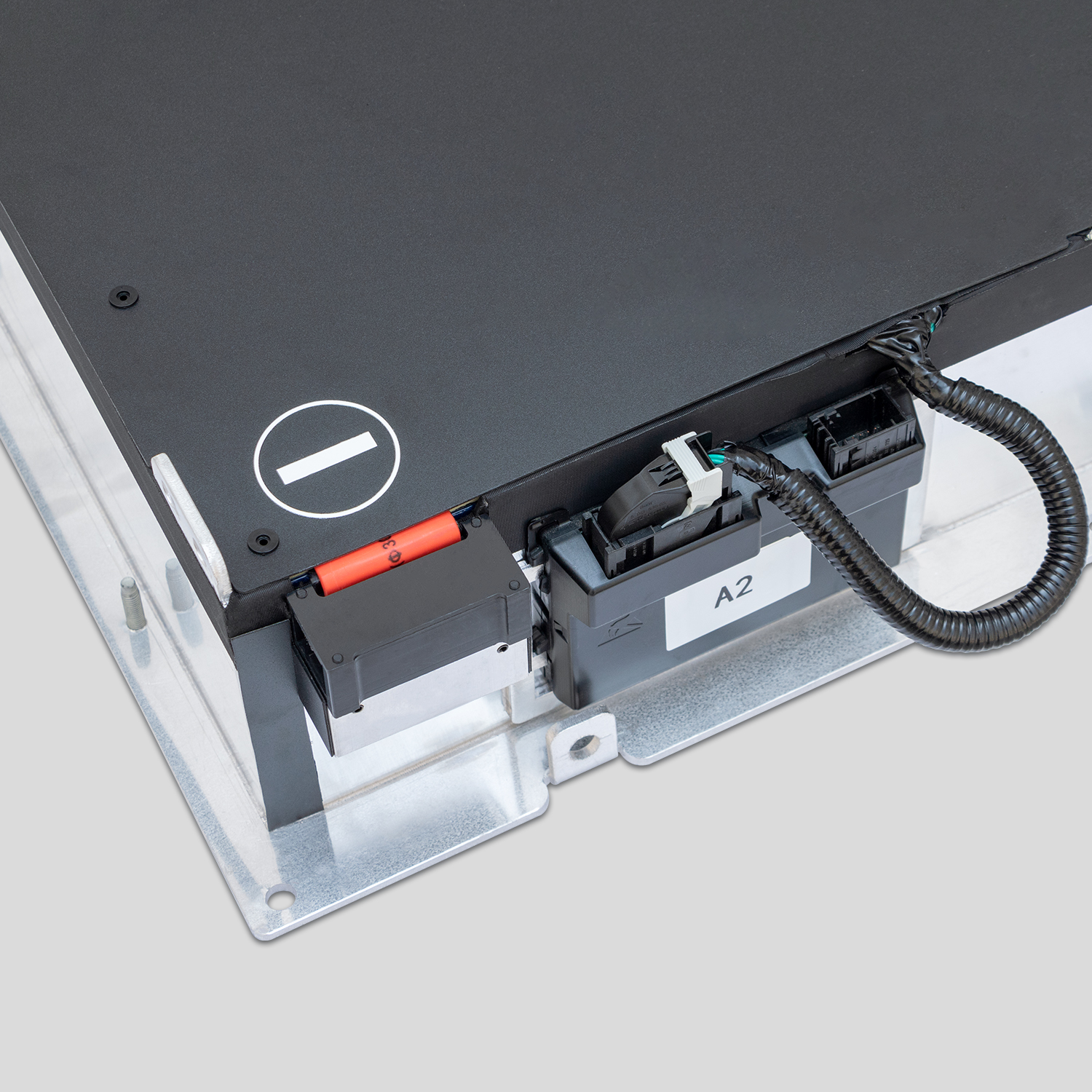
For the Nissan Leaf AZE0 and ZE1 models, a professionally built 50kWh pack is designed as a Direct OEM Replacement. It matches the original voltage, dimensions, and communication protocols. This means no modifications to the car’s software or hardware are needed—just swap the packs, and the car recognizes it immediately.
3. Weight Reduction and Handling
The 50kWh pack is generally lighter than the 62kWh unit. While this reduces total energy storage, it also reduces strain on the suspension and can improve the car’s handling dynamics, making the vehicle feel more agile.
🗺️ The American Driving Context
To understand why this switch works so well in the USA, we need to look at driving habits.
- The Range Myth: Most Americans vastly overestimate how much range they actually need. Unless you are driving from San Francisco to LA regularly, 150 miles of range covers 99% of use cases.
- Charging Infrastructure: With the expansion of Level 2 charging networks (at malls, workplaces, and public parking), the “anxiety” of a smaller pack is diminishing.
- Reviving an Asset: Many 62kWh Leafs are high-spec SL or SV models with great interiors. Instead of scrapping a perfectly good car with a functional motor and chassis, replacing the battery with a 50kWh unit extends the vehicle’s life by another 100,000+ miles.
🛠️ Making the Switch: A Step-by-Step Guide
If you are considering this upgrade path, here is how the process works from a technical and logistical standpoint:
- The Assessment: Before ordering, verify your model (ZE0, AZE0, or ZE1). The 50kWh upgrade is most common for the Leaf AZE0 (2018-2023) and ZE1 (2020+) platforms.
- The Source: Purchase a brand new 50kWh lithium battery pack specifically designed for Nissan Leaf compatibility. Avoid used or refurbished units if possible.
- Installation: While this is a “plug-and-play” solution, installation requires high-voltage safety protocols. If you are not a certified technician, use a local garage. The process usually takes 1-2 hours.
- The Reset: Once installed, the car will recognize the new battery. You may need to perform a BMS reset or “re-learn” cycle (often guided by the manufacturer’s support team) to calibrate the state of charge.
📝 Frequently Asked Questions (FAQ)
Q1: Will a 50kWh battery fit in my 62kWh Nissan Leaf?
Yes, absolutely. For Nissan Leaf models (specifically AZE0 and ZE1), the 50kWh and 62kWh packs share the same physical chassis dimensions and mounting points. It is a direct bolt-in replacement.
Q2: How much range will I lose by switching from 62kWh to 50kWh?
You will lose approximately 40-50 miles of range in ideal conditions. The 62kWh originally offered ~226 miles, while the 50kWh offers ~149-160 miles. However, since your old 62kWh battery likely only holds 80-100 miles due to degradation, the net gain in usable range is actually significant.
Q3: Is the 50kWh battery made with new cells?
This is the critical differentiator. When sourced from a reputable manufacturer like CNS BATTERY, the 50kWh pack is built using brand new, Grade-A CATL lithium cells. This is not a recycled or refurbished pack; it is a brand new powertrain component.
Q4: Do I need to reprogram my car’s computer?
Generally, no major reprogramming is required. The 50kWh pack is designed to mimic the voltage and communication signals of the original factory battery. However, a simple BMS (Battery Management System) calibration might be needed after installation to ensure the dashboard gauge reads accurately.
Q5: What is the warranty on an aftermarket 50kWh pack?
Reputable suppliers offer substantial warranties. For instance, CNS BATTERY provides a 2-year / 80,000 km warranty on their Nissan Leaf battery solutions, covering defects and performance degradation, which often surpasses the terms available on used OEM replacements.
📞 Ready to Revive Your Nissan Leaf?
Switching from a degraded 62kWh pack to a new 50kWh solution isn’t a downgrade—it’s a smart, cost-effective strategy to get back on the road with a reliable, warrantied battery.
Don’t let a bad battery kill a good car. If you are in the USA and looking for a high-quality, OEM-compatible Nissan Leaf battery solution, Get a Free Custom Quote Today. Our technical experts can verify compatibility with your specific VIN and provide a transparent price for a brand new CATL-cell pack.