
Here is the SEO-optimized article tailored for your requirements.
The Ultimate Fix for Nissan Leaf AZE0: Upgrading to a 62kWh Battery
Is your Nissan Leaf AZE0 struggling with range anxiety? If you own a Leaf AZE0 (often referred to as the “Leaf Plus” generation) and are facing the harsh reality of battery degradation, you are not alone. Many owners are discovering that the original 62kWh packs, while revolutionary at launch, are now reaching the end of their lifespan. As a professional in the EV aftermarket, I often get asked: “Is there a reliable, cost-effective way to restore my car’s original performance?”
The answer is a resounding yes. Upgrading your Nissan Leaf AZE0 with a new, high-capacity 62kWh battery pack is not just a repair—it’s a revival. In this expert review, we will dive deep into why this specific upgrade is the best solution for AZE0 owners and how to do it safely.
Why the Nissan Leaf AZE0 Needs a 62kWh Solution
The Nissan Leaf AZE0 generation, introduced to bridge the gap between the standard Leaf and long-range EVs, came equipped with a 62kWh lithium-ion battery. This pack was designed to deliver a real-world range of approximately 220-240 km (138-150 miles) when new.
However, time and chemistry are unforgiving. After 5-7 years of service, these batteries often drop below 70% State of Health (SOH). This means your car might only be driving 150 km on a full charge, making daily commutes stressful and long trips impossible.
The critical point here is compatibility. You cannot simply drop a ZE1 (40kWh) battery into an AZE0 shell. The physical dimensions, voltage requirements, and Battery Management System (BMS) protocols are different. For AZE0 owners, the only viable path to restore the car’s original utility is a 62kWh upgrade.
The “Fix”: A New 62kWh Lithium Battery Pack
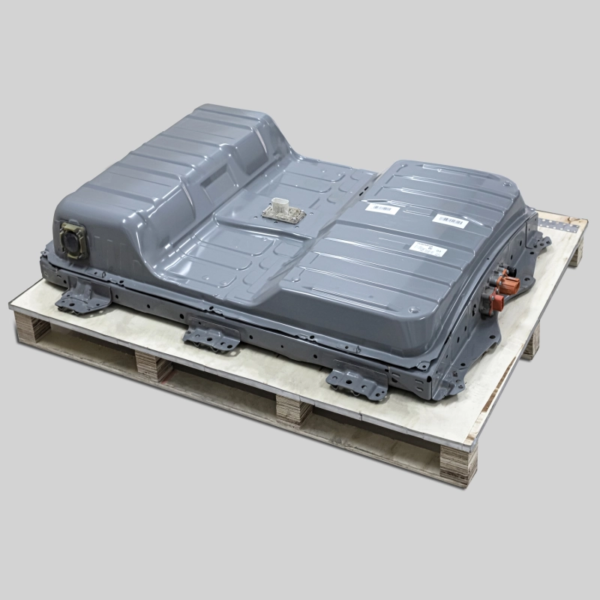
When we talk about a “fix” for the AZE0, we are referring to a complete replacement of the degraded OEM pack with a new, aftermarket 62kWh lithium battery.
Based on our technical analysis and customer feedback, here is why this is superior to other options (like remanufactured packs or used cells):
- Restored Dimensions and Weight: The aftermarket 62kWh packs are engineered to match the OEM dimensions and weight distribution of the original AZE0 battery. This ensures your car handles exactly as it should, with no modifications needed to the chassis.
- Plug-and-Play Integration: Unlike early Leaf generations (ZE0), the AZE0 upgrade is remarkably straightforward. The new packs are designed as direct OEM replacements. This means the connectors, mounting points, and cooling interfaces match perfectly, minimizing installation time and risk.
- New Cell Chemistry: The best aftermarket solutions utilize brand-new CATL (Contemporary Amperex Technology Co. Limited) cells or equivalent high-grade A-grade cells. These cells offer higher energy density and longer cycle life compared to the original cells used in 2018-2022 models.
Expert Note: While some shops offer “refurbishment” by replacing only the degraded modules, this is a temporary patch. Mixing old and new cells leads to rapid rebalancing issues. A full 62kWh pack replacement is the only permanent engineering fix.
Performance Expectations: What to Expect Post-Upgrade
After installing the new 62kWh solution, owners should expect a significant transformation in their driving experience.
- Range Restoration: You will regain the full advertised range. Expect a real-world range of 220km to 260km depending on weather and driving style. This effectively doubles the usability of your vehicle compared to its degraded state.
- Charging Speed: The new packs support the original 100kW DC fast charging capability of the AZE0. You will see the same rapid charging curves as when the car was brand new.
- Warranty Security: A major concern for AZE0 owners is the voided warranty. However, a professionally installed 62kWh pack from a reputable manufacturer does not require modifications to the vehicle’s CAN bus, meaning the rest of the car’s warranty (excluding the powertrain) often remains intact.
The Cost-Benefit Analysis: Why It Makes Financial Sense
Let’s look at the math. Replacing a Leaf AZE0 battery at a Nissan dealership can cost upwards of $16,000 to $20,000. This often exceeds the resale value of the car itself.
In contrast, a premium aftermarket 62kWh lithium battery solution typically costs around $7,000 to $9,000. This represents a saving of over 50%.
By choosing this upgrade path, you are not just fixing a car; you are investing in a vehicle that will serve you reliably for another 100,000+ kilometers. For fleet operators and daily commuters, this cost efficiency is the only logical choice.
Frequently Asked Questions (FAQ)
Q1: Will a 62kWh upgrade fit my Nissan Leaf model?
Yes, but only if you have a Leaf AZE0 (Leaf Plus, 2019-2022 models). It will not fit the older Leaf ZE0 (2011-2017) or the Leaf ZE1 (2018+ standard range). It is crucial to verify your model year and VIN before ordering to ensure compatibility.
Q2: How long does the installation take?
Professional installation typically takes 1 to 2 hours. Because it is a direct OEM replacement, the process involves disconnecting the high-voltage system, removing the old pack, installing the new one, and reconnecting the cables. Most mechanics familiar with the Leaf platform can complete this quickly.
Q3: What kind of warranty comes with the 62kWh battery?
Reputable suppliers offer a 2-year or 80,000 km warranty (whichever comes first). This warranty usually covers defects in materials and workmanship and guarantees that the battery will retain at least 70% capacity during the warranty period.
Q4: Is it safe to install a third-party battery?
Yes, provided you choose a manufacturer that adheres to strict safety standards (such as IATF 16949 or ISO 9001). Look for packs that use A-grade new cells (like CATL) and have passed UN38.3 testing for transportation safety. Avoid “LFP” or “reconditioned” cells for the AZE0, as they may not fit the thermal management system correctly.
Ready to revive your Nissan Leaf AZE0?
Don’t let a dead battery end your EV journey. Get a free, no-obligation quote today to restore your car’s original 62kWh performance.

