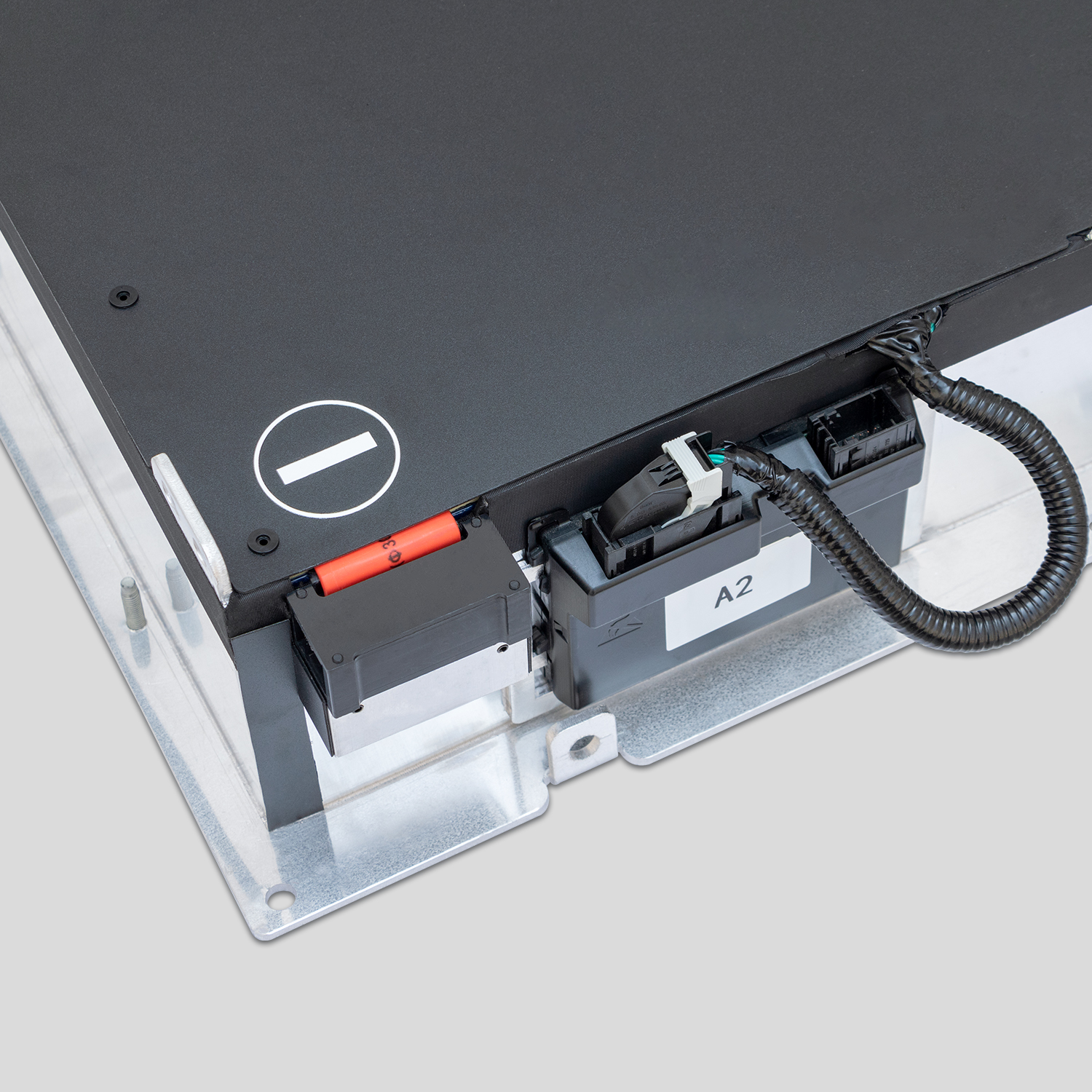
Why Nissan Leaf BMS Programming is the Key to Double Your Range
Is your Nissan Leaf suffering from range anxiety? If your daily commute feels like a gamble with the battery gauge, you’re not alone. The good news is that you don’t necessarily need to buy a new car. For many Leaf owners, the secret to unlocking a “like new” driving experience lies not just in the cells, but in the brain of the battery: the Battery Management System (BMS).
At CNS BATTERY, we specialize in high-performance, OEM-compatible battery solutions for Nissan and BMW. We understand that simply replacing degraded cells isn’t enough. To truly double your range and ensure safety, the BMS must be expertly programmed to communicate seamlessly with your vehicle. In this guide, we’ll break down why BMS programming is the critical step that turns a generic battery swap into a reliable, long-range upgrade.
What is the BMS and Why Does it Matter?
The Battery Management System (BMS) is the electronic control unit embedded within your electric vehicle’s battery pack. Think of it as the “ECU” for your energy source. It monitors voltage, temperature, and current to protect the battery from damage and communicates vital data to your car’s dashboard.
When you install a new battery pack—whether it’s a full replacement or an upgrade to a higher kWh capacity—the vehicle’s main computer (VCU) needs to trust the new BMS. Without proper programming:
- The car won’t start: The handshake between the BMS and the car fails.
- Range is inaccurate: The dashboard might show full charge, but the actual usable capacity is limited.
- Charging fails: The car may refuse to accept a charge or stop charging prematurely.
Proper BMS programming ensures “Plug-and-Play” compatibility. It tells the car that this is a genuine, safe, and fully functional battery, allowing you to access 100% of the new capacity.
The Programming Process: From Bench to Road
At CNS, our engineering team has spent over a decade mastering the protocols for Nissan Leaf models (ZE0, AZE0, ZE1). Here is our standard process to ensure your BMS is ready to double your range.
1. Hardware & Software Preparation
Before the battery leaves our factory, our technicians load the latest firmware onto the BMS chip. This firmware is specifically compiled for your Leaf’s model year and VIN code. We don’t use generic software; we use data matching the original factory standards to guarantee compatibility.
2. The “Handshake” Simulation
We don’t just flash the chip and ship it. In our lab, we simulate the connection between the BMS and a virtual Leaf ECU. This ensures that the “handshake” protocol is flawless. We verify that the BMS correctly reports State of Charge (SOC), State of Health (SOH), and temperature data.
3. On-Site Activation (If Required)
While most of our packs are pre-programmed, some complex upgrades (like swapping a 40kWh for a 62kWh pack) may require a final activation step on your specific vehicle. This usually involves connecting a diagnostic tool to the OBD2 port to “teach” the car about its new, larger energy reservoir.
Expert Tip: If you are a DIY enthusiast, we provide detailed video tutorials and remote video guidance to walk you through this final step. Our goal is to make the process as simple as possible.
Real-World Results: Doubling the Mileage
The ultimate goal of BMS programming is to unlock the full potential of new, high-quality cells. By replacing old, degraded modules with brand-new CATL lithium-ion cells and ensuring the BMS is correctly calibrated, we see consistent results.
Case Study: The 2014 Nissan Leaf ZE0 Upgrade
Consider a typical 2014 Nissan Leaf ZE0 owner. The original 24kWh or 30kWh battery might have degraded to a mere 12-15kWh of usable capacity, limiting the range to under 80km (50 miles).
The CNS Solution:
- Hardware: Replace the degraded pack with a brand-new 62kWh Lithium Battery Pack.
- Software: Program the BMS to report the full 62kWh capacity to the car.
The Result:
Once the BMS is programmed and the car recognizes the new capacity, the range jumps from 80km to over 400km (250 miles). This isn’t just a repair; it’s a complete resurrection of the vehicle.
Performance Comparison
| Metric | Original Degraded Battery | CNS Upgraded Battery (62kWh) |
|---|---|---|
| Usable Capacity | ~15 kWh | 62 kWh |
| Real-World Range | < 80 km | ~ 400 km |
| BMS Status | Reporting degradation faults | Flawless communication |
| Value | High replacement cost | 50% savings vs. OEM |
Why Choose CNS for Your BMS & Battery Needs?
When you are looking to double your range through a battery upgrade, you need a partner that understands both the hardware and the software. Here is why thousands of Nissan and BMW owners trust CNS:
- OEM-Grade R&D: We don’t just assemble batteries; we engineer them. Our R&D is based on original factory standards, ensuring that our BMS programming protocols are identical to the manufacturer’s.
- Zero-Failure Guarantee: We utilize brand-new, top-tier cells from CATL. Combined with our precise BMS calibration, this results in a near-zero failure rate.
- Unbeatable Warranty: We stand by our technology. That is why we offer an industry-leading 2-Year / 80,000 KM warranty on all our automotive batteries. This covers defects in materials, workmanship, and performance degradation.
- Global Support: Whether you are in the USA, Europe, or elsewhere, we handle the complexities of lithium battery shipping (UN 38.3 compliant) and provide local language technical support.
Ready to Double Your Range?
Don’t let a dying battery force you into an expensive new car purchase. With a CNS high-capacity battery and expert BMS programming, your Nissan Leaf can drive like new again.
If you are ready to unlock the full potential of your EV, Get a Free Custom Quote today. Our technical experts will help you select the right pack and guide you through the compatibility process.
Frequently Asked Questions (FAQ)
1. Can I program the Nissan Leaf BMS myself?
Yes, it is possible for technically inclined DIYers. We provide high-definition installation videos and step-by-step PDF guides. For complex upgrades, we also offer free remote video guidance via Zoom or WhatsApp to assist with the programming process. However, if you are not comfortable working with high-voltage systems, we strongly recommend using a certified technician.
2. What happens if the BMS programming fails?
A failed BMS programming usually results in the car displaying an error (like “Check Charging System” or “BMS Error”) and refusing to drive or charge. This is a safety feature. If this happens, our technical support team will connect with you via video call to troubleshoot. In most cases, reconnecting the cables correctly or re-flashing the chip resolves the issue immediately.
3. Do I need to reprogram the BMS when replacing with an OEM-compatible pack?
It depends on the specific model and the type of pack. Many of our standard replacement packs (e.g., replacing a 40kWh with another 40kWh) are designed for direct plug-and-play and do not require coding. However, if you are changing the capacity (e.g., upgrading to 62kWh) or the hardware revision has changed, programming or coding is mandatory to inform the car’s computer of the new specifications.
4. How long does BMS programming take?
The physical connection and data upload typically take less than 10 minutes. However, the entire process, including safety checks, disconnecting the 12V battery, and reconnecting high-voltage terminals, usually takes a professional technician about 1-2 hours for a full installation.