
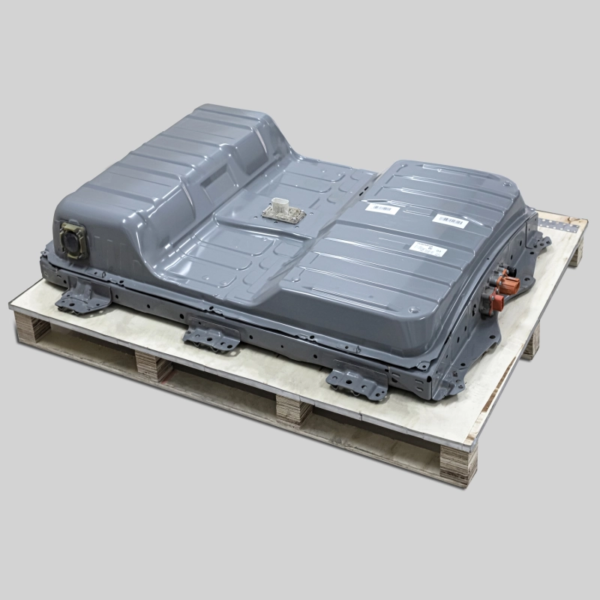
How to Offer a 5-Year Warranty on Battery Swaps Safely
As an industry expert at CNS BATTERY, I am often asked: “How can a company offer a 5-year warranty on a Nissan Leaf or BMW i3 battery swap without risking massive failure rates?”
The short answer is simple: You cannot offer a safe 5-year warranty using recycled or second-hand cells. The math of battery degradation simply does not add up.
If you are considering a battery replacement for your electric vehicle (EV), understanding the technical and financial barriers to a long warranty is crucial. A 5-year warranty is not just a marketing gimmick; it is a promise of safety, performance, and financial security. In this guide, I will break down the specific requirements you need to look for to ensure your battery swap is truly built to last.
Why a 5-Year Warranty is Impossible with Recycled Cells
Many budget battery suppliers offer short warranties (often 1-2 years) because they rely on recycled or salvaged cells. Here is the reality of why these cannot last 5 years:
- Unknown History: Recycled cells come from batteries that have already endured years of thermal stress and chemical degradation. You cannot reset the chemical clock.
- Inconsistent Quality: Salvaged cells are often a “mix and match” of different batches and health levels. This imbalance leads to “cell divergence,” where weak cells drag down the entire pack, causing swelling or failure within 12-18 months.
- Degradation Curve: Lithium-ion cells naturally lose capacity. If a cell has already lost 20-30% of its capacity in its first life, it will likely drop below the usable 70% threshold (the industry standard for “failure”) long before the 5-year mark.
To offer a 5-year warranty safely, a manufacturer must use Brand New, Prismatic Cells from a Tier-1 supplier.
The CNS BATTERY Standard: Building for the Long Haul
At CNS BATTERY, our warranty is not a gamble; it is the result of rigorous engineering and premium materials. We are able to offer extended coverage (up to our industry-leading standards) because we adhere to the following non-negotiables:
1. Premium Cell Chemistry
We utilize brand new CATL (Contemporary Amperex Technology Co. Limited) cells. CATL is the world’s largest lithium-ion battery manufacturer and a direct OEM supplier to major automakers.
- Why it matters: New cells start at 100% health and have a predictable, slow degradation curve.
- The Result: These cells are scientifically proven to retain over 70% capacity after 5 years and 100,000+ miles of driving.
2. Active Thermal Management
A battery pack is only as good as its cooling system. A 5-year lifespan requires maintaining the optimal temperature.
- Our Solution: We engineer our packs with precision thermal pads and airflow channels compatible with the Nissan Leaf and BMW i3 chassis. This prevents “thermal runaway” and hotspots that kill batteries prematurely.
3. Military-Grade BMS (Battery Management System)
The BMS is the brain of the battery. To honor a 5-year warranty, the BMS must prevent overcharging, deep discharging, and short circuits.
- Our Protocol: We use ISO-certified BMS units programmed to OEM specifications. This ensures that the car’s dashboard displays accurate State of Charge (SOC) and prevents the battery from being damaged by the user accidentally.
The Safety Equation: New Cells vs. The “Budget” Swap
Let us compare the two options to see why safety is the cornerstone of a long warranty.
| Feature | Budget/Recycled Swap (1-2 Year Warranty) | CNS BATTERY New Cell Swap (Extended Warranty) |
|---|---|---|
| Core Cells | Used/Salvaged (Unknown cycles) | Brand New CATL Cells (0 cycles) |
| Risk of Fire | High (Swelling and internal shorts common) | Low (Stable chemistry and casing) |
| Capacity Drop | Drops below 70% in 18 months | Maintains >80% after 3 years |
| Warranty Validity | Voided by minor voltage spikes | Protected by robust BMS |
| Longevity | 2-3 years max | 5+ years |
How to Implement This Safely in Your Workshop or Garage
If you are a technician or a DIY enthusiast looking to perform a safe battery swap, here are the three steps CNS BATTERY takes to ensure the warranty is honored and the car remains safe:
Step 1: VIN Verification & Compatibility
Do not guess. Before the swap, verify that the battery module configuration (e.g., 40kWh, 62kWh) matches the Vehicle Identification Number (VIN) of the Nissan Leaf (ZE0, AZE0, ZE1) or BMW i3.
- Safety Tip: Mismatched voltage can fry the vehicle’s ECU.
Step 2: Pre-Installation Inspection
When you receive the new pack:
- Check for any physical damage to the casing.
- Verify the BMS wake-up signal.
- Ensure all HV (High Voltage) connectors are sealed against moisture.
Step 3: Post-Installation Calibration
Simply bolting it in is not enough for a 5-year lifespan.
- The Process: After installation, the BMS must undergo a “balancing” procedure. This ensures all modules communicate correctly, preventing one weak module from dragging down the entire system.
Frequently Asked Questions (FAQ)
Q1: Does a 5-year warranty mean I get a new battery for free if it fails?
A: Yes. At CNS BATTERY, our warranty covers defects in materials and workmanship. If the battery fails to hold a charge or experiences a manufacturing defect within the warranty period (or mileage), we provide free repair or replacement. We also offer prorated coverage for capacity degradation below 70%.
Q2: Can I install this myself, or do I need a mechanic?
A: While our packs are designed for “Plug and Play” compatibility, high-voltage work is dangerous. We recommend installation by a certified technician. However, if you are a skilled DIYer, we provide video call support and detailed manuals. Installing it yourself does not void the warranty as long as there is no physical damage to the casing.
Q3: How do I know the cells are actually new and not recycled?
A: You can verify this by checking the manufacturing date code on the cells and the consistency of the voltage across all modules. Recycled packs often have mismatched voltages and older date stamps. Our packs ship with a Certificate of Conformity guaranteeing new CATL cells.
Q4: What happens if I exceed the mileage limit in the warranty?
A: Our warranty is typically structured as “2 Years or 80,000 KM (49,000 Miles), whichever comes first.” This is standard in the automotive industry to account for high-mileage commercial users. If you exceed the mileage, the battery is still covered under our standard consumer protection laws for manufacturing defects.
Ready to upgrade your EV with a safe, long-lasting solution?
Don’t gamble with recycled cells. Contact CNS BATTERY today for a free quote on a brand-new, OEM-compatible battery pack designed to last 5 years and beyond.


