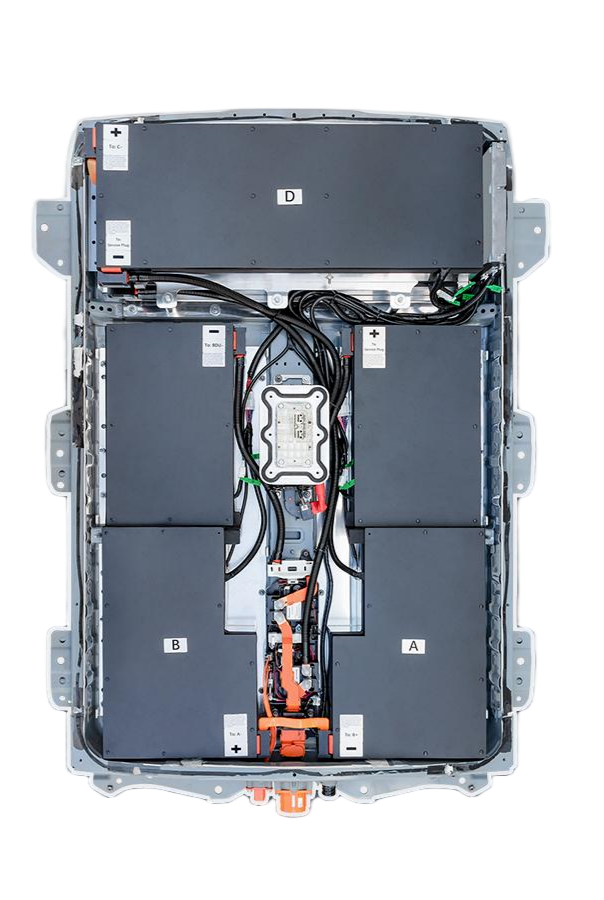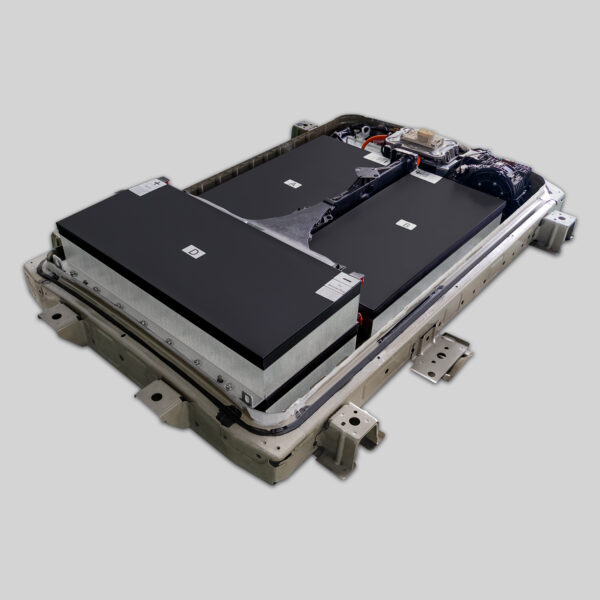
Comparing Internal Resistance: CNS Battery vs. Aged OEM Packs
As an electric vehicle ages, the driving experience inevitably changes. For Nissan Leaf and BMW i3 owners, one of the most frustrating symptoms of battery degradation is the increase in Internal Resistance (IR). If you are noticing your car feels sluggish, the charging speed has slowed down, or the range indicator drops rapidly under acceleration, you are likely battling high internal resistance in your old OEM pack.
At CNS BATTERY, we often receive inquiries from owners who are tired of the “turtle mode” (limp mode) warnings and the anxiety of not making it to their destination. This article serves as a comprehensive guide to understanding why internal resistance increases in old batteries and how switching to a brand-new, high-quality replacement like a CNS Battery restores your vehicle’s original performance.
What is Internal Resistance and Why Does It Matter?
Internal resistance is essentially the “friction” electricity encounters as it flows through the battery cells and internal wiring. Think of it like water flowing through a pipe. A new battery has a wide, smooth pipe (low resistance), allowing electrons to flow freely. An old battery is like a pipe clogged with rust (high resistance), restricting flow.
The Physics of Power Loss
When you press the accelerator, your motor demands a high current. If the internal resistance is high, the voltage of the battery sags significantly under this load. This is governed by the formula:
$$V_{\text{actual}} = V_{\text{ocv}} – (I \times R_{\text{internal}})$$
Where:
- $V_{\text{actual}}$ is the voltage available to the motor.
- $V_{\text{ocv}}$ is the Open Circuit Voltage (the battery’s resting voltage).
- $I$ is the current draw.
- $R_{\text{internal}}$ is the Internal Resistance.
The Consequences:
- Reduced Power: As $R_{\text{internal}}$ increases, $V_{\text{actual}}$ drops. If the voltage sags too low, the Battery Management System (BMS) triggers a safety cut-off to protect the cells, resulting in sudden power loss or “limp mode.”
- Heat Generation: High resistance generates heat ($P_{\text{loss}} = I^2 \times R$). This heat further accelerates degradation, creating a vicious cycle.
- Charging Limitations: Fast charging requires pushing high current into the battery. High IR causes the voltage to hit the upper limit too quickly, forcing the charger to taper off and drastically increasing charging times.
The CNS Battery Advantage: Zero Degradation, Zero Stress
When you purchase a CNS Battery, you are not buying a “rebuilt” or “refurbished” unit. You are purchasing a brand-new pack manufactured using brand-new, premium-grade CATL cells.
Why New Cells Matter
Unlike salvaged or reused cells found in many aftermarket “budget” batteries, our cells have:
- Minimal Initial IR: Brand-new cells start with the lowest possible internal resistance, identical to the specifications of the original factory batteries.
- Consistent Matching: We rigorously sort and match cells to ensure uniform resistance across the entire pack. This balance prevents “weak links” that drag down performance.
Performance Restoration
By replacing your aged, high-resistance OEM pack with a CNS Battery, you effectively reset your vehicle’s clock. You will experience:
- Instant Torque: The voltage no longer sags under load, restoring the snappy acceleration you remember from day one.
- Full Fast Charging Capability: The battery accepts high current without excessive heat, allowing you to utilize DC fast charging stations at their maximum speed.
- Elimination of Limp Mode: With stable voltage and low resistance, the BMS no longer needs to restrict power.
Real-World Data: Before and After
To illustrate the difference, let’s look at a comparison between an aged OEM Nissan Leaf 40kWh pack and a brand-new CNS 40kWh replacement.
| Metric | Aged OEM Pack (8+ Years) | New CNS Battery Pack |
|---|---|---|
| Internal Resistance | High (Varies per cell) | Low & Uniform |
| Voltage Sag under Load | Severe (Triggers Limp Mode) | Minimal (Stable Power) |
| DC Fast Charging | Slow (Tapers immediately) | Fast (Full 50kW+) |
| Driving Range | 50-60% of original | 100% of rated capacity |
| Thermal Management | Struggles to dissipate heat | Efficient cooling |
The Hidden Cost of High Resistance: Safety and Longevity
Beyond performance, high internal resistance is a safety concern. As resistance increases, so does heat generation. Old OEM packs often have degraded thermal interface materials and aging Battery Management Systems that may not accurately monitor cell temperatures.
Our packs are engineered with modern safety standards in mind. We utilize advanced BMS technology and high-quality insulation materials to ensure that even under the stress of heavy use, the temperature remains within the optimal safety window. This isn’t just about performance; it is about driving with peace of mind.
Get Your Performance Back
If you are tired of the limitations of your old battery, it is time to consider a replacement that brings your car back to life. At CNS BATTERY, we specialize in OEM-compatible solutions for the Nissan Leaf (ZE0, AZE0, ZE1) and BMW i3 series.
Don’t let high internal resistance ruin your EV experience. Restore your vehicle’s original power, range, and charging speed with a reliable, brand-new battery solution.
Ready to revive your EV? Get a Free Custom Quote for your Nissan or BMW today.
Frequently Asked Questions (FAQ)
Q: How do I know if my battery’s internal resistance is too high?
A: Common symptoms include the car entering “Turtle Mode” (limp mode) during acceleration, the battery gauge dropping rapidly when you step on the pedal (even if the overall charge is high), and significantly slower DC fast charging speeds compared to when the car was new.
Q: Can internal resistance be fixed without replacing the whole battery?
A: Unfortunately, internal resistance is a chemical property of the lithium-ion cells. While rebalancing or reconditioning can help with state-of-charge imbalances, it cannot reverse the chemical aging that causes high resistance. The only solution for restoring performance is replacing the degraded cells or the entire pack.
Q: Are CNS Batteries compatible with my specific Nissan Leaf model year?
A: Yes, we offer precise compatibility for Nissan Leaf models including ZE0, AZE0, and ZE1, as well as the BMW i3. Our engineering strictly adheres to OEM standards for voltage, capacity, and communication protocols to ensure a plug-and-play installation without modifications.
Q: What warranty do you offer on your batteries?
A: We stand by the quality of our products. All CNS Automotive Batteries come with a minimum 2-year or 80,000 km warranty (whichever comes first). This comprehensive coverage includes protection against defects in materials and workmanship, as well as prorated coverage for performance degradation, ensuring your battery maintains optimal capacity.