
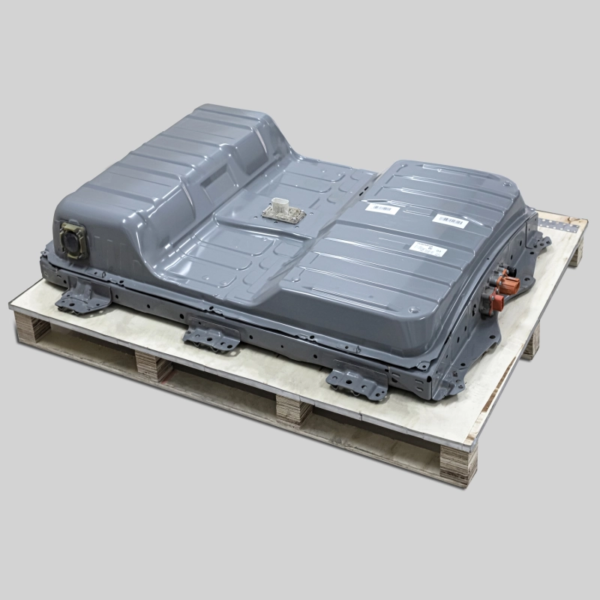
Why Copper Busbars Matter in Your Nissan Leaf Battery Upgrade
If you are considering a battery upgrade for your Nissan Leaf, you are likely focused on range, longevity, and safety. While most buyers look at the battery capacity (kWh) and brand of cells (like CATL), there is a critical internal component that often goes unnoticed: the busbar.
The busbar is the metal connector that links individual battery modules together, allowing electricity to flow. In the world of EV battery replacements, the choice of material—specifically copper vs. aluminum—can be the difference between a reliable upgrade and a costly repair. As a leading manufacturer of aftermarket Nissan and BMW batteries, CNS BATTERY prioritizes the use of pure copper busbars to ensure our packs meet OEM standards and deliver “Ultimate Safety.”
The Science Behind the Spark: Conductivity
At the heart of every EV battery is the need for efficient power transfer. The busbar acts as the highway for electrons moving from the cells to the motor.
- Copper: Known for its superior electrical conductivity. It allows current to flow with minimal resistance.
- Aluminum: While lighter and cheaper, aluminum has roughly 60% less conductivity than copper.
When resistance is high (as it is with aluminum), energy is lost as heat. In the context of a Nissan Leaf battery upgrade, this means an aluminum busbar runs hotter than a copper one under the same load.
Why Heat is the Enemy
Heat is the primary factor in lithium-ion battery degradation. More importantly, excessive heat at the connection points is a safety hazard.
If a busbar connection becomes too hot, it can lead to:
- Thermal Runaway: A dangerous chain reaction that can result in fire.
- Contact Oxidation: High temperatures accelerate the oxidation of the metal surface, increasing resistance further and creating a vicious cycle.
- BMS Malfunctions: The Battery Management System (BMS) monitors temperature. Excessive heat can trigger error codes, forcing your car into “limp mode” or shutting it down entirely.
By using pure copper busbars, CNS BATTERY packs maintain a cooler operating temperature. This reduces stress on the Battery Management System and ensures the pack operates within the safe thermal window required for long-term reliability.
The Durability Factor: Corrosion and Vibration
An electric vehicle is a harsh environment. The battery pack is subjected to constant vibration, moisture, and fluctuating temperatures.
- Corrosion Resistance: Copper is significantly more resistant to corrosion than aluminum. In the humid environment under a car’s chassis, aluminum busbars can oxidize rapidly. This oxidation creates a resistive layer, increasing the risk of connection failure.
- Mechanical Strength: Copper is a denser, harder metal. It is less prone to physical deformation or “cold flow” (where the metal slowly deforms under pressure from bolts) compared to soft aluminum. This ensures that the electrical connection remains tight and secure over tens of thousands of miles.
Performance and Range: The Efficiency Link
You are upgrading your Nissan Leaf battery to go further and perform better. Every watt of energy lost in the busbars is a watt stolen from your driving range.
Because copper reduces energy loss due to resistance, more of the power stored in your CATL battery cells actually reaches the motor. While the difference might seem small in a lab, in real-world driving—especially during rapid acceleration or high-speed cruising—copper busbars contribute to the overall efficiency that helps you achieve the advertised range.
Why Choose CNS BATTERY for Your Upgrade
At CNS BATTERY, we don’t cut corners on internal components. We understand that our clients demand OEM-compatible quality at a fraction of the dealer price.
- OEM Standard R&D: We utilize pure copper busbars, ensuring “Ultimate Safety” and “Long Battery Life.”
- Brand New CATL Cells: We use the highest quality cells available, not refurbished or recycled junk.
- 10 Years of Tech Accumulation: Our decade of experience in the battery field ensures that every pack is engineered for reliability.
We specialize in providing precise adaptation solutions for the entire Nissan model range, including the Leaf ZE0, AZE0, and ZE1. When you upgrade with us, you are not just buying a battery; you are buying peace of mind.
Don’t compromise on the internal connections that keep your car running safely. Explore our range of Nissan Leaf battery upgrades and experience the difference that quality engineering makes.
Get a Free Custom Quote for Your Nissan Leaf
Frequently Asked Questions (FAQ)
Q: What is the warranty on CNS BATTERY packs?
A: We offer an unbeatable warranty of up to 2 years or 80,000 km (whichever comes first). This covers defects in materials and workmanship, including free replacement or repair. We also provide prorated coverage for performance degradation, ensuring your battery maintains at least 70% capacity over the warranty period.
Q: How do I know if a CNS battery is compatible with my Nissan Leaf?
A: We support a wide range of Nissan models, including Leaf ZE0, AZE0, and ZE1. To confirm compatibility, simply provide our customer service team with your vehicle’s year, model number, and VIN code for instant confirmation.
Q: Can I install the battery myself?
A: Yes, our batteries are designed for plug-and-play installation. We provide comprehensive step-by-step installation videos and PDF guides. For complex issues, our technical support team offers video call guidance to help you through the process. However, if you are not comfortable working with high-voltage systems, we recommend using a certified technician.

