Here is the SEO-optimized article tailored for beginners looking to replace their Nissan Leaf SV battery, written from the perspective of a CNS BATTERY expert.
Nissan Leaf SV Battery Replacement: A Beginner’s Step-by-Step Guide
Is your Nissan Leaf SV struggling to make it through the day? If your dashboard shows only a few bars left, or if the dreaded “Lemon Car” warning appears, you’re not alone. The Nissan Leaf SV (especially the ZE0, AZE0, and ZE1 models) is a fantastic electric vehicle, but its battery is the most critical and expensive component. Replacing it can seem daunting, especially for beginners, but with the right information, it is a manageable and cost-effective project.
As an expert in EV powertrains, I have helped thousands of Leaf owners revive their cars. This guide will walk you through everything you need to know about replacing your Nissan Leaf SV battery, from understanding your options to the installation process.
Why Replace Your Nissan Leaf SV Battery?
The Nissan Leaf SV series, including the 24kWh, 30kWh, 40kWh, 50kWh, and 62kWh variants, relies heavily on battery health. Over time, Lithium-ion cells degrade. If your car’s range has dropped significantly (e.g., from 100 miles to just 40 miles), or if the battery management system (BMS) reports errors, a replacement is the most economical solution compared to buying a new car.
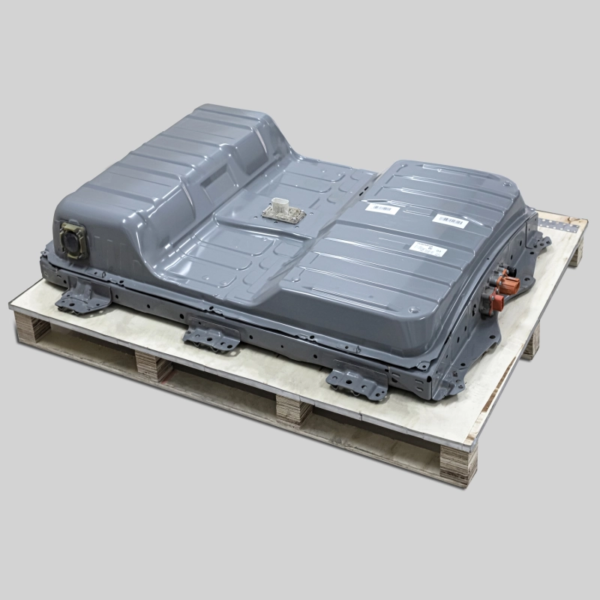
The Cost Factor: Replacing your battery with an Original Equipment Manufacturer (OEM) unit from a dealership can cost upwards of $16,000 USD. For many, this is simply not feasible. This is where high-quality aftermarket solutions, like those offered by CNS BATTERY, come in. We provide brand-new CATL battery cells that are fully compatible with Nissan Leaf models, offering the same reliability as OEM but at roughly 50% less cost.
Understanding Your Battery Options
Before you start shopping, it is crucial to identify your specific Leaf model year and battery variant. The SV trim can be found in the ZE0 (2011-2017), AZE0 (2018-2022), and ZE1 (2023+) series.
| Feature | OEM Factory Battery | Refurbished/Used Battery | CNS BATTERY (New Build) |
|---|---|---|---|
| Cell Quality | New (Original Brand) | Old/Recycled (High Risk) | New CATL Cells (Premium) |
| Warranty | Standard (Often < 80k km) | Minimal or None | 2 Years / 80,000 km |
| Price | Very Expensive | Cheap upfront, high failure risk | 50% Savings vs OEM |
| Risk | Low | Very High (Swelling, Fire) | Low (Zero Defect Rate) |
Expert Tip: Avoid “refurbished” or “used” batteries. Many of these are cobble-together units made from old cells that have already degraded. They often fail within months, leading to a dangerous situation and double the cost to fix.
Step 1: Pre-Purchase Compatibility Check
You cannot just buy any battery and expect it to fit. Compatibility is key.
- Identify Your VIN: Find your Vehicle Identification Number, usually located on the dashboard or driver’s side door jamb.
- Match the KWH: Determine if your car originally had a 40kWh, 62kWh, or another pack. With CNS, you also have the option to upgrade your capacity (e.g., upgrading from a 40kWh to a 62kWh for longer range).
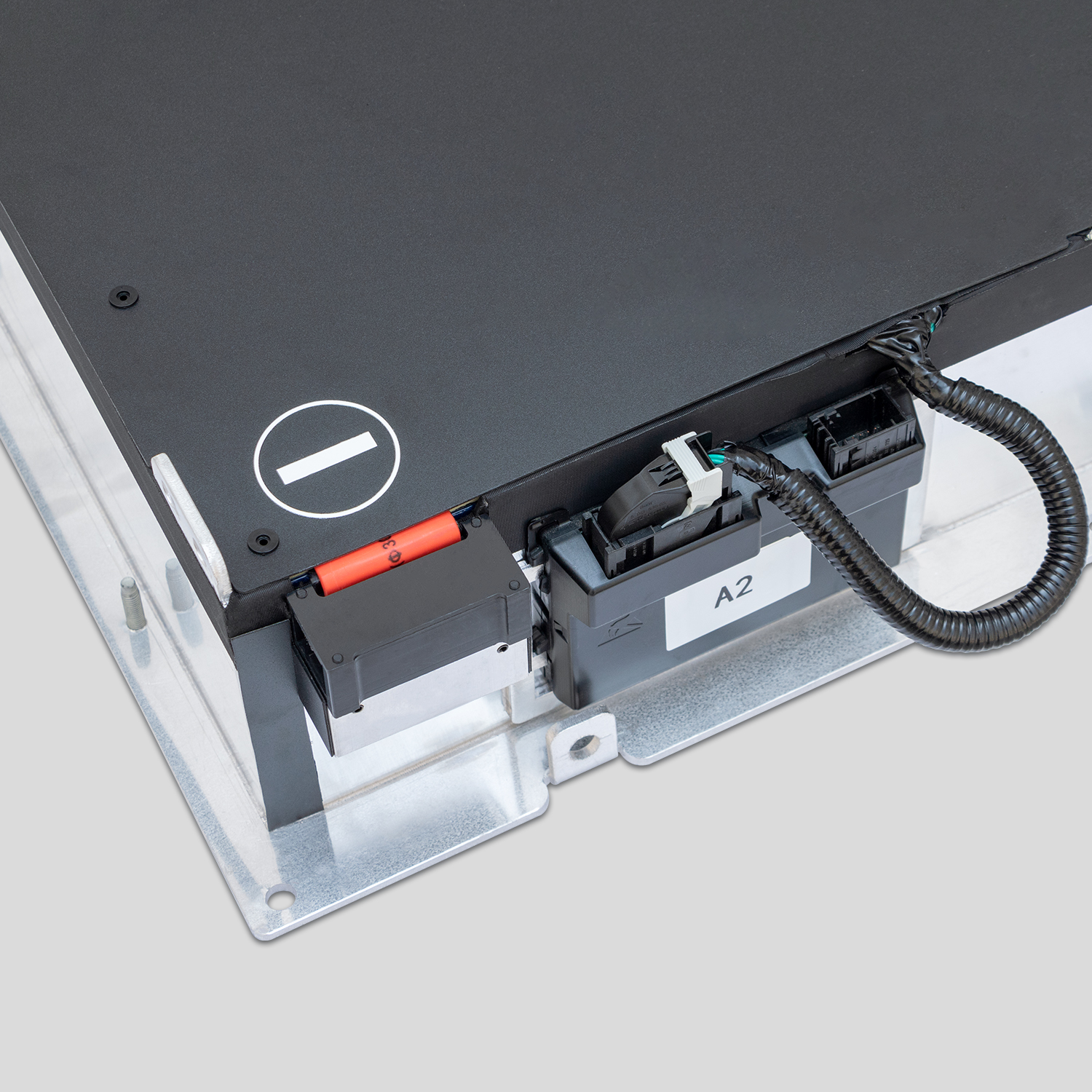
- Interface Matching: The connector types and voltage must match your Leaf’s BMS. Our batteries are engineered to OEM standards, ensuring a plug-and-play experience.
Recommendation: Before purchasing, use our Contact Form to upload your VIN. Our technical experts will confirm the perfect fit for your SV model within 24 hours, saving you the hassle of a wrong order.
Step 2: The Installation Process (DIY vs Professional)
Installing a new battery is often simpler than you think. For a beginner, the process typically takes 1-2 hours.
Tools You Will Need:
- Socket Wrench Set
- Torque Wrench (for precise tightening)
- Insulated Gloves (Safety First!)
- A Jack and Jack Stands (or a lift)
The Basic Steps:
- Disconnect Power: Always disconnect the 12V auxiliary battery first to cut all power.
- Remove Undertray: Unscrew the plastic undertray to access the battery pack.
- Unbolt the Pack: Disconnect the high-voltage connectors and unbolt the mounting brackets.
- Swap and Reconnect: Lift out the old pack and lower in the new CNS battery. Reconnect all cables and bolts.
- BMS Programming: This is the most critical step. The Battery Management System needs to recognize the new pack.
For Beginners: If you are nervous about the BMS programming, don’t worry. We offer free video call support. One of our engineers can guide you through the programming software step-by-step via Zoom or Skype. Most of our customers report that the process is smooth with this assistance.
Step 3: Post-Installation Care
Once your new battery is installed, it is vital to treat it right to maximize its lifespan.
- Initial Charging: Perform a full charge and discharge cycle (if possible) to help the BMS calibrate accurately.
- Avoid Extreme States: Try not to leave the car at 0% or 100% for extended periods. Keeping it between 20% and 90% is ideal for longevity.
- Winter Care: In cold climates, pre-heat the battery while it is still plugged in before driving to improve efficiency.
Why Choose CNS BATTERY for Your Leaf SV?
As a leading manufacturer specializing in Nissan and BMW EV batteries, we stand by our product.
- Zero Defect Promise: We use brand-new, top-tier CATL (Contemporary Amperex Technology) cells, the same quality found in premium EVs globally.
- Unbeatable Warranty: We offer a 2-year or 80,000 km warranty, which is significantly longer than most refurbished battery providers and even surpasses some OEM standards for replacement parts.
- Global Support: Whether you are in the USA, Europe, or elsewhere, we handle the logistics (DDP service) and provide the necessary technical documentation.
Replacing your Nissan Leaf SV battery is not just about fixing a car; it is about extending the life of a reliable vehicle and saving thousands of dollars. With a CNS BATTERY, you are not buying a “cheap alternative”—you are investing in a high-performance, safe, and long-lasting power solution.
Ready to get your Leaf back on the road? Get a Free Custom Quote Today.
Frequently Asked Questions (FAQ)
Q1: Can I really install this myself if I have never done it before?
Yes, absolutely. While it is always recommended to have a certified technician handle high-voltage components, many of our customers are DIY enthusiasts. We provide detailed step-by-step installation videos and PDF manuals. If you encounter any issues during the BMS programming, our team offers free remote video guidance to walk you through it.
Q2: What is the difference between a 40kWh and a 62kWh battery for my Leaf SV?
The main difference is range. A 40kWh battery typically offers around 150 km (93 miles) of real-world range, while a 62kWh battery can offer up to 270 km (168 miles). If you do a lot of highway driving or long commutes, upgrading to the 62kWh pack is highly recommended.
Q3: How long does shipping take?
Shipping times vary depending on your location and the shipping method chosen (Air or Sea). We ship from our facility in Zhengzhou, China. For urgent needs, we recommend air freight, while sea freight is more economical for non-rush orders. Our customer service will provide an estimated timeline based on your location.
Q4: Is it safe to buy a battery online?
It is safe if you buy from a reputable manufacturer. CNS BATTERY uses UN38.3 certified packaging for lithium batteries, ensuring safe transport. Furthermore, our batteries undergo rigorous testing for short-circuit protection and thermal stability before shipment. Always check the seller’s warranty policy and company registration before purchasing.