
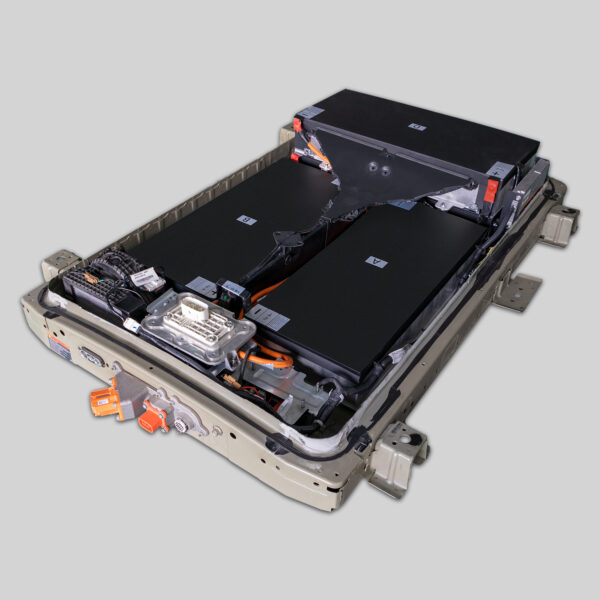
How Much Range After Nissan Leaf Battery Upgrade? New Batteries Explained
Is your Nissan Leaf losing its spark? As the battery ages, the driving range drops, and the dreaded “Turtle Mode” warning light can turn a fun drive into a stressful calculation. If you’re staring at a massive bill from the dealership for a factory replacement, you’re probably wondering: Is there a smarter way to get my range back?
The short answer is yes. Upgrading your Nissan Leaf battery with a high-quality aftermarket solution, like those offered by CNS Battery, can restore your vehicle to near-new performance at a fraction of the cost. But how much range can you realistically expect after an upgrade? Let’s break down the numbers, the technology, and why a new battery changes the game.
Why Your Old Battery Range Drops
Before we talk about the upgrade, it’s crucial to understand why your current battery is struggling. Lithium-ion batteries degrade over time. This isn’t just about age; it’s about chemical wear.
- Capacity Loss: The active materials inside the cells break down. A 10-year-old 24kWh Leaf might only hold 15kWh of usable energy.
- Increased Resistance: As the battery ages, it resists the flow of electricity. This means the car uses more power just to move, eating into your range.
- Thermal Management: Older packs often lose efficiency in extreme heat or cold, further reducing the miles you can drive.
An upgrade isn’t just a patch; it’s a complete chemical reset.
The CNS Battery Difference: New Cells, New Life
When you choose a CNS Battery upgrade, you aren’t getting refurbished or repurposed cells. You are getting a pack built from brand-new, premium-grade cells (often from top-tier manufacturers like CATL).
This is the critical factor that determines your post-upgrade range. Because these are brand-new cells, they haven’t suffered the chemical degradation of your old pack.
Here is what happens when you install a new CNS battery:
- Restored Voltage & Capacity: You get the full advertised kWh back.
- Lower Internal Resistance: The car runs cooler and more efficiently.
- Fresh BMS: A new Battery Management System ensures every cell is balanced perfectly from day one.
Real-World Range Expectations by Model
The exact mileage you’ll see depends on your specific Leaf model and the kWh rating of the battery you choose. CNS offers upgrades ranging from 40kWh to 68kWh, allowing you to not just restore, but potentially increase your range beyond the original factory specs.
1. The 40kWh Standard (ZE0 / AZE0 / ZE1)
This is the most common upgrade for older Leafs.
- Advertised Range: Approximately 240km (150 miles).
- Real-World Driving: Expect 180km – 200km (110 – 125 miles) in mixed city/highway driving.
- Best For: Daily commuting and city drivers. This upgrade effectively doubles the range of a severely degraded original 24kWh battery.
2. The 50kWh / 62kWh Upgrade (The “Sweet Spot”)
This is where the Leaf truly comes alive again.
- Advertised Range: Approximately 360km – 400km (225 – 250 miles).
- Real-World Driving: Most owners report 270km – 320km (170 – 200 miles).
- User Testimonial: David L. from London replaced his battery with a 62kWh CNS pack. He reported that the full charge range hit 440km, consistent with the specifications. He noted it felt like his car had been “revived.”
3. The 68kWh Monster (Long-Range Enthusiasts)
For those wanting maximum mileage.
- Real-World Driving: Expect 350km – 400km (220 – 250 miles) in optimal conditions.
- User Testimonial: Javier R. from Paris upgraded his 2014 Leaf to a 68kWh unit. Even in cold winter conditions, he maintains around 400km, proving the thermal stability of the new cells.
Pro Tip: If you plan on keeping your Leaf for the long haul, upgrading to a 62kWh pack is often considered the best value for money, offering modern EV range at a fraction of the price of a new car.
Beyond kWh: Factors That Affect Your Miles
While the battery capacity is the biggest factor, your actual range will fluctuate based on driving habits and environment.
| Factor | Impact on Range | CNS Battery Advantage |
|---|---|---|
| Temperature | Cold weather reduces chemical reaction speed. | CNS packs use advanced thermal management to minimize winter loss. |
| Driving Style | Aggressive acceleration drains power. | New cells handle high discharge rates better, maintaining efficiency. |
| Tire Pressure | Low pressure = higher rolling resistance. | A new battery gives you the “fresh start” motivation to maintain the whole car! |
| AC/Heating | Climate control is a major power draw. | Lisa K. from Germany noted that even with AC on the highway, her new battery showed “no significant power drain.” |
Why Choose an Upgrade Over a New Car?
Replacing your Nissan Leaf battery with a CNS solution is not just about fixing a problem; it’s a financial strategy.
- Cost Efficiency: A new CNS battery costs roughly 50% less than a factory replacement. As Mark T. from California calculated, he saved nearly $8,000 compared to the dealership quote.
- Plug-and-Play Simplicity: You don’t need to learn a new infotainment system or adjust to new driving dynamics. Your Leaf, with its familiar handling, just gets a massive power boost.
- Sustainability: By upgrading, you are extending the life of a vehicle that already exists, reducing the environmental impact of manufacturing a brand-new car.
Installation: Easier Than You Think
One of the biggest fears is the installation process. Can you do it yourself?
Absolutely. The process is designed to be straightforward:
- Disconnect Power: Safety first.
- Remove Old Brackets: Take out the old, degraded pack.
- Connect New Cables: The connectors are designed to match OEM standards.
- BMS Programming: This is the only “tech” step, but CNS provides remote video guidance to walk you through it.
Tom H. from Texas, who admitted he “used to struggle for ages just to change a car light bulb,” installed his 62kWh battery in about 2 hours using the video tutorial. He saved $800 on mechanic fees!
Frequently Asked Questions (FAQ)
Q1: Will a new battery fix the “Turtle Mode” warning?
A: Yes. The “Turtle Mode” is triggered by low voltage, usually caused by degraded cells that can’t hold a charge. A new CNS battery restores the full voltage and capacity, eliminating this warning light.
Q2: How long does the installation take?
A: For a professional technician, it typically takes 50 minutes to 1 hour. For a DIY user with basic tools (wrench, screwdriver), it usually takes about 2 hours. We provide step-by-step installation videos and even remote video guidance if you get stuck.
Q3: What warranty do I get with a CNS Battery upgrade?
A: We offer an industry-leading 2-year / 80,000 km warranty (whichever comes first). This covers defects in materials and workmanship, and we guarantee the battery maintains at least 70% capacity over that period. This is significantly longer than the warranty offered on most refurbished batteries.
Q4: Are these batteries compatible with all Nissan Leaf models?
A: CNS batteries are designed specifically for Nissan models, including the Leaf ZE0, AZE0, ZE1, and e-NV200. We ensure compatibility with OEM standards for voltage and connectors. To confirm your specific vehicle, you can provide your VIN for a free compatibility check.
Q5: Do I need special tools to install it?
A: No special high-voltage tools are required beyond standard mechanic wrenches and screwdrivers. The process is a mechanical removal and replacement. The only specialized step is programming the BMS, for which our customer service team provides remote assistance.
Ready to Restore Your Range?
Don’t let battery degradation force you into buying a new car. With a CNS Battery upgrade, you can breathe new life into your Nissan Leaf, restoring it to 90% of its original factory performance at half the price.
Whether you drive a ZE0, AZE0, or ZE1, we have the perfect kWh solution to get you back on the road with confidence.
Get Your Free Custom Quote Today and see how much range you can add to your Leaf.


