Here is the SEO-optimized article tailored for your requirements.
Is It Worth Easy Install Leaf LFP Battery for DIY Enthusiasts?
Is it worth it? For Nissan Leaf owners looking to extend their vehicle’s life without breaking the bank, the answer is a resounding yes.
As a battery expert, I often see Leaf owners stuck between two bad options: buying an expensive Original Equipment Manufacturer (OEM) battery or gambling on a used/refurbished pack. However, the rise of Lithium Iron Phosphate (LFP) technology has changed the game. These modern batteries offer a perfect blend of safety, longevity, and cost-effectiveness.
If you are a DIY enthusiast, installing an LFP battery is not just “worth it”—it is often designed to be plug-and-play. In this guide, we will break down why switching to an LFP pack is the smartest upgrade for your Leaf, and how you can save thousands by doing it yourself.
1. Why Switch to an LFP Battery?
Before we talk about installation, let’s talk about chemistry. Most original Nissan Leaf batteries use Lithium Manganese Oxide (LMO). While this was great technology in 2011, it has limitations compared to modern LFP.
LFP (Lithium Iron Phosphate) is the chemistry used by industry giants like Tesla for its standard range vehicles because it is virtually indestructible compared to older chemistries. Here is why it beats the old tech:
- Safety First: LFP batteries are thermally stable. They do not overheat easily and are much less prone to thermal runaway (catching fire) compared to older chemistries.
- Longevity: An LMO battery might last 5-7 years. An LFP battery is designed to last 10-15 years or more. We are talking about 3,000 to 5,000 charge cycles versus the 1,000 cycles of an old Leaf pack.
- Cost: Because LFP uses iron and phosphate (common materials) instead of rare cobalt, they are significantly cheaper to produce.
Expert Insight: At CNS Battery, we specialize in retrofitting classic EVs with modern LFP technology. We have seen firsthand how this upgrade revives vehicles that were previously considered “battery dead.”
2. The DIY Advantage: Saving Thousands
Let’s be honest: labor costs are the killer in auto repair. A professional mechanic might charge $800 to $1,500 just for the labor to drop a battery pack.
If you are comfortable with basic tools (wrenches, jack stands) and have a few hours to spare, doing it yourself means you only pay for the hardware.
The Math:
- OEM Replacement Cost: ~$16,000 (Yes, sixteen thousand dollars).
- DIY LFP Battery Cost: ~$7,000 – $8,000.
- Savings: Over $8,000 by simply skipping the markup and doing the swap yourself.
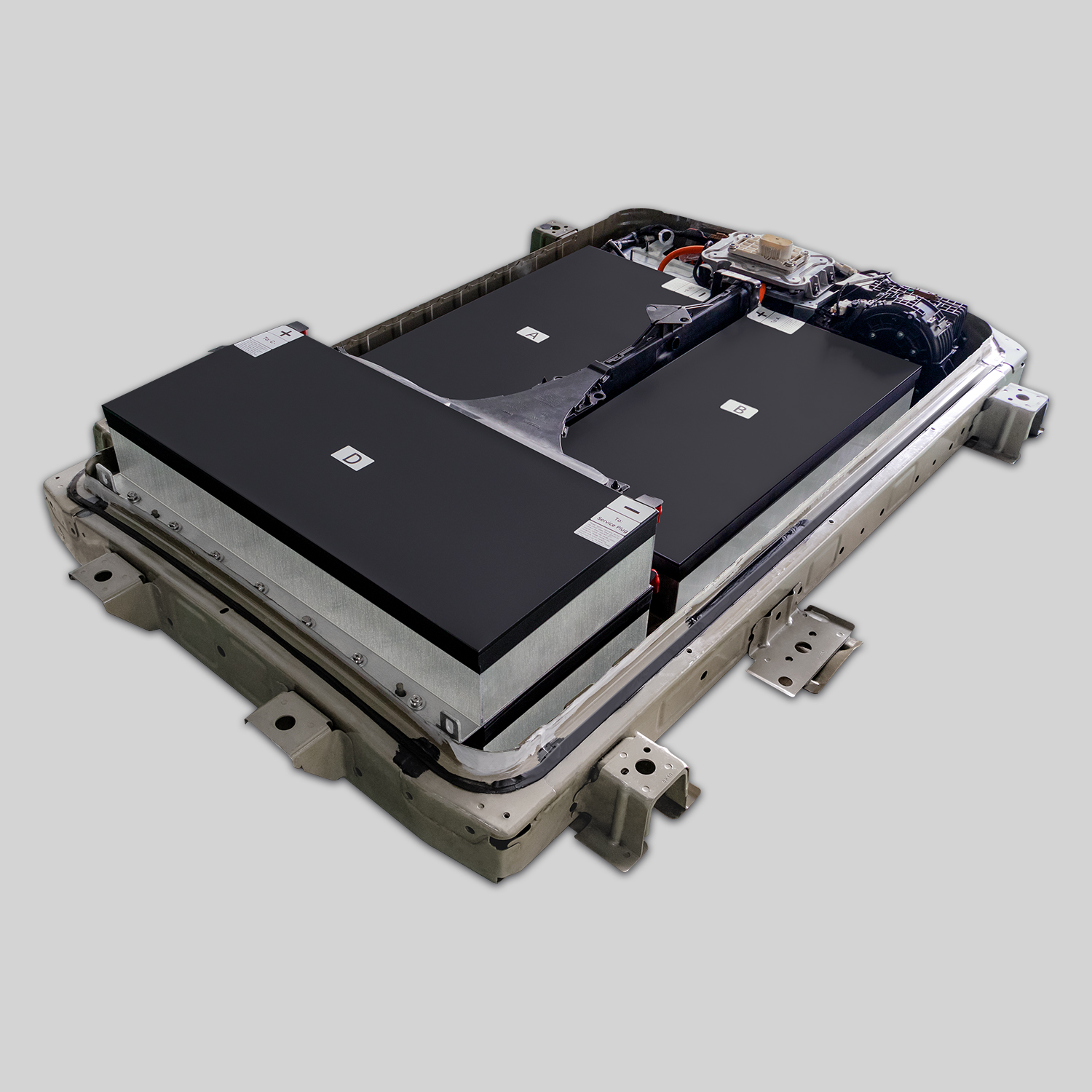
Is it difficult? For a Leaf, the battery is located under the cabin. It is a “drop and swap” procedure. If you can change your own oil or tires, you can handle this. Most modern LFP packs for the Leaf are designed with OEM compatibility in mind, meaning the connectors and mounting points match your original car.
3. Why Choose a Pre-Built LFP Kit Over “Rolling Your Own”?
You might be thinking, “I could buy cells on Alibaba and build my own pack.” Do not do this.
Assembling a 300V+ battery pack requires specialized equipment (spot welders, vacuum bagging machines) and deep technical knowledge. One wrong wire can fry your car’s BMS or even cause a fire.
Pre-built LFP kits (like those from CNS) are worth every penny for the DIYer because:
- Plug-and-Play: They come pre-wired. You do not need to solder or weld anything.
- Certified Safety: They use Brand New CATL Cells. CATL is the world’s second-largest battery manufacturer. Using their cells guarantees quality and safety that random eBay cells cannot match.
- Warranty: A DIY homebrew pack has no warranty. A professional kit comes with a 2-Year / 80,000km warranty. If something goes wrong, you are covered.
4. The Installation Process: Is It Truly “Easy”?
Based on feedback from our customers and technical data, here is what the DIY installation looks like:
- Lift the Car: You will need a lift or very sturdy jack stands. Safety is paramount.
- Disconnect Power: Always disconnect the 12V battery first.
- Drop the Pack: Remove the underbody shield and unbolt the battery. This is the heaviest part (approx. 300kg / 660lbs), so having a friend help or using a transmission jack is highly recommended.
- Swap & Connect: Lift the new LFP pack in, bolt it down, and reconnect the high-voltage connectors. Most modern kits are designed to communicate seamlessly with the Leaf’s dashboard.
- Software/Programming: This is the only tricky part. Some packs may require a simple BMS reset or programming. (Pro Tip: Our customer service offers free remote video guidance for this step).
Time Estimate: 2-3 hours for a novice with help.
5. Real-World Results: What to Expect
When you install a new 62kWh LFP pack on an older Leaf (ZE0/AZE0), you are not just replacing the battery; you are upgrading it.
- Range Boost: Expect to regain 90-100% of the original range. We are talking about 260+ miles (420km) on a full charge, which is significantly better than the degraded 80-100 miles you were probably getting.
- Performance: Acceleration feels snappier because the new cells can deliver power more efficiently than the old, degraded ones.
- No More “Winter Range Anxiety”: LFP batteries handle cold weather slightly better than old LMO packs, and they do not degrade when kept at 100% charge (unlike your old Leaf battery, which you had to keep at 80% to preserve life).
6. Making the Right Choice: Partner with Experts
While the “DIY” part saves you money on labor, you still need a reliable supplier. You cannot risk your safety (or your car) with cheap, uncertified batteries.
CNS Battery is the industry leader in Nissan and BMW EV battery solutions. We have over a decade of technological accumulation and use only the highest quality Brand New CATL Cells.
Our kits are designed specifically for the Nissan Leaf (ZE0, AZE0, ZE1) and e-NV200. We offer a 24-month / 80,000km warranty, which is unbeatable in the aftermarket industry. Unlike refurbished batteries that might fail in 6 months, our LFP packs are built to last.
Ready to revive your Leaf?
Don’t let an old battery kill your car. Get a free quote today and start your journey toward a reliable, long-range EV.
Get Your Free Custom Quote Now
Frequently Asked Questions (FAQ)
Q1: Can I really install this myself, or do I need to be a mechanic?
You do not need to be a certified mechanic, but you need basic mechanical skills. The physical installation (unbolting the old pack and bolting in the new one) is straightforward. However, you must be extremely careful with high-voltage safety. If you are uncomfortable with the BMS programming step, we offer remote video support to guide you.
Q2: Will an LFP battery work with my Leaf’s heating system?
Yes. Modern LFP packs are designed with OEM compatibility in mind. They integrate seamlessly with the Nissan Leaf’s existing Battery Management System (BMS) and thermal management systems. The battery will communicate with your dashboard just like the original factory unit.
Q3: What is the lifespan of an LFP battery compared to my old Leaf battery?
Your original Leaf battery likely had a cycle life of around 1,000 cycles before degrading significantly. An LFP battery has a cycle life of 3,000 to 5,000 cycles. This means your new LFP battery could last you 10-15 years, depending on usage.
Q4: Why should I trust CNS Battery over other brands?
CNS Battery specializes exclusively in Nissan and BMW EV batteries. We use Brand New CATL Cells, which are the gold standard in the industry. Many competitors use recycled or lower-grade cells. Furthermore, our 2-Year / 80,000km warranty provides peace of mind that cheap alternatives cannot match.