How to Source Affordable Nissan EV Battery Packs for Repair Shops
As a repair shop owner or fleet manager, you understand that the electric vehicle (EV) market is shifting from a novelty to a necessity. Among these, the Nissan Leaf and Nissan e-NV200 remain the most common EVs walking through your garage doors. However, the most significant bottleneck for servicing these vehicles is often the Nissan EV battery replacement. The Original Equipment Manufacturer (OEM) prices are often exorbitant, locking customers out of repairs and forcing them into expensive new car purchases.
This is a missed opportunity for your shop. By sourcing affordable Nissan EV battery packs, you can offer a competitive, high-margin service that saves your customers thousands while revitalizing their vehicles. But where do you find a supplier that balances cost, quality, and reliability?
Based on our decade of experience in the EV powertrain industry, here is a comprehensive guide on how to get the right battery solution for your repair shop.
Why Repair Shops Need a New Battery Sourcing Strategy
The economics of EV repair are changing. When a Nissan Leaf owner comes in with a degraded battery, their first instinct is often to call the dealership. However, the typical OEM replacement cost can exceed $16,000 USD. Faced with this sticker shock, many customers abandon the repair entirely.
As a professional in the automotive industry, you know the value of a used Leaf with a dead battery is often less than $2,000. By offering a replacement solution that costs roughly the same as the scrap value of the car, you unlock a massive value proposition.
The Core Dilemma: You need a battery that is:
- Significantly cheaper than OEM (to attract budget-conscious customers).
- Compatible and reliable (to avoid warranty claims and reputation damage).
- Backed by technical support (because programming and installation can be complex).
Sourcing from generic marketplaces or using recycled “jellyroll” cells often leads to premature swelling, failure, and angry customers returning to your shop. This is where partnering with a specialized Original Equipment Manufacturer (OEM) compatible supplier becomes critical.
1. Prioritize “New Cell” Technology Over Recycled Packs
The first step in finding an affordable solution is understanding the technology. Not all batteries are created equal, and the cheapest option upfront often becomes the most expensive in the long run.
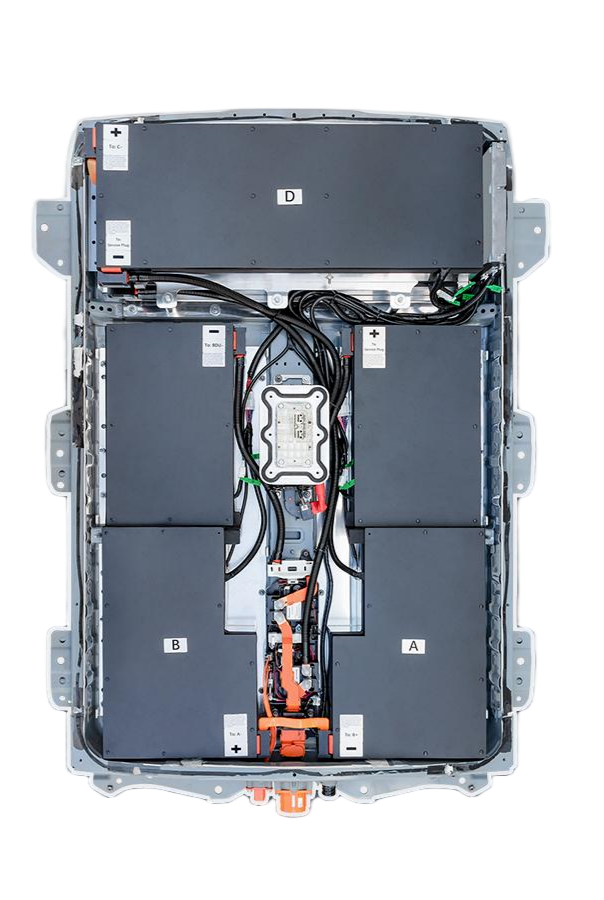
When evaluating suppliers, insist on Brand New CATL (Contemporary Amperex Technology Co. Limited) Battery Cells. CATL is the world’s largest lithium-ion battery manufacturer, and their cells represent the gold standard for safety and longevity.
- The Problem with Recycled/Refurbished: Many cheap alternatives on the market use cells salvaged from other dead batteries. These cells are already aged, have inconsistent chemistry, and are prone to swelling or sudden death.
- The Advantage of New: A pack built with new, grade-A cells from a reputable factory like CATL will offer a lifespan far exceeding that of refurbished batteries. It ensures stable discharge, better thermal management, and crucially, it matches the performance of the original factory parts.
By choosing a supplier that utilizes new cells, you eliminate the “zero failure rate” risk and can confidently offer your customers a product that actually solves their problem.
2. Leverage OEM-Compatible Design for Plug-and-Play Installation
Time is money in a repair shop. If a battery installation requires cutting wires, custom fabrication, or complex modifications, your labor costs skyrocket, negating the savings of a cheaper battery.
Look for suppliers that explicitly design for OEM compatibility. This means:
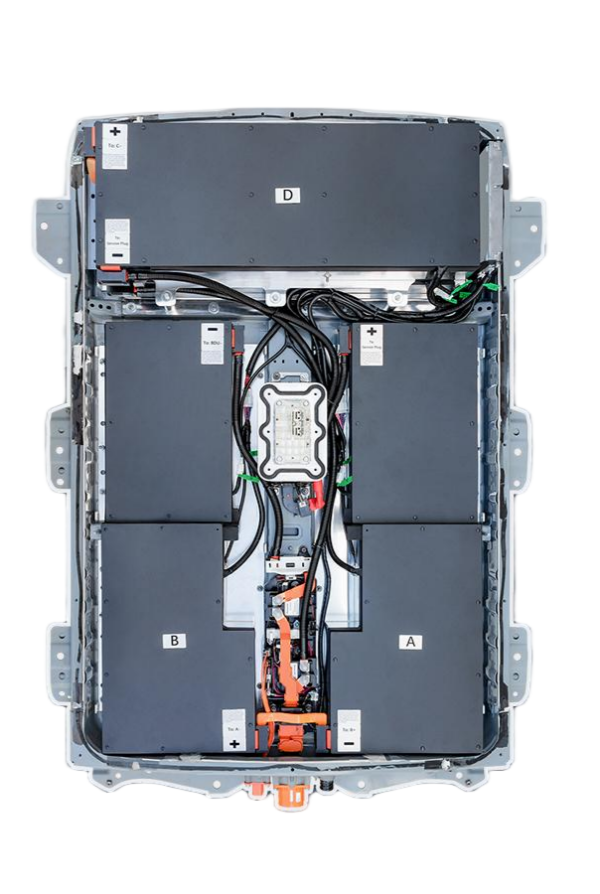
- Exact Fit: The battery pack dimensions, mounting points, and connector locations must match the Nissan specifications (for ZE0, AZE0, ZE1, or e-NV200 models) perfectly.
- Plug-and-Play: The wiring harness should be a direct match. There should be no need for splicing or rewiring.
- BMS Compatibility: The Battery Management System (BMS) must communicate seamlessly with the Nissan Vehicle Control Module (VCM).
When you source a battery that is engineered to OEM standards, your technicians can perform the swap as a straightforward mechanical replacement, similar to changing an engine oil filter. This reduces installation time to approximately 1-2 hours, allowing you to turn jobs around quickly and maintain high customer satisfaction.
3. Demand a Comprehensive Warranty to Protect Your Business
One of the biggest fears when moving away from the dealership is the lack of a safety net. If the battery fails, your shop is on the hook. Therefore, the warranty terms are arguably more important than the purchase price.
A reliable supplier should offer a warranty that exceeds industry standards to give you peace of mind. For example, a robust warranty policy might look like this:
| Warranty Feature | Standard Industry Offer | Premium Supplier Offer (e.g., CNS BATTERY) |
|---|---|---|
| Duration | 1 Year / 20,000 km | 2 Years / 80,000 km |
| Coverage | Often limited or pro-rated | Full coverage for defects & workmanship |
| Degradation | Rarely specified | Guaranteed to maintain >70% capacity |
| Support | Email only, slow response | 24-hour technical support & video guidance |
By partnering with a supplier that offers a 24-month/80,000km warranty, you transfer the risk away from your business. If a customer has an issue, your supplier’s technical team handles the troubleshooting, not your mechanics.
4. Utilize Pre-Sales Compatibility Checks to Avoid Errors
Nissan Leafs have evolved over the years (ZE0, AZE0, ZE1), and the battery specifications vary. Ordering the wrong pack is a costly mistake.
Before you purchase, use the supplier’s VIN Compatibility Assessment tool. This is a critical step for repair shops managing multiple vehicle intakes.
- How it works: Submit the Vehicle Identification Number (VIN) of the customer’s car.
- The benefit: The supplier confirms in writing whether the 40kWh, 62kWh, or specific module configuration is a perfect match.
- The outcome: You eliminate the risk of ordering the wrong part, which saves on return shipping costs and prevents angry customers waiting for a replacement.
5. Access Technical Support and Installation Resources
Even with a plug-and-play design, EV battery replacement is high-voltage work. Your technicians need confidence, and your customers need reassurance.
Choose a supplier that acts as a true partner by offering:
- Step-by-Step Video Tutorials: High-definition guides showing the disconnection, removal, and reconnection process specific to Nissan models.
- Remote Video Guidance: The ability to schedule a video call (Zoom, WhatsApp) with an engineer during the installation if a technician gets stuck.
- Marketing Support: Provide your customers with brochures or links explaining the cost savings and technical superiority of the replacement, helping you close the sale faster.
6. Calculate the Real Value: Cost vs. Total Solution
While the headline price is important, calculate the “Total Cost of Ownership” for your customer.
A premium aftermarket battery should cost approximately 50% less than the OEM replacement. However, the value lies in the combination of the low price plus the long warranty.
For example:
- OEM Price: $16,000 (1-year warranty)
- Aftermarket Price: $8,000 (2-year warranty with new CATL cells)
By offering the aftermarket solution, you save the customer $8,000, which is often more than the value of their entire car. This turns a “junk” vehicle into a reliable daily driver, creating immense customer loyalty to your shop.
Final Steps to Source Your Battery
Sourcing an affordable Nissan EV battery pack for your repair shop doesn’t mean sacrificing quality. By following the steps above—prioritizing new CATL cells, demanding OEM fitment, and securing a strong warranty—you position your business as the hero for Nissan owners facing astronomical repair bills.
To get started, you need a personalized quote based on your specific vehicle model (Leaf ZE0, ZE1, or e-NV200) and desired capacity (40kWh, 62kWh, etc.).
Get Your Free Custom Quote Now
Don’t gamble on generic suppliers. Partner with a manufacturer that has a decade of technological accumulation and a commitment to zero-failure reliability. Get your free quote today and offer your customers the best value in the EV repair market.
Frequently Asked Questions (FAQ)
Q1: How long does the installation take for a Nissan Leaf battery replacement?
A: For a professional technician, installing a compatible Nissan Leaf battery typically takes 1-2 hours. The process is designed to be safe and straightforward, similar to a standard mechanical replacement. We also provide detailed step-by-step installation videos and remote video guidance to ensure your team completes the job efficiently.
Q2: Are these batteries compatible with all Nissan Leaf models (ZE0, ZE1, AZE0)?
A: Yes, our batteries are designed specifically for Nissan models, ensuring broad compatibility. We support popular models including the Nissan Leaf ZE0, AZE0, ZE1, and Nissan e-NV200. To ensure a perfect match, we offer a free VIN Compatibility Assessment before you purchase.
Q3: What is the warranty coverage for these battery packs?
A: We offer an industry-leading warranty to protect your investment. All our automotive batteries come with a minimum 2-year or 80,000 km warranty (whichever comes first). This covers defects in materials and workmanship, and we guarantee the battery maintains at least 70% capacity over the warranty period.
Q4: What type of cells are used in these battery packs?
A: We utilize Brand New CATL Battery Cells. CATL is the world’s largest lithium-ion battery manufacturer. Using new, grade-A cells ensures superior durability, safety, and energy efficiency compared to recycled or refurbished alternatives, which often use degraded cells prone to swelling.
Q5: How do I get a quote for my specific repair needs?
A: Getting a quote is simple. You can contact our technical experts directly through our website. We will ask for your vehicle model and specifications to provide a personalized recommendation and pricing.