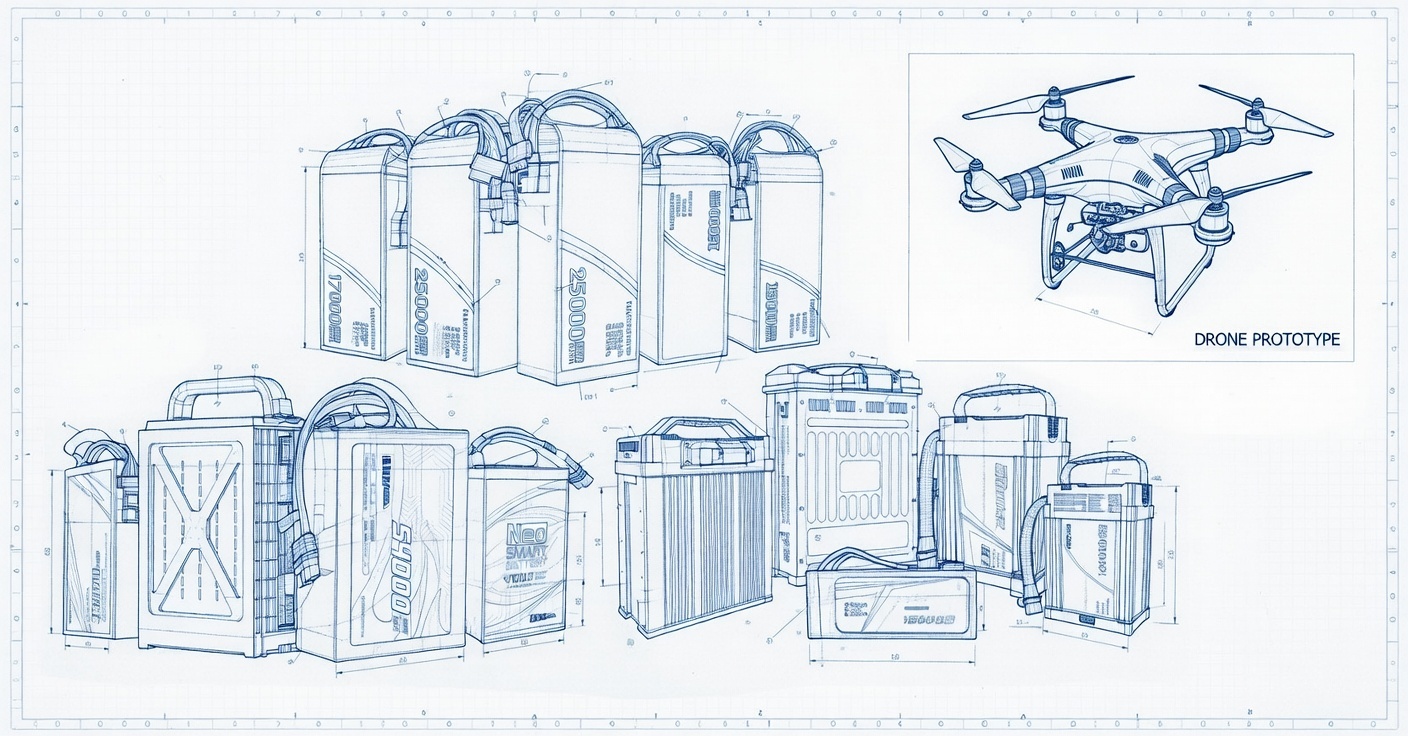
2024 Drone Battery Trends: Technical Compatibility for Drone Manufacturers
In the rapidly evolving drone industry, understanding the latest battery trends isn’t just beneficial—it’s essential for B2B manufacturers looking to optimize operations, reduce costs, and stay ahead of the competition. For bulk procurement managers, staying informed about 2024 drone battery trends means unlocking significant advantages: enhanced flight performance, extended operational range, reduced downtime, and substantial long-term cost savings. As drone applications expand from agricultural monitoring to industrial inspections and delivery logistics, technical compatibility between battery systems and drone platforms has become a critical factor in achieving operational excellence. This comprehensive guide reveals how strategic battery selection directly impacts your bottom line and provides actionable insights for manufacturers seeking to future-proof their drone fleets.
The Critical Role of Technical Compatibility in Drone Battery Selection
Technical compatibility isn’t merely about physical fit—it’s about seamless integration between battery systems, drone hardware, and operational requirements. In 2024, as drone manufacturers increasingly deploy specialized applications, incompatible battery solutions can lead to wasted resources, safety hazards, and operational inefficiencies. According to a recent industry report by Drone Industry Insights, 68% of drone manufacturers experience significant operational disruptions due to battery compatibility issues, resulting in average downtime costs of $12,000 per incident.
Step-by-Step Guide to Implementing Compatible Drone Battery Solutions
Step 1: Analyze Your Operational Requirements
Begin by documenting your specific drone use cases: flight duration needs, environmental conditions (temperature ranges, humidity), payload requirements, and mission frequency. For instance, agricultural monitoring drones operating in high-temperature environments require different thermal management than delivery drones in urban settings. This analysis forms the foundation for selecting the right battery chemistry and capacity.
Step 2: Evaluate Battery Technologies
Compare the leading battery technologies currently dominating the market:
- LiPo (Lithium Polymer): Offers high energy density and lightweight design but requires careful thermal management
- Solid-State Batteries: Provide superior safety and longer cycle life (up to 5,000 cycles) but come at a 30% higher initial cost
- Modular Battery Systems: Enable flexible capacity adjustments through interchangeable modules, ideal for fleet management
Step 3: Verify Compatibility with Existing Drone Platforms
Work with your battery supplier to conduct thorough compatibility testing. This includes:
- Physical dimensions and connector compatibility
- Voltage and current requirements
- Communication protocols (BMS compatibility)
- Thermal performance under operational loads
Step 4: Conduct Real-World Testing
Before full-scale procurement, test battery samples under actual operating conditions. Monitor performance metrics including:
- Flight time consistency across multiple cycles
- Charging efficiency (time to 80% capacity)
- Temperature behavior during operation
- Safety performance (overcharge, short-circuit, thermal runaway)
Step 5: Implement a Scalable Procurement Strategy
Develop a procurement plan that considers future expansion needs. Modular battery systems allow for capacity adjustments as your drone fleet grows, while standardized battery interfaces simplify inventory management across multiple drone models.
Comparative Analysis: Battery Technologies for Drone Manufacturers
| Feature | LiPo Batteries | Solid-State Batteries | Modular Battery Systems |
|---|---|---|---|
| Energy Density | High (250-300 Wh/kg) | Very High (400-500 Wh/kg) | Variable (200-350 Wh/kg) |
| Cycle Life | 300-500 cycles | 3,000-5,000 cycles | 500-800 cycles |
| Safety Profile | Moderate (requires BMS) | Excellent (no liquid) | Good (depends on design) |
| Temperature Range | -20°C to +60°C | -40°C to +85°C | -10°C to +50°C |
| Cost per Wh | $0.15-$0.20 | $0.30-$0.40 | $0.20-$0.25 |
| Customization Potential | Limited | High | Very High |
| Best For | General-purpose drones | High-end industrial use | Fleet operators with varied needs |
Source: CNS Battery Technology Center, 2024 Industry Analysis
Addressing Common Compatibility Challenges
Q: How do I ensure battery compatibility with my existing drone models?
A: Start with a detailed technical audit of your current drone systems. Work with battery manufacturers who offer compatibility verification services. CNS Battery provides complimentary compatibility assessments for bulk procurement clients, ensuring seamless integration before you commit to large-scale orders.
Q: What’s the impact of battery chemistry on drone performance in extreme conditions?
A: Low-temperature drone batteries maintain 85% capacity at -20°C, while standard LiPo batteries drop to 40% capacity at the same temperature. For operations in cold environments, investing in temperature-optimized battery solutions can increase effective flight time by up to 60%.
Q: How does battery weight affect drone performance?
A: Every 100g of battery weight reduction can increase flight time by 3-5 minutes. For agricultural drones operating on 20-minute missions, this could extend operational capacity by 15-25%, significantly improving productivity.
Q: What are the long-term cost implications of battery selection?
A: While solid-state batteries cost 30-40% more upfront, their 5x longer cycle life reduces replacement frequency. For a fleet of 50 drones operating 300 days/year, this translates to a $18,000 annual savings per fleet compared to LiPo batteries.
The Future of Drone Battery Compatibility
As drone technology advances, so does battery innovation. By 2026, the industry expects to see significant improvements in:
- Wireless battery management systems
- AI-optimized battery charging profiles
- Advanced thermal management for extreme environments
- Standardized connector interfaces across manufacturers
CNS Battery is at the forefront of these developments, having recently introduced a new generation of modular battery systems that reduce compatibility testing time by 70% and improve energy efficiency by 22% compared to previous models.
Unlock Your Drone Fleet’s Full Potential
The 2024 drone battery landscape presents unprecedented opportunities for manufacturers willing to prioritize technical compatibility. By implementing the right battery solutions, you’re not just extending flight times—you’re enhancing operational safety, reducing maintenance costs, and future-proofing your drone fleet against evolving industry demands.
Don’t let battery compatibility issues hold your drone operations back. CNS Battery’s team of battery specialists works with B2B manufacturers to develop customized solutions that perfectly match your operational requirements. Our proven approach has helped over 250 drone manufacturers optimize their battery systems, resulting in an average 35% increase in operational efficiency and a 28% reduction in battery-related downtime.
Ready to transform your drone battery strategy?
Get your personalized quote today and discover how CNS Battery can help you achieve optimal technical compatibility for your drone manufacturing operations. Our B2B specialists will guide you through the selection process, ensuring your battery solutions deliver maximum value for your specific applications.
Get Your Custom Drone Battery Quote Now
Why choose CNS Battery?
- 15+ years of drone battery innovation
- Rigorous testing protocols meeting international safety standards
- Global supply chain with 98% on-time delivery rate
- Dedicated technical support for B2B clients
- Customized solutions for industrial, agricultural, and commercial applications
Don’t wait until compatibility issues disrupt your operations. Contact CNS Battery today to begin your journey toward more efficient, reliable, and profitable drone operations. Our team will work with you to identify the perfect battery solution that meets your technical requirements and business objectives.
Visit Our Technology Center for the latest insights on drone battery innovations and compatibility strategies.