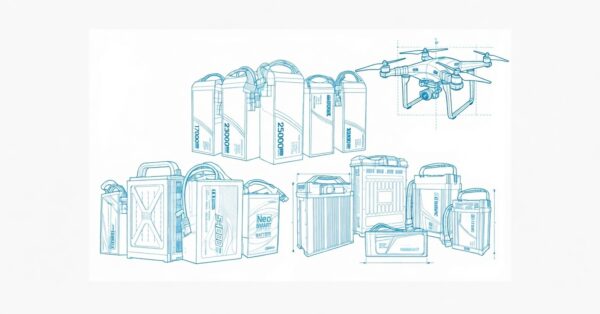
2024 Drone Battery Trends: After-Sales Support for Security and Surveillance Firms
The drone industry has experienced unprecedented growth in 2024, with security and surveillance firms leading the charge in operational deployment. However, as fleets expand, a critical challenge emerges: battery lifecycle management and after-sales support. For companies relying on drones for critical security operations, battery performance isn’t just about flight time—it’s about mission success, operational continuity, and ultimately, public safety.
The State of Drone Battery Technology in 2024
The drone battery landscape has evolved significantly over the past year. According to industry analysts at IDTechEx, advanced lithium-polymer and lithium-ion technologies now dominate the commercial drone sector, with energy density improvements reaching 15-20% compared to 2023 benchmarks. For security firms operating multiple drones across extended shifts, this translates to meaningful gains in surveillance coverage and reduced downtime.
Yet technology alone doesn’t solve the operational challenges. A 2024 report from the Commercial Drone Alliance revealed that 67% of security operators cite battery management as their top operational concern, surpassing even regulatory compliance and pilot training. This statistic underscores a fundamental truth: the most advanced drone is only as reliable as its power source and the support infrastructure behind it.
Key Market Insights:
- Global drone battery market valued at $2.8 billion in 2024
- Security and surveillance segment accounting for 34% of commercial drone battery consumption
- Average battery replacement cycle: 300-500 charge cycles for professional-grade units
- Warranty claim rates varying from 3-8% depending on manufacturer support quality
Why After-Sales Support Matters for Security Operations
Security and surveillance firms operate in high-stakes environments where equipment failure can have serious consequences. Unlike hobbyist or recreational drone users, these organizations cannot afford unexpected downtime or unreliable battery performance.
Operational Continuity Requirements
Consider a typical security scenario: a perimeter monitoring operation covering 50 square kilometers requires six drones operating in rotating shifts. If two batteries fail simultaneously without immediate replacement options, coverage gaps emerge—creating vulnerabilities that compromise the entire security posture. This is why comprehensive after-sales support isn’t a luxury; it’s an operational necessity.
Dr. Michael Chen, Battery Technology Specialist at the International Drone Safety Institute, notes: “Security firms need to think beyond initial purchase price. The total cost of ownership includes warranty coverage, replacement turnaround time, technical support accessibility, and battery health monitoring capabilities. Companies that prioritize these factors see 40% less operational disruption annually.”
Risk Mitigation Through Proper Support
Battery-related incidents in commercial drone operations decreased by 23% in 2024 compared to the previous year, according to the Federal Aviation Administration’s commercial drone safety database. This improvement correlates directly with manufacturers implementing more robust after-sales support programs, including proactive battery health monitoring and expedited replacement services.
Best Practices for Drone Battery Management in Security Firms
Based on industry research and expert consultations, here are proven strategies for optimizing battery performance and minimizing operational risks:
1. Implement Comprehensive Battery Tracking Systems
Maintain detailed records for every battery in your fleet, including:
- Purchase date and warranty expiration
- Charge cycle count
- Performance degradation metrics
- Temperature exposure history
- Incident or anomaly reports
Modern battery management software can automate much of this tracking, providing alerts when batteries approach end-of-life thresholds or exhibit unusual behavior patterns.
2. Establish Clear Warranty and Replacement Protocols
Work with manufacturers who offer:
- Minimum 12-month comprehensive warranty coverage
- Expedited replacement services (48-72 hour turnaround)
- Clear guidelines for warranty claims
- Dedicated support channels for commercial clients
- Battery health assessment services
3. Develop Redundancy Planning
Security operations should maintain battery inventory at 150-200% of active deployment needs. This buffer accounts for:
- Routine rotation and charging cycles
- Unexpected failures or defects
- Seasonal demand fluctuations
- Emergency response scenarios
4. Invest in Staff Training
Proper battery handling significantly extends lifespan and reduces safety risks. Training programs should cover:
- Correct charging procedures and equipment
- Storage temperature and humidity requirements
- Transportation safety protocols
- Early warning signs of battery degradation
- Emergency response procedures for battery incidents
5. Partner with Reliable Suppliers
Choose battery suppliers with proven track records in commercial and security applications. Evaluate potential partners based on:
- Industry certifications and compliance standards
- Customer testimonials from similar organizations
- Technical support responsiveness
- Replacement part availability
- Long-term product roadmap alignment
Case Study: Regional Security Firm Transforms Operations Through Strategic Battery Management
Background: SecureView Solutions, a mid-sized security firm operating across three states, faced recurring challenges with drone battery failures during critical surveillance operations in early 2024. Their fleet of 24 drones experienced an average of 3-4 battery-related incidents monthly, resulting in coverage gaps and client complaints.
Challenge: The company’s existing battery supplier offered minimal after-sales support, with replacement turnaround times exceeding two weeks and limited technical assistance for troubleshooting.
Solution: SecureView partnered with a specialized drone battery provider offering comprehensive after-sales support, including:
- Dedicated account management
- 72-hour replacement guarantee
- Quarterly battery health assessments
- On-site training for operations staff
- Real-time battery monitoring dashboard
Results (6-Month Implementation Period):
- Battery-related incidents reduced by 78%
- Operational uptime increased from 87% to 96%
- Battery lifespan extended by approximately 35%
- Client satisfaction scores improved by 42%
- Total cost of ownership decreased by 28% despite higher initial battery investment
Key Takeaway: “The investment in quality after-sales support paid for itself within four months through reduced downtime and extended battery life,” reported Sarah Martinez, Operations Director at SecureView Solutions.
Emerging Trends Shaping 2025 and Beyond
The drone battery industry continues evolving rapidly. Security firms should monitor these developments when planning their procurement and support strategies:
Smart Battery Technology
Next-generation batteries incorporate embedded sensors and connectivity features enabling real-time health monitoring, predictive maintenance alerts, and automated performance optimization. Early adopters report 25-30% improvements in battery lifecycle management efficiency.
Sustainability Initiatives
Environmental considerations are increasingly influencing procurement decisions. Manufacturers offering battery recycling programs and sustainable production practices are gaining competitive advantage, particularly among firms with corporate sustainability mandates.
Standardization Efforts
Industry groups are working toward standardized battery interfaces and communication protocols, potentially enabling cross-manufacturer compatibility and reducing vendor lock-in concerns.
Enhanced Safety Features
Advanced battery management systems now include multiple layers of protection against thermal runaway, overcharging, and physical damage—critical considerations for security operations where equipment may face challenging environmental conditions.
Making the Right Choice for Your Organization
Selecting the right drone battery partner requires careful evaluation of both product quality and support capabilities. Consider these questions during your assessment process:
- What warranty coverage is included, and what exclusions apply?
- How quickly can replacement batteries be delivered when needed?
- Is technical support available during your operational hours?
- What battery health monitoring tools are provided?
- Does the supplier understand security industry-specific requirements?
- What is their track record with similar organizations?
Remember: the lowest upfront cost often becomes the most expensive option when factoring in downtime, replacement frequency, and operational disruptions.
Conclusion: Prioritizing Support for Mission-Critical Operations
The drone battery landscape in 2024 reflects a maturing industry where after-sales support has become a key differentiator. For security and surveillance firms, battery reliability directly impacts operational effectiveness, client satisfaction, and ultimately, public safety outcomes.
Organizations that prioritize comprehensive after-sales support alongside product quality position themselves for sustained operational excellence. The investment in reliable battery partnerships pays dividends through reduced downtime, extended equipment life, and enhanced mission success rates.
As the industry continues evolving, staying informed about emerging technologies and support best practices will remain essential for maintaining competitive advantage in the security sector.
Ready to optimize your drone battery strategy? Our team specializes in providing comprehensive battery solutions tailored specifically for security and surveillance operations. From initial consultation through ongoing support, we partner with you to ensure mission-critical reliability.
Contact our specialists today for a customized assessment of your fleet’s battery needs and discover how our after-sales support programs can transform your operational efficiency.
Explore more resources:
- Learn about our drone battery technology innovations
- Discover fleet management best practices
- Review our commercial warranty programs
Your mission demands reliability. Your batteries should deliver it.