Your Guide to BMW i3 Battery Compatibility
If you drive a BMW i3, you know the feeling: the “Range Anxiety” starts to creep in as your battery capacity degrades. The original battery, while revolutionary for its time, has a finite lifespan. When the dreaded “Battery Needs Service” warning pops up, or the range drops below 100 miles, the official dealer quote can be shocking—often exceeding $12,000 to $16,000.
This is where the aftermarket comes in. However, replacing a high-voltage EV battery isn’t like changing a phone screen. The most critical factor for a successful, safe, and long-lasting repair is Battery Compatibility.
At CNS BATTERY, we specialize in OEM-compatible solutions for BMW and Nissan. We don’t just sell batteries; we provide engineering solutions. This guide is designed to help you navigate the complex world of BMW i3 battery compatibility, ensuring you make an informed decision that saves you thousands without compromising on safety.
Understanding the BMW i3 Battery Landscape
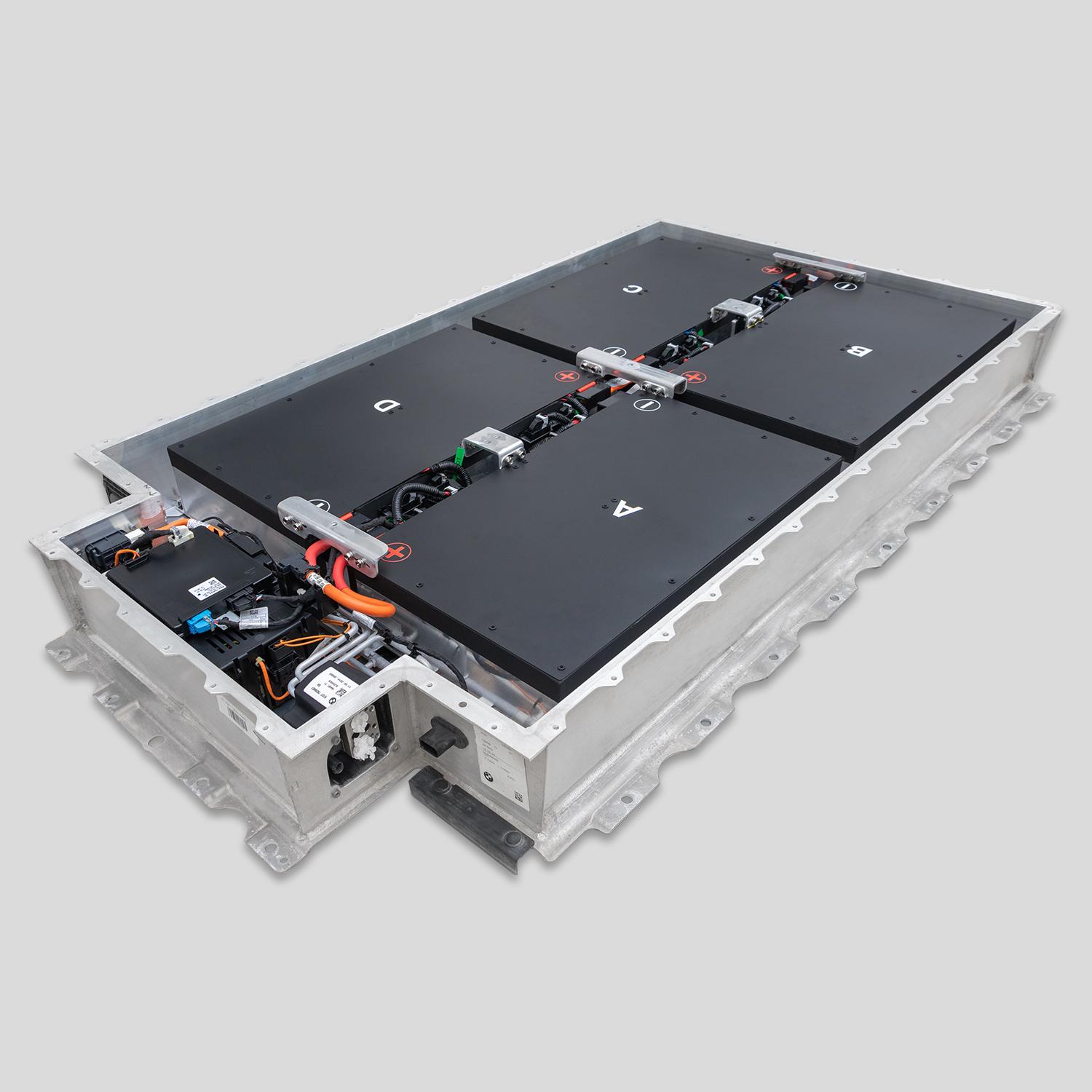
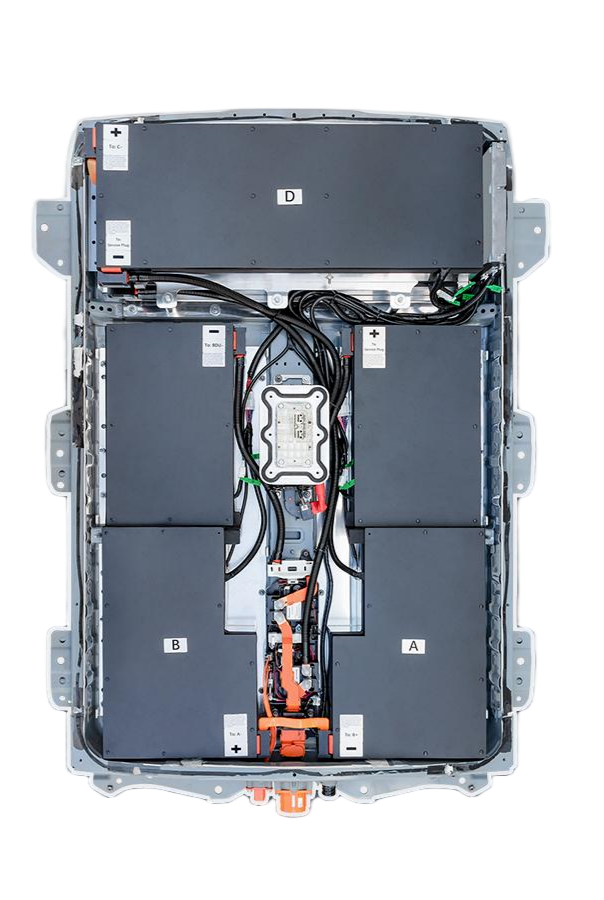
The BMW i3 was produced in several distinct battery variants. Before purchasing a replacement, you must identify your specific model year and battery chemistry. Mixing up these specifications can lead to communication errors with the Vehicle Control Unit (VCU), rendering the car inoperable.
1. The Model Year Dilemma
BMW i3 production ran from 2013 to 2024, with significant battery changes:
- Pre-2016 (60 Ah / 18.8 kWh / 22 kWh): These early models used smaller capacity cells. Replacement options are limited, and compatibility often requires specific Battery Management System (BMS) matching.
- 2016-2018 (94 Ah / 27.2 kWh / 33 kWh): This was the “Life” model upgrade. The battery pack size increased significantly.
- 2019-2024 (120 Ah / 37.9 kWh / 42.2 kWh): The final iteration, often referred to as the “Fast Charging” version, features a higher energy density and a different thermal management interface.
2. The Chemistry Gap: Lithium-Ion vs. Lithium Iron Phosphate (LFP)
This is the most common pitfall.
- Original BMW i3: Uses NCM (Nickel Cobalt Manganese) chemistry. This chemistry has a specific voltage curve (typically peaking around 408V+).
- Generic “Drop-in” Batteries: Many cheap replacements use LFP (Lithium Iron Phosphate). While LFP is safe, its voltage curve peaks much lower (around 360V).
- The Compatibility Issue: If you install an LFP battery in an NCM-designed car, the car’s software will detect a “low voltage” fault and refuse to drive. Even if it bypasses this, the State of Charge (SOC) calculation will be completely wrong, leading to sudden shutdowns.
Our Solution: CNS BATTERY provides NCM chemistry packs specifically engineered to mimic the OEM voltage curve and communication protocols. We do not use incompatible LFP chemistry for BMW i3 applications.
The 3 Pillars of True Compatibility
Simply fitting the battery into the chassis is not enough. True compatibility requires a perfect match in three areas:
1. Physical Interface (The “Plug-and-Play” Test)
The battery must fit the chassis rails perfectly, and the high-voltage connectors must align.
- The Problem: Many aftermarket packs have the connectors on the wrong side or use different gauge cables.
- CNS Standard: We utilize OEM-grade connectors (such as the specific TE Connectivity or Yazaki types used by BMW). Our packs are designed to bolt in using the original chassis brackets without modification.
2. Communication Protocol (The “Talking” Test)
The battery isn’t just a power source; it’s a computer. The Battery Management System (BMS) must “speak” BMW’s proprietary language (K-CAN or PT-CAN bus).
- The Problem: If the BMS cannot handshake with the car’s Instrument Cluster and DME (Engine Control Unit), you will get error codes like “123456” or “Check Control Message: High Voltage System.”
- CNS Standard: Our BMS is pre-programmed to emulate the OEM BMW signal. We handle the complex programming so that you don’t have to splice wires or use unreliable “adapters” that can cause short circuits.
3. Thermal Management (The “Cooling” Test)
The BMW i3 battery requires active cooling/heating via a glycol loop.
- The Problem: A misaligned coolant port means the battery overheats in summer or freezes in winter, triggering limp mode.
- CNS Standard: Our packs feature OEM-matched coolant port positions and flow rates, ensuring the thermal management system works exactly as the factory intended.
Why Compatibility = Longevity
Choosing a compatible battery isn’t just about installation; it’s about lifespan. An incompatible BMS will not manage the cells correctly, leading to:
- Cell Imbalance: One cell dying while others are full, causing a “domino effect” of failure.
- Over-discharge: The car trying to draw power even when the battery is empty, permanently damaging the cells.
CNS BATTERY uses brand-new CATL cells. CATL is a Tier-1 supplier to BMW, meaning the cell chemistry and quality are identical to what you would find in a brand-new factory pack, but at a fraction of the cost.
Real-World Compatibility Scenarios
To help you visualize, here is how compatibility plays out in common repair situations:
| Scenario | Incompatible Solution | CNS BATTERY Solution |
|---|---|---|
| 2017 BMW i3 94Ah | LFP Battery installed. Car shows “100%” SOC but shuts down at 80% actual charge. | NCM 94Ah Equivalent. Voltage curve matches perfectly. Car reads SOC accurately. |
| BMS Communication | Generic BMS requires cutting wires and splicing a “translator” module. High risk of fire. | Plug-and-Play Harness. Direct connection to OEM plug. No wire cutting required. |
| Physical Fit | Battery sits too high, blocking the rear seat or trunk floor. | OEM Dimensional Specs. Perfect fit under the floor pan, restoring interior space. |
Making the Switch: Your Next Steps
If you are facing a BMW i3 battery replacement, the cost savings of choosing a compatible aftermarket solution are undeniable—often saving you 50% to 70% compared to the dealership.
However, do not compromise on compatibility. Here is our recommended process:
- Verify Your VIN: Before anything, check your Vehicle Identification Number. This confirms your exact battery spec (kWh and Ah).
- Request a Compatibility Check: Do not guess. Send your VIN to our technical team.
- Professional Installation: While the pack is designed for a “drop-in” replacement, we recommend a certified technician to handle the high-voltage disconnect and reconnect.
By focusing on true OEM compatibility, CNS BATTERY ensures your BMW i3 drives just like new—without the sticker shock.
Frequently Asked Questions (FAQ)
Q1: Can I install a CNS BATTERY pack myself?
Yes, technically. The installation process typically takes 1-2 hours. We provide step-by-step video tutorials and PDF manuals. However, because we are dealing with high voltage (over 400V), we strongly recommend having it installed by a certified EV technician to avoid warranty issues or personal injury.
Q2: What is the warranty on a compatible BMW i3 battery?
We offer an industry-leading 2-year or 80,000 km warranty (whichever comes first). This covers manufacturing defects and ensures the battery maintains at least 70% capacity during the warranty period. This is significantly better than most refurbished battery offerings.
Q3: Will a replacement battery affect my car’s software or registration?
No. Because our battery matches the OEM voltage and communication protocols, the car’s software will recognize it as a standard BMW battery. There is no need for “hacking” the software or voiding other aspects of your vehicle registration. The car will function normally, and the range display will be accurate.
Q4: How do I know if my specific BMW i3 model is supported?
We support a wide range of BMW i3 models, including the 60Ah, 94Ah, and 120Ah variants. To confirm your specific vehicle, please Contact Our Technical Experts Now for Customization.