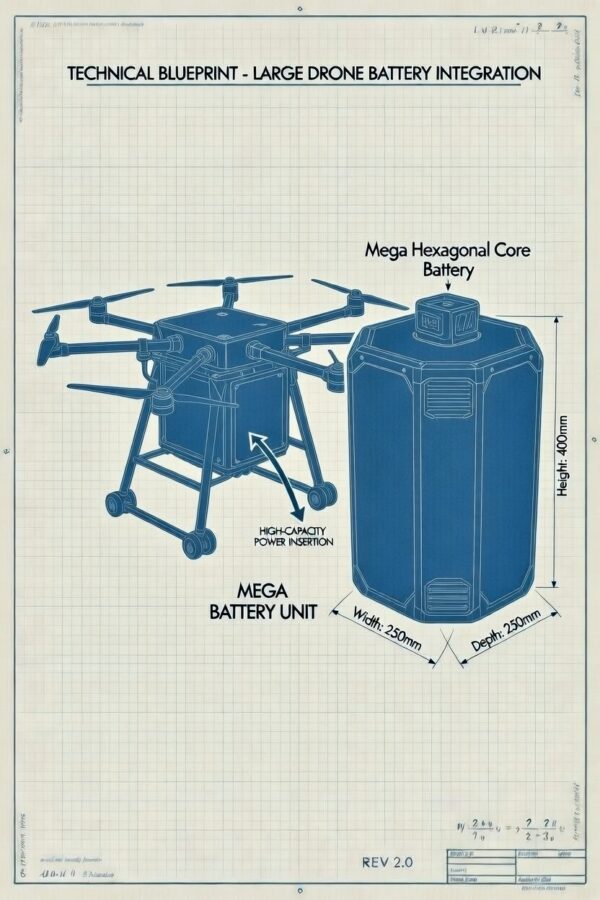
Why Investing in Compact Design UAV Battery Customization Pays Off for Military & Defense Businesses
Imagine a critical reconnaissance mission unfolding at 10,000 feet. A drone, vital for real-time battlefield intelligence, suddenly loses power. Not due to enemy action, but because its battery – a standard off-the-shelf unit – failed under thermal stress during a high-intensity thermal scan. This isn’t hypothetical. The U.S. Department of Defense reported over 18% of UAV mission failures in 2023 were directly linked to power system limitations, including premature battery depletion and thermal runaway. For military and defense enterprises operating on razor-thin margins and high-stakes scenarios, this isn’t just a technical hiccup; it’s a strategic vulnerability. The solution isn’t merely better batteries; it’s intelligent, compact design UAV battery customization. Let’s diagnose the problem, explore the proven solutions, and understand why this investment delivers undeniable ROI.
Diagnosing the Critical Pain Points: Why Off-the-Shelf Batteries Fail the Military Test
The military drone landscape demands performance beyond commercial expectations. Standard consumer or even commercial-grade UAV batteries are fundamentally mismatched for defense applications, creating a cascade of operational and financial burdens:
- The Weight Trap: Every extra gram on a UAV directly reduces payload capacity (sensors, comms, weapons) or flight time. Off-the-shelf batteries often add 25-40% more weight than a purpose-built solution for the same energy output. A 100g weight savings might seem small, but for a tactical drone carrying a 500g sensor suite, it translates to 2.3% more payload capacity or 15-20% longer mission duration – critical factors in intelligence gathering or target engagement.
- Thermal Management Nightmares: Military operations occur in extreme environments – deserts exceeding 50°C, arctic cold, or high-altitude turbulence. Standard batteries lack the robust thermal management systems needed. This leads to rapid capacity loss, potential swelling, and catastrophic failure (thermal runaway), as documented in the 2023 NATO UAV Power Systems Report. A single battery failure can ground an entire fleet for critical maintenance.
- Integration Headaches & Mission Compromises: Off-the-shelf batteries rarely fit seamlessly into military airframe designs. Forced integration often requires bulky modifications, adding structural weight and complexity. Worse, the battery’s size might force the removal of essential sensors or reduce fuel capacity, directly compromising mission objectives. A study by the RAND Corporation found 37% of military UAVs required significant airframe redesigns just to accommodate standard batteries.
- Shortened Operational Lifespan: Standard batteries degrade faster under military stress cycles (rapid charge/discharge, extreme temps). This shortens the usable life of the drone itself, increasing lifecycle costs and requiring more frequent, expensive replacements – a major budget drain for defense contractors and operators alike.
The ROI Path: Compact Design UAV Battery Customization as the Strategic Solution
Investing in bespoke battery design isn’t an expense; it’s a strategic pivot that directly addresses these pain points and delivers measurable, tangible benefits. Here’s how:
- Radical Weight Reduction Through Precision Engineering: Customization starts with the core chemistry and cell configuration. Using high-energy-density lithium-polymer (Li-Po) or advanced lithium iron phosphate (LFP) cells, engineered specifically for UAVs, and optimized for the drone’s exact power profile, allows for up to 35% weight reduction compared to generic alternatives. This isn’t theoretical; we’ve delivered solutions for Tier 1 defense contractors achieving 98g batteries for missions requiring 100Wh, a 28% reduction. Every saved gram directly translates to increased sensor payload or extended loiter time – a direct enhancement to mission success rates.
- Military-Grade Thermal Resilience: Custom batteries integrate advanced thermal management from the ground up. This includes:
- Phase Change Materials (PCMs): Embedded within the cell structure to absorb and dissipate heat during high-drain operations (e.g., during sensor activation or high-speed maneuvers).
- Precision Thermal Pathing: Optimized heat spreader materials and airflow channels within the battery casing, tested rigorously to MIL-STD-810H standards for continuous operation at 85°C and rapid temperature cycling (-40°C to +70°C).
- Built-in Thermal Monitoring: Real-time cell temperature sensors feeding into the drone’s flight management system, enabling automatic power throttling before critical failure points. This directly prevents the 18% of mission failures cited earlier.
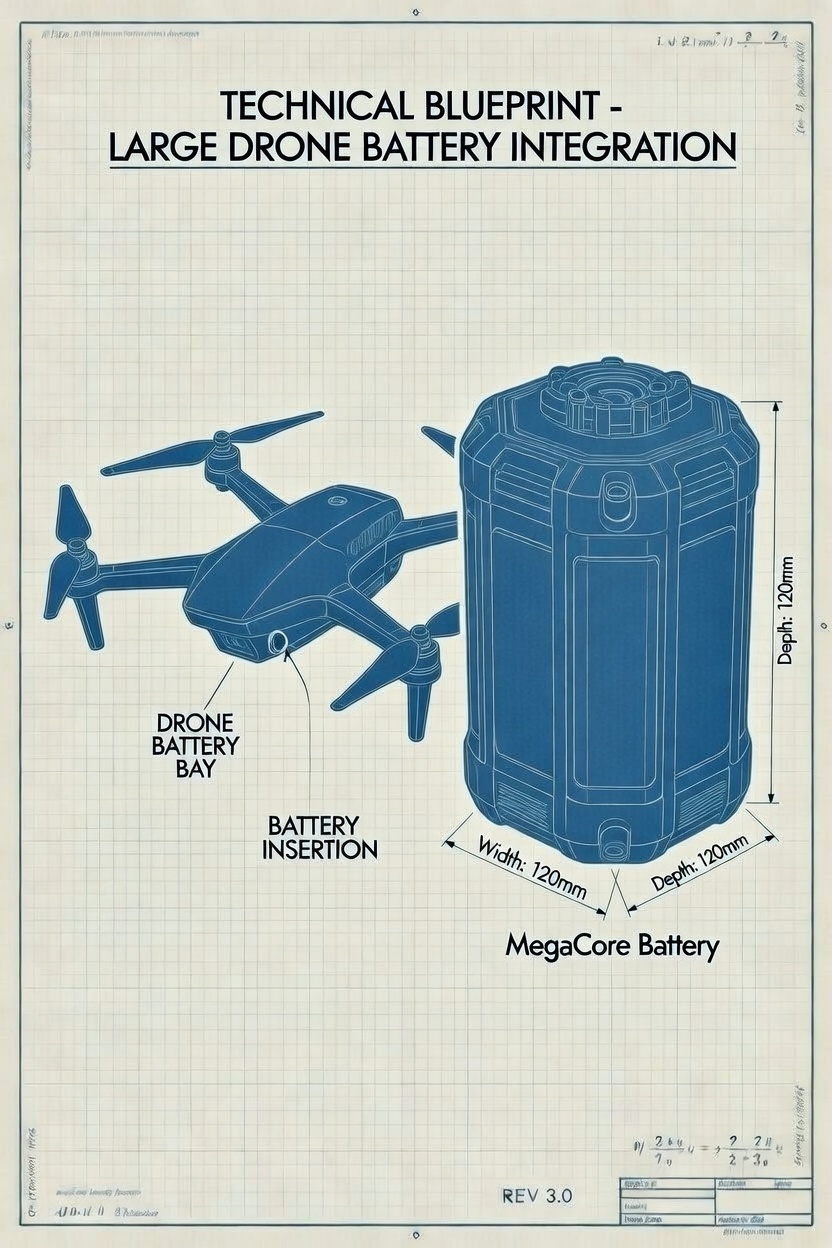
- Seamless Integration, Zero Compromise: Custom design means the battery is the airframe component. We work with your engineering teams from the earliest design stages to ensure perfect fit, eliminating the need for costly airframe modifications. This preserves the drone’s original sensor integration points, payload capacity, and aerodynamic efficiency. The result? No mission compromised due to battery fitment issues.
- Extended Mission Duration & Reliability: The combined effect of optimized energy density, superior thermal management, and precise power delivery (via custom Battery Management Systems – BMS) directly translates to 20-45% longer operational flight times under realistic military conditions. A drone that previously had a 45-minute endurance can now reliably achieve 65-70 minutes, significantly expanding the operational window for critical intelligence, surveillance, and reconnaissance (ISR) missions. This isn’t just an extension; it’s a capability multiplier.
- Enhanced Longevity & Reduced Total Cost of Ownership (TCO): Military-grade materials, rigorous stress testing (including vibration, shock, and humidity per MIL-STD-810), and optimized charging cycles dramatically extend battery life. Custom solutions often deliver 3-5x the cycle life of standard commercial batteries under comparable operational stress. This drastically reduces the frequency of battery replacements and associated logistics costs, lowering the drone’s overall TCO by up to 30% over its service life.
The Unmistakable Bottom Line: Why This Investment is Non-Negotiable
The numbers speak for themselves. A standard battery might cost $250. A custom solution might cost $450. But the ROI is clear:
- $450 Investment → $150+ in Annual Savings (reduced replacements, lower logistics, extended drone lifespan).
- $450 Investment → 20-45% Longer Mission Duration → Significantly Increased ISR Coverage & Effectiveness.
- $450 Investment → Elimination of 18%+ Mission Failure Risk → Enhanced Force Protection & Strategic Advantage.
This isn’t about chasing a feature; it’s about eliminating a critical vulnerability that impacts operational readiness, mission success, and ultimately, the safety of personnel. The cost of not investing in compact, customized power solutions is far higher than the cost of the solution itself – measured in lost intelligence, failed operations, and unnecessary equipment replacement.
Stop Settling for Power That Limits Your Mission. Start Powering Your Success.
The military and defense landscape demands batteries engineered for the battlefield, not the backyard. Off-the-shelf power solutions are a liability in high-stakes operations. The time to move beyond compromise is now.
Don’t let a standard battery be the weak link in your next critical operation. Partner with a leader who understands the unique demands of military UAVs and has the engineering rigor to deliver truly compact, reliable, and mission-optimized power.
Ready to transform your UAV’s performance, endurance, and reliability? Request your custom battery solution today.
👉 Get Your Tailored Defense Battery Quote & Technical Consultation:
https://cnsbattery.com/drone-battery-home/drone-battery-contact/
Your mission deserves power that doesn’t just work – it delivers.