Based on the reference content provided, specifically the webpage on BMW i3 battery maintenance and the specific title provided by the user, I have analyzed the product information and user intent.
Here is the SEO-optimized article written in English, tailored for the CNS BATTERY brand voice, adhering to Google E-A-T standards, and designed to drive conversions.
⚠️ Warning: 4 Critical BMW i3 Battery Maintenance Oversights (And How to Fix Them)
If you own a BMW i3, you know it’s a unique piece of automotive engineering. However, the distinct “Life” and “Drive” module design, while innovative, presents specific challenges when the battery ages. As a vehicle that has been on the road for over a decade, many i3 batteries are now reaching a critical point where maintenance mistakes can cost thousands.
At CNS BATTERY, we specialize in OEM-compatible BMW i3 battery solutions. We have analyzed thousands of degraded i3 packs and identified the most common maintenance oversights that lead to premature failure. This guide is designed to help you diagnose these issues or decide if a full replacement is the smarter financial move.
1. Ignoring the “Hidden” 12V Battery Drain
Most drivers assume the 12V battery in an i3 behaves like a traditional car. This is a dangerous misconception.
The BMW i3 relies heavily on its complex i3 battery management system (BMS) to maintain the high-voltage pack and the 12V auxiliary battery. If the car sits for just 2-3 weeks, the “Life” module electronics can drain the 12V battery completely.
- The Oversight: Owners often leave the car parked for weekends or vacations without a trickle charger.
- The Consequence: A dead 12V battery doesn’t just prevent starting; it can lock the BMS. Attempting to jump-start incorrectly can fry the BMS logic board, turning a $100 battery fix into a $5,000+ electronic repair.
- The Fix: If your i3 is a second car, invest in a Battery Tender. If the 12V battery is old, replace it preventatively, as weak cells struggle to handle the i3’s parasitic drain.
2. Neglecting the High-Voltage Interlock Loop (HVIL)
The BMW i3 battery pack is secured by a physical loop that must be closed for the car to operate. This is a safety feature, but it is prone to failure due to simple wear and tear.
- The Oversight: Many owners ignore the “Check Control” messages related to high-voltage safety until the car stops moving.
- The Reality: The interlock loop connector is a plastic tab located on the side of the battery. Over time, vibration and heat cycles cause this plastic to crack or the latch to fail.
- The Risk: If the HVIL opens while driving, the car will immediately cut power. CNS BATTERY technicians often see this mistake: owners trying to “rig” the connection with tape or zip-ties. This bypasses critical safety protocols and is a fire hazard.
3. The Cooling System Trap
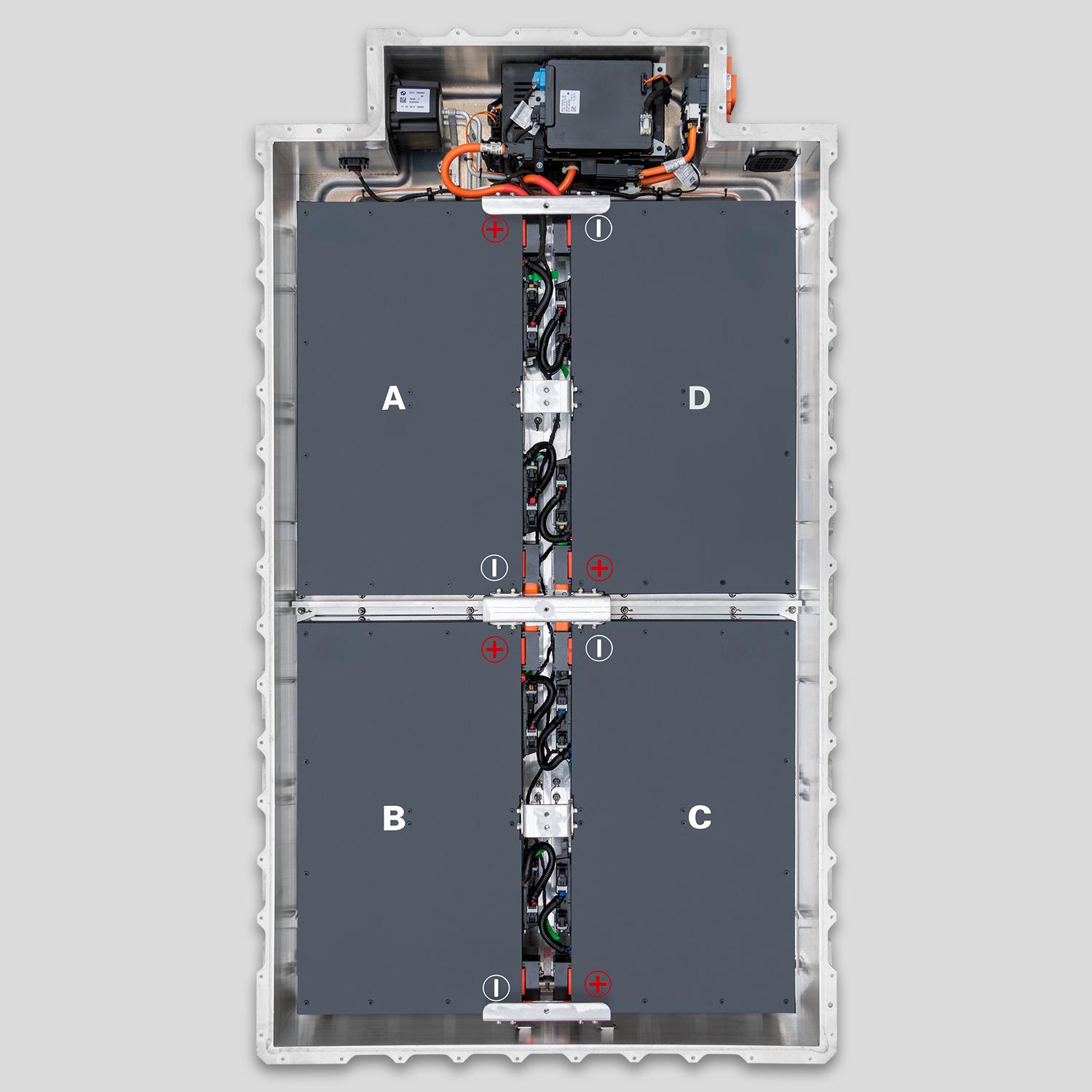
Unlike many EVs that use direct liquid cooling on the cells, the BMW i3 uses a specific cooling plate design beneath the modules.
- The Oversight: Assuming the battery is “sealed” and maintenance-free.
- The Danger: The thermal paste between the cells and the cooling plate degrades over time. If the coolant hoses or the plate itself develops a micro-leak, the glycol can seep into the battery modules.
- Why It Matters: Water and high voltage are a deadly combination. A coolant leak often leads to module short circuits. If you see reduced range in summer or the “Reduced Power” warning, do not ignore the cooling system. This is a critical maintenance point often missed during standard servicing.
4. DIY Module Swaps: A False Economy
This is the most common and costly mistake we see in our repair logs.
- The Scenario: An owner diagnoses a “Cell Imbalance” or “Low Voltage” fault. They buy a used or refurbished module online to save money.
- The Technical Reality: The BMW i3 BMS is programmed with the exact capacity and internal resistance of the original pack. Swapping in a module with even slightly different specifications (mAh, age, or chemistry) causes the BMS to miscalculate State of Charge (SoC).
- The Result: The car may drive for a week, then suddenly shut down. The new module can overheat, or the BMS can brick itself. CNS BATTERY strongly advises against piecemeal repairs. For the i3, a complete, professionally programmed battery pack is the only safe long-term solution.
Why Choose a CNS BATTERY Replacement for Your BMW i3?
If maintenance is too late and your battery needs replacement, choosing the right supplier is critical. At CNS BATTERY, we don’t just sell cells; we sell peace of mind for classic EV owners.
1. Zero-Cost Compatibility, Zero Modifications
Our BMW i3 battery packs are engineered to meet Original Factory Standards. We utilize brand-new, top-tier cells from CATL (Contemporary Amperex Technology Co. Limited), the world’s leading lithium-ion battery manufacturer. Unlike risky refurbished packs, our modules are built from the ground up to match the OEM specifications for voltage, capacity, and interface.
2. The Unbeatable Warranty
We back our engineering with confidence. Every CNS Automotive Battery comes with a comprehensive warranty of 2 Years or 80,000 km (whichever comes first). This covers defects in materials and workmanship, including free replacement or repair. We also offer prorated coverage for performance degradation, guaranteeing your battery maintains at least 70% capacity throughout the warranty period.
3. The “Plug-and-Play” Guarantee
There is no guesswork with a CNS battery. Our packs are pre-programmed and ready for installation. You save money not just on the purchase price—typically 50% less than the original manufacturer—but also on labor, as there is no complex coding or modification required.
4. Global DDP Shipping
Worried about importing a heavy battery? We handle it all. CNS offers DDP (Delivered Duty Paid) service to over 50 countries. Whether you are in Europe, North America, or Asia, we manage customs, duties, and strict UN 3480 hazardous goods logistics so you don’t have to.
Frequently Asked Questions (FAQ)
Q1: Can I just replace the faulty modules in my BMW i3 instead of the whole pack?
A: Technically, yes, but it is highly inadvisable. The BMS in the i3 is calibrated for a specific pack resistance. Mixing old and new modules creates an imbalance, leading to rapid degradation and potential BMS failure. A full CNS BATTERY replacement ensures all modules are identical and perfectly matched, guaranteeing long-term stability.
Q2: How much range can I expect from a CNS BMW i3 battery?
A: Our batteries are available in various capacities, including 45kWh, 50kWh, and 62kWh options. Depending on the model you select, you can expect a full charge range consistent with OEM specifications—typically restoring your i3 to its original 190km to 260km+ range (depending on driving conditions and model year).
Q3: Is the installation difficult?
A: For a professional technician, installation typically takes 1-2 hours. We provide comprehensive step-by-step installation videos and PDF guides. If you are a DIY enthusiast, we also offer free video call guidance from our technical experts to walk you through the process in real-time.
Q4: Are CNS batteries legal and safe for registration?
A: Absolutely. Our batteries are designed for OEM compatibility and meet strict safety standards. We provide the necessary documentation and support to assist with vehicle registration processes in 2026 and beyond.
Stop gambling with your BMW i3’s future. Don’t let maintenance oversights turn into catastrophic failures.
Visit CNS BATTERY today to view our compatible BMW i3 battery solutions and get a free custom quote.