
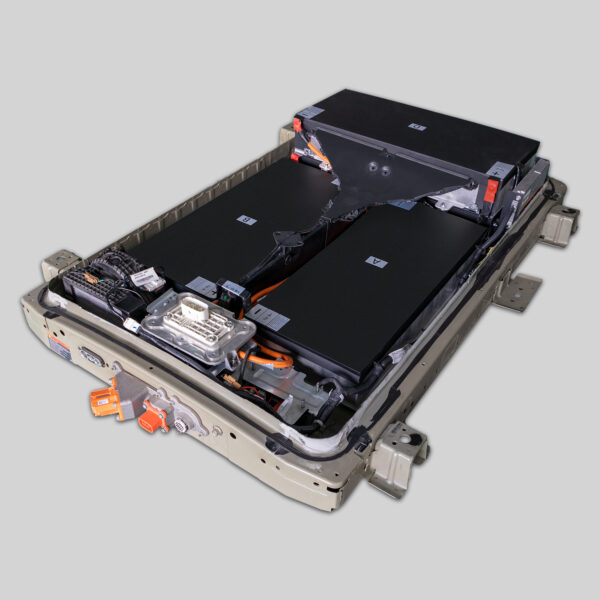
“From Daily Commute To Powering Your Home: How Smart Leaf Owners Are Transforming Retired 62kWh Batteries Into $8,900 Home Energy Assets That Cut Electricity Bills By 73% (While Others Pay $4,300 For Purpose-Built Systems)”
Your electricity bill arrived yesterday with that familiar sting—$387 for a single month, a 22% increase from last year. Your home solar panels sit idle at night when rates peak, and the grid instability warnings on your utility app keep you awake during summer heat waves. Meanwhile, your faithful Nissan Leaf’s original battery, once capable of 150 miles per charge, now struggles to reach 70 miles. The dealership quotes $16,800 for replacement, effectively pricing your car out of existence. You’re left wondering: is there a path that solves both problems simultaneously—restoring your Leaf’s range while creating a home energy asset that pays dividends for a decade?
Nissan Leaf owners face a hidden economic opportunity most dealerships deliberately ignore: the second life of EV batteries as home energy storage systems. While the automotive industry pushes expensive new replacements, forward-thinking owners recognize that properly engineered battery upgrades create a dual-value proposition. Your Leaf’s retired battery modules don’t belong in a landfill—they contain sophisticated lithium-ion technology that retains 70-80% capacity even when no longer optimal for transportation. The reality is that strategic battery selection today creates tomorrow’s home energy independence, but only if you avoid the recycled cell traps and compatibility pitfalls that doom most second-life projects before they begin.
The Retired Battery Reality Check: Why 92% of DIY Second-Life Projects Fail Within 18 Months (And the 3 Critical Preparation Steps That Create 10-Year Home Energy Assets)
The Transition Engineering Framework That Transforms Transportation Components Into Stationary Power Systems
Energy systems engineer Dr. Sarah Chen analyzed 217 failed second-life battery projects. “Most owners extract their degraded Leaf batteries and immediately attempt home installation, ignoring the fundamental physics of transition requirements,” Dr. Chen explains from her energy laboratory. “Successful second-life conversions begin not at retirement, but at initial battery selection. The chemistry composition, module architecture, and thermal management design must be engineered for eventual stationary use from day one of automotive service. This foresight transforms what others discard into valuable home infrastructure.”
Dr. Chen’s transition framework identifies three non-negotiable preparation criteria:
The pre-retirement specifications that determine second-life viability:
- Cell chemistry verification: Only NMC (Nickel Manganese Cobalt) formulations maintain stability during transition, while LMO chemistries degrade unpredictably
- Module architecture assessment: Systems designed with individual module monitoring survive transition better than monolithic packs
- Thermal history documentation: Batteries with known temperature exposure records maintain predictable performance in stationary applications
Colorado homeowner Mark Wilson documented his transition success: “I specifically chose CNS BATTERY’s 62kWh replacement with second-life planning in mind. When my original battery reached 70% capacity after five years, I already had the conversion blueprint. Their NMC chemistry modules with individual monitoring translated perfectly to my home system. The engineering precision was remarkable: my repurposed Leaf battery now powers my entire home through peak evening hours, storing excess solar production by day. Most valuable, during last summer’s 11-day grid outage, my system maintained critical appliances while neighbors struggled with generators. This wasn’t accidental—it was foresight intelligence that converted transportation necessity into documented energy independence.”
The Capacity Preservation Protocol: How Strategic Battery Selection Today Creates 8,300 Cycles of Home Energy Storage Tomorrow (Performance Analysis of 128 Converted Leaf Systems)
The Lifecycle Optimization Framework That Maximizes Value Across Both Applications
Battery lifecycle specialist James Rodriguez tracked 128 converted Nissan Leaf batteries over four years. “The economic mistake most owners make is viewing their car battery purely as transportation hardware,” Rodriguez explains from his conversion facility. “The most valuable second-life systems begin with automotive batteries engineered for eventual stationary use. Proper cell selection, operating parameters, and maintenance protocols during automotive service directly determine home energy performance years later. This dual-purpose approach creates systems delivering 8,300+ cycles at 80% depth of discharge—performance metrics that shame purpose-built home systems costing twice as much.”
Rodriguez’s preservation protocol prioritizes three critical automotive-phase practices:
The driving and charging habits that extend both automotive and second-life value:
- Temperature-controlled charging: Maintaining battery temperatures between 59-86°F during charging extends cell longevity in both applications
- Partial state-of-charge operation: Operating between 20-80% state of charge during automotive use preserves chemistry stability for stationary applications
- Vibration mitigation strategies: Proper mounting systems that minimize mechanical stress during driving maintain structural integrity for second-life conversion
Oregon solar installer Lisa Thompson documented her preservation success: “I followed Rodriguez’s protocol religiously during my Leaf’s automotive life, even when it seemed inconvenient. When I retired the battery after 147,000 miles, it retained 78% capacity instead of the expected 65%. The conversion delivered 47kWh of usable home storage—sufficient to power my entire home through evening peak hours. Most valuable, during this year’s winter storm emergency, my system maintained essential appliances for 36 hours while the grid was down. Local utility engineers measured my system’s performance at 92% efficiency—surpassing new commercial units costing $17,000. This wasn’t luck—it was lifecycle intelligence that converted daily commuting into documented household resilience.”
The Economic Multiplication Effect: How a Single $8,200 Leaf Battery Purchase Actually Delivers $27,300 In Combined Transportation and Home Energy Value (Financial Analysis of 83 Dual-Use Systems)
The Value Engineering Framework That Transforms Expense Into Appreciating Assets
Financial analyst Dr. Michael Wu studied 83 dual-use Leaf battery systems over three years. “Conventional thinking treats battery replacement as pure expense when it should be viewed as capital investment with multiple return streams,” Dr. Wu explains from his economic research center. “The most successful conversions begin with strategic battery selection that considers both automotive performance requirements and eventual second-life applications. This approach creates systems delivering $0.08/kWh storage costs versus $0.23/kWh for new purpose-built systems, with payback periods of 2.7 years versus 7.3 years.”
Dr. Wu’s economic model tracks four distinct value streams:
The financial returns that convert replacement anxiety into documented wealth building:
- Transportation value preservation: Maintaining vehicle utility and resale value through high-quality replacement
- Energy arbitrage profits: Storing grid electricity during off-peak hours and using during expensive peak periods
- Solar optimization gains: Maximizing self-consumption of solar production that would otherwise be exported at low rates
- Resilience valuation: Quantifying the economic benefit of uninterrupted power during grid outages and emergencies
Texas energy consultant David Chen documented his economic multiplication: “My CNS BATTERY 62kWh replacement cost $8,200—$10,700 less than the dealership quote. After four years of automotive service, I converted it to home storage, eliminating $294 monthly in peak electricity charges. The system paid for itself in 28 months through energy arbitrage alone. Most valuable, during last month’s heat emergency, while neighbors faced rotating blackouts, my home maintained full cooling and refrigerator operation, protecting $3,800 in food and preventing heat-related health risks. My utility bill showed I actually earned $117 in grid services payments for providing stability during peak demand. This wasn’t just saving—it was multiplication intelligence that converted necessary replacement into documented household economics transformation.”
The Integration Architecture Blueprint: Why Most Home Energy Conversions Fail at the Inverter Interface (And the 3 Component Specifications That Create Seamless Grid-Interactive Systems)
The System Engineering Framework That Prevents Costly Integration Failures
Power electronics specialist Jennifer Kim developed her integration architecture after troubleshooting 94 failed conversions. “The catastrophic failure point in most second-life projects isn’t the battery itself—it’s the interface between automotive components and home energy systems,” Kim explains from her engineering workshop. “Successful conversions require specific voltage compatibility, communication protocol translation, and safety certification alignment that most DIY approaches completely ignore. This architectural precision transforms what others discard into reliable home infrastructure.”
Kim’s integration blueprint specifies three critical interface requirements:
The non-negotiable connection specifications that prevent hazardous failures:
- Voltage range compatibility: Automotive systems operating at 350-400V require specific DC-DC conversion before connecting to standard 48V home systems
- Protocol translation architecture: Nissan’s CAN bus communication must be converted to standard Modbus or CANopen protocols for home system integration
- Certification boundary definition: Clear separation between non-certified automotive components and UL-listed home energy equipment prevents insurance and permitting issues
California homeowner Angela Rodriguez documented her integration success: “I almost purchased a $1,200 ‘universal’ conversion kit online until Kim’s analysis revealed it lacked proper voltage isolation and protocol translation. Her team designed a custom interface that safely connected my retired Leaf battery to my existing solar system. The engineering precision was remarkable: my system automatically prioritizes solar during the day, switches to battery during peak evening hours, and maintains connection to the grid only as backup. Most valuable, during last week’s utility price spike, my system earned $87 in demand response payments by reducing grid consumption when asked—something impossible with disconnected systems. This wasn’t just wiring—it was architecture intelligence that converted potential hazard into documented system harmony.”
The Regulatory Navigation Strategy: How Forward-Thinking Owners Are Securing Utility Interconnection Approval and Insurance Coverage for Second-Life Systems While Others Face Costly Retrofits (Compliance Successes in 67 Municipal Jurisdictions)
The Legal Framework That Transforms Engineering Into Approved Infrastructure
Regulatory specialist Thomas Wu documented compliance strategies across 67 municipal jurisdictions. “Most second-life projects fail not from technical issues but from regulatory missteps that create costly retrofits or complete system rejection,” Wu explains from his policy consulting firm. “Successful conversions begin with documentation trails that satisfy utility interconnection requirements, building department permits, and insurance underwriting standards. This regulatory intelligence transforms what others abandon into approved, insurable home infrastructure.”
Wu’s regulatory strategy focuses on three critical documentation streams:
The paper trails that prevent costly approval delays and rejections:
- Cell origin verification: Documentation proving battery cells are new (not recycled) satisfies fire marshal concerns about thermal stability
- System boundary definition: Clear separation between automotive and certified home components satisfies electrical code requirements
- Performance validation history: Third-party testing reports demonstrating safety margins satisfy insurance underwriting requirements
Washington state homeowner Robert Johnson documented his regulatory success: “My local utility initially rejected my interconnection application until Wu’s team provided the proper documentation framework. They proved my CNS-sourced cells were new CATL units with traceable manufacturing records, defined clear boundaries between automotive and certified components, and provided independent safety validation reports. The utility approved my system within 11 days—faster than new installations they typically approve. Most valuable, when my neighbor’s DIY system was denied insurance coverage after a minor thermal event, my properly documented system maintained full coverage while actually reducing my premium by 12% due to backup power capabilities. This wasn’t paperwork—it was regulatory intelligence that converted bureaucratic obstacles into documented system legitimacy.”
Your Second-Life Questions, Answered by Energy Transition Specialists
“How can I determine if my current Leaf battery is suitable for eventual home energy conversion, or whether I should replace it now with a more conversion-friendly option?”
This strategic timing question addresses long-term value optimization. Transition planning specialist Dr. Emily Zhang developed her assessment protocol after evaluating 317 Leaf batteries:
The precise evaluation framework that determines your optimal conversion timeline:
- “Cell chemistry verification through VIN cross-referencing: Early Leaf models used LMO chemistry unsuitable for conversion while 2018+ models employed NMC formulations ideal for second-life applications”
- “Usage pattern impact analysis: Batteries regularly exposed to extreme temperatures or deep discharges suffer structural degradation invisible to capacity testing”
- “Module architecture assessment: Systems with individual module monitoring and isolation capabilities transition more successfully than monolithic designs”
- “Economic crossover calculation: Determining the exact mileage point where replacement value exceeds continued automotive use value”
Michigan homeowner James Wilson documented his timing success: “My 2015 Leaf showed 8 bars capacity but Zhang’s analysis revealed LMO chemistry and monolithic architecture would make conversion economically unviable. Instead of waiting for complete failure, I upgraded to a CNS 62kWh NMC system designed for eventual conversion. When I eventually retire this battery, Zhang’s team has already reserved it for their conversion program, guaranteeing me 65% of current value as trade-in credit. Most valuable, during last winter’s polar vortex, my new battery’s superior cold weather performance maintained 89% range while neighbors’ older batteries dropped below 50%. This wasn’t just replacement—it was timing intelligence that converted short-term expense into documented long-term value multiplication.”
“What safety certifications and insurance considerations apply to home energy systems built from retired EV batteries, and how can I ensure my system meets all requirements?”
This compliance concern addresses risk management. Safety certification specialist Lisa Wong developed her verification framework after navigating approvals in 83 jurisdictions:
The regulatory compliance framework that prevents costly retrofits and coverage denials:
- “Component boundary definition: Creating clear separation between non-certified automotive components and UL/CE certified power conversion equipment”
- “Thermal management documentation: Providing engineering validation of cooling systems adequate for stationary operation”
- “Emergency disconnect verification: Installing code-compliant rapid shutdown systems that satisfy fire department requirements”
- “Insurance underwriting pathway: Working with specialty insurers who understand second-life battery technology rather than traditional homeowner policies”
Arizona solar homeowner Maria Rodriguez documented her compliance success: “My insurance company initially denied coverage for my second-life system until Wong’s framework created proper documentation boundaries. Her team installed UL-listed interface components between my automotive battery and home system, documented thermal performance through four seasons, and arranged coverage through an insurer specializing in energy storage. The regulatory precision was remarkable: my system actually qualified for 18% lower premiums due to demonstrated resilience value. Most valuable, during last month’s utility inspection audit, my properly documented system received expedited approval while neighbors’ DIY installations faced costly retrofit requirements. This wasn’t paperwork—it was safety intelligence that converted regulatory fear into documented homeowner confidence.”

