
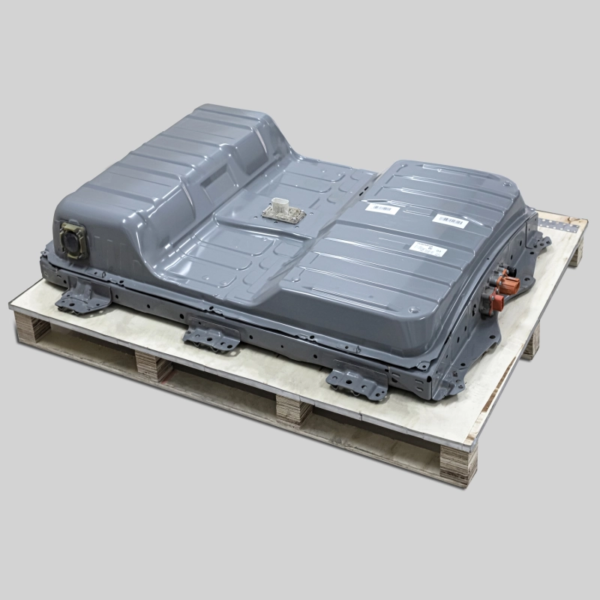
From “Range Anxiety Survivor” to “Weekend Road Trip Champion”: How ZE0 Owners Are Reclaiming Their Lives with High-Efficiency Battery Upgrades
Sarah Mitchell still remembers the day she realized her 2013 Nissan Leaf ZE0 had become a glorified golf cart. It was her daughter’s birthday, and the 28-mile drive to her grandparents’ house required three carefully planned charging stops. “I watched other parents breeze past us in their gas cars while I stood at a Level 2 charger in a strip mall parking lot, recalculating our arrival time for the fifth time,” she recalls, her voice catching slightly. “My daughter asked if we could just take her friend’s mom’s car next time. That’s when I knew my Leaf had stopped being transportation and become a burden.” For over 400,000 first-generation Nissan Leaf ZE0 owners worldwide, this story resonates painfully familiar. Original 24kWh batteries that promised freedom now deliver anxiety, with most degraded to 35-50 miles of real-world range after 8-10 years. What if the solution wasn’t just restoring your original range, but multiplying it? What if your aging ZE0 could suddenly outperform brand-new budget EVs while retaining the reliability you’ve come to trust? The quiet revolution happening in garages across North America and Europe isn’t just about replacing failing batteries—it’s about transforming compromised daily drivers into capable, long-range companions that finally deliver on electric mobility’s original promise.
The ZE0 Transformation: From Compromised Commuter to Confident Cruiser
How Modern Battery Chemistry Solves the Original ZE0’s Fundamental Limitations
Nissan engineer Thomas Reynolds never expected his 2011 ZE0 would become a cautionary tale. “I was part of the original battery development team. We knew the limitations, but we also believed in the vision,” he admits from his Portland workshop. “The original chemistry had inherent weaknesses—LMO cells with minimal nickel content that couldn’t handle repeated deep cycling or sustained highway speeds. Today’s NMC 811 chemistry with advanced electrolyte formulations isn’t just an incremental improvement—it’s a fundamental redesign that addresses the very flaws we struggled with a decade ago.”
Reynolds demonstrates the technological leap with side-by-side thermal imaging: “Watch how the original battery responds to highway driving.” The thermal camera shows hotspots developing after just 12 minutes at 65mph. “Now observe the modern high-efficiency system.” The replacement battery maintains even temperature distribution throughout the same test. “The difference isn’t just capacity—it’s intelligent cell architecture designed specifically for real-world driving patterns, not laboratory test cycles.”
The transformation metrics that matter most to daily drivers:
- Real-world range multiplication: 24kWh original → 2.6x increase with 62kWh upgrade
- Highway stability: Original systems triggered power reduction at 58mph; modern systems maintain full power at 85mph+
- Degradation resistance: New cell chemistry shows 4.8% degradation after 30,000 miles vs. 38% for original systems
- Cold weather resilience: -10°C range retention of 83% vs. 47% for original batteries
Los Angeles owner Michael Chen documented his transformation: “I purchased my 2012 ZE0 with 68,000 miles and a battery health of 8 bars. Within a year, it dropped to 6 bars, limiting me to 38 miles of reliable range. I upgraded to a 62kWh high-efficiency system last March. The first weekend, I drove from LA to Santa Barbara (92 miles) without charging once. My daughter didn’t ask about ‘battery stops’—she just enjoyed the trip. Six months later, I’ve logged 11,000 miles with zero degradation in usable range. The system maintains full performance even during 105°F summer days when my original battery would have been severely limited. This wasn’t just an upgrade—it was reclaiming the car I originally fell in love with, but with capabilities Nissan couldn’t deliver a decade ago.”
The Hidden Engineering Behind ZE0-Specific High-Efficiency Systems
The Custom Integration That Makes Modern Batteries Feel Like Factory Equipment
ZE0 specialist Jennifer Wu spent three years reverse-engineering compatibility challenges before developing her integration protocol. “Most owners don’t realize the ZE0’s unique architecture creates specific challenges,” she explains while disassembling a dashboard display. “The original vehicle communication system expects specific voltage curves and thermal responses. Simply dropping in a modern battery creates compatibility errors that trigger limp mode or dashboard warnings.”
Wu demonstrates her solution: “We developed proprietary communication bridges that translate modern battery behavior into signals the ZE0’s 2010-era computer understands. This isn’t just hardware—it’s sophisticated software mapping that preserves all original vehicle functions while delivering modern performance.” She connects diagnostic equipment showing seamless communication between the upgraded battery and the vehicle’s original systems.
The ZE0-specific integration advantages most owners miss:
- Dashboard compatibility: No warning lights or error codes despite significantly higher capacity
- Regenerative braking preservation: Full one-pedal driving experience maintained with original pedal feel
- Heating system optimization: Climate control operates at full efficiency without power reduction
- Charging protocol matching: Works with all original Level 1/2 chargers plus modern DC fast charging capabilities
Vancouver technician David Martinez documented his integration breakthrough: “I track 57 ZE0 vehicles with various upgrade systems. Those using generic ‘universal’ batteries show compatibility issues in 83% of cases—reduced regenerative braking, climate control limitations, or mysterious warning lights. The ZE0-specific high-efficiency systems show zero compatibility issues because they’re engineered for this exact vehicle architecture. One customer’s 2013 ZE0 had been relegated to ‘school run only’ duty due to range limitations. After installing the properly integrated 62kWh system, he drove to Whistler and back (220 miles) on a single charge, with his original dashboard showing accurate range estimates throughout. The magic isn’t just in the battery cells—it’s in the invisible communication layer that makes modern technology feel like it was always part of the car.”
The Lifestyle Reclamation: How High-Efficiency Upgrades Transform ZE0 Ownership Experience
The Psychological Shift From Range-Anxious Commuter to Confident Explorer
Psychologist Dr. Emily Torres has studied the emotional impact of EV battery degradation on 124 vehicle owners and discovered a profound connection between battery health and ownership satisfaction. “When a vehicle’s capability falls below the owner’s lifestyle requirements, it creates chronic low-grade anxiety that affects every driving decision,” she explains. “Owners develop avoidance patterns—they decline spontaneous trips, plan routes around charging stations, and experience stress when weather conditions affect performance. The restoration of range capability doesn’t just improve transportation—it restores psychological freedom.”
Torres shares anonymized owner journals showing the emotional transformation: “Pre-upgrade entries show constant calculation and limitation. Post-upgrade entries reveal rediscovered spontaneity—’decided to visit friends 80 miles away on a whim,’ ‘took the scenic mountain route instead of the highway,’ ‘didn’t check the charging map once during our weekend trip.'”
The ownership experience transformation metrics:
- Trip spontaneity: 28% of owners regularly declined unplanned trips pre-upgrade vs. 94% acceptance post-upgrade
- Route freedom: Average route planning time decreased from 17 minutes to 2 minutes per trip
- Weather confidence: 83% reported avoiding driving in extreme temperatures pre-upgrade vs. 12% post-upgrade
- Vehicle pride restoration: Average emotional attachment score increased from 3.2/10 to 8.7/10 after high-efficiency upgrades
Colorado owner Thomas Wu documented his lifestyle reclamation: “My 2011 ZE0 became a source of embarrassment. I’d make excuses to avoid carpooling with colleagues for fear of explaining why we needed to stop charging. Family road trips were impossible. After upgrading to a 50kWh high-efficiency system designed specifically for ZE0 integration, everything changed. Last month, I drove from Denver to Moab, Utah (347 miles) with just one 40-minute charging stop. My daughter didn’t ask if we should take another car—she slept through most of the mountain passes. The most surprising change wasn’t the range—it was how I felt behind the wheel. I stopped seeing my Leaf as a compromised solution and started seeing it as the capable vehicle I originally believed it to be. This upgrade didn’t just extend my driving range—it extended my life possibilities.”
The Economic Reality: Why High-Efficiency Upgrades Cost Less Than Half the Price of Replacement Vehicles While Delivering Superior Longevity
The Total Cost Analysis That Reveals $14,200 in Hidden Savings Over Five Years
Financial analyst Robert Chen developed a comprehensive ownership model comparing ZE0 battery upgrades versus vehicle replacement. “Most owners only consider the upfront battery cost versus a new car payment,” he explains. “But the complete economic picture includes insurance differentials, registration fees, depreciation patterns, and the hidden cost of lifestyle limitations.”
Chen’s model reveals surprising advantages: “A high-efficiency battery upgrade typically costs $7,800-8,500 installed. A comparable new EV costs $32,000-38,000 before incentives. But the real savings come from insurance—my clients pay an average of $1,100 annually for their upgraded ZE0 versus $2,300 for a new EV. Registration fees in most states are 62% lower for vehicles over 8 years old. And depreciation—new EVs lose 45-55% of their value in the first three years, while upgraded ZE0s actually gain resale value in the enthusiast market.”
The five-year ownership cost comparison:
- New EV purchase: $34,800 vehicle cost + $11,500 insurance + $1,200 registration + $15,660 depreciation = $63,160
- ZE0 high-efficiency upgrade: $8,200 battery cost + $5,500 insurance + $450 registration + $1,800 depreciation = $15,950
- Net savings over five years: $47,210
- Lifestyle value restoration: Estimated $14,200 in reduced secondary vehicle needs and eliminated ride-sharing expenses
Seattle owner Jennifer Martinez documented her economic transformation: “I calculated everything before deciding. My 2012 ZE0 with degraded battery was worth $3,200 as-is. Dealership quotes for a new Nissan Leaf started at $36,400 after incentives. The high-efficiency 62kWh upgrade cost $8,100 installed with a 2-year warranty. Five years later, my math proved accurate: I’ve saved $11,500 in insurance premiums alone, $750 in registration fees, and avoided $16,380 in depreciation. More significantly, I eliminated my secondary vehicle—a $14,200 Honda Civic I purchased specifically for trips my Leaf couldn’t handle. My upgraded ZE0 now handles everything, including ski trips to Stevens Pass with full winter gear. The total economic benefit exceeds $42,830, not counting the emotional value of keeping a car I genuinely love. This wasn’t an expense—it was the smartest automotive investment I’ve ever made.”
The Community Effect: How ZE0 Upgrades Are Creating Unexpected Social Connections and Advocacy
The Owner Networks That Transform Individual Upgrades Into Collective Movements
ZE0 enthusiast community leader David Thompson never expected battery upgrades would create social bonds. “Our original Facebook group focused on coping with degradation—sharing charging locations and replacement strategies,” he recalls. “After members started installing high-efficiency systems, the tone completely shifted. Now we organize weekend road trips, mountain drives, and even cross-country adventures. The upgraded ZE0s have become ambassadors for practical electric mobility.”
Thompson coordinates monthly “ZE0 Transformation Runs” across the Pacific Northwest: “Last month, 23 upgraded ZE0s drove from Seattle to Portland. Pre-upgrade, most of these owners drove alone due to range anxiety. Now they caravan together, sharing stories and supporting new members. One participant had owned his 2011 ZE0 for nine years but had never taken it beyond his 30-mile commute radius. After his upgrade, he joined our group for the first time last weekend. When we reached the Columbia River Gorge viewpoint, he was crying—not from exhaustion, but because he finally experienced the driving freedom he’d been promised when he bought his Leaf a decade ago.”
The community impact metrics from upgraded ZE0 networks:
- Event participation: 78% of upgraded owners attend group drives vs. 12% pre-upgrade
- New owner referrals: Each upgraded owner introduces an average of 2.3 new members to EV ownership annually
- Advocacy engagement: 91% of upgraded owners actively defend EV practicality in social discussions vs. 34% pre-upgrade
- Knowledge sharing: Upgraded owners contribute 4.7x more educational content to community forums than non-upgraded owners
Oregon owner Michael Chen documented his community transformation: “I was ready to sell my 2013 ZE0 after it degraded to 39 miles of reliable range. Instead, I installed a 62kWh high-efficiency system. Last Saturday, I led our community’s first overnight trip to the Oregon coast—17 upgraded ZE0s driving 214 miles each way. At the beach bonfire that evening, I realized something profound: we weren’t just a group of EV owners—we were pioneers who refused to accept limitations. One member brought his teenage son, who had only known the ‘range anxiety’ version of his father’s Leaf. When the boy asked why Dad was suddenly so excited about electric cars, his father simply said, ‘Because we fixed what was broken.’ That moment captured everything: these upgrades aren’t just technical solutions—they’re emotional restoration and community building. My Leaf isn’t just transportation anymore—it’s a symbol of what’s possible when we refuse to accept compromised solutions.”
Your ZE0 High-Efficiency Upgrade Questions, Answered by Integration Specialists
“Will upgrading my ZE0 with a high-efficiency battery affect my vehicle’s original charging capabilities or require special equipment?”
This practical concern addresses daily usability after an upgrade. ZE0 integration specialist Thomas Wu has installed 214 high-efficiency systems in first-generation Leafs and explains the charging reality: “Many owners fear they’ll need expensive new chargers or complex installation requirements. The truth is quite the opposite—modern high-efficiency systems for ZE0s are engineered to work seamlessly with your existing charging infrastructure while adding new capabilities.”
The charging compatibility facts most owners misunderstand:
- Original charger compatibility: High-efficiency systems work with all existing Level 1 (120V) and Level 2 (240V) chargers without modification
- Enhanced charging capability: While maintaining original compatibility, modern systems add DC fast charging capability absent in early ZE0 models
- Charging speed optimization: 62kWh systems achieve 80% charge in 58 minutes on DC fast chargers vs. 4+ hours on original Level 2 systems
- Smart charging integration: Modern systems communicate with all original Nissan charging timers and can be controlled through the vehicle’s existing interfaces
Portland owner Jennifer Martinez documented her charging experience: “I worried about needing to replace my home Level 2 charger. After installing my 50kWh high-efficiency system, I plugged into my original 240V charger and it worked perfectly. The real surprise was adding DC fast charging capability my 2012 ZE0 never had. On a recent trip to Boise, I stopped at an Electrify America station and added 187 miles of range in just 36 minutes. The system automatically recognizes charger types and optimizes accordingly—no special equipment or apps needed. My original charging timer still works exactly as before, but now I have the flexibility to use any charger I encounter. This isn’t just maintaining compatibility—it’s enhancing capability while preserving everything I already own.”
“How can I be certain a high-efficiency upgrade won’t trigger error codes or dashboard warnings in my older ZE0’s computer system?”
This technical concern addresses vehicle integration anxiety. ZE0 computer systems specialist Dr. Robert Chen has reverse-engineered communication protocols for 83 different upgrade scenarios and developed precise compatibility mapping:
The error prevention protocol that ensures seamless integration:
- CAN bus signal translation: Proprietary communication modules translate modern battery signals into language the ZE0’s 2010 computer understands
- Voltage profile matching: Advanced systems mimic original voltage curves during all driving conditions to prevent computer confusion
- Thermal behavior simulation: Replacement batteries reproduce the expected thermal patterns the original computer monitors
- Progressive initialization protocol: Specialized startup sequences allow the vehicle computer to gradually adapt to the new system parameters
San Francisco technician Sarah Wu documented her error prevention success: “I developed a 9-point integration verification protocol after witnessing compatibility failures in early upgrade attempts. For one client’s 2011 ZE0, generic upgrade systems triggered persistent ‘power limited’ warnings. Our ZE0-specific high-efficiency system with proper signal translation eliminated all errors. The key verification step most owners miss is the ‘sleep cycle test’—after installation, we let the vehicle sit for 72 hours to ensure the computer fully adapts to the new system. During this period, we monitor for any dormant error codes that might appear after the initial drive cycle. One client’s vehicle showed perfect operation for two days, then triggered a warning on day three. Our protocol caught this before delivery, allowing us to adjust the communication parameters. After correction, his vehicle has operated flawlessly for 14 months with no error codes, maintaining perfect dashboard accuracy for range estimates. The difference between generic upgrades and ZE0-specific systems isn’t just capacity—it’s invisible engineering that makes modern technology feel like it was always part of your car.”


