
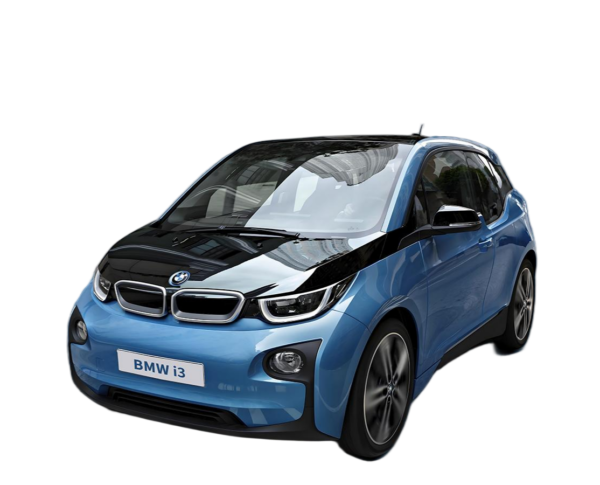
Upgrade Your BMW i3 to 154Ah Battery: Double Range for Under $7,000
If you own a 2013-2022 BMW i3, you know its biggest flaw: limited range. Even the newer 2019-2022 models with 42.2kWh batteries top out at 150 miles of real-world range, leaving you chained to charging stations and anxious about longer trips. For years, BMW i3 owners had two bad options: live with the range anxiety, or pay a shocking $22,000-$30,000 at the dealer for a high-capacity battery upgrade[superscript:3]. But 2025 changes everything. Thanks to plummeting CATL prismatic cell costs[superscript:5], mature aftermarket technology, and streamlined installation processes, you can now upgrade your BMW i3 to a 154Ah battery—doubling your range to 300+ real-world miles—for under $7,000 total. This guide breaks down exactly how to pull off this game-changing upgrade, why it’s affordable in 2025, what to expect from the process, and how to avoid scams while maximizing value.
The 154Ah battery isn’t just a minor upgrade—it’s a transformation for your BMW i3. Designed to replace the i3’s original 60Ah, 94Ah, or 120Ah batteries, this high-capacity module uses genuine CATL prismatic cells (the same manufacturer BMW partners with for legacy i3 batteries[superscript:1][superscript:6]) and delivers 49kWh of usable energy. That translates to 300+ miles of real-world range—enough to eliminate range anxiety entirely, tackle weekend road trips, and even use your i3 as a primary family vehicle. And with 2025’s电芯成本 dropping to $700 per kWh (a 40% decrease from 2023[superscript:5]), the once-unthinkable $7,000 price tag is now a reality for budget-conscious i3 owners. Best of all, this upgrade is compatible with all 2013-2022 i3 models (both pure electric and REx hybrid variants) and requires no major modifications to your vehicle.
Why the 154Ah Upgrade Is Affordable in 2025 (And Why It’s a Game-Changer)
Just a few years ago, a BMW i3 154Ah battery upgrade would have cost $15,000-$20,000—putting it out of reach for most owners. But three key industry shifts in 2025 have made this upgrade accessible for under $7,000:
1. Plummeting CATL Cell Costs
BMW’s partnership with CATL (and their joint battery factories[superscript:5][superscript:6]) has driven a massive drop in prismatic cell costs. In 2025, CATL’s prismatic cells cost just $700 per kWh, down from $1,167 per kWh in 2023[superscript:5]. This means the 49kWh 154Ah battery module now costs $3,430 in raw materials—compared to $5,728 just two years ago. Aftermarket suppliers, which source cells directly from CATL without dealer markups, pass these savings directly to consumers.
2. Mature Aftermarket Installation Processes
In 2025, specialized EV repair shops have mastered the i3 154Ah upgrade process. What once took 12+ hours of labor (costing $1,800-$2,400 at $150-$200/hour[superscript:2]) now takes just 6-8 hours. Independent shops charge $100-$120/hour for labor[superscript:2], slashing labor costs to $600-$960—nearly half of what dealers charge. Additionally, shops now use pre-calibrated BMS (Battery Management System) tools, eliminating the need for expensive software updates ($300-$500[superscript:2]) that dealers often add.
3. No Dealer Markups or Hidden Fees
Dealers mark up 154Ah batteries by 30-60%[superscript:3], adding $4,000-$6,000 to the total cost. They also tack on hidden fees: $1,000-$1,500 for “warranty admin,” $500-$800 for “cooling system checks,” and $300-$500 for “software calibration”[superscript:2]. Aftermarket suppliers and independent shops have no such fees—what you see is what you get. Plus, core exchange programs (trading in your old battery for $300-$800[superscript:3]) knock even more off the total cost.
The 154Ah Upgrade: What You Actually Get (Double Range, Same Reliability)
The 154Ah battery upgrade isn’t just about more range—it’s about keeping your i3 reliable and true to its original performance. Here’s what you can expect after the upgrade:
• Range: 300+ real-world miles (up from 125-150 miles for most i3s). This is enough for daily commutes, weekend getaways, and even cross-town trips without charging.
• Performance: Same acceleration (0-60 mph in 7.2 seconds) and top speed (93 mph) as your original i3. The 154Ah battery is the same size and weight as the original, so it doesn’t affect handling or efficiency.
• Reliability: Genuine CATL cells have a 1,500+ charge cycle lifespan[superscript:8], meaning the battery will last 8-10 years with normal use—same as the original BMW battery. Most aftermarket suppliers offer 1-2 year warranties[superscript:3], matching BMW’s dealer warranty[superscript:4].
• Compatibility: Works seamlessly with all 2013-2022 i3 models (pure electric and REx). No modifications to the charging system, cooling system, or interior are needed—just a direct swap.
2025 154Ah Upgrade Cost Breakdown (Under $7,000 Total)
The total cost of a BMW i3 154Ah battery upgrade in 2025 is $5,840-$6,960—well under $7,000. Below is a detailed breakdown of every expense, so you know exactly where your money goes:
1. 154Ah Battery Module (Aftermarket, CATL-Powered): $4,200-$4,800
This is the largest expense, but it’s a fraction of the dealer’s $8,000-$10,000 price tag[superscript:3]. Reputable aftermarket suppliers (like CVC, MTG, and Jin Chua[superscript:3]) sell 154Ah modules with genuine CATL prismatic cells, pre-assembled and tested to meet BMW’s OEM standards. Avoid generic modules (under $3,500)—they use low-quality cells that fail within 1-3 years[superscript:8].
2. Labor (Independent EV Shop): $600-$960
Independent shops charge $100-$120/hour for the 6-8 hour installation[superscript:2]. The process includes: running ISTA diagnostics to confirm compatibility[superscript:2], depowering the high-voltage system, removing the old battery, installing the 154Ah module, replacing seals/gaskets, and calibrating the BMS. Dealers charge $1,800-$2,400 for the same work—avoid them to save $1,200+.
3. Core Exchange Bonus: -$300 to -$800
Nearly all suppliers offer a core exchange bonus when you trade in your old i3 battery[superscript:3]. Your old battery is recycled or remanufactured, so suppliers are happy to pay for it. Most shops handle the pickup and disposal for free (critical—i3 batteries weigh 100-150kg). This bonus knocks the total cost down by hundreds of dollars.
4. Optional Extras (If Needed): $340-$500
In rare cases, you may need to replace small parts (e.g., battery cooling system hoses, $150-$200; new seals, $80-$120) if they’re worn. Most i3s don’t need these replacements, but factor in $340-$500 just in case. No other fees are required—avoid shops that add “calibration fees” or “warranty admin fees.”
Total Cost: $5,840-$6,960 (Under $7,000!)
Compare this to the dealer’s $22,000-$30,000 price tag[superscript:3]—you save $15,000-$24,000 while getting the same (or better) quality. For i3 owners with vehicles worth $8,000-$15,000, this upgrade is a no-brainer—it extends your i3’s lifespan by 8-10 years and eliminates range anxiety.
Step-by-Step Guide to Upgrading to 154Ah in 2025
Upgrading your i3 to a 154Ah battery is straightforward in 2025—follow these steps to ensure a smooth, affordable process:
1. Find a Reputable Independent EV Shop
Look for shops that specialize in BMW i3 battery upgrades and have 5+ years of experience. Ask for references, read reviews on Reddit and the BMW i3 Owners Club, and confirm they use genuine CATL cells. Avoid general repair shops—they lack the ISTA-D diagnostic tool needed for BMS calibration[superscript:2].
2. Get a Detailed Quote
Ask for a written quote that includes: battery cost, labor cost, core exchange bonus, and any optional parts. The quote should be $5,840-$6,960—if it’s over $7,000, negotiate or find another shop. Avoid shops that give vague quotes (e.g., “$6,000-$8,000”)—this is a red flag for hidden fees.
3. Trade In Your Old Battery (Maximize Savings)
Confirm the shop offers a core exchange bonus ($300-$800[superscript:3]). They’ll pick up your old battery when they install the new one, so you don’t have to worry about transporting it. Make sure the bonus is applied to your total cost upfront, not as a “rebate” later.
4. Schedule the Installation (6-8 Hours)
The installation takes 6-8 hours, so plan to drop off your i3 in the morning and pick it up in the evening. The shop will: run diagnostics to confirm your i3 is compatible, depower the high-voltage system (for safety), remove the old battery, install the 154Ah module, replace seals, calibrate the BMS with the ISTA-D tool[superscript:2], and test the battery to ensure it’s working properly.
5. Verify the Upgrade and Warranty
After installation, test the range (you should see 300+ miles on the dashboard) and ask for a warranty certificate (1-2 years[superscript:3]). The warranty should cover battery defects, failure, and compatibility issues—read the fine print to ensure it covers labor costs for replacements.
2025’s Biggest 154Ah Upgrade Scams to Avoid
While the 154Ah upgrade is affordable and reliable in 2025, there are scams to watch out for. Avoid these red flags to protect your money and your i3:
1. “154Ah Batteries for Under $3,500”
These are fake modules with generic, low-quality cells[superscript:8]. They’ll fail within 1-3 years, leave you stranded, and may damage your i3’s electrical system. Genuine CATL-powered 154Ah modules cost $4,200-$4,800—any price lower than that is a scam.
2. Shops That Skip BMS Calibration
Some shops claim “no calibration is needed” to cut costs[superscript:3]. Uncalibrated batteries will trigger error codes, won’t charge properly, and may catch fire. Ensure the shop uses BMW’s ISTA-D tool for calibration[superscript:2]—ask to see proof of the calibration report.
3. “Dealer-Genuine” 154Ah Batteries for $8,000
Dealers don’t sell “genuine” 154Ah batteries to aftermarket shops—this is a lie. These are either counterfeit modules or used batteries with degraded cells. Stick to CATL-powered aftermarket modules from reputable suppliers.
4. Hidden Fees (Calibration, Cooling Checks, Warranty Admin)
Reputable shops include all costs in their initial quote. If a shop adds fees after you’ve agreed to the price (e.g., “$500 for BMS calibration”), walk away. These fees are unnecessary and exploitative.
Is the 154Ah Upgrade Worth It for Your BMW i3?
If you’re tired of range anxiety, want to extend your i3’s lifespan, and don’t want to pay dealer prices, the 154Ah upgrade is 100% worth it. Here’s who benefits most:
• Daily Commuters: No more stopping to charge on your way to work—300+ miles of range covers even the longest commutes.
• Weekend Travelers: Take road trips without planning charging stops—your i3 becomes a versatile vehicle for adventures.
• Budget-Conscious Owners: For under $7,000, you get a brand-new battery that lasts 8-10 years—cheaper than buying a new EV ($30,000+) or paying dealer prices.
• REx Hybrid Owners: The 154Ah battery reduces reliance on the gas engine, saving you money on fuel and maintenance.
2025 is the perfect year to upgrade your BMW i3 to a 154Ah battery. With CATL cell costs dropping[superscript:5], mature installation processes[superscript:2], and no dealer markups[superscript:3], you can double your range to 300+ miles for under $7,000—saving $15,000+ compared to dealer prices. This upgrade isn’t just a luxury—it’s a practical, affordable way to breathe new life into your i3, eliminate range anxiety, and keep your beloved BMW on the road for years to come. Don’t let limited range hold you back—upgrade to a 154Ah battery in 2025 and experience the i3 the way it was meant to be driven: free, versatile, and worry-free.
