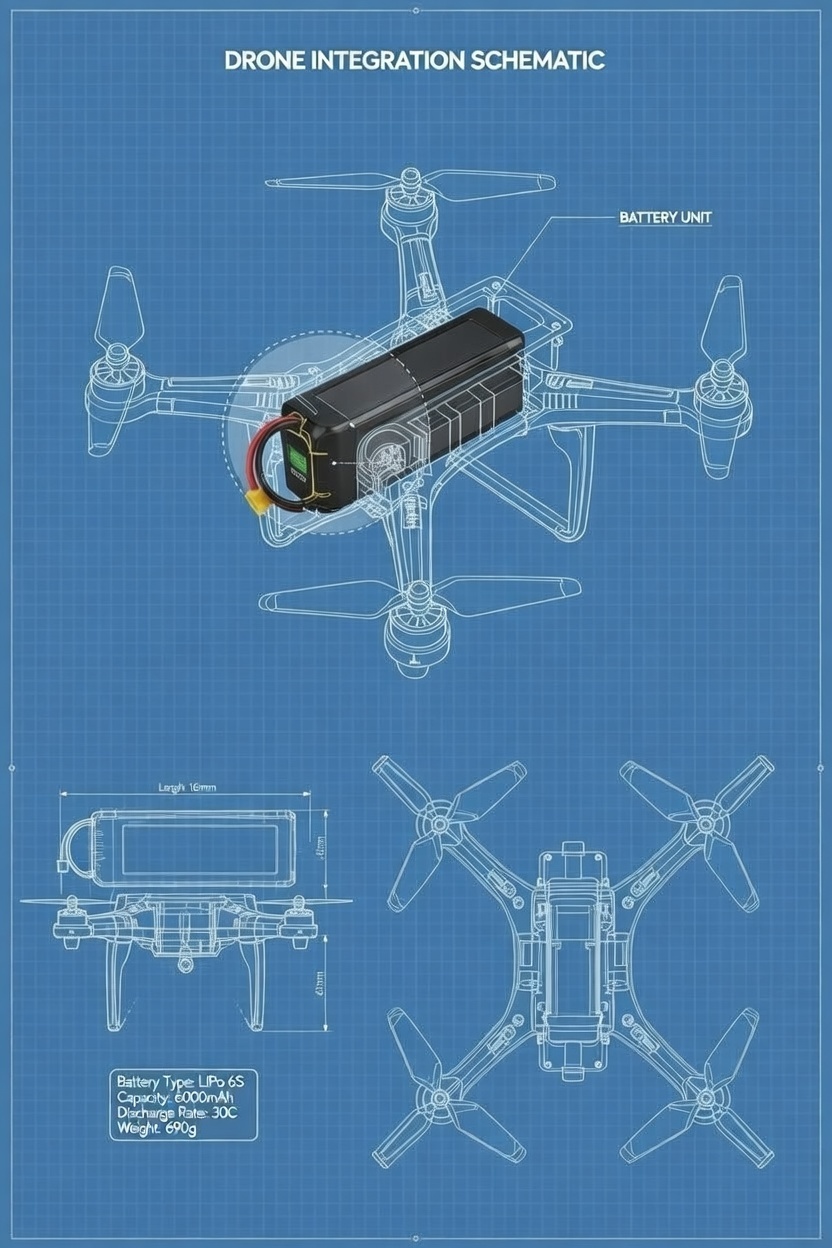
Introduction: The Hidden Crisis in Drone Operations
Picture this: A critical security breach occurs at 2 AM. Your surveillance drone fleet is ready to deploy—but half your batteries are depleted from yesterday’s patrol, and the remaining units need 90 minutes to charge. By the time your drones are airborne, the window for effective response has closed. This scenario represents a daily reality for countless security and surveillance firms struggling with inadequate drone battery procurement strategies.
The challenge extends far beyond simple inconvenience. In 2025, the drone security market reached $8.7 billion globally, with 73% of operations citing battery management as their primary operational bottleneck. New IATA regulations effective January 2026 now mandate that lithium-ion batteries must be transported at no more than 30% state of charge, fundamentally reshaping procurement logistics. Meanwhile, rapid technological advances in fast charging technology promise 56-minute full charges, yet many firms remain stuck with legacy systems that can’t keep pace with mission-critical demands.
This comprehensive guide transforms how security and surveillance organizations approach drone battery procurement, focusing on fast charging capabilities that maximize operational readiness while ensuring compliance, safety, and cost-effectiveness.
Understanding Fast Charging Technology for Drone Batteries
The Science Behind Rapid Power Delivery
Fast charging for drone batteries isn’t simply about pushing more electricity faster. Modern LiPo (Lithium Polymer) battery fast charging systems employ sophisticated battery management systems (BMS) that monitor cell voltage, temperature, and current flow in real-time. The U.S. Department of Energy defines Extreme Fast Charging (XFC) technology as achieving 0-80% charge in under 10 minutes with charging rates of 6C or higher, while maintaining battery energy density above 200Wh/kg.
For security drone applications, practical fast charging typically operates at 3C-5C rates, balancing speed with battery longevity. Leading manufacturers like DJI have implemented intelligent charging stations capable of simultaneously managing 12 TB50 smart batteries with output specifications of 26.1V max and 6.75A max per channel, completing full charges in approximately 56 minutes.
Key Technical Specifications to Evaluate
When procuring drone batteries with fast charging capabilities, security firms must assess:
- Charge Rate (C-Rating): Minimum 3C for operational efficiency, 5C+ for rapid deployment scenarios
- Energy Density: Target 200-250Wh/kg for optimal flight time-to-weight ratio
- Cycle Life: 500+ complete charge cycles before 80% capacity retention
- Thermal Management: Integrated cooling systems preventing temperatures exceeding 65°C during charging
- BMS Intelligence: Cell balancing, overcharge protection, and communication protocols
Regulatory Compliance and Safety Standards
2025-2026 IATA Transportation Regulations
The International Air Transport Association’s 66th Edition Dangerous Goods Regulations (DGR) introduced transformative changes affecting drone battery procurement:
Effective January 1, 2026:
- Lithium-ion batteries MUST be transported at ≤30% state of charge (previously “should”)
- New UN codes implemented: UN3556 (lithium-ion battery-powered vehicles), UN3557 (lithium metal battery-powered vehicles)
- Enhanced packaging requirements with 3-meter stacking tests for PI966 and PI967 provisions
- Mandatory 3C certification marking for all batteries in commercial transport
Security firms operating international drone fleets must build these constraints into procurement planning. Batteries shipped at 30% charge require immediate charging upon arrival, making fast charging infrastructure not optional but essential for operational continuity.
Industry Safety Certifications
Reputable drone battery suppliers should provide:
- UN38.3 Testing Certification: Mandatory for all lithium battery transportation
- IEC 62133 Compliance: International safety standard for portable sealed secondary cells
- CE/FCC Markings: Regional electromagnetic compatibility and safety approval
- ISO 9001 Quality Management: Manufacturing process certification
- RoHS Compliance: Restriction of hazardous substances
Strategic Procurement Framework for Security Operations
Assessing Your Operational Requirements
Before engaging suppliers, conduct a comprehensive operational audit:
Fleet Analysis:
- Number of drones in active rotation
- Average daily flight hours per unit
- Peak deployment scenarios requiring simultaneous operations
- Geographic distribution of operational bases
Charging Infrastructure:
- Available power capacity at each location
- Environmental conditions (temperature extremes affect charging efficiency)
- Security requirements for battery storage areas
- Backup power availability for continuous operations
Total Cost of Ownership Calculation
Smart procurement looks beyond initial purchase price. Consider this real-world case study:
Case Study: Metropolitan Security Solutions (2025)
This 50-drone fleet operator initially selected batteries based on lowest unit cost ($180 per battery). Within 18 months, they experienced:
- 34% premature battery failure rate
- Average 75-minute charge times limiting operational windows
- $47,000 in unplanned replacement costs
- Two mission failures attributed to insufficient charge during extended operations
After switching to premium fast-charging batteries ($285 per unit) with integrated BMS and 5C charging capability:
- Battery lifespan extended to 650+ cycles
- Charge time reduced to 45 minutes
- Operational availability increased 40%
- Total three-year cost reduced by 28% despite higher initial investment
Fast Charging Infrastructure Implementation
Station-Based vs. Mobile Charging Solutions
Fixed Charging Stations work best for:
- Centralized fleet operations
- Facilities with stable power infrastructure
- High-volume daily charging requirements (20+ batteries)
- Temperature-controlled environments
DJI’s Battery Management Station exemplifies this approach, accommodating 12 TB50 batteries simultaneously with intelligent charge sequencing that optimizes power distribution and minimizes grid impact.
Mobile Charging Solutions suit:
- Distributed operational teams
- Remote surveillance locations
- Emergency response units
- Temporary deployment scenarios
Portable power stations like the DJI Power 1000 V2 with 200W solar panel compatibility enable field charging with 56-minute full charge cycles, supporting multiple drone batteries through appropriate adapter cables.
Power Management Best Practices
Implement these protocols to maximize charging efficiency and battery longevity:
- Staggered Charging Schedules: Avoid simultaneous charging of all batteries to prevent power grid overload and reduce thermal stress
- Temperature Monitoring: Maintain charging environment between 10°C-35°C for optimal performance
- Storage Charge Levels: Keep备用 batteries at 40-60% state of charge when not in use
- Regular Calibration: Perform complete discharge-charge cycles monthly to maintain BMS accuracy
- Rotation Systems: Implement first-in-first-out battery usage to prevent aging disparities
Vendor Selection Criteria and Due Diligence
Essential Supplier Qualifications
When evaluating drone battery suppliers for security applications, verify:
Technical Capabilities:
- In-house BMS development and manufacturing
- Fast charging technology patents or licenses
- Quality control testing facilities
- R&D investment percentage (industry leaders maintain 8-12%)
Business Stability:
- Minimum 5 years in drone battery manufacturing
- Financial statements demonstrating profitability
- Insurance coverage for product liability
- References from comparable security sector clients
Support Infrastructure:
- 24/7 technical support availability
- Warranty terms (industry standard: 12-24 months)
- Replacement battery availability guarantees
- Training programs for operational staff
Red Flags to Avoid
Protect your organization by watching for these warning signs:
- Unwillingness to provide UN38.3 test reports
- Vague or missing warranty documentation
- No physical manufacturing address verification
- Prices significantly below market average (often indicating inferior cells)
- Lack of fast charging specification documentation
- No after-sales support infrastructure
Future-Proofing Your Battery Investment
Emerging Technologies to Monitor
The drone battery landscape evolves rapidly. Security firms should track:
Solid-State Batteries: Expected commercial availability 2027-2028, promising 50% higher energy density and eliminated fire risk
Graphene-Enhanced LiPo: Currently in advanced testing, offering 30% faster charging with improved cycle life
Smart Grid Integration: Charging systems that automatically optimize based on electricity pricing and grid demand
Wireless Charging Pads: Emerging technology enabling automatic charging when drones land on designated pads
Scalability Planning
Design your procurement strategy with growth in mind:
- Select battery platforms compatible with multiple drone models
- Negotiate volume pricing tiers accommodating fleet expansion
- Ensure charging infrastructure can scale 50% beyond current needs
- Maintain supplier relationships enabling rapid procurement during emergencies
Conclusion: Elevating Operational Readiness Through Strategic Battery Procurement
Fast charging capability in drone battery procurement isn’t merely a technical specification—it’s a strategic advantage that directly impacts your security firm’s operational effectiveness, response times, and mission success rates. The convergence of new transportation regulations, advancing charging technology, and increasing operational demands makes informed procurement decisions more critical than ever.
Security and surveillance firms that prioritize fast charging capabilities, regulatory compliance, and total cost of ownership over initial purchase price position themselves for sustained operational excellence. The investment in quality fast-charging batteries and supporting infrastructure pays dividends through increased availability, reduced downtime, and enhanced mission reliability.
Take Action Today
Don’t let battery limitations compromise your security operations. Our team specializes in custom drone battery solutions tailored specifically for security and surveillance applications, combining cutting-edge fast charging technology with comprehensive compliance support.
Ready to optimize your drone fleet’s operational readiness? Contact our specialists for a customized procurement assessment and discover how strategic battery investment transforms your security capabilities.
👉 Get Your Custom Drone Battery Solution
Additional Resources
- Explore our complete drone battery product range for detailed specifications
- Download our Battery Management Best Practices whitepaper
- Schedule a technical consultation with our engineering team
- Review case studies from security firms achieving 40%+ operational improvements
Your mission-critical operations deserve battery solutions that perform when it matters most. Let’s build your competitive advantage together.