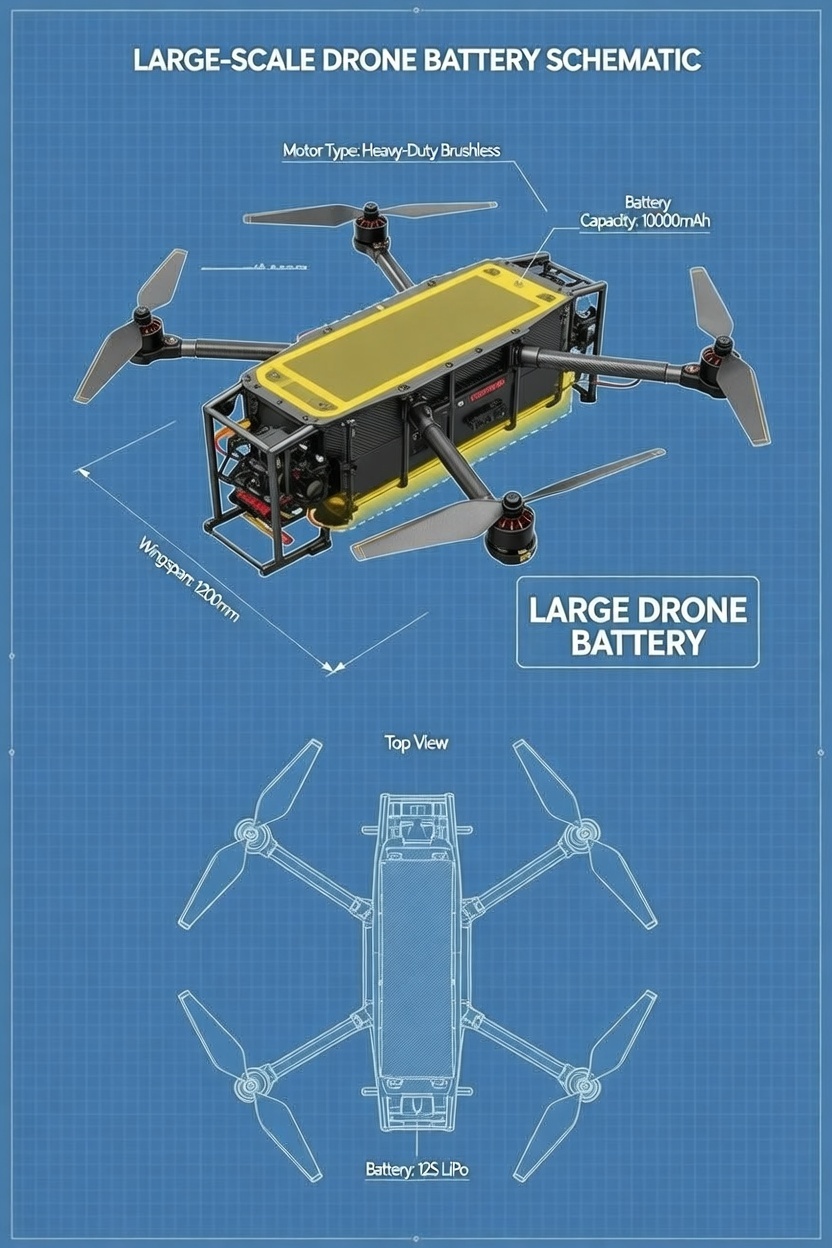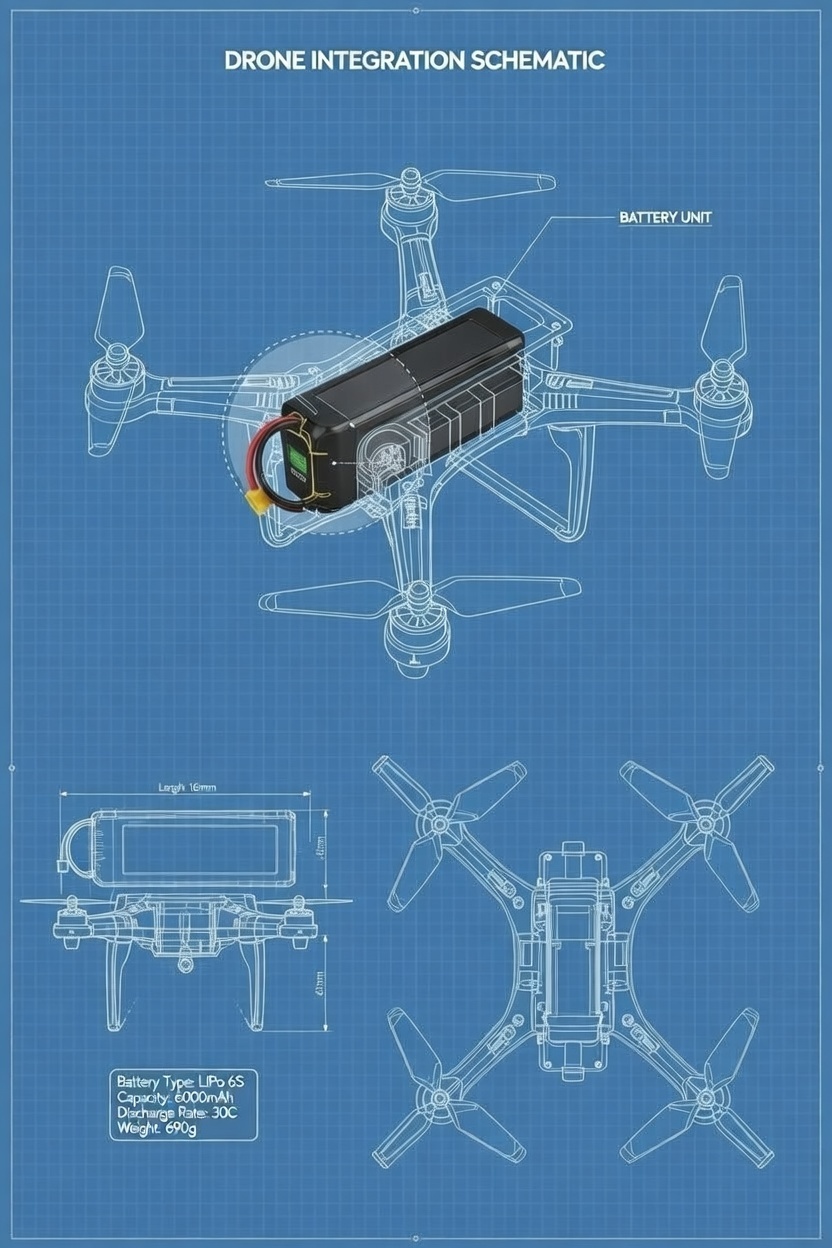
In the rapidly evolving landscape of 2026, the intersection of aerial robotics and clean energy infrastructure has created a unique procurement niche. Hydrogen fuel testing labs are increasingly relying on industrial drones for facility inspection, leak detection, and environmental monitoring. However, the core of this operational capability lies not just in the airframe, but in the power source. For procurement managers and technical directors overseeing bulk acquisitions, understanding the nuances of the Battery Management System (BMS) in drone batteries is critical. This guide is designed specifically for大宗 procurement users (bulk buyers) within the hydrogen energy sector. By prioritizing advanced BMS features, organizations can significantly reduce long-term operational costs, enhance safety protocols in volatile environments, and ensure data integrity during critical testing phases. A strategic approach to drone battery procurement goes beyond price per watt-hour; it demands a rigorous evaluation of the electronic brain that protects your investment and your facility.
The Critical Role of BMS in Hydrogen Testing Environments
Hydrogen fuel testing laboratories operate under stringent safety regulations. The presence of hydrogen gas, even in controlled testing scenarios, introduces specific risks regarding ignition and electrostatic discharge. When deploying drones within or around these facilities, the battery system becomes a potential ignition source if not properly managed. This is where the BMS transitions from a component to a safety critical system.
In 2026, the standard for industrial drone batteries has shifted. It is no longer sufficient to have basic overcharge protection. Modern BMS architectures must integrate real-time cell monitoring, thermal runaway prevention, and robust communication protocols that do not interfere with sensitive hydrogen sensors. For bulk procurement users, the benefit is twofold: risk mitigation and asset longevity. A high-quality BMS ensures that every cell in a battery pack ages uniformly, preventing premature failure of the entire pack. In a bulk purchase scenario involving hundreds of units, a 10% increase in cycle life translates to substantial cost savings and reduced logistical burdens associated with battery disposal and replacement. Furthermore, advanced BMS units provide data logging capabilities essential for compliance reporting, allowing labs to prove that all electronic equipment met safety standards during testing operations.
Step-by-Step Guide to Drone Battery Procurement
Navigating the procurement process for specialized drone batteries requires a structured approach. The following steps outline a best-practice framework for sourcing BMS-equipped batteries suitable for hydrogen fuel testing labs.
1. Define Operational Requirements and Safety Zones
Before contacting vendors, map out the specific zones where drones will operate. Hydrogen labs often have classified hazardous areas (e.g., Zone 0, Zone 1, Zone 2). Your battery procurement specifications must align with these zones. Determine if you need intrinsically safe batteries or if standard industrial-grade BMS with enhanced isolation is sufficient. Document the required flight time, payload capacity, and discharge rates (C-rating) needed for your specific drone models.
2. Specify BMS Technical Parameters
This is the most critical step. Your Request for Proposal (RFP) should explicitly detail BMS requirements. Key parameters include:
- Cell Balancing: Mandate active balancing for packs over 6S to ensure longevity.
- Communication Protocols: Require SMBus, CAN Bus, or RS485 for seamless integration with ground control stations.
- Protection Thresholds: Define exact voltage and temperature cut-offs.
- Data Logging: The BMS must record cycle counts, error codes, and peak temperatures.
3. Vendor Vetting and Certification Check
Not all battery manufacturers are equipped to handle industrial specifications. Verify that the vendor holds relevant ISO certifications (e.g., ISO 9001 for quality management). In the context of 2026 regulations, check for compliance with emerging standards like the EU Industrial Accelerator Act if you operate internationally, which emphasizes supply chain transparency and safety. Request sample units for preliminary testing before committing to a bulk order.
4. Pilot Testing and Validation
Never deploy a new battery batch directly into critical operations. Conduct a pilot program with a small subset of the procurement. Test the batteries in conditions that mimic the hydrogen lab environment, focusing on thermal performance and signal interference. Validate that the BMS communication does not disrupt hydrogen leak detectors or spectrometers.
5. Negotiate Support and Warranty Terms
For bulk procurement, standard warranties are often insufficient. Negotiate extended warranty terms that cover BMS firmware updates and technical support. Ensure the vendor provides replacement units quickly to minimize downtime. A service level agreement (SLA) regarding battery health monitoring tools is also advisable.
Comparison Analysis: Standard vs. Advanced BMS Features
To aid decision-making, the following comparison highlights the differences between standard consumer-grade BMS and the advanced systems required for hydrogen testing labs.
| Feature | Standard Consumer BMS | Advanced Industrial BMS (Recommended) | Benefit for Hydrogen Labs |
|---|---|---|---|
| Balancing Method | Passive (Resistor-based) | Active (Capacitor/Inductor-based) | Active balancing extends pack life by 30-40%, reducing waste and cost. |
| Thermal Management | Basic thermal cutoff | Dynamic thermal throttling & logging | Prevents overheating in confined lab spaces; provides data for safety audits. |
| Communication | Simple LED indicators | Digital telemetry (CAN/SMBus) | Allows real-time monitoring of battery health from the control room. |
| Safety Protections | Overcharge/Discharge | Short-circuit, Over-temp, Cell mismatch | Critical for preventing ignition sources in hydrogen-rich environments. |
| Data Retention | Volatile (Lost on power off) | Non-volatile memory (Blackbox) | Essential for incident investigation and regulatory compliance. |
| Cycle Life | 300-500 cycles | 1000+ cycles | Higher ROI for bulk purchasers; less frequent replacement. |
The table clearly demonstrates that while advanced BMS features may increase the initial unit cost, the total cost of ownership (TCO) is significantly lower due to extended lifespan and reduced risk. For a hydrogen fuel testing lab, the ability to monitor battery telemetry in real-time is not just a convenience; it is a safety imperative. If a battery begins to exhibit abnormal heating, the BMS should communicate this to the ground station immediately, allowing the operator to land the drone before a potential incident occurs.
Addressing Common Pain Points in Battery Procurement
Bulk buyers often encounter specific challenges when sourcing drone batteries. Here are high-value solutions for the most common痛点 (pain points).
Pain Point 1: Inconsistent Performance Across Batches
Solution: Require vendors to provide batch testing reports. A robust BMS should compensate for minor cell variations, but consistency starts at the cell grading level. Specify that all cells within a pack must be from the same production batch.
Pain Point 2: Compatibility with Legacy Drone Systems
Solution: Many labs use a mix of old and new drone models. Work with vendors who offer customizable BMS firmware. The ability to tweak communication protocols or voltage curves ensures that new batteries can power older frames without modification.
Pain Point 3: Safety Concerns in Hazardous Areas
Solution: Look for BMS features that include “Safe Mode” activation. In the event of a crash or impact, the BMS should instantly disconnect the output circuit to prevent sparking. Some advanced systems also include inertial switches that trigger this disconnect upon sudden deceleration.
Pain Point 4: Lack of Technical Support
Solution: Prioritize vendors who offer engineering-level support rather than just customer service. For bulk orders, request a dedicated account manager who understands the technical intricacies of BMS architecture.
Frequently Asked Questions (FAQ)
Q1: Why is active balancing preferred for drone batteries in testing labs?
A: Active balancing transfers energy from high-voltage cells to low-voltage cells rather than dissipating it as heat. This efficiency is crucial in lab environments where heat generation must be minimized, and it significantly extends the usable capacity of the battery pack over time.
Q2: Can the BMS interfere with hydrogen sensors?
A: Poorly shielded BMS electronics can emit electromagnetic interference (EMI). Procurement specifications should require EMI shielding compliance (e.g., CE or FCC Part 15 Class A). Industrial-grade BMS units are designed to minimize noise, ensuring they do not trigger false positives on sensitive gas detectors.
Q3: How do I verify the cycle life claimed by the vendor?
A: Request third-party test reports or conduct your own accelerated aging tests on sample units. A reliable BMS will accurately report State of Health (SOH). If the reported SOH drops faster than expected during testing, it indicates poor cell matching or balancing logic.
Q4: What happens if the BMS fails mid-flight?
A: Redundant safety circuits are essential. The BMS should have a hardware-level fail-safe that defaults to a safe state (disconnected) if the microcontroller freezes. This prevents uncontrolled discharge or thermal events.
Q5: Is it worth paying more for a smart BMS with cloud connectivity?
A: For large fleets, yes. Cloud-connected BMS allows for centralized fleet management. You can track the health of every battery across multiple labs, predict failures before they happen, and optimize charging schedules to reduce energy costs.
Conclusion and Next Steps
Procuring drone batteries for hydrogen fuel testing labs is a high-stakes decision that impacts safety, budget, and operational efficiency. By focusing on the sophistication of the Battery Management System, procurement leaders can secure a power solution that is reliable, safe, and cost-effective in the long run. The technology available in 2026 offers unprecedented levels of control and monitoring, turning the battery from a simple consumable into a smart asset.
Do not leave your facility’s safety to chance with generic power solutions. Tailor your procurement strategy to demand the highest standards in BMS technology. If you are ready to discuss custom BMS specifications or require a quote for bulk drone battery orders tailored to hydrogen testing environments, our team of experts is available to assist.
For personalized consultation and detailed technical specifications, please visit our contact page: Drone Battery Contact. Let us help you power your innovation safely and efficiently.