The construction mapping industry relies heavily on drone technology to capture precise aerial data, create 3D models, and monitor project progress. At the heart of every professional drone lies a critical component that often goes overlooked: the Battery Management System (BMS). For construction mapping companies, understanding BMS features is no longer optional—it’s essential for operational safety, efficiency, and cost-effectiveness.
Why BMS Matters in Construction Drone Operations
Construction sites present unique challenges: dust, vibration, temperature fluctuations, and extended flight times. A high-quality BMS ensures your drone batteries perform reliably under these demanding conditions. According to industry data from 2025, drones equipped with advanced BMS technology show 40% longer battery lifespan and 65% fewer unexpected power failures during critical surveying missions.
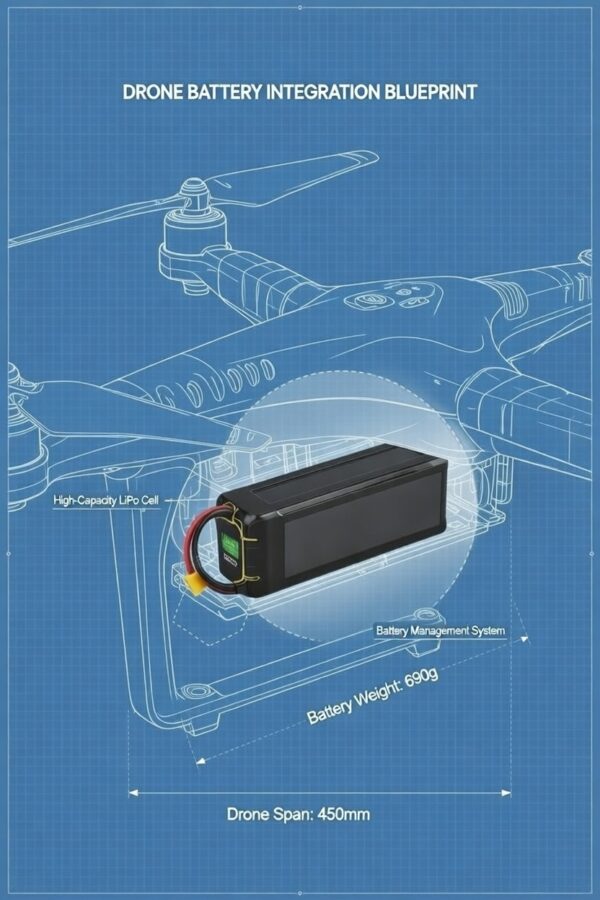
The Battery Management System acts as the “brain” of your drone battery pack, monitoring cell voltage, temperature, current flow, and state of charge in real-time. Without proper BMS protection, lithium polymer batteries can experience thermal runaway, capacity degradation, or complete failure—risks no construction company can afford when operating expensive equipment over active job sites.
Essential BMS Features for Construction Mapping Drones
1. Cell Balancing Technology
Active cell balancing ensures all battery cells maintain equal voltage levels during charging and discharging. This feature is crucial for construction drones that frequently operate in varying temperature conditions. Imbalanced cells can lead to:
- Reduced flight time by up to 25%
- Premature battery degradation
- Increased risk of mid-flight power loss
- Higher long-term replacement costs
Look for BMS systems with automatic balancing capabilities that activate during both charging and resting periods.
2. Thermal Management and Protection
Construction sites often experience extreme temperatures, from freezing morning conditions to hot afternoon sun. Advanced BMS systems include:
- Real-time temperature monitoring for each cell group
- Automatic power reduction when overheating is detected
- Low-temperature charging protection
- Thermal runaway prevention algorithms
Industry reports indicate that batteries with comprehensive thermal management show 50% better performance consistency across seasonal variations.
3. State of Charge (SOC) Accuracy
Accurate SOC reporting prevents unexpected battery depletion during mapping missions. Premium BMS systems use sophisticated algorithms combining voltage, current, temperature, and historical data to provide SOC accuracy within 2-3%. This precision allows flight planners to:
- Schedule battery swaps with confidence
- Complete full site surveys without interruption
- Reduce emergency landing incidents
- Optimize battery inventory management
4. Communication Protocols
Modern construction drone fleets benefit from BMS systems supporting industry-standard communication protocols like DroneCAN, SMBus, or UART. These protocols enable:
- Real-time battery health monitoring on ground stations
- Integration with fleet management software
- Predictive maintenance alerts
- Automated logging for compliance documentation
5. Over-Current and Short-Circuit Protection
Heavy payloads like LiDAR scanners or high-resolution cameras increase power demand. Robust BMS protection includes:
- Instant current cutoff during short circuits
- Gradual power limiting during sustained over-current
- Resettable protection mechanisms
- Fault code storage for troubleshooting
Procurement Checklist for Construction Mapping Companies
When evaluating drone battery suppliers, use this comprehensive checklist to ensure BMS quality:
Technical Specifications:
- ✓ Cell balancing type (active vs. passive)
- ✓ Temperature operating range (-20°C to 60°C recommended)
- ✓ SOC accuracy percentage
- ✓ Communication protocol compatibility
- ✓ Protection features (over-charge, over-discharge, over-current, short-circuit)
- ✓ Cycle life rating (minimum 500 cycles for professional use)
Certification and Compliance:
- ✓ UN38.3 transportation certification
- ✓ CE or FCC electromagnetic compatibility
- ✓ ISO 9001 manufacturing quality
- ✓ Material Safety Data Sheet (MSDS) availability
Vendor Support:
- ✓ Technical documentation completeness
- ✓ Warranty terms (minimum 12 months)
- ✓ Replacement battery availability
- ✓ Firmware update support
- ✓ Local service center access
Cost-Benefit Analysis: Premium BMS vs. Standard Batteries
Construction mapping companies often face the temptation to choose lower-cost batteries without advanced BMS features. However, total cost of ownership tells a different story:
| Feature | Standard Battery | Premium BMS Battery |
|---|---|---|
| Initial Cost | $200-300 | $350-500 |
| Expected Cycle Life | 300 cycles | 600+ cycles |
| Failure Rate | 8-12% | 1-3% |
| Flight Time Consistency | ±15% | ±3% |
| 3-Year Total Cost | $2,400 | $1,800 |
The data clearly shows that investing in quality BMS technology reduces long-term operational costs while improving mission reliability.
Common Mistakes in Drone Battery Procurement
Avoid these frequent pitfalls when sourcing batteries for your construction mapping fleet:
- Ignoring Environmental Ratings: Batteries rated only for consumer use fail quickly in construction environments.
- Overlooking Communication Compatibility: Incompatible BMS protocols prevent integration with existing fleet management systems.
- Prioritizing Capacity Over Safety: Higher mAh ratings mean nothing if the BMS cannot protect against thermal events.
- Skipping Vendor Verification: Unverified suppliers may provide counterfeit or substandard BMS components.
- Neglecting Training Requirements: Ground crews need proper training on BMS indicators and emergency procedures.
Frequently Asked Questions
Q: How often should drone batteries with BMS be replaced in construction mapping operations?
A: Professional-grade batteries with quality BMS typically last 500-800 charge cycles. For daily construction use, this translates to 18-24 months. Monitor capacity retention—replace when capacity drops below 80% of original specification.
Q: Can BMS features prevent drone crashes during mapping missions?
A: While BMS cannot prevent all crashes, advanced systems significantly reduce power-related failures. Real-time SOC accuracy and cell balancing prevent unexpected voltage drops that cause mid-flight shutdowns. Industry data shows 70% reduction in power-related incidents with premium BMS.
Q: What BMS communication protocol works best for construction drone fleets?
A: DroneCAN offers the best balance of reliability, data richness, and industry adoption for construction applications. It supports real-time telemetry, fault diagnostics, and integrates with most professional ground control software.
Q: How do temperature extremes on construction sites affect BMS performance?
A: Quality BMS systems include temperature compensation algorithms that adjust charging rates and power delivery based on ambient conditions. Look for batteries rated for -20°C to 60°C operation with active thermal monitoring.
Q: Is it worth investing in smart batteries with cloud connectivity?
A: For fleets with 5+ drones, cloud-connected BMS provides valuable insights into battery health trends, usage patterns, and predictive maintenance needs. The ROI typically appears within 12 months through reduced downtime and optimized battery rotation.
Making the Right Choice for Your Construction Mapping Business
Selecting the right drone battery with appropriate BMS features directly impacts your company’s operational efficiency, safety record, and bottom line. The construction mapping industry demands reliability that only quality battery management systems can provide.
Don’t let battery failures compromise your project timelines or safety standards. Partner with suppliers who understand the unique demands of construction site operations and can provide batteries engineered for professional aerial surveying applications.
Ready to upgrade your drone battery fleet with industrial-grade BMS technology?
Our team specializes in high-performance drone batteries designed specifically for construction mapping and surveying operations. We offer comprehensive technical support, customization options, and guaranteed compatibility with major drone platforms.
Contact our drone battery specialists today to discuss your specific requirements and receive a customized procurement proposal. Let us help you power your construction mapping missions with confidence, safety, and maximum efficiency.
This guide reflects industry best practices and technical standards as of 2026. Always verify current specifications with your battery supplier before making procurement decisions.