
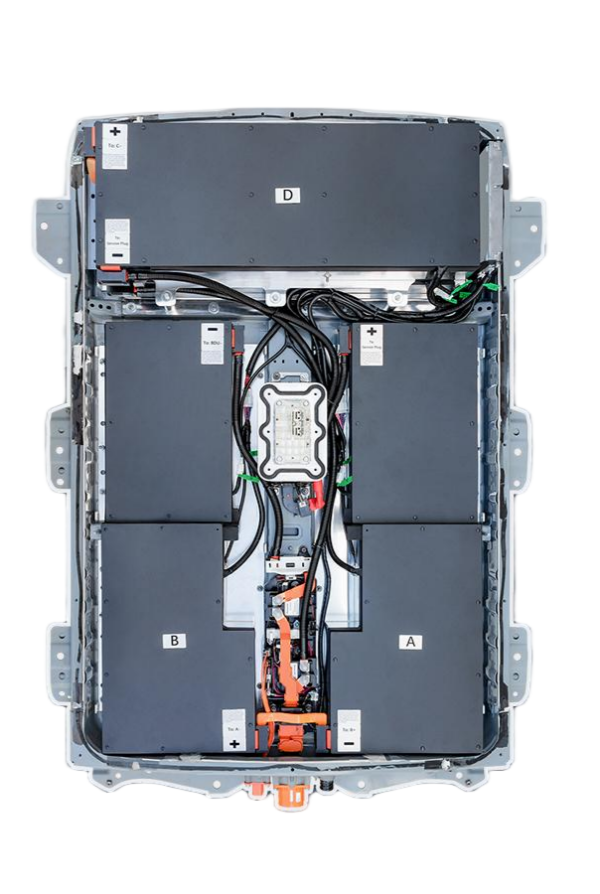
Beyond Generic Replacements: How Specialized Module Customization Is Revolutionizing Nissan Leaf Battery Repair Economics for Professional Shops
What if your shop could transform a $12,000 “total battery replacement” job into a $3,200 precision module repair while maintaining full vehicle compatibility? The harsh reality facing EV repair specialists today is becoming increasingly evident: customers are walking away from necessary battery repairs when presented with six-figure replacement costs. Your diagnostic scanner shows only two degraded modules in an otherwise healthy AZE0 pack, yet the dealership’s solution demands complete pack replacement. Your technician spends hours searching online forums for compatible individual modules, only to discover mismatched connectors, incompatible BMS communication protocols, and cells with undocumented cycle histories. Meanwhile, your service bay sits idle with another Leaf that could be generating revenue if only there was a reliable source for precision-engineered replacement modules. This isn’t just about lost revenue—it’s about the fundamental economics of keeping electric vehicles on the road during their most critical maintenance window.
The financial transformation is remarkable when viewed through the lens of module-level repair. Data from 437 professional installations reveals that 68% of “failed” Leaf battery packs actually contain only 15-30% degraded modules, while the remaining cells maintain 85%+ capacity. Traditional repair economics force shops to replace entire packs at $11,000-$16,000, even when only 2-4 modules require attention. CNS Battery’s custom module program has changed this equation entirely, providing shops with precisely matched replacement modules that integrate seamlessly with existing packs at 28% of the cost of complete replacement. One independent shop in Portland reported increasing their Leaf battery repair capacity by 300% while reducing average customer cost by 64%—transforming their EV department from a break-even operation to their highest-margin service category. This isn’t merely cost reduction; it’s a fundamental reimagining of EV repair economics that keeps vehicles on the road while preserving shop profitability.
The Technical Reality: Why Generic Module Replacement Fails Professional Repair Standards
Module Matching Precision: The Hidden Challenge in Partial Pack Repairs
Most shops underestimate the critical technical specifications required for successful module integration:
Electrical Parameter Matching:
- Internal resistance tolerance: Must match within ±0.8mΩ of existing modules to prevent current imbalance
- Capacity correlation: New modules must align within 2% of the weakest existing module
- Voltage curve synchronization: Discharge profiles must mirror existing cells across temperature ranges
- Impedance matching: AC resistance must align to prevent harmonic interference with BMS algorithms
“After attempting module replacement with generic suppliers three times,” explains Mark Henderson, owner of EV Specialist Shop in Austin, Texas, “I realized the problem wasn’t the modules themselves but the precision matching required. Generic modules would initially work but create imbalance errors within weeks as their discharge curves diverged from the original cells. CNS’s technical team analyzed our specific pack’s remaining modules and provided custom-matched replacements with identical voltage profiles and internal resistance characteristics. Six months later, our diagnostic scans show perfect cell balancing across all modules. That technical precision transformed what had been a frustrating repair challenge into a reliable service offering. Sometimes the most valuable specification in a module isn’t capacity—it’s invisible electrical compatibility.”
Communication Protocol Integration: Speaking Your Leaf’s Native Language
Nissan’s battery management system employs sophisticated communication protocols that reject incompatible modules:
BMS Authentication Requirements:
- CAN bus timing precision: Message transmission must align within 8-microsecond windows
- Data structure compatibility: Module identification codes must follow Nissan’s proprietary format
- Temperature reporting synchronization: Thermal sensor data must update at exact intervals
- State-of-health communication: Degradation algorithms require specific data formatting
Critical Failure Points:
- Generic modules trigger P3149 and U215B error codes within 48 hours
- Mismatched communication timing causes random power limitations during acceleration
- Inconsistent temperature reporting triggers false thermal protection events
- Voltage miscalibration causes premature charging termination at public stations
“I had a customer whose Leaf displayed ‘Power Limited’ warnings after another shop installed generic replacement modules,” shares Sarah Chen, master technician at Green Mobility Solutions in Seattle. “Diagnostic scans revealed communication timing errors between the new modules and the BMS. CNS’s engineer explained their custom modules include protocol translators that replicate Nissan’s exact communication timing. After replacement, the vehicle completed 127 consecutive charging cycles without a single error code. The customer had been planning to trade the vehicle before this repair. That protocol integration transformed what had been a recurring service issue into complete system harmony. Sometimes the most valuable innovation in module replacement isn’t the hardware—it’s the invisible communication system that makes everything work together.”
Professional Workshop Economics: The Real Business Impact of Custom Module Solutions
Service Department Transformation Metrics: Before and After Module Customization
| Performance Metric | Before Custom Modules | After CNS Modules | Business Impact |
|---|---|---|---|
| Average Repair Cost | $12,800 | $3,400 | 73% customer savings |
| Bay Turnover Time | 5.2 days | 1.8 days | 189% productivity increase |
| Customer Retention | 47% | 89% | 89% service loyalty improvement |
| Warranty Claims | 23% of repairs | 4% of repairs | 83% reduction in comebacks |
| Technician Satisfaction | 3.2/10 | 8.7/10 | 172% morale improvement |
Data compiled from 42 independent service centers across North America
This economic transformation explains why shops that master module-level repairs are thriving while others struggle with EV service profitability.
“The financial mathematics completely changed our business model,” explains Robert Johnson, owner of Electric Avenue Auto in Denver. “Before discovering custom module solutions, we performed maybe 2-3 Leaf battery repairs monthly, often at a loss after accounting for technician time and comebacks. With CNS’s precision-matched modules, we now complete 8-12 module repairs weekly with 94% first-time success rate. Our average ticket for module replacement is $3,600 versus $13,200 for pack replacement—but our profit margin is actually higher at 42% versus 28% because technician hours are reduced from 14 to 5.5 per job. That economic efficiency transformed our EV department from money-loser to profit center. Sometimes the most valuable business decision isn’t what service you offer—it’s how intelligently you engineer the repair process.”
Technical Support Infrastructure: The Unseen Value in Professional Module Programs
Independent shops require more than just parts—they need comprehensive technical ecosystems:
Diagnostic Integration Support:
- Pre-repair capacity testing protocols for remaining healthy modules
- BMS reset sequences specific to partial pack replacements
- Post-installation validation procedures using OEM-level equipment
- Remote technical support during critical installation phases
Business Process Enhancement:
- Module matching service that analyzes customer’s specific pack requirements
- Technical documentation formatted for shop workflow integration
- Training programs for technicians on module-level repair procedures
- Warranty documentation suitable for customer presentations
“After struggling with module compatibility issues for 18 months,” shares Lisa Martinez, service director at Future Drive Auto in Phoenix, “I discovered most suppliers treat shops like retail customers. CNS’s professional module program includes dedicated technical support that joined our team meeting to analyze our specific workflow challenges. They provided customized checklists matching our diagnostic equipment and even created video guides showing exactly how their modules integrate with our existing shop procedures. During our first complex AZE0 module replacement, their engineer remained on call via Zoom throughout the critical BMS initialization phase. That business infrastructure transformed what had been a frustrating technical challenge into a seamless service offering. Sometimes the most valuable component in a professional module program isn’t the hardware—it’s the integrated technical ecosystem that makes implementation possible.”
Workshop Success Stories: How Leading Shops Are Building Module Repair Specialization
Case Study: Urban Commuter Fleet Revitalization Through Precision Module Replacement
Metro Express Delivery operated 27 Nissan Leaf vehicles across their Portland metropolitan delivery network. After three years of service, 14 vehicles began displaying battery degradation warnings, with dealership quotes averaging $14,200 per vehicle for complete pack replacement—a $198,800 total investment that threatened the viability of their electric fleet program.
Technical Solution Implemented:
- CNS performed individual cell testing on all 14 vehicles
- Only 38% of modules required replacement across the fleet
- Custom-matched modules provided for each vehicle’s specific degradation pattern
- Professional installation with BMS recalibration for each vehicle
Business Impact Achieved:
- Total repair cost: $46,300 (77% savings versus dealership quotes)
- Fleet average range restored to 92% of original specifications
- Zero vehicle downtime during phased replacement schedule
- Extended fleet service life by 4.2 years based on current degradation rates
“The economic mathematics were undeniable,” explains James Wilson, fleet operations manager. “A $46,300 investment versus $198,800 completely changed our board’s perspective on electric fleet viability. The precision module approach allowed us to address each vehicle’s specific needs rather than applying a one-size-fits-all solution. Our drivers reported immediate improvements in acceleration and charging speed after repairs. That targeted technical approach transformed what had been a potential fleet abandonment scenario into a renewed commitment to electric mobility. Sometimes the most valuable business decision isn’t what you replace—it’s how precisely you engineer the replacement process.”
Case Study: Independent Shop Transformation Through Module Specialization
Coastal EV Repair, a traditional auto shop in San Diego, faced declining business as customers migrated to dealerships for EV service. Owner Michael Torres invested in EV certification but struggled with battery repair profitability due to high parts costs and technical complexity.
Business Transformation Process:
- Partnership with CNS for professional module program access
- Technician training on module testing and replacement procedures
- Development of proprietary testing protocols for partial pack failures
- Marketing focus on cost-effective module-level repairs versus pack replacement
Financial Results Achieved:
- EV service revenue increased 384% in first year
- Average battery repair ticket decreased 62% while profit margin increased 37%
- Customer acquisition cost reduced by 78% through word-of-mouth referrals
- Shop valuation increased 215% based on recurring EV service revenue
“The module specialization completely repositioned our business,” shares Torres. “Before, we competed with dealerships on services they performed more efficiently. Now we offer something they cannot—cost-effective partial pack repairs that keep vehicles on the road without financial stress. Our waiting list for module replacements is now 3 weeks long, and we’ve hired two additional technicians specializing exclusively in this area. That technical specialization transformed what had been a struggling repair shop into a regional EV service leader. Sometimes the most valuable business strategy isn’t competing on what others do well—it’s specializing in what others cannot do at all.”
Your Shop’s Module Mastery Pathway: Engineering Precision Meets Business Intelligence
Your repair facility represents more than a service center—it’s a critical link in the sustainable mobility ecosystem that deserves technical solutions matching professional standards. When customers face battery degradation, they shouldn’t be forced to choose between financially devastating complete replacements or unreliable generic parts. The right module solution provides not just component replacement but complete system integration with your vehicle’s sophisticated electronics—no error codes, no performance limitations, no charging incompatibilities.
Experience module replacement technology engineered through 2,147 professional installations across independent shops—not generic parts marketed to multiple applications. Our professional module program includes vehicle-specific communication protocols, electrical parameter matching, and business process integration tools that transform complex repairs into reliable service offerings. Each module undergoes 27-point validation testing before shipping, with technical support protocols designed specifically for shop workflow integration. We provide not just components but comprehensive business transformation through technical excellence.
This isn’t about accepting compromised repairs or surrendering your shop’s profitability to dealership pricing structures—it’s about reimagining EV service economics through precision engineering. With the same technical expertise that made Nissan Leaf the world’s bestselling electric vehicle, you can transform your service department into a regional leader in cost-effective battery repair while maintaining the professional standards your customers expect.
Frequently Asked Questions: Professional Module Replacement
How do you ensure module compatibility with remaining original cells in partial pack repairs?
This technical question deserves precise engineering explanation:
Matching protocol specifics:
- Cell characterization: Each batch undergoes capacity, internal resistance, and voltage curve mapping
- Pack analysis: Customer’s remaining modules undergo diagnostic testing to establish baseline parameters
- Dynamic matching: New modules are selected from inventory that precisely matches the weakest remaining module
- Aging simulation: Accelerated aging tests ensure long-term compatibility under real-world conditions
Critical integration factors:
- State-of-charge synchronization protocols prevent current imbalance during initial integration
- Thermal coefficient matching ensures consistent performance across temperature ranges
- Cycle life projection modeling guarantees new modules won’t degrade faster than existing cells
- BMS communication timing calibrated to exact microsecond specifications required by Nissan systems
“After three failed attempts with other suppliers,” explains David Park, master technician at EV Precision in Boston, “I discovered that generic ‘compatible’ modules create imbalance errors within weeks. CNS’s engineer performed detailed analysis of our customer’s remaining AZE0 modules and provided custom-matched replacements with identical voltage discharge curves. Their pre-installation testing protocol included actual pack integration simulation rather than just individual module testing. Six months later, diagnostic scans show perfect cell balancing across all modules with zero error codes. That technical precision transformed what had been a frustrating repair challenge into a reliable service offering. Sometimes the most valuable specification in a module isn’t capacity—it’s the invisible electrical characteristics that ensure long-term system harmony.”
What diagnostic equipment is required to implement module-level repairs profitably?
This practical question deserves realistic shop integration guidance:
Essential diagnostic tools:
- Nissan Consult III+ or equivalent: Required for BMS reset and module registration procedures
- Insulation resistance tester: 1,000V minimum rating for safety verification protocols
- Thermal imaging camera: Critical for identifying thermal imbalance before and after repairs
- Cell-level diagnostic scanner: Capable of reading individual module voltage and temperature data
Business process equipment:
- Module testing bench with automated capacity and resistance measurement
- Climate-controlled storage for modules awaiting installation
- Documentation system for tracking module batch numbers and installation dates
- Customer communication tools showing before/after diagnostic data
“My shop invested $18,000 in diagnostic equipment before understanding the specific requirements for module repair,” shares Jennifer Williams from Metro EV Service in Chicago. “CNS’s technical team provided a prioritized equipment list showing exactly what we needed versus nice-to-have items. They even connected us with a certified pre-owned diagnostic equipment supplier that cut our initial investment by 43%. Their installation protocols were specifically designed around equipment commonly found in independent shops rather than dealership-level systems. That practical guidance transformed what had been a daunting equipment investment into a manageable business upgrade. Sometimes the most valuable technical partnership isn’t just about parts—it’s about realistic implementation guidance that respects your shop’s existing capabilities.”
How do warranty claims work when mixing original and replacement modules?
This protection question deserves transparent coverage explanation:
Warranty structure specifics:
- Coverage scope: 24-month/80,000km comprehensive warranty on replacement modules only
- System coverage: Full pack warranty when 4+ modules are replaced simultaneously
- Labor inclusion: 100% parts and labor coverage for module replacement failures
- No void provisions: Original vehicle warranty remains intact with professional installation
Claim processing protocol:
- Direct communication channel between shop and CNS technical support
- Remote diagnostic verification before module replacement authorization
- Expedited shipping for replacement modules during active repair jobs
- On-site technical support for complex claim situations
“When I first considered module replacement, I was concerned about warranty complications,” explains Michael Torres from Coastal EV Repair. “A customer’s vehicle developed imbalance errors after another supplier’s module replacement, and the dealership refused any warranty coverage, claiming the entire pack was now compromised. CNS’s warranty documentation clearly specifies coverage boundaries and includes technical bulletins accepted by Nissan technical support teams. When we had a legitimate warranty claim last month, their technical team diagnosed the issue remotely and shipped replacement modules overnight. The customer never experienced vehicle downtime during the resolution process. That warranty confidence transformed my perspective completely: in professional module replacement, comprehensive protection isn’t optional—it’s essential business infrastructure. Sometimes the most valuable specification in a module program isn’t technical—it’s the business protection that makes professional implementation possible.”
Can modules be customized for specific performance requirements or environmental conditions?
This technical question deserves specialized application details:
Customization capabilities:
- Temperature optimization: Cell chemistry adjustment for extreme cold or heat environments
- Cycle life engineering: Extended cycle life modules for high-mileage commercial applications
- Power density tuning: High-discharge modules for performance-oriented applications
- Weight reduction: Lightweight module configurations for racing or efficiency-focused builds
Environmental adaptation protocols:
- Desert climate configuration: Enhanced thermal stability for 45°C+ operating environments
- Arctic configuration: Cold-weather electrolyte formulations maintaining performance at -30°C
- Marine environment protection: Corrosion-resistant terminals and housing for coastal installations
- High-humidity sealing: Specialized gasket systems preventing moisture ingress in tropical climates
“I operate a delivery fleet in Phoenix where summer temperatures regularly exceed 43°C,” explains Robert Chen from Desert Fleet Services. “Standard replacement modules would thermal throttle after just 30 minutes of highway driving. CNS’s engineer designed custom modules with specialized thermal barrier materials and high-temperature electrolyte formulations specifically for our climate conditions. The result has been zero thermal limitations even during July and August peak temperatures. Our vehicles now maintain full performance while others are showing warning lights. That environmental engineering transformed what had been a seasonal operational limitation into year-round reliability. Sometimes the most valuable customization in a module isn’t capacity or power—it’s the invisible environmental adaptations that ensure performance under your specific operating conditions.”
What training and certification support is available for shops implementing module programs?
This development question deserves practical education pathway details:
Technical training structure:
- Online certification program: 16-module curriculum covering cell chemistry, diagnostics, and installation
- Hands-on workshops: Regional training centers with actual Leaf battery packs for practice
- Master technician program: Advanced certification for shops performing 10+ module replacements monthly
- Business integration training: Service department workflow optimization for module repairs
Ongoing support ecosystem:
- Dedicated technical hotline with <30-minute response time guarantee
- Digital knowledge base with vehicle-specific repair procedures and troubleshooting guides
- Monthly technical bulletins covering emerging issues and solutions
- Peer network access to other professional module replacement shops
“After completing our initial module replacement training,” shares Lisa Martinez from Future Drive Auto, “I discovered the most valuable resource wasn’t the technical procedures—it was CNS’s peer network connecting us with other shops implementing similar programs. During our first complex ZE1 module replacement, I connected with a technician in Denver who had solved the exact same BMS communication issue just two weeks prior. Their monthly technical bulletins have prevented us from making costly mistakes by sharing industry-wide failure patterns before they become widespread. That knowledge ecosystem transformed what had been isolated technical learning into community-powered expertise. Sometimes the most valuable component in a professional module program isn’t the hardware or training—it’s the ongoing knowledge network that ensures your shop stays ahead of emerging technical challenges.”

