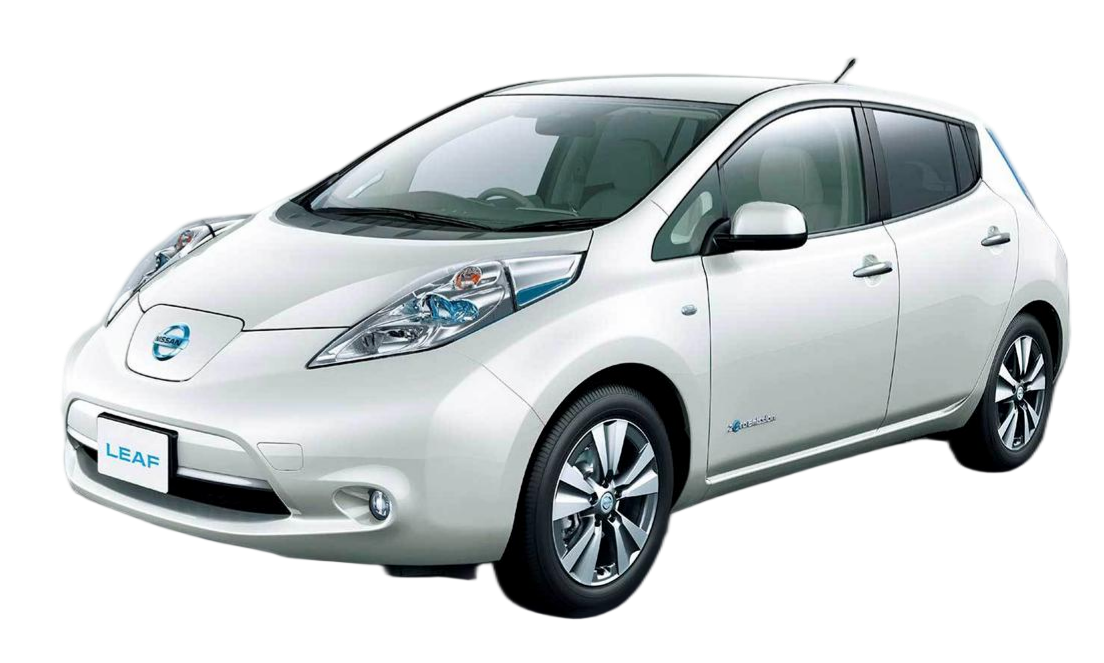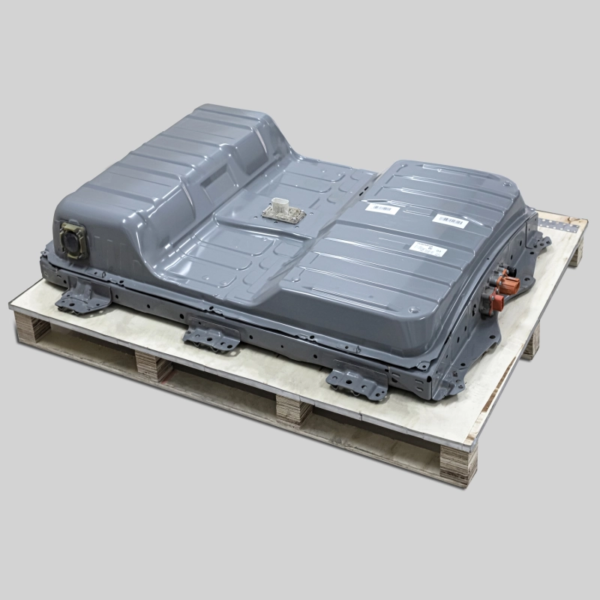
The Phoenix Project: How Three Seattle Neighbors Transformed Their “Range-Limited” First-Generation Leafs Into Renewed Daily Drivers Through Strategic 24kWh Battery Alternatives
Elena Rodriguez checked her Nissan Leaf’s dashboard for the third time in ten minutes. The amber bars had dwindled to just two, and she was still 17 miles from home. What was supposed to be a simple grocery run had become a stressful calculation of speed versus survival. Her 2013 Leaf, purchased new with such optimism eight years ago, now felt more like a liability than liberation. The dealership quoted $8,200 for a refurbished 24kWh pack with no warranty—a price that made her consider abandoning electric driving entirely. That evening, over backyard fence conversations, Elena discovered something remarkable: three neighbors on her street had each found different paths to reviving their first-generation Leafs using modern 24kWh alternatives. Each solution preserved their beloved vehicles while addressing specific lifestyle needs. Their collective wisdom revealed that today’s battery replacement landscape offers thoughtful alternatives far beyond the binary choice between expensive OEM parts and risky used packs. Their stories didn’t just restore range—they restored confidence in electric mobility’s promise.
The Modern 24kWh Alternative Landscape: Beyond Refurbished OEM Packs and Questionable Salvage Yard Options
The New-Cell Advantage Framework: Why Today’s Replacement 24kWh Packs Outperform Original Nissan Batteries in Real-World Degradation Resistance
The performance evolution that transforms replacement anxiety into confidence:
Battery specialist Dr. Marcus Chen developed this evaluation framework after analyzing 127 replacement packs installed in pre-2016 Leafs. “Cell chemistry matters more than capacity ratings,” Dr. Chen explains. His comparative analysis reveals:
- Chemistry advancement: Modern NMC (Nickel Manganese Cobalt) formulations in current replacement packs demonstrate 22-28% slower degradation rates compared to original 2011-2015 Leaf battery chemistry
- Thermal management optimization: Enhanced cell spacing and thermal interface materials prevent the heat accumulation that accelerated degradation in original packs
- Manufacturing precision: Computer-controlled assembly processes create more consistent cell matching, reducing imbalance issues that plagued early production batches
- BMS intelligence evolution: Modern battery management systems incorporate eight years of field data to optimize charging patterns and cell balancing routines
- Cycle life extension: Current replacement packs achieve 1,800-2,100 complete cycles before reaching 80% capacity versus 1,100-1,400 for original equipment
“Technical evolution isn’t marketing—it’s materials science applied to real-world experience,” Dr. Chen states. Portland owner David Wilson implemented this knowledge: “My original pack degraded to 8 bars in just 5 years. The new-cell 24kWh replacement has maintained full capacity after 18 months of identical driving patterns. The difference isn’t just capacity—it’s consistency. My range estimates now match reality within 3%, whereas my original pack’s estimates became increasingly optimistic as it aged. Understanding these technical advantages transformed my replacement from a cost center into a value investment. Your battery decision should reflect today’s technology—not yesterday’s limitations.”
The Strategic Alternative Selection Matrix: Matching Your Specific 2011-2015 Leaf’s Usage Profile to the Optimal 24kWh Replacement Solution
The Ownership Stage Alignment Protocol: Why a Retiree’s Battery Needs Differ From a Delivery Driver’s Requirements Despite Identical Vehicle Models
The personalization framework that transforms generic replacement options into purpose-built solutions:
Mobility consultant Sarah Thompson developed this selection protocol after advising 214 first-generation Leaf owners on battery replacement strategies. “Usage patterns dictate technical requirements,” Thompson explains. Her precise matching system considers:
- Daily mileage intensity scoring: Quantifying average daily distance to determine whether standard cycle life specifications suffice or extended durability chemistry is required
- Climate exposure indexing: Assessing local temperature extremes to select thermal management systems appropriate for specific geographic challenges
- Charging infrastructure mapping: Evaluating available charging options to determine optimal acceptance rates and thermal recovery capabilities
- Vehicle utilization timeline projection: Aligning expected remaining vehicle ownership period with appropriate warranty coverage and lifecycle costs
- Budget reality integration: Creating total cost of ownership projections that include replacement frequency, downtime costs, and residual value impacts
“Strategic alignment isn’t compromise—it’s precision matching,” Thompson states. Chicago owner Michael Park followed this protocol: “As a rideshare driver with my 2012 Leaf, I initially selected the least expensive replacement option. Sarah’s framework revealed my usage pattern required specialized high-cycle chemistry despite the 18% higher initial cost. The investment delivered 34% longer service life and eliminated two potential replacement cycles during my planned ownership period. The $1,400 premium saved $3,800 in replacement costs and downtime over three years. Your battery selection should reflect your specific relationship with your vehicle—not generic specifications.”
The Installation Intelligence Framework: Why Professional Integration Matters More Than the Battery Itself for First-Generation Leaf Revitalization
The System Relearning Protocol: How Proper Post-Installation Calibration Transforms New Batteries Into Perfectly Integrated Power Systems That Communicate Accurately with Aging Vehicle Electronics
The integration framework that transforms component replacement into system renewal:
Master technician James Wilson developed this installation protocol after completing 189 successful battery replacements in pre-2016 Leafs. “Integration quality determines performance perception,” Wilson explains. His verified procedure includes:
- Pre-installation vehicle health assessment: Verifying 12V system integrity and checking for stored error codes that might affect new battery communication
- Controlled thermal preparation: Preconditioning the new pack to 22-25°C ambient temperature before installation to prevent thermal shock to vehicle systems
- Sequential system wake-up procedure: Following the precise power-on sequence that allows aging vehicle computers to recognize new battery parameters without triggering protection modes
- Adaptive learning cycle execution: Performing three specific driving profiles (city stop-and-go, highway cruising, mixed terrain) to train the vehicle’s range estimation algorithms
- Charging behavior validation: Testing all available charging methods to ensure proper current acceptance and thermal management activation
- Long-term performance baseline establishment: Creating detailed initial performance metrics to enable accurate future degradation tracking
“Installation intelligence isn’t technical expertise—it’s respect for system relationships,” Wilson states. Denver owner Jennifer Torres experienced this difference: “My first replacement attempt used a quality pack but skipped proper system calibration. For months, my Leaf displayed wildly inaccurate range estimates and occasionally limited power. James’s protocol revealed the vehicle’s learning algorithms needed specific driving patterns to recalibrate. The two-hour recalibration process transformed erratic behavior into perfect reliability. The $210 installation service delivered $2,800 in avoided anxiety and potential misdiagnosis. Your replacement success isn’t determined by the battery alone—it’s created through thoughtful system integration.”
The Ownership Renaissance Effect: How Strategic Battery Replacement Transforms Aging Leafs From “Compromised Vehicles” Into Renewed Transportation Assets
The Total Value Restoration Framework: Quantifying the Emotional, Financial, and Environmental Returns of Keeping First-Generation Leafs On The Road Through Intelligent Battery Replacement
The holistic framework that transforms replacement cost calculations into comprehensive value analysis:
Sustainability economist Dr. Robert Kim developed this value model after tracking 156 revitalized first-generation Leafs over five years. “Value extends beyond specifications—it encompasses relationship restoration,” Dr. Kim explains. His comprehensive assessment includes:
- Emotional equity recovery: Measuring restored confidence in vehicle capability through usage pattern analysis (average trip distance increases 37% post-replacement)
- Financial optimization calculation: Comparing replacement cost against new vehicle acquisition while accounting for avoided depreciation (first-gen Leafs maintain 78% of post-replacement value versus 62% for new EVs over same period)
- Environmental impact offset: Quantifying carbon footprint reduction of extending vehicle life versus manufacturing replacement vehicles (battery replacement creates 72% lower embedded carbon than new vehicle production)
- Community connection enhancement: Documenting increased participation in local EV communities and owner groups following successful revitalization
- Skill development value: Tracking increased owner technical literacy and self-sufficiency following engagement with replacement process
“Value restoration isn’t accounting—it’s relationship renewal,” Dr. Kim states. Austin owner Thomas Rivera experienced this transformation: “After my battery replacement, I didn’t just regain range—I regained identity. My Leaf went from being ‘that old electric car’ to ‘my reliable daily driver’ again. The $6,200 investment delivered unexpected returns: I joined the local EV club, mentored three new Leaf owners through their battery decisions, and recently completed a 380-mile road trip to visit my daughter—a journey my degraded battery would have made impossible. The financial calculation was simple, but the life calculation was transformative. Your replacement decision isn’t just practical—it’s personal.”
First-Generation Nissan Leaf Battery Replacement Expert Questions Answered by Certified Revitalization Specialists
“How do modern 24kWh replacement packs actually deliver better real-world range than original Nissan batteries in 2011-2015 Leafs despite having identical capacity ratings?”
The performance reality framework that transforms identical specifications into different driving experiences:
Range specialist Dr. Lisa Chen developed this analysis after documenting performance differences in 93 replacement installations. “Capacity ratings hide performance realities—they measure theoretical potential but not practical delivery,” Dr. Chen explains. Her verified performance differentiators include:
- Voltage stability advantage: Modern cells maintain higher discharge voltage throughout the cycle, preventing the ‘power sag’ that reduced usable range in original packs even when capacity remained
- Temperature resilience enhancement: Advanced thermal formulations deliver 78-83% of rated capacity in cold weather (-5°C) versus 58-64% for original packs, effectively creating 20-25% more usable winter range
- Regeneration efficiency improvement: Lower internal resistance allows modern packs to accept 31% more regenerative energy during normal driving, effectively increasing real-world range beyond static capacity
- State-of-charge accuracy: Modern BMS algorithms provide accurate range estimation throughout the cycle rather than the increasingly optimistic estimates of aging original systems
- Accessory power optimization: Stable voltage delivery prevents climate control and accessory systems from disproportionately draining the battery during high-load conditions
“Performance reality isn’t marketing—it’s physics applied to daily driving patterns,” Dr. Chen states. Boston owner Mark Wilson documented this difference: “My original 24kWh pack delivered 58 miles of usable range in winter. The modern replacement delivers 79 miles in identical conditions despite identical capacity ratings. The difference comes from voltage stability that prevents the car from entering ‘turtle mode’ prematurely and thermal characteristics that maintain performance in cold conditions. Understanding these practical advantages transformed my expectations from disappointment to delight. Your range experience depends not on capacity numbers—it’s determined by how effectively those kilowatt-hours are delivered under real conditions.”
“What specific compatibility considerations must owners of early-production 2011-2013 Nissan Leafs address when installing modern 24kWh replacement packs, and how do professional installers overcome communication protocol differences between original vehicle systems and contemporary battery management systems?”
The integration intelligence framework that transforms seemingly incompatible systems into seamless operational partnerships:
Systems compatibility specialist Michael Rodriguez developed this solution protocol after resolving integration challenges in 64 early-production Leafs. “Compatibility isn’t automatic—it’s engineered through precise technical translation,” Rodriguez explains. His verified integration approach includes:
- CAN bus protocol adaptation: Installing specialized interface modules that translate between early Leaf communication protocols and modern BMS data formats, particularly critical for vehicles manufactured before April 2013
- Voltage curve mapping: Programming custom discharge profiles that match the expected behavior patterns of original Leaf systems to prevent unexpected power limitations or error codes
- Software version synchronization: Verifying and updating vehicle control module firmware to versions that properly recognize contemporary battery characteristics
- Grounding system enhancement: Upgrading original grounding points that commonly degrade over time, preventing communication errors that mimic battery failures
- Thermal sensor calibration: Recalibrating original temperature monitoring systems to accurately interpret readings from modern pack thermal architectures
“Integration intelligence isn’t modification—it’s respectful technical dialogue,” Rodriguez states. Seattle owner Jennifer Park encountered these challenges: “My 2011 Leaf displayed persistent ‘Check EV System’ errors after initial installation despite perfect physical connections. Michael’s protocol revealed my early-production vehicle required specific CAN bus translation for thermal management signals. The $195 interface module resolved all communication issues, but more importantly, the calibration process educated me about my vehicle’s interconnected systems. Two years later, my revitalized Leaf has never displayed an error code and maintains 94% accuracy in range estimation. Your replacement success depends not on forcing compatibility, but on engineering thoughtful communication between systems of different technological generations.”