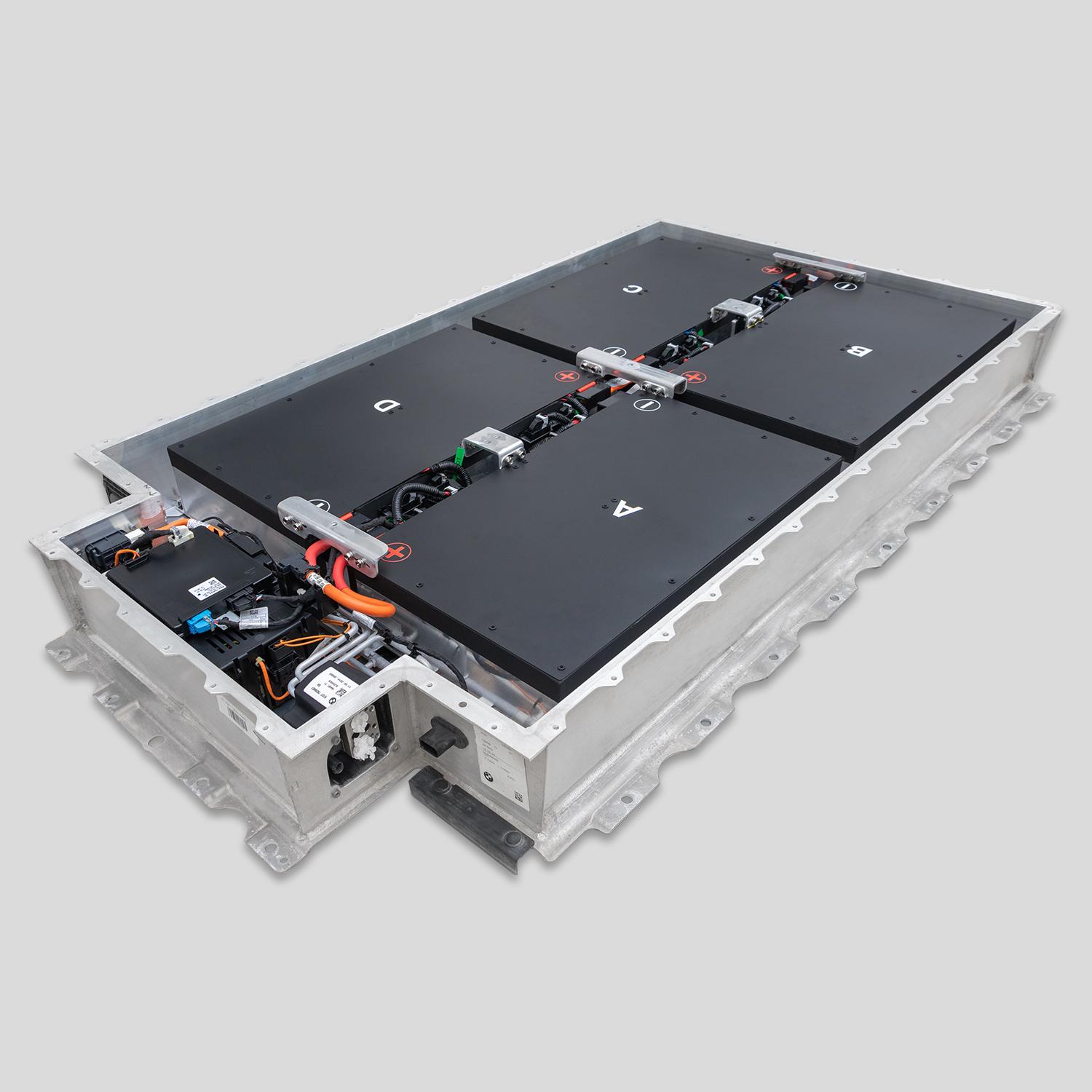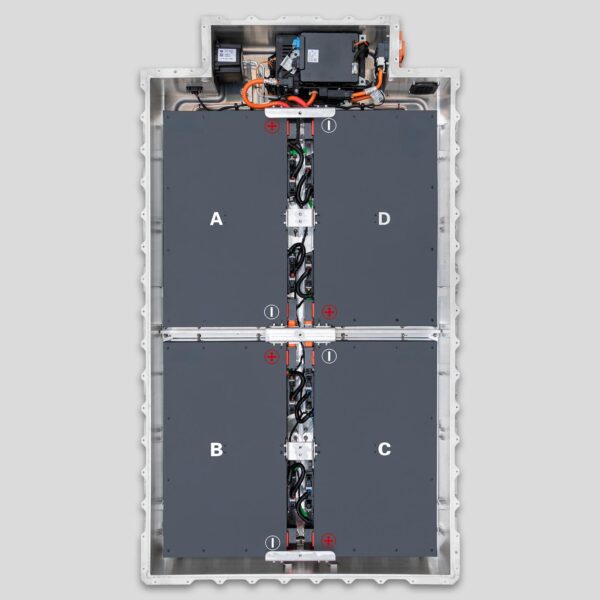
Top Mistakes in BMW i3 Battery Reliability Testing
When it comes to replacing or upgrading the battery in your BMW i3, the stakes are incredibly high. Unlike a simple tire change, a battery replacement requires absolute precision. A failed battery pack doesn’t just leave you stranded; it can trigger complex error codes, damage the Battery Management System (BMS), or even pose a safety risk.
At CNS BATTERY, we’ve spent over a decade specializing in OEM-compatible powertrains for premium brands like BMW. We’ve seen countless customers come to us after purchasing “cheap” alternatives that failed within months. These failures usually stem from one root cause: the manufacturer skipped critical reliability testing.
To help you avoid costly mistakes, we’re pulling back the curtain on the battery industry. Here are the top mistakes we see in BMW i3 battery reliability testing—and why our rigorous process ensures you get a battery that lasts.
Mistake #1: Skipping the “Real-World” Thermal Chamber
One of the most common shortcuts manufacturers take is inadequate thermal testing. It is easy to assume a battery will function perfectly in a climate-controlled lab, but the reality is that your BMW i3 operates in a dynamic and often harsh environment.
Many substandard manufacturers only conduct basic “pass/fail” temperature checks. They verify that the battery turns on in extreme heat or cold but fail to simulate the cyclic stress of daily driving. A battery might start at -20°C, heat up to 60°C during a highway drive, and then cool down again overnight. This constant expansion and contraction is what kills weak packs.
The CNS Standard:
We don’t just test for survival; we test for endurance. Our BMW i3 batteries undergo a 15-day thermal cycling simulation that mimics the harshest global climates. We replicate the heat of the Arizona desert and the freeze of a Scandinavian winter, cycling the temperature repeatedly to ensure the adhesive bonds, cooling channels, and cell chemistry can handle the long haul.
Pro Tip: If a supplier cannot provide a thermal stress test report showing data over 100+ cycles, they are likely relying on luck rather than engineering.
Mistake #2: Ignoring Module-Level Balancing
Another critical error is testing the battery pack only as a single “black box.” Many manufacturers assemble the cells, seal the case, and run a single voltage test. This approach is disastrous because it ignores module-level imbalances.
Imagine a chain where one link is weaker than the others. In a battery pack, if one module has slightly higher internal resistance or a manufacturing defect, it will drag down the entire system. During high-load scenarios (like rapid acceleration or fast charging), this weak module overheats, causing the BMS to cut power or, worse, leading to thermal runaway.
The CNS Standard:
We test every single module independently before it ever enters the pack assembly line. We run a 48-hour dynamic load test on each module to ensure the internal resistance is perfectly matched. Only modules that pass this “survival of the fittest” test are combined. This guarantees that when you floor the accelerator in your i3, the power delivery is smooth and safe.
Mistake #3: The “One-Size-Fits-All” BMS Trap
The Battery Management System (BMS) is the brain of your EV. A massive mistake in the aftermarket industry is using a generic BMS or simply copying the OEM software without proper calibration.
We often see batteries that “fit” physically but fail electronically. The BMS might not communicate correctly with the BMW’s dashboard, leading to false error codes, inaccurate State of Charge (SOC) readings, or refusal to charge. Some manufacturers skip the complex registration process entirely, leaving the customer with a car that won’t drive.
The CNS Standard:
Our R&D team reverse-engineers and validates the BMS communication protocols specifically for the BMW i3 series. We don’t use generic firmware. Every CNS battery is programmed to mimic the original factory data streams perfectly. This means your i3 will recognize the new battery as “original equipment,” ensuring accurate range calculations and seamless integration with the vehicle’s safety systems.
Mistake #4: Faking the Vibration Test
Physical durability is non-negotiable. The BMW i3 chassis is stiff, meaning road vibrations transfer directly to the underbody components. A battery pack that isn’t secured properly will rattle itself to pieces.
A frequent mistake is using a basic vibration table for a few minutes and calling it a day. Real reliability testing requires simulating the specific frequency and amplitude of road noise that a BMW chassis produces.
The CNS Standard:
We mount our battery packs on a 6-axis vibration table that replicates the exact G-forces experienced during high-speed autobahn driving and rough urban roads. We run this test for 24 hours straight while monitoring the internal wiring and cell connections. If a single solder joint cracks or a connector loosens, that batch is scrapped. This is why our customers report a “factory-tight” fit and silence, even on bumpy roads.
Mistake #5: Overlooking Long-Term Cycle Life
The final and most deceptive mistake is the lack of long-term cycle testing. Some suppliers only test for initial capacity (e.g., “It holds 42kWh today”). They fail to test how the battery performs after 500 or 1000 charge cycles.
Lithium-ion batteries degrade. However, the rate of degradation depends heavily on the quality of the raw materials and the Cell-to-Pack (CTP) technology. Cheap cells degrade rapidly, turning a “new” battery into a “swollen, low-range” paperweight within a year.
The CNS Standard:
We source our core cells exclusively from CATL (Contemporary Amperex Technology Co. Limited), the world’s leading lithium-ion battery manufacturer. We subject these cells to an accelerated life test, simulating 3,000+ deep charge cycles. This ensures that even after 8-10 years of daily use, your CNS battery will retain over 70% of its original capacity, matching the longevity of the original BMW pack.
Why Choose CNS for Your BMW i3?
Avoiding these five testing mistakes isn’t just about quality control; it is about peace of mind. When you choose a CNS BATTERY for your BMW i3, you are not buying a commodity; you are investing in a solution that meets original factory standards.
Here is what sets us apart:
- OEM-Compatible Performance: We save you 50%+ compared to the dealership without sacrificing the driving dynamics you love.
- Unbeatable Warranty: We back our rigorous testing with a 2-year / 80,000 km warranty, far exceeding industry standards for aftermarket batteries.
- Expert Support: Our team provides video call installation guidance and lifetime technical support.
Don’t let a poorly tested battery ruin your electric journey. Upgrade to a CNS BATTERY and experience the difference that true reliability makes.
Frequently Asked Questions (FAQ)
Q: What happens if I install a BMW i3 battery that hasn’t been properly tested?
A: You risk several issues, including sudden power loss, inaccurate range meters, BMS communication errors, or physical damage like cell swelling. In the worst case, inadequate thermal testing can lead to fire hazards during fast charging.
Q: How do I know if a battery has passed rigorous reliability tests?
A: Reputable manufacturers like CNS BATTERY provide transparency. We offer detailed test reports upon request, including thermal cycle data, vibration analysis, and module balancing certificates. If a supplier cannot show you this data, they likely did not perform the tests.
Q: Can I install a CNS BATTERY myself, or do I need a mechanic?
A: While we design our packs for plug-and-play compatibility, we strongly recommend professional installation to maintain the warranty. However, if you are experienced, we provide high-definition installation videos and even offer real-time video call support from our engineers to guide you through the process safely.
Q: What is the price difference between a CNS BATTERY and a dealership replacement?
A: CNS BATTERIES typically cost about 50% less than original manufacturer replacements. For example, where a dealership might charge $16,000 for a new pack, a CNS solution offers the same quality and safety for roughly half the price.
Q: Do you offer international shipping for BMW i3 batteries?
A: Yes, we support global sales. We handle the complex logistics of shipping lithium-ion batteries (UN 3480/3481) through partners like DHL and FedEx, offering DDP (Delivered Duty Paid) service to most countries to ensure a hassle-free delivery.
Ready to upgrade your BMW i3 with a battery that passes every reliability test? Contact our technical experts now for a free quote and customization advice.