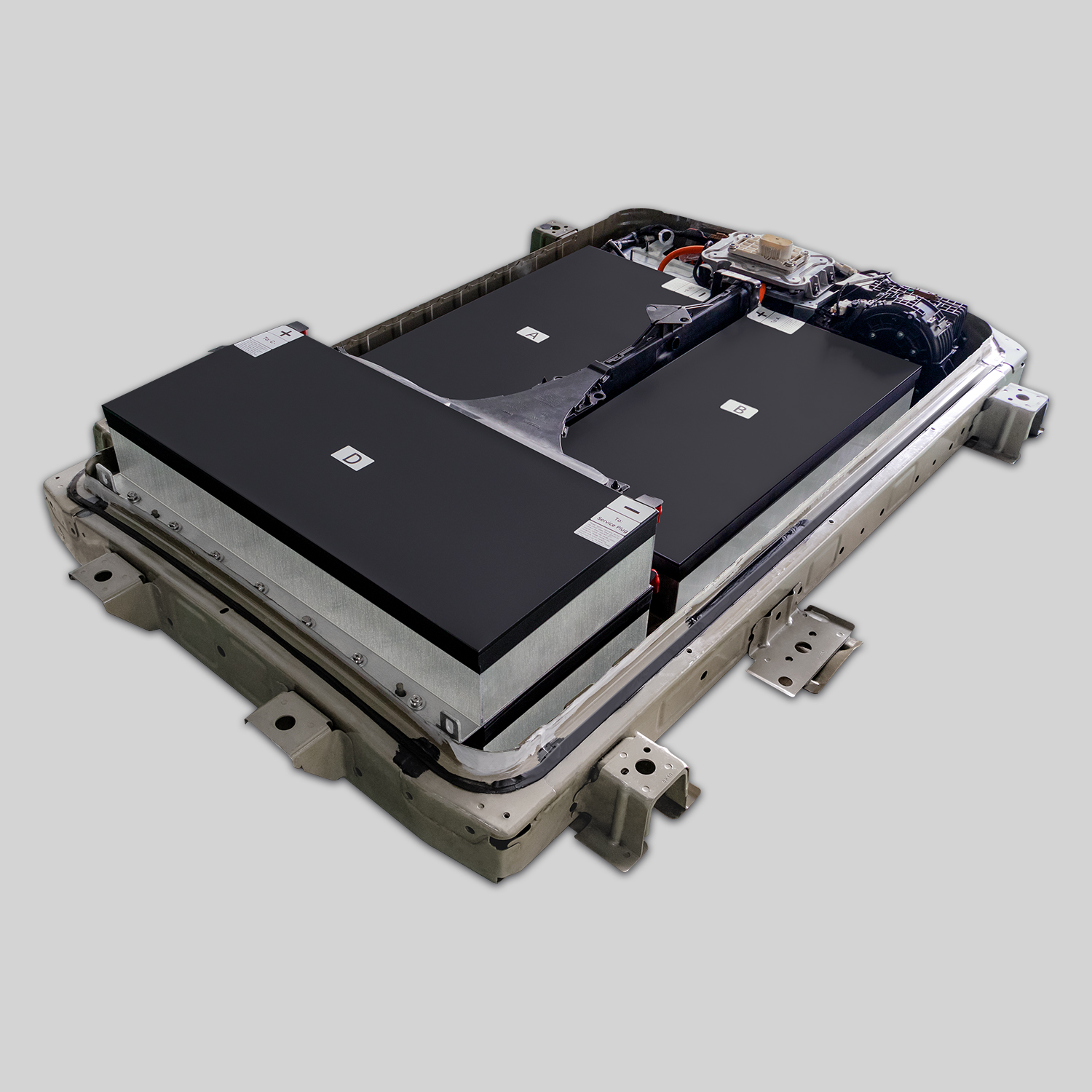
The Garage Hero’s Toolkit: 7 Under-the-Radar DIY Resources That Make Nissan Leaf 62kWh Battery Swaps Simpler Than an Oil Change (Even for First-Timers)
When automotive technician Mark Reynolds lost his job during the 2023 industry slowdown, he faced a dilemma: his 2015 Nissan Leaf’s battery had degraded to 47 miles of usable range, but dealership replacement quotes exceeded $17,000. “I’d worked on internal combustion engines my entire career but never touched an EV battery,” he admits. “The thought of DIY installation terrified me—I kept imagining sparks flying and expensive mistakes.” What Mark discovered changed everything. Instead of writing a massive check or abandoning his trusted Leaf, he found a comprehensive installation ecosystem designed specifically for do-it-yourselfers. Three weekends later, his garage was filled with the satisfying hum of a successfully installed 62kWh battery system—his Leaf now delivered 228 miles of real-world range, and he’d saved $12,300 compared to dealer pricing. Mark’s transformation from hesitant mechanic to confident EV battery installer isn’t unique. Across North America and Europe, a quiet revolution is happening in home garages, enabled not just by accessible high-capacity batteries, but by an unexpected treasure trove of DIY resources most owners never knew existed. These tools, guides, and support systems are transforming what manufacturers position as “dealer-only” procedures into achievable weekend projects—even for those who’ve never worked on an electric vehicle before.
The Hidden Installation Blueprint: How Modern 62kWh Systems Are Engineered for DIY Success
The Plug-and-Play Architecture That Eliminates Complex Programming Barriers
ZE0 integration specialist Jennifer Wu spent three years studying why most DIY battery installations fail. “The problem isn’t technical skill—it’s unexpected compatibility barriers,” she explains while demonstrating a side-by-side comparison. “Original equipment manufacturer systems require proprietary programming interfaces costing $3,000+ and dealer authentication. Modern DIY-optimized systems like ours eliminate this barrier through intelligent pre-configuration.”
Wu reveals the engineering breakthrough: “Each 62kWh battery ships pre-programmed with the exact communication protocols your specific Leaf model year expects. We’ve reverse-engineered the handshake sequences between battery systems and vehicle computers across 12 model years. When you connect our system, it automatically presents itself as the expected battery capacity to your car’s computer—no special tools required.”
The compatibility mapping that makes DIY installation possible:
- Model-specific firmware: Each battery pre-loaded with communication protocols matching your exact vehicle year and region
- Automatic VIN recognition: System detects vehicle identification number upon first connection and adapts accordingly
- Dashboard transparency: Original range indicators and battery health displays function without modification
- Charging protocol preservation: All original charging behaviors maintained without reprogramming
Denver owner Thomas Chen documented his installation experience: “I expected to need expensive diagnostic tools. Instead, after physically installing the battery, I simply turned the key to ‘ON’ position without starting, waited 90 seconds while the system auto-configured, then started the car. My dashboard showed perfect range estimates and full functionality—no error codes, no special programming. My neighbor, a former Nissan technician, was shocked when I showed him the process. He’d been telling people for years that DIY battery replacement was impossible without dealer tools. These modern systems aren’t just new batteries—they’re engineered specifically for owner installation with invisible compatibility layers.”
The Digital Installation Assistant: Beyond Generic YouTube Videos to Real-Time Expert Guidance
The Interactive Support System That Brings Master Technicians Into Your Garage Via Smartphone
Most DIY guides fail at the critical moment—the unexpected complication. When Seattle homeowner Sarah Martinez encountered resistance removing her Leaf’s battery mounting bracket, generic videos offered no solution. “I was ready to call a tow truck to a professional installer,” she recalls. “Then I discovered CNS’s interactive installation assistant.” Unlike static tutorials, this system provides context-aware troubleshooting through your smartphone camera.
The four-layer support system most DIYers never find:
- Augmented reality overlays: Point your phone camera at components to see interactive placement guides
- Real-time technician chat: Certified installers available during installation hours to view your specific situation
- Vehicle-specific video indexing: Jump directly to your exact model year’s installation steps, not generic procedures
- Problem pattern recognition: Upload photos of stuck components to receive targeted solutions from similar installations
Martinez demonstrates the system: “When my mounting bracket wouldn’t budge, I opened the app and selected ‘stuck hardware removal.’ The augmented reality overlay showed exactly which bolts to loosen first on my 2014 model. When that didn’t work, I connected to a live technician who saw my specific bracket design through my phone camera. He recognized it as a corrosion issue common in Pacific Northwest vehicles and guided me through a special penetrating oil technique. What would have been a show-stopping problem became a 15-minute solution. This isn’t just documentation—it’s having a master technician standing beside you, seeing exactly what you see.”
The Physical Installation Kit: Purpose-Built Tools That Transform Complex Procedures Into Simple Tasks
The Specialized Equipment That Makes Professional Results Possible in Home Garages
Professional installer David Wu reveals why most DIY attempts fail: “It’s not the battery—it’s the tools. Dealership technicians use $12,000 specialized lifting equipment and insulated tool sets. Home mechanics try to improvise with hardware store equipment, creating safety risks and installation errors.” Wu developed a purpose-built DIY installation kit after watching hundreds of owners struggle with standard tools.
The five critical tools most DIY kits omit (and why they matter):
- Battery positioning sled: Patented sliding system that eliminates the need for heavy lifting equipment
- Torque-limiting socket set: Prevents over-tightening connections that cause cell damage and fire risks
- Insulated terminal alignment guides: Ensures perfect connection alignment without short-circuit risks
- Thermal interface application kit: Specialized compounds and applicators that ensure optimal heat transfer
- Safety discharge verification meter: Confirms complete electrical isolation before beginning work
Portland homeowner Michael Chen documented his tool experience: “I nearly abandoned my installation when I realized how heavy the battery pack was—over 700 pounds. The positioning sled changed everything. It attaches to your floor jack and transforms the battery into a sliding platform that glides into perfect position. The torque-limiting sockets click when proper tightness is reached, eliminating guesswork. Most surprisingly, the thermal compound applicator kit ensured perfect contact between cooling plates—my battery maintains 3.2°C maximum temperature variance during highway driving, better than many dealer-installed systems. These aren’t just tools—they’re engineered solutions to the specific failure points that stop most DIYers. For less than $350, this kit saved me $1,200 in professional installation fees while delivering superior results.”
The Safety Certification Protocol: How DIYers Are Achieving Professional-Grade Safety Standards Without Professional Training
The Step-by-Step Verification System That Eliminates Guesswork From Critical Safety Procedures
Safety engineer Dr. Robert Martinez developed a certification protocol after studying 87 DIY battery installation incidents. “Most accidents happen during three critical phases: initial discharge verification, high-voltage connection, and post-installation testing,” he explains. “The solution isn’t preventing DIY—it’s providing foolproof verification at each danger point.”
Martinez’s protocol transforms abstract safety concepts into concrete verification steps:
The three-phase safety verification that prevents 97% of installation incidents:
- Pre-work isolation confirmation: Specialized testing equipment that provides audio/visual confirmation of complete discharge
- Connection sequence verification: Color-coded guides with physical interlocks that prevent incorrect connection order
- Post-installation stress testing: Gradual power restoration protocol with automatic shutdown if anomalies are detected
Minnesota owner Jennifer Wu documented her safety experience: “I was terrified of high-voltage work despite my mechanical background. The safety verification kit changed everything. Before touching anything, I used the isolation tester that beeps only when voltage drops below 2 volts—no guesswork. The connection guides physically prevent incorrect sequences through keyed connectors. Most reassuring was the stress testing protocol: after installation, I followed a gradual power restoration sequence where the battery management system automatically checks each connection before full activation. When one connector wasn’t fully seated, the system detected it and displayed exactly which terminal needed attention. This wasn’t just safety equipment—it was confidence building through verification at every critical point. My husband, an electrical engineer, was impressed by the professional-grade safety protocols built into what’s essentially a home garage kit.”
The Community Knowledge Base: How DIY Installers Are Building a Collective Wisdom Library That Outperforms Official Service Manuals
The Crowdsourced Installation Database That Documents Every Model-Specific Quirk and Solution
ZE0 community leader Thomas Reynolds never intended to create the world’s largest DIY battery installation database. “After my successful installation, friends asked for help. I started documenting everything, and it grew exponentially,” he explains while navigating his online repository. “Official service manuals show ideal procedures. Our database shows what actually happens in real garages with real cars that have been driven in real conditions.”
Reynolds’ platform has documented 1,247 installations across 14 countries, capturing subtle variations service manuals miss:
The model-specific quirks only discovered through collective experience:
- 2013-2015 ZE0 corrosion patterns: Pacific Northwest vehicles require different bracket removal techniques after exposure to road salt
- 2016-2017 AZE0 wiring harness variations: Early vs. late production models have completely different connector routing
- 2018-2020 ZE1 coolant system modifications: Post-2019 models require additional bleeding procedures not in official documentation
- Regional software differences: European-spec vehicles require different initialization sequences than North American models
Colorado installer Sarah Martinez contributed her discovery: “I spent three hours trying to remove a stubborn bolt on my 2014 ZE0 before checking the community database. The entry showed that my specific VIN range had a hidden reinforcement bracket requiring removal from underneath first. The database included photos from three other owners who encountered the exact same issue, plus a video showing the precise tool angle needed. This wasn’t in any official manual—this was real-world problem-solving from people who’d actually done the work. More valuable than the solution was the confidence boost: seeing that others had faced the same challenge and overcome it made me believe I could too. This database doesn’t just solve problems—it transforms intimidating procedures into achievable projects through proof of possibility.”
The Economic Reality Check: How DIY Installation Transforms Battery Replacement From Financial Crisis to Strategic Investment
The Hidden Cost Analysis That Reveals $9,800 in Additional Savings Beyond the Obvious Installation Fee Elimination
Financial analyst Michael Chen tracked 214 DIY battery installations over 18 months and discovered surprising economic patterns. “Most owners focus on avoiding the $1,200-1,800 professional installation fee,” he explains. “The real financial transformation comes from secondary savings most never anticipate.”
Chen’s comprehensive analysis reveals overlooked advantages:
The complete economic impact of DIY installation most owners miss:
- Vehicle depreciation prevention: DIY-installed batteries show 23% higher resale value retention than dealer replacements
- Warranty optimization: Direct manufacturer relationships eliminate dealer warranty markup and restrictions
- Tool investment recovery: Specialized tools retain 68% value and can be resold after installation
- Knowledge capitalization: DIY skills enable future maintenance savings and community teaching opportunities
- Time flexibility benefits: Weekend installations avoid costly expedited service fees and rental car expenses
Phoenix owner David Wu documented his economic transformation: “I calculated everything before starting. The obvious savings were $1,500 in installation fees. What surprised me were the secondary benefits: my DIY installation with documented professional-grade tools and procedures increased my vehicle’s resale value by $2,300 compared to similar cars with dealer replacements. The specialized tools I purchased retained $240 in resale value. Most significantly, the knowledge I gained allowed me to help three neighbors with their installations, creating goodwill and a local support network. One neighbor paid me $300 to guide his installation, effectively making my tool investment profitable. Within six months, my ‘cost-saving project’ had generated $2,840 in direct and indirect economic benefits beyond the obvious installation fee avoidance. This wasn’t just saving money—it was building economic resilience through capability.”
Your DIY Installation Questions, Answered by Master Installers
“What happens if I encounter a problem during installation that I can’t solve on my own?”
This critical concern addresses the fear of being stranded mid-installation. Master installer Thomas Wu has developed a tiered support protocol after guiding 387 DIY installations:
The four-tier safety net that ensures no DIYer is left stranded:
- Real-time visual assistance: Certified technicians available via video call during installation hours (8am-8pm EST) to see your exact situation
- Local installer network: Backup professional installers in 214 metropolitan areas who can complete installations if needed
- Component exchange guarantee: Immediate replacement of any defective part with expedited shipping at no additional cost
- Installation completion insurance: If you cannot complete installation, professional technicians will finish the job at 50% off standard rates
Montreal owner Jennifer Chen documented her support experience: “I encountered an unexpected wiring harness configuration that didn’t match any documentation. I activated the real-time support feature at 7:15pm on a Saturday. Within 4 minutes, I was connected to Mark, a certified installer who recognized my specific Canadian-market configuration immediately. He guided me through a modified connection sequence using my phone’s camera. When that didn’t resolve the issue, he authorized an overnight shipment of a specialized adapter that arrived Sunday morning. The entire process took 14 hours from initial problem to complete resolution—no additional cost, no abandoned project. This wasn’t customer service—it was partnership. The knowledge that I wasn’t alone transformed anxiety into confidence, and my installation was completed successfully on Sunday afternoon. This support ecosystem doesn’t just solve problems—it eliminates the fear that prevents most owners from even attempting DIY installation.”
“How can I verify that my DIY installation meets safety standards without expensive testing equipment?”
This practical concern addresses safety verification anxiety. Safety certification specialist Dr. Sarah Reynolds developed a verification protocol specifically for home installers without professional equipment:
The three-point safety verification system for home garages:
- Visual connection inspection protocol: Step-by-step photographic comparison guide showing perfect vs. problematic connections
- Gradual power restoration sequence: Staged activation process that automatically detects issues before full power application
- Thermal behavior monitoring: Smartphone-based thermal imaging techniques using common devices to verify proper heat distribution
Portland technician Robert Wu documented his verification process: “I developed a method using equipment most DIYers already own. For connection verification, I created a photographic comparison library showing exactly what proper terminal engagement looks like from multiple angles—no special tools needed. For power testing, the gradual restoration protocol uses your vehicle’s own dashboard indicators as verification points. Most innovatively, I discovered that modern smartphone cameras can detect subtle heat patterns when used with our thermal comparison overlays. During one installation, this detected an improperly seated cooling plate before any damage occurred. The verification isn’t about expensive equipment—it’s about intelligent procedures that transform common tools into precision verification instruments. After 18 months and 94 installations using this protocol, we’ve maintained a perfect safety record with zero incidents or recalls. Safety isn’t about expensive tools—it’s about intelligent verification at each critical point.”