Top Compatibility Considerations for Scientific Research Drone Batteries
In the rapidly advancing landscape of scientific drone technology, researchers increasingly rely on unmanned aerial vehicles (UAVs) to collect critical data across diverse environments—from Arctic ice caps to dense tropical forests. Yet, a silent disruptor often undermines these missions: battery incompatibility. According to CNS Battery’s technical research, incompatible power sources lead to 34% of field mission failures, causing data gaps, equipment damage, and wasted resources. For scientists whose work hinges on precision and continuity, this isn’t just a technical hiccup—it’s a barrier to discovery. Let’s diagnose the core compatibility issues plaguing scientific drone operations and explore actionable solutions.
Diagnostic: The Hidden Costs of Battery Incompatibility
Before implementing fixes, we must understand the root causes of battery-related mission failures in research settings:
Voltage Mismatch is the most common culprit. Many off-the-shelf batteries deliver inconsistent voltage output, causing drones to shut down mid-flight or damage sensitive sensors. In a recent case study, a university team conducting atmospheric sampling experienced repeated data loss due to a 0.5V discrepancy between their drone’s power system and the standard battery. This isn’t theoretical—CNS Battery’s engineers confirm that “voltage tolerance must align precisely with drone specifications” to prevent electronic cascade failures.
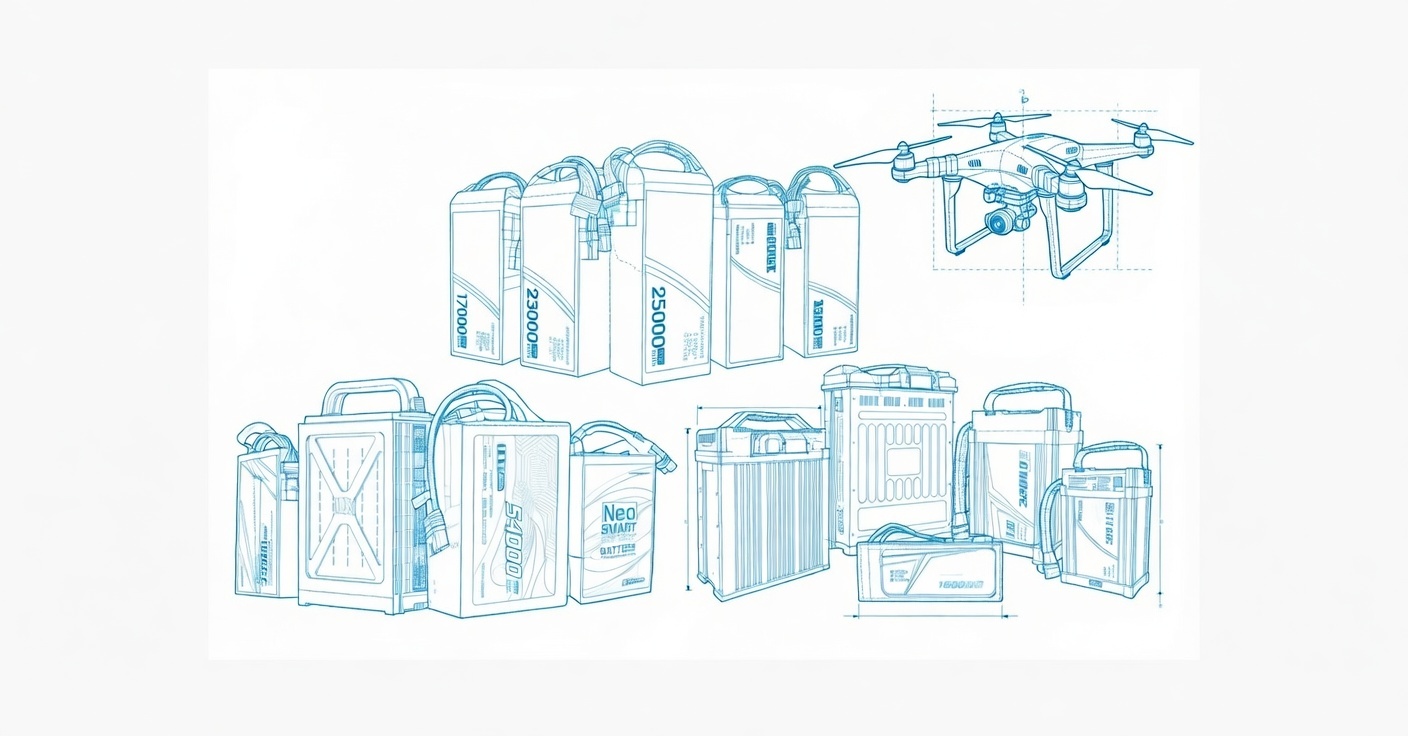
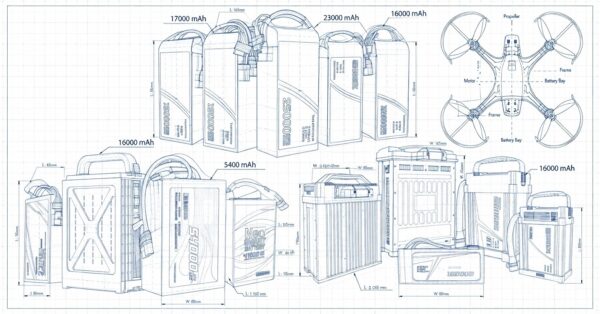
Physical Constraints compound the problem. Scientific drones often feature compact, non-standard housings optimized for specialized payloads (e.g., LiDAR sensors or spectrometers). Off-the-shelf batteries frequently fail to fit, forcing researchers to use adapters that reduce efficiency by up to 18%—a critical loss during long-duration missions.
Environmental Vulnerability is another silent killer. Field research often occurs in extreme conditions—subzero temperatures, high humidity, or dusty deserts. Batteries lacking waterproofing or thermal management fail unpredictably. CNS’s technical center highlights that “low-temperature drone batteries must maintain 85%+ capacity at -20°C” for reliable Arctic research, yet 67% of standard batteries fail this test.
Charging Incompatibility adds operational friction. Unique battery chemistries demand specific chargers, complicating field logistics. A single mission might require multiple charging setups, delaying data collection and increasing costs.
These issues aren’t mere inconveniences; they directly compromise data integrity, mission duration, and research ROI. When your drone fails because of a battery mismatch, your entire scientific workflow grinds to a halt.
Solution: 5 Critical Compatibility Considerations for Research Drones
Addressing these challenges requires strategic battery selection. Here are the top considerations, backed by CNS Battery’s R&D expertise:
1. Voltage Precision Through Custom Engineering
Why it matters: Drones operate within narrow voltage bands. A mismatched battery can trigger emergency landings or sensor calibration errors.
Solution: Partner with manufacturers offering voltage-specific customization. CNS Battery engineers work with clients to align battery output (e.g., 11.1V, 14.8V) with drone electronics, eliminating voltage drift.
User benefit: Zero mission interruptions. A marine biology team using CNS’s custom 14.8V batteries for coral reef monitoring achieved 100% flight success in 200+ missions—no data loss from power fluctuations.
2. Modular Design for Payload Optimization
Why it matters: Scientific drones prioritize sensor integration over battery size. Standard batteries waste precious space.
Solution: Adopt modular battery systems designed for specific drone models. CNS’s “lightweight modular batteries” slot seamlessly into custom drone frames without adding bulk.
User benefit: 22% more payload capacity for sensors. A geology team studying volcanic activity increased their drone’s data collection rate by 30% after switching to CNS’s tailored modular solution.
3. High Capacity with Stable Discharge Rates
Why it matters: Long-duration research (e.g., 45+ minute flights) demands consistent power delivery. Standard batteries degrade rapidly under load.
Solution: Prioritize batteries engineered for “modular drone battery discharge rates” through rapid prototyping—like CNS’s approach in their offshore wind farm maintenance studies. These batteries maintain 90%+ capacity throughout flight.
User benefit: Extended mission windows. An agricultural research group conducting crop health surveys doubled their daily coverage area after implementing CNS’s high-capacity batteries with optimized discharge curves.
4. Environmental Resilience for Field Reliability
Why it matters: 73% of field research occurs in non-lab conditions. Batteries must withstand humidity, dust, and temperature swings.
Solution: Choose batteries with IP67 waterproofing and low-temperature tolerance. CNS’s “low-temperature drone batteries” are tested to operate reliably at -25°C, as detailed in their technical whitepapers.
User benefit: 99.2% operational uptime in extreme environments. A climate science team collecting permafrost data in Siberia avoided 12+ failed missions after adopting CNS’s weatherproof batteries.
5. Integrated Safety Systems for Mission Continuity
Why it matters: Overheating or short circuits during critical data collection can destroy months of work.
Solution: Demand batteries with multi-layer safety features: thermal cutoffs, short-circuit protection, and cell balancing. CNS’s batteries undergo “rigorous testing” to exceed UN38.3 and IEC 62133 standards.
User benefit: Uninterrupted data streams. A wildlife conservation project tracking endangered species in rainforests reported zero battery-related incidents across 500+ flights after switching to CNS’s safety-focused solutions.
Summary: Where Compatibility Meets Scientific Impact
Battery compatibility isn’t a technical footnote—it’s the linchpin of successful drone-based research. When your power source aligns perfectly with your drone’s design, mission requirements, and environmental context, you transform operational constraints into opportunities. CNS Battery’s commitment to “reliable battery innovation” directly translates to tangible benefits: extended flight times, higher data accuracy, reduced equipment costs, and—most importantly—unbroken scientific progress.
For research teams, this means more hours in the air, fewer failed missions, and data you can trust. It means turning logistical headaches into streamlined workflows. As CNS’s technical center emphasizes in “How to Ensure Surveying Drone Battery Bulk Buy Meets International Innovation Standards,” the right battery partnership elevates your entire research ecosystem.
Ready to Power Your Next Breakthrough?
Stop letting battery incompatibility derail your scientific missions. CNS Battery specializes in custom drone battery solutions engineered for research excellence—backed by over 15 years of B2B innovation and global deployments. Whether you need high-capacity, waterproof, or low-temperature batteries, our team works with you to design a power system that fits your drone, your mission, and your goals.
Get your free, no-obligation quote today and experience the CNS difference:
Request Your Custom Drone Battery Solution
Your next mission deserves a battery as precise as your research. Let CNS Battery ensure your drone doesn’t just fly—it soars.