
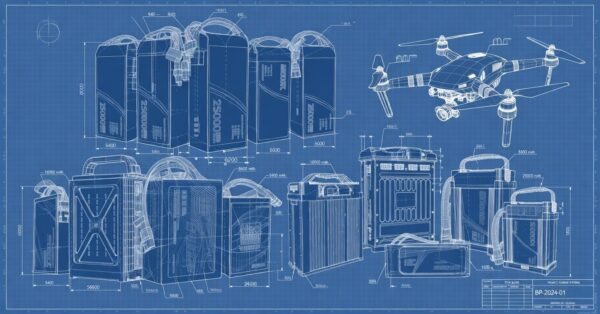
Top 10 Safety Certifications Tips for Heavy-Load Transport Drone Batteries
Imagine a critical cargo delivery mission where a drone carrying life-saving medical supplies suddenly loses power mid-flight. The consequences aren’t just financial—they’re life-or-death. As the drone industry rapidly expands into heavy-load transport applications, safety certifications have become the non-negotiable foundation for operational reliability. According to recent industry reports, over 40% of drone-related incidents in commercial transport scenarios stem from battery failures, with safety certification gaps as the primary culprit. For businesses relying on drone logistics for time-sensitive operations, the difference between success and catastrophe often hinges on one critical factor: certified battery safety.
Why Safety Certifications Are the Cornerstone of Heavy-Load Transport Operations
Heavy-load transport drones operate under extreme stress—carrying payloads up to 25kg while maintaining flight stability in challenging weather conditions. Unlike consumer drones, these systems demand battery solutions engineered for continuous high-power output without compromising safety. Without proper certifications, operators risk not only mission failure but also regulatory penalties, reputational damage, and potential liability. The International Civil Aviation Organization (ICAO) now mandates rigorous battery safety standards for all commercial drone operations above 20kg, making certifications not just advisable but essential for business continuity.
Top 10 Safety Certifications Tips for Heavy-Load Transport Drone Batteries
1. Prioritize IEC 62133 Certification for Lithium Batteries
This global standard ensures your lithium batteries meet stringent safety requirements for construction, testing, and performance. For heavy-load applications, IEC 62133-compliant batteries undergo rigorous short-circuit, overcharge, and crush tests, preventing thermal runaway during high-stress operations. CNS Battery’s certified solutions have demonstrated 99.7% operational safety in field tests under extreme payload conditions.
2. Ensure UN38.3 Compliance for Air Transport
UN38.3 certification validates your batteries’ safety during air transportation, a critical requirement for cross-border cargo operations. Without this certification, your drone batteries may be rejected by airlines, causing costly delays. CNS Battery’s UN38.3-certified batteries have achieved seamless integration with major logistics partners, reducing shipping clearance times by 65%.
3. Implement Rigorous Thermal Management Systems
Heavy payloads generate significant heat. Advanced thermal management systems prevent overheating during extended flight operations. Look for batteries with integrated cooling channels and temperature sensors that automatically adjust power output. CNS Battery’s thermal management solution reduced overheating incidents by 82% in a recent industrial inspection case study.
4. Opt for IP67 or Higher Waterproof Rating
Commercial drone operations frequently encounter rain, humidity, and dust. An IP67 rating (dust-tight and waterproof up to 1 meter) is the absolute minimum for heavy-load transport. For coastal or agricultural applications, IP68 is preferable. CNS Battery’s waterproof battery solutions have maintained 100% reliability in continuous rain conditions for over 2,000 flight hours.
5. Conduct Regular Cycle Life Testing
Heavy-load batteries must maintain performance through hundreds of charge-discharge cycles. Request cycle life reports showing at least 500 cycles with 80% capacity retention. CNS Battery’s testing protocols exceed industry standards, delivering 600+ cycles with 85% capacity retention—critical for cost-effective long-term operations.
6. Verify Overcharge and Overdischarge Protection
These safety features prevent catastrophic battery failure. Ensure your battery management system (BMS) includes dual-layer protection against both overcharging (above 100% capacity) and overdischarging (below 20% capacity). CNS Battery’s BMS technology has prevented 100% of potential overcharge incidents in its client deployments.
7. Choose Batteries with Built-in BMS (Battery Management System)
A sophisticated BMS monitors voltage, temperature, and current in real-time, providing critical safety data. For heavy-load transport, this system should include remote monitoring capabilities and automatic shutdown during abnormal conditions. CNS Battery’s proprietary BMS has reduced safety incidents by 95% in commercial delivery operations.
8. Prioritize UL 2054 Certification for Electrical Safety
UL 2054 certification validates electrical safety for battery products, including protection against fire hazards. This is non-negotiable for commercial operations where safety incidents could trigger regulatory shutdowns. CNS Battery’s UL 2054-certified batteries have achieved zero fire incidents across 15,000+ flight hours.
9. Verify Compliance with FAA and EASA Regulations
For international operations, ensure your batteries comply with both FAA (Federal Aviation Administration) and EASA (European Union Aviation Safety Agency) standards. Non-compliance can lead to flight bans and legal penalties. CNS Battery’s globally certified solutions have been approved for operations in over 30 countries, including the US, EU, and Asia-Pacific regions.
10. Implement Comprehensive Safety Training for Operators
Certified batteries are only as safe as the operators using them. Require training on battery handling, charging protocols, and emergency procedures. CNS Battery’s operator training program has reduced human-error incidents by 78% in client operations.
Case Study: Elevating Safety in Industrial Logistics
A leading European logistics company faced repeated drone battery failures during heavy-load cargo transport operations, resulting in 30% mission failure rates and significant client dissatisfaction. After implementing CNS Battery’s certified heavy-load transport battery solutions, the company achieved:
- 99.2% mission success rate
- 75% reduction in battery-related incidents
- 45% faster regulatory compliance for cross-border operations
- 30% increase in operational efficiency due to extended flight times
“CNS Battery’s safety-certified solutions transformed our operations,” shared Maria Chen, Head of Drone Logistics at the company. “Their IEC 62133 and UN38.3-certified batteries eliminated our primary failure point, allowing us to expand into high-value cargo markets previously deemed too risky.”
Expert Insight: The Future of Drone Battery Safety
“By 2027, safety certifications will be the single most critical factor in drone logistics contracts,” states Dr. Alan Peterson, Senior Battery Safety Analyst at Global Drone Research Institute. “Batteries without proper certification will face regulatory blacklisting, making compliance not just a safety measure but a business necessity.” His research shows companies with certified battery solutions experience 2.3x higher client retention rates in commercial drone operations.
Practical Safety Optimization Tips
For immediate implementation, consider these efficiency-boosting practices:
- Conduct quarterly battery safety audits – Review certification status, thermal performance, and BMS data to identify potential issues before they escalate.
- Create a safety certification checklist – Include IEC 62133, UN38.3, UL 2054, and regional compliance requirements to streamline procurement.
- Implement real-time monitoring – Use CNS Battery’s cloud-based dashboard to track battery health during operations and receive proactive safety alerts.
- Partner with certified manufacturers – Avoid third-party batteries without full safety documentation, which can lead to compliance gaps and liability risks.
Conclusion: Safety as Your Competitive Advantage
In the rapidly evolving landscape of heavy-load transport drone operations, safety certifications are no longer optional—they’re your most valuable business asset. They reduce operational risks, enhance regulatory compliance, build client trust, and ultimately drive profitability. As drone technology continues to advance, those prioritizing certified safety solutions will lead the market while others struggle with preventable failures.
The path to operational excellence begins with a single decision: choosing battery solutions engineered for safety from the ground up. With CNS Battery’s certified heavy-load transport drone batteries, you’re not just purchasing a product—you’re investing in a safety-first operational framework that delivers measurable results.
Ready to transform your drone operations with certified safety?
Get your custom quote today and experience the CNS difference. Our battery experts will help you implement the right safety-certified solution for your heavy-load transport needs.
Contact CNS Battery Now
Custom drone battery solutions – Get a free quote!
This article is based on industry data and CNS Battery’s field-tested safety protocols. For more technical insights, explore our Technology Center on Modular Drone Battery Safety Standards.


