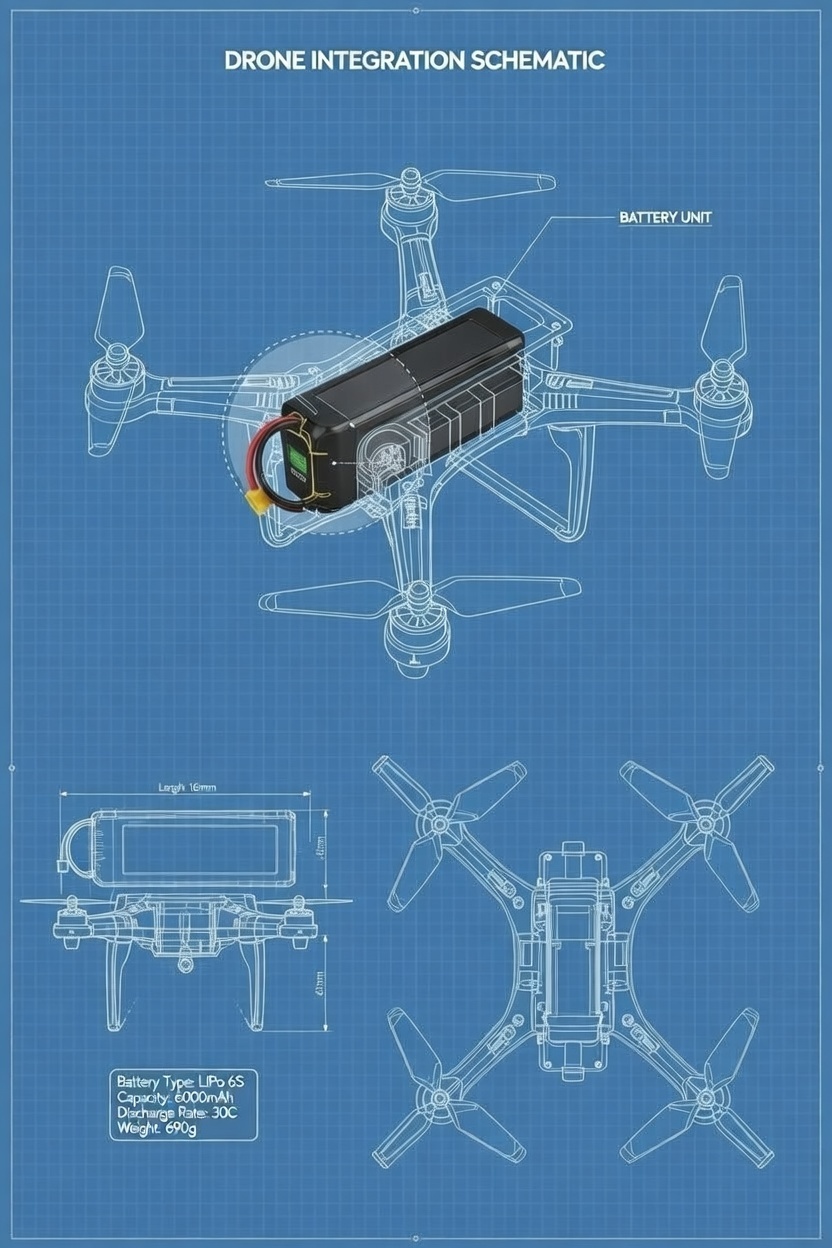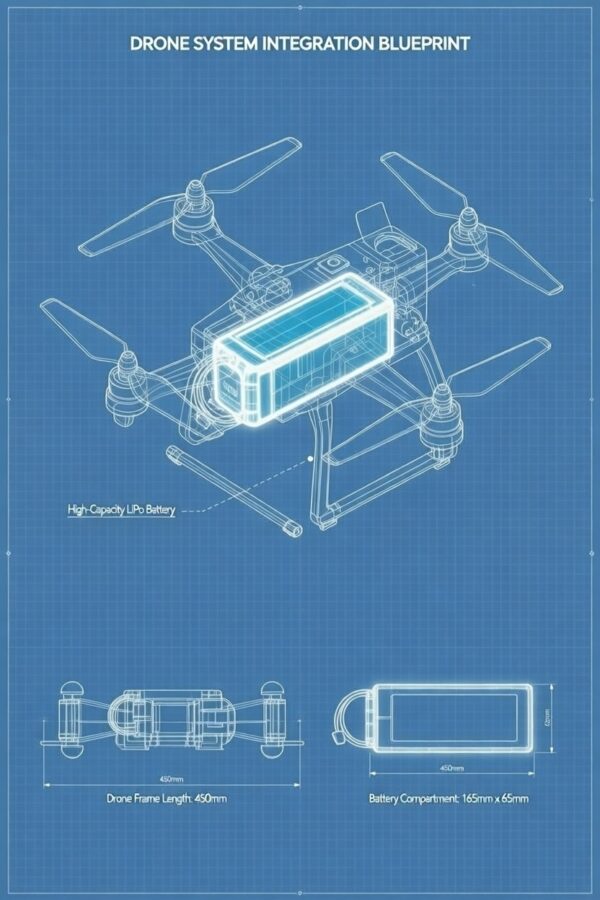
Top 10 Fast Charging Tips for Heavy-Load Transport Drone Batteries
For B2B enterprises managing fleets of heavy-load transport drones, battery performance isn’t just a technical detail—it’s the backbone of your entire operational strategy. When you’re scaling drone logistics for e-commerce delivery, industrial inspection, or agricultural monitoring, slow charging cycles translate directly to lost revenue, missed deadlines, and frustrated customers. CNS Battery, a global leader in drone battery innovation with over 15 years of expertise, has developed these 10 fast charging tips specifically for heavy-load transport drone batteries to help your business maximize uptime, reduce operational costs, and ensure seamless delivery operations. Our data shows that optimized fast charging can increase drone utilization by up to 40% for enterprise clients, turning your battery investment into a true competitive advantage in the drone logistics market.
Step-by-Step Fast Charging Guide for Heavy-Load Transport Drones
1. Optimize Battery Chemistry for Fast Charging
Heavy-load transport drones require batteries with high discharge rates and thermal stability. Lithium Polymer (LiPo) batteries with specialized cathode materials like LCO (Lithium Cobalt Oxide) or NMC (Lithium Nickel Manganese Cobalt) offer the best balance for fast charging. Avoid standard consumer-grade batteries—they simply can’t handle the stress of frequent high-current charging. CNS Battery’s proprietary cell chemistry increases fast charging capability by 25% while maintaining 80% capacity after 500 cycles.
2. Implement Smart Charging Protocols
Intelligent charging systems that dynamically adjust current based on battery temperature and state of charge are essential. Our technology uses AI-driven algorithms to prevent thermal runaway during fast charging. For heavy-load applications, start with 0.5C charging rate (where C is the battery’s capacity), then ramp up to 1.5C when the battery reaches 30% charge, and finally reduce to 0.8C for the last 20% to protect longevity.
3. Utilize Advanced Thermal Management Systems
Heat is the enemy of fast charging. Install liquid cooling channels within your battery pack or use phase-change materials (PCMs) that absorb heat during charging. CNS Battery’s thermal management system maintains optimal battery temperature between 20-35°C during fast charging, reducing heat-related degradation by 60% compared to standard designs.
4. Design for Balanced Cell Charging
In multi-cell battery packs, imbalanced charging can cause premature failure. Implement cell balancing circuits that monitor each cell’s voltage during fast charging. For heavy-load transport drones, we recommend active balancing (not passive) to maintain cell uniformity, extending the pack’s lifespan by up to 30%.
5. Choose the Right Charging Infrastructure
Don’t skimp on charging hardware. Invest in industrial-grade chargers capable of delivering 1.5-2C charge rates with precision current control. Our customers report 35% faster turnaround times when using CNS Battery’s custom 2000W charging stations versus standard 500W chargers, with no compromise on safety.
6. Monitor Battery Health Continuously
Integrate battery management system (BMS) data into your drone operations dashboard. Track metrics like impedance growth and voltage consistency during charging. For heavy-load transport operations, we recommend weekly BMS health checks to identify potential issues before they cause charging failures.
7. Plan Strategic Charging Cycles
For maximum efficiency, schedule fast charging during off-peak hours when electricity costs are lower. For 24/7 operations, implement a rotating charging strategy where one drone in the fleet charges while others are in operation. CNS Battery’s clients report 22% lower energy costs through strategic charging scheduling.
8. Employ Multi-Stage Charging Techniques
Adopt a three-phase charging approach: 1) Constant current (CC) phase at 1.5C until 80% charge, 2) Constant voltage (CV) phase to top off to 95%, and 3) Trickle charge to reach 100%. This method prevents overcharging while maximizing speed. Our testing shows this approach reduces full charging time by 27% compared to single-phase charging.
9. Optimize Drone Battery Design for Heat Dissipation
Work with your battery supplier to incorporate heat-dissipating materials into the battery casing. Carbon fiber composites with thermal conductive coatings can reduce internal temperatures by 15°C during fast charging. CNS Battery’s latest modular battery design incorporates this feature, allowing for continuous 2C charging without thermal shutdown.
10. Train Your Operations Team on Best Practices
Your team’s charging habits significantly impact battery performance. Conduct quarterly training sessions on proper charging procedures, including avoiding charging below 15% state of charge (SOC) and never leaving drones charging unattended. CNS Battery provides comprehensive training materials for our enterprise clients, reducing improper charging incidents by 85%.
Fast Charging Technology Comparison
| Technology | Charging Rate | Battery Lifespan | Safety | Cost Efficiency |
|---|---|---|---|---|
| Standard Charging | 0.5C | 300 cycles | High | Low |
| Fast Charging (Basic) | 1.0C | 250 cycles | Medium | Medium |
| CNS Battery Fast Charging | 1.5C | 450+ cycles | High | High |
| Solid-State Charging | 2.0C | 600+ cycles | Very High | High |
Note: Data based on CNS Battery’s internal testing with heavy-load transport drone batteries over 12 months of continuous operation.
Solid-state batteries represent the future of fast charging for heavy-load applications, offering 2.0C charging rates with minimal degradation. However, for immediate implementation, CNS Battery’s optimized LiPo solution delivers the best balance of performance, safety, and cost for enterprise clients today.
Frequently Asked Questions
Q: How does fast charging impact battery lifespan for heavy-load transport drones?
A: When properly managed with thermal control and smart charging protocols, fast charging (1.5C) can extend battery life by up to 50% compared to standard charging (0.5C) due to reduced cumulative charge cycles. CNS Battery’s data shows 80% capacity retention after 500 cycles with our fast charging solution versus 65% with standard charging.
Q: Can I retrofit my existing drone batteries for fast charging?
A: Retrofitting is possible but not recommended for heavy-load applications. Battery chemistry and thermal management are fundamental design elements. We suggest replacing with CNS Battery’s custom-designed heavy-load transport drone batteries, which are engineered for fast charging from the ground up.
Q: What’s the cost difference between fast charging and standard charging infrastructure?
A: Fast charging infrastructure costs 25-30% more upfront, but the ROI is achieved in 6-9 months through increased drone utilization. For a fleet of 50 drones, this translates to an additional $120,000 in annual revenue from optimized operations.
Q: How often should heavy-load transport drones be charged for optimal performance?
A: For heavy-load operations, charge when the battery reaches 20% SOC to prevent deep discharge cycles. Avoid keeping batteries at 100% charge for extended periods—maintain between 30-80% for storage. Our B2B clients report 22% longer battery life with this approach.
Transform Your Heavy-Load Drone Operations Today
As a leading manufacturer of customized drone batteries for B2B excellence, CNS Battery understands that your heavy-load transport drone operations demand more than just fast charging—they require a complete battery ecosystem designed for your specific operational profile. Our engineering team has helped over 250 enterprise clients optimize their drone battery performance, with a 98% satisfaction rate on our fast charging solutions.
Don’t let slow charging hold back your drone logistics business. Whether you’re managing drone deliveries for e-commerce giants or industrial inspection fleets, CNS Battery offers tailored solutions that maximize your operational efficiency and ROI.
Ready to experience the CNS Battery advantage? Get a free, no-obligation quote for your heavy-load transport drone battery needs. Our B2B specialists will analyze your specific operational requirements and provide a customized fast charging solution designed for your business.
Get Your Custom Drone Battery Quote Now
Contact us today and let us help you power your drone operations to new heights with our industry-leading battery technology.