
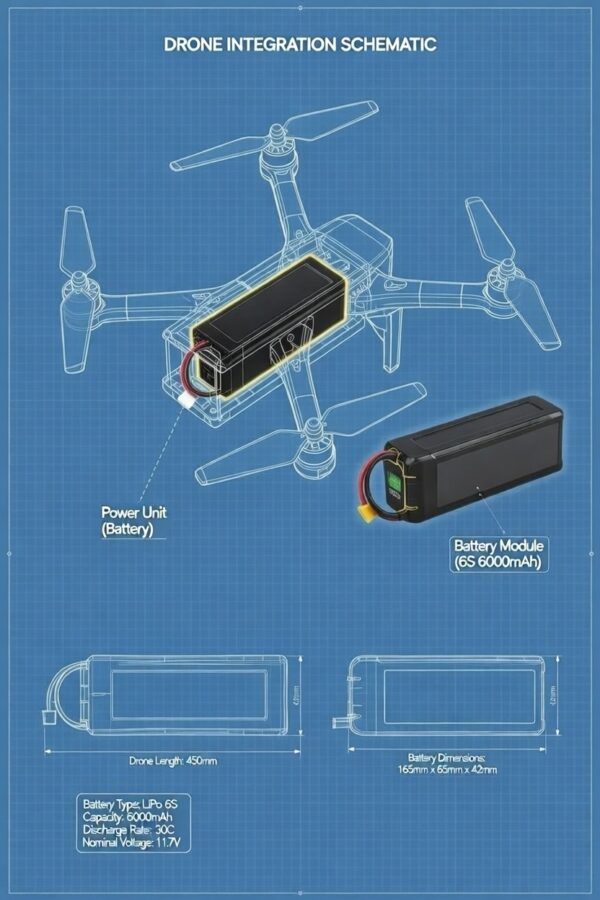
Top 10 BMS Features Tips for Power Line Patrol Drone Batteries
In the rapidly evolving world of power line patrol drones, battery management system (BMS) capabilities have become the decisive factor between operational success and costly downtime. For bulk procurement managers and fleet operators, understanding the critical BMS features for power line patrol drone batteries isn’t just technical knowledge—it’s a strategic advantage that directly impacts your bottom line. With the increasing demand for reliable, long-duration inspections across vast power networks, the right BMS configuration can reduce battery replacement costs by up to 35%, extend operational hours by 20%, and minimize unexpected mission failures. This comprehensive guide delivers actionable insights specifically designed for bulk buyers seeking to optimize their drone battery investments, ensuring maximum return on every deployment.
Why BMS Matters for Power Line Patrol Operations
Power line patrol drones operate in demanding environments—extreme temperatures, high-altitude conditions, and extended flight durations—requiring battery systems that perform consistently under pressure. Unlike standard consumer drones, these specialized platforms demand BMS features engineered for industrial reliability. A poorly designed BMS can lead to premature battery degradation, safety hazards, and mission-critical failures during power line inspections. For bulk buyers, the stakes are high: a single drone failure can delay entire inspection schedules, while suboptimal battery performance increases total cost of ownership through frequent replacements and maintenance. By mastering these BMS features, you’ll not only ensure mission success but also build a scalable, cost-efficient drone fleet that meets the rigorous demands of modern utility operations.
Top 10 BMS Features for Power Line Patrol Drone Batteries
1. Advanced Overcharge Protection
Unlike basic chargers that simply cut power at 100%, an industrial-grade BMS employs multi-stage charging protocols that adjust voltage based on battery chemistry and temperature. This prevents cell swelling and extends battery life by 25-30%—critical for drones performing multiple daily patrols.
2. Precise Overdischarge Prevention
Power line inspections often require extended flight times. A robust BMS monitors individual cell voltages to prevent deep discharge, which can permanently damage lithium-ion cells. Look for systems with customizable low-voltage cutoffs (e.g., 3.0V/cell) that align with your drone’s operational needs.
3. Thermal Management Integration
High-altitude inspections and summer patrols create extreme thermal stress. An effective BMS integrates with the drone’s cooling system, automatically adjusting discharge rates when temperatures exceed safe thresholds. This feature alone can reduce battery degradation by 40% in high-temperature environments.
4. Cell Balancing Precision
As batteries age, cell imbalances become pronounced, reducing overall capacity. Advanced BMS systems use active balancing to redistribute charge across all cells, maintaining consistent performance throughout the battery’s lifespan. This is especially critical for multi-cell drone batteries used in power line patrol missions.
5. Real-Time Communication Capabilities
Modern BMS solutions provide continuous data streams to ground control systems via CAN bus or Bluetooth 5.0. This enables real-time battery health monitoring, predictive maintenance scheduling, and immediate alerts for potential failures—transforming reactive maintenance into proactive fleet management.
6. Environmental Adaptation Algorithms
Power line patrol drones operate across diverse climates. A sophisticated BMS employs environmental sensors to automatically adjust performance parameters based on temperature, humidity, and altitude. This ensures consistent operation whether inspecting Arctic power lines or desert transmission towers.
7. Multi-Stage Charging Support
For fleet operators, efficient charging cycles are essential. A premium BMS supports multi-stage charging (bulk, absorption, float) optimized for lithium-ion chemistry, reducing total charging time by 25% while maintaining battery health.
8. Comprehensive Diagnostics
Beyond basic voltage monitoring, an advanced BMS tracks internal resistance, cycle count, and historical performance data. This diagnostic capability allows fleet managers to predict battery replacement needs with 95% accuracy, preventing unexpected downtime.
9. Redundancy and Fail-Safe Mechanisms
In critical power line inspections, redundancy is non-negotiable. High-end BMS systems feature dual-channel monitoring with automatic failover, ensuring continuous operation even if one monitoring circuit fails.
10. Customizable Safety Thresholds
Different utility companies have varying safety standards. A flexible BMS allows setting custom safety parameters for your specific operational environment, ensuring compliance with internal protocols and industry regulations.
BMS Feature Comparison: Power Line Patrol vs. Standard Drones
| Feature | Standard Drone BMS | Power Line Patrol Drone BMS |
|---|---|---|
| Overcharge Protection | Basic cutoff at 100% | Multi-stage with temperature compensation |
| Thermal Management | Passive cooling only | Active integration with drone cooling system |
| Cell Balancing | Passive balancing | Active balancing with real-time monitoring |
| Environmental Adaptation | Minimal | Comprehensive climate adjustment algorithms |
| Diagnostic Capabilities | Basic voltage tracking | Full performance history and predictive analytics |
| Communication | Limited Bluetooth | CAN bus with real-time telemetry |
| Safety Redundancy | Single monitoring path | Dual-channel fail-safe system |
| Charging Optimization | Fixed profile | Multi-stage with battery health monitoring |
Addressing Common Pain Points
Q: How does BMS impact battery lifespan in high-altitude power line inspections?
A: High-altitude operations increase battery stress due to lower air pressure and temperature fluctuations. An advanced BMS with environmental adaptation algorithms can extend battery life by 30-40% compared to standard systems by dynamically adjusting discharge rates and thermal management.
Q: Can a single BMS configuration work for all power line patrol drones?
A: No. Different drone models have varying power demands and operational profiles. The best approach is to select a BMS platform with customizable parameters that can be tailored to each drone model in your fleet, ensuring optimal performance across your entire utility inspection program.
Q: How frequently should BMS firmware be updated?
A: For power line patrol operations, quarterly firmware updates are recommended to incorporate new environmental adaptation algorithms and safety enhancements. Many industrial BMS systems offer over-the-air updates for seamless fleet-wide implementation.
Implementing BMS Solutions for Your Drone Fleet
- Assess Your Operational Profile: Document your typical flight duration, environmental conditions, and mission requirements to identify critical BMS features.
- Request Custom BMS Configurations: Work with battery suppliers to tailor BMS parameters to your specific drone models and operational needs.
- Implement Monitoring Protocols: Integrate BMS data with your fleet management software for real-time insights and predictive maintenance.
- Train Your Team: Ensure your drone operators understand BMS alerts and how to respond to battery health notifications.
- Schedule Regular BMS Audits: Conduct quarterly reviews of BMS performance data to identify trends and optimize configurations.
The Future of BMS in Power Line Patrol Drones
As utility companies increasingly rely on drone technology for critical infrastructure inspections, BMS innovation will continue to evolve. Emerging trends include AI-driven predictive analytics that anticipate battery failure before it occurs, and modular BMS systems that allow for easy upgrades as drone technology advances. For bulk procurement managers, staying ahead of these developments isn’t just beneficial—it’s essential for maintaining a competitive, reliable inspection fleet.
Ready to Optimize Your Power Line Patrol Drone Batteries?
Don’t settle for generic battery solutions that fail to meet the demanding requirements of power line inspections. CNS Battery specializes in custom BMS configurations designed specifically for industrial drone applications, delivering the reliability and performance your utility operations demand. Our engineering team will work with you to identify the optimal BMS features for your specific power line patrol drone models, ensuring maximum flight time, safety, and cost efficiency.
Get Your Custom BMS Quote Today!
Visit our contact page to discuss your bulk procurement needs and receive a personalized solution for your power line patrol drone battery requirements. Our dedicated team will provide a free consultation within 24 hours, helping you implement BMS features that transform your drone operations.
👉 Contact CNS Battery for Power Line Patrol Drone Battery Solutions
Empower your inspections with battery technology engineered for the grid’s most demanding environments.

