The Ultimate Grepow Alternative Flight Time Handbook for Industrial Inspection Operators
Are you sacrificing data integrity for battery life? In the high-stakes world of industrial inspection, a sudden brownout isn’t just an inconvenience—it’s a potential safety hazard and a data loss catastrophe. Operators often find themselves grounded mid-mission, forced to hover anxiously over their telemetry, or worse, watching a $20,000 inspection rig plummet because the battery couldn’t handle the payload.
For professionals relying on heavy sensors for LiDAR, thermal imaging, or gas detection, the limitations of standard Grepow batteries have become a bottleneck. This guide is not about generic drone tips; it is a deep technical dive for B2B operators seeking to maximize ROI through extended flight endurance without compromising on safety or compliance.
🛑 The “Mid-Mission” Crisis: Diagnosing Your Flight Time Limitations
Before we solve the problem, we must diagnose the root cause. If you are an industrial operator, you are likely facing one of these three specific technical constraints. Identifying which one applies to your fleet is the first step toward a solution.
1. The Physics of Heavy Payloads
Industrial drones are workhorses, not race cars. When you strap a heavy multispectral sensor or a high-resolution cinema camera onto a standard airframe, the physics change dramatically.
- The Problem: Standard batteries often lack the “C-Rating” (discharge rate) to handle high current draws. When the motors scream under load, a standard battery sags in voltage, causing the drone to lose altitude or trigger a low-voltage emergency landing prematurely.
- The Data: Most standard packs are rated at 25C. For heavy payloads, you need 45C to 120C continuous discharge capability to prevent voltage droop.
2. The “Cold Chain” of Battery Chemistry
Industrial inspections often happen in harsh environments—offshore oil rigs, high-altitude pipelines, or arctic wind farms.
- The Problem: Standard Lithium Polymer (LiPo) batteries are notoriously fragile in the cold. At sub-zero temperatures, their internal resistance increases, causing a massive drop in available capacity.
- The Data: A standard LiPo might lose 40% of its rated capacity at -10°C. If your battery claims 20 minutes, you might only get 12 minutes in a cold environment before a critical low-voltage warning forces a landing.
3. The Downtime Drain
Time is money. In industrial settings, the battery is often the scarcest resource.
- The Problem: Long charge times mean your drone sits idle while you wait for the next shift of batteries. If your workflow requires “hot swapping,” you need a battery that can recharge at speeds matching your operational tempo.
- The Data: Standard batteries charge at 1C (taking roughly 1 hour). For industrial throughput, you need 3C to 5C fast charging to cut that downtime to 15-20 minutes.
🛠️ The Industrial Operator’s Toolkit: Solutions for Maximum Endurance
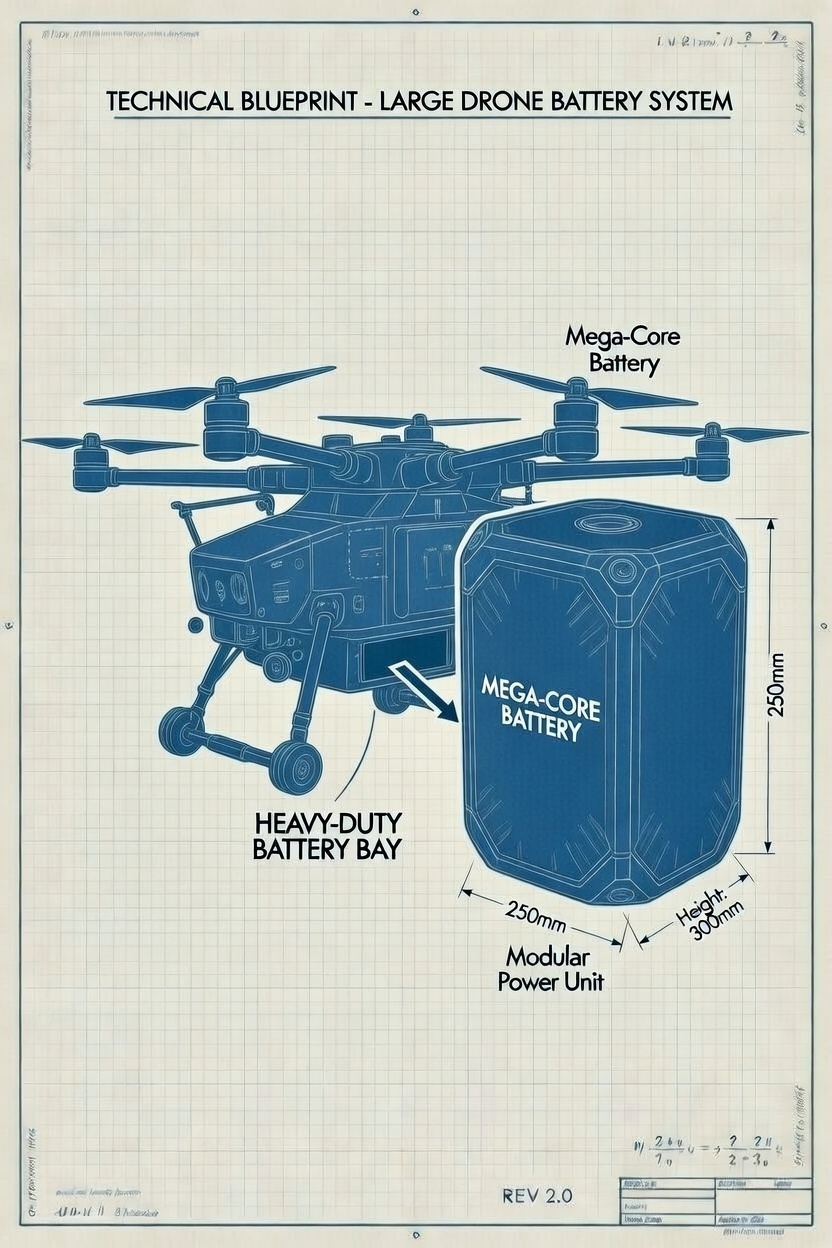
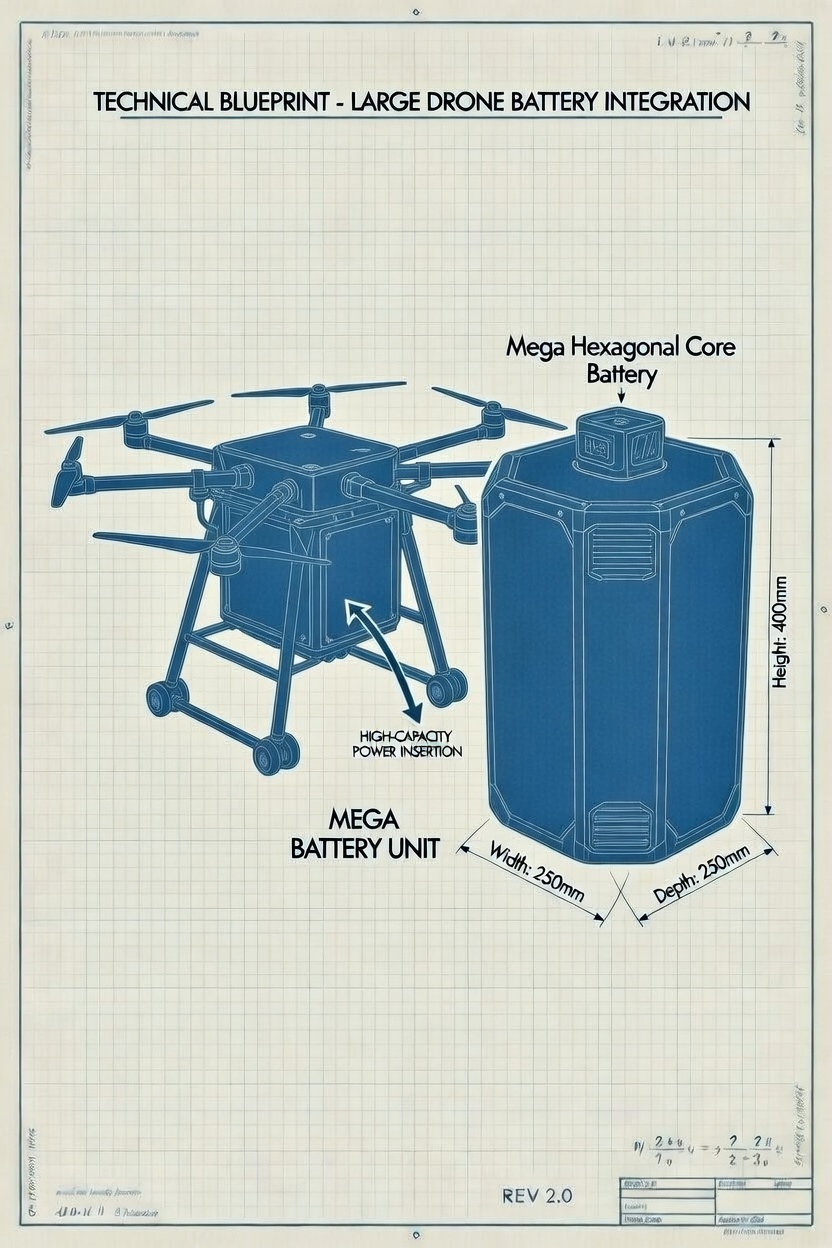
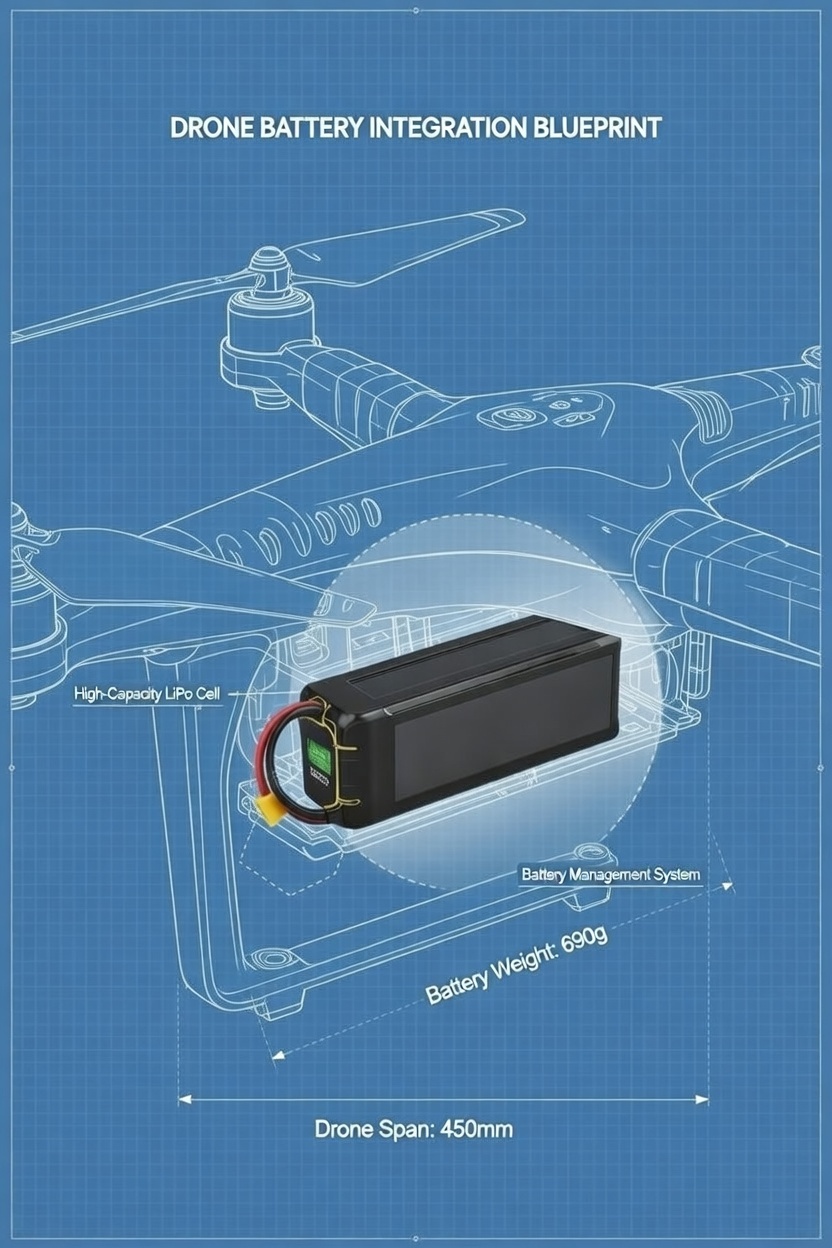
Switching from a generic solution to a purpose-built industrial battery requires a shift in mindset. It is not just about mAh (capacity); it is about energy density, thermal management, and robust chemistry.
Here are the specific technical solutions designed to solve the problems identified above.
1. Upgrade to Semi-Solid State Chemistry
If you are pushing the limits of weight and flight time, Lithium Polymer is no longer enough. The cutting edge of industrial drone power is Semi-Solid State technology.
- The Advantage: This chemistry offers an energy density of up to 380Wh/kg. To put that in perspective, a standard LiPo might be 200Wh/kg. This means you can carry a battery of the same weight but get 50-80% more flight time, or carry a lighter battery for the same flight time, reducing wear on your motors.
- The Application: This is ideal for long-endurance mapping missions or heavy-payload inspections where every gram counts. Unlike standard packs, these batteries maintain their voltage stability even under the high discharge rates required by industrial motors.
2. Master the Thermal Environment
Do not let the weather ground your operation. Industrial inspections cannot be scheduled around perfect weather.
- The Advantage: Look for batteries specifically engineered with a wide operating temperature range. The right solution should function reliably from -30°C to 60°C.
- The Application: These batteries utilize advanced thermal management systems (often integrated into the Battery Management System or BMS) that pre-heat the cells in cold conditions and dissipate heat during fast charging. This ensures that your “20-minute” battery performs as a “20-minute” battery, regardless of whether you are inspecting a steel mill or an ice cap.
3. Implement a “Pit-Stop” Fast Charging Strategy
To maximize the number of inspections per day, you must treat your battery system like a pit crew.
- The Advantage: By utilizing batteries designed for 5C fast charging, you can turn downtime into a strategic advantage.
- The Application: This allows you to run a “hot swap” operation with a minimal number of batteries. While one drone is in the air, the other is charging at lightning speed. This is not just about convenience; it reduces your total cost of ownership by allowing you to buy fewer batteries to maintain the same operational tempo.
📊 The Industrial Battery Comparison Matrix
To help you make an informed decision based on your specific inspection needs, we have broken down the technical specifications of our industrial-grade solutions.
| Feature | Standard LiPo (Legacy) | High Voltage LiPo (Upgrade) | Semi-Solid State (Cutting Edge) |
|---|---|---|---|
| Energy Density | ~200 Wh/kg | ~240 Wh/kg | Up to 380 Wh/kg |
| Discharge Rate | 25C – 45C | 60C – 80C | 30C – 50C (Stable) |
| Operating Temp | 0°C to 45°C | -20°C to 60°C | -30°C to 60°C |
| Charge Speed | 1C (Slow) | 2C – 3C | 1C (Balanced) |
| Best For | Light photography, short flights | Heavy lifting, fast flight | Long-range mapping, extreme cold |
Note: The Semi-Solid State option trades raw speed for extreme energy density and safety, making it the superior choice for data collection missions where staying aloft is the primary goal.
📝 The Ultimate Buyer’s Checklist
Before you finalize your decision to upgrade your fleet’s power source, run through this checklist to ensure you are not overlooking critical safety or compatibility factors.
- Check the BMS (Battery Management System): Does it offer real-time telemetry via Bluetooth? Can it communicate cell health to your ground station software? A “dumb” battery is a liability in industrial settings.
- Verify the Connector Type: Industrial environments demand rugged connectors. Ensure the battery uses industry-standard heavy-duty connectors (like XT150 or Anderson) that can handle high current without arcing or melting.
- Confirm Regulatory Compliance: Industrial operators are often subject to strict safety audits. Ensure your batteries are certified for transport (UN38.3) and meet local safety standards (CE, FCC, RoHS).
- Assess the “Cold Start” Capability: If you operate in cold climates, ask the manufacturer for data on the battery’s performance at your specific minimum operating temperature. Do not guess.
🚀 Conclusion: Beyond the Generic Alternative
Choosing an alternative to Grepow is not just about finding a different brand; it is about finding a partner that understands the specific physics and logistics of industrial operations. You are not just buying a power source; you are buying flight time, data integrity, and operational safety.
The Semi-Solid State and High Voltage solutions represent the future of industrial drone power. By focusing on energy density and thermal resilience, you can eliminate the “mid-mission anxiety” that plagues so many inspection teams.
Do not let battery limitations cap the potential of your industrial drone operations. It is time to upgrade to a solution built for the rigors of the real world.
Ready to transform your inspection workflow? Do not settle for off-the-shelf solutions that compromise your mission. Contact us today for a personalized technical consultation and discover how our custom battery solutions can extend your flight time and maximize your ROI.
Explore More Resources: