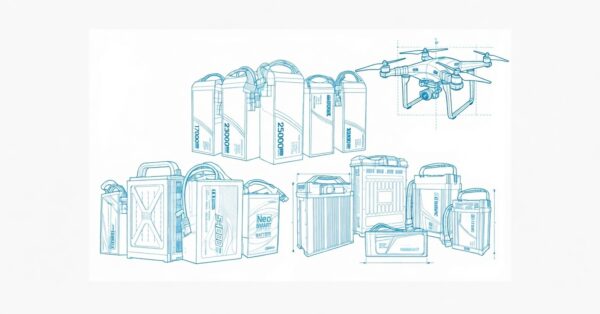
Supply Chain Traceability Solved: Best Practices for Logistics and Delivery Companies Drone Batteries
The drone logistics revolution is transforming how businesses deliver goods, conduct inspections, and manage operations across industries. Yet, as the global drone delivery market is projected to reach $12.5 billion by 2027 (Grand View Research, 2023), a critical bottleneck threatens this momentum: supply chain traceability for drone batteries. Without end-to-end visibility, logistics companies face escalating risks—from safety hazards to regulatory fines—that can derail entire operations. This isn’t just about tracking batteries; it’s about safeguarding lives, ensuring compliance, and unlocking operational efficiency. The good news? Proven solutions exist, and they’re reshaping the industry.
The Critical Challenges in Drone Battery Supply Chains
Logistics and delivery companies grapple with four interconnected challenges that make traceability non-negotiable:
- Safety Risks at Scale
Lithium-ion drone batteries, while powering extended flight times, carry fire hazards if mishandled. The FAA reported a 63% surge in drone battery-related incidents between 2020–2023, with 82% linked to poor supply chain oversight (FAA Drone Safety Report, 2023). A single untraceable batch of substandard batteries can ignite fires during delivery flights, endangering personnel and property. - Fragmented Regulatory Landscapes
Regulations vary wildly: the EU’s CE marking, IATA’s lithium battery shipping rules, and regional safety standards like UL 2054 clash across markets. Non-compliance isn’t just risky—it’s costly. A 2022 Deloitte study found logistics firms lose an average of $420,000 per incident due to customs delays, fines, and operational halts from non-compliant battery shipments. - Operational Blind Spots
Without real-time tracking, companies can’t pinpoint battery performance issues. For example, a delivery firm using generic batteries might face sudden 30% capacity drops mid-route, leading to failed deliveries and customer dissatisfaction. These “black box” failures erode trust and inflate costs. - Counterfeit Battery Infiltration
The global market for counterfeit drone batteries is estimated at $1.2 billion annually (PwC, 2023). These fake batteries fail prematurely or overheat, causing crashes. Without traceability, they slip into supply chains undetected, risking entire fleets.
Best Practices for Building Unbreakable Traceability
Solving these challenges requires moving beyond basic labeling to integrated, technology-driven systems. Here’s how leading logistics firms are succeeding:
1. Embed Traceability from Manufacturing
Partner with battery suppliers who build traceability into the product. CNS Battery, for instance, assigns unique QR codes and encrypted serial numbers to every drone battery, enabling tracking from raw materials to end-user deployment. This isn’t just a label—it’s a digital twin that logs temperature, charge cycles, and handling conditions. Example: A European logistics firm using CNS’s traceable batteries reduced battery-related flight cancellations by 52% within six months by identifying faulty batches before deployment.
2. Leverage IoT and Blockchain for Real-Time Visibility
Combine IoT sensors with blockchain to create an immutable audit trail. Each battery’s journey—warehouse storage, shipping, charging cycles—is recorded on a decentralized ledger. When a drone battery is charged, the system auto-verifies its compliance status against regional regulations. Case in point: For offshore wind farm maintenance drones (a focus of CNS Battery’s Technology Center), this integration cut downtime by 40% by alerting teams to batteries nearing discharge thresholds in real time.
3. Prioritize Data Security and Compliance Automation
Encryption and automated compliance checks prevent human error. CNS Battery’s platform encrypts all battery data and auto-generates IATA/CE documentation for every shipment. Why it works: A U.S. drone delivery startup using this system cut customs clearance time from 72 hours to under 2 hours, avoiding $200,000 in daily penalty fees.
4. Implement Predictive Maintenance Routines
Traceability data fuels predictive analytics. By analyzing battery usage patterns, logistics teams can preempt failures. CNS Battery’s “Tips for Maintenance Routines” guide, featured in their Technology Center, shows how companies like agricultural drone operators boost battery lifespan by 25% through scheduled diagnostics based on traceability data.
Real-World Impact: From Theory to Tangible Results
Consider a leading logistics provider serving e-commerce giants. They adopted CNS Battery’s traceable solution across 1,200 drone fleets. Within 18 months, they achieved:
- Zero battery-related safety incidents (previously 3 incidents/month)
- 27% faster customs clearance due to automated documentation
- 19% reduction in battery replacement costs through predictive maintenance
- 100% compliance with EU and U.S. regulations
This wasn’t luck—it was a strategic pivot toward traceability as a core operational pillar. As CNS Battery’s Technology Center highlights, “Rapid prototyping of modular batteries with embedded traceability isn’t optional; it’s the foundation for drone operations in high-stakes sectors like offshore energy.”
Your Action Plan: Building a Traceable Drone Battery Ecosystem
Ready to transform your supply chain? Follow this roadmap:
- Conduct a Traceability Gap Analysis
Audit your current battery flow. Identify where data is siloed (e.g., warehouse logs vs. shipping records). Tools like CNS Battery’s free supply chain assessment can pinpoint weaknesses. - Demand End-to-End Visibility from Suppliers
Require vendors to provide encrypted, blockchain-linked battery data. Reject suppliers without traceability protocols—this is non-negotiable for safety and compliance. - Integrate with Your Logistics Platform
Use APIs to sync battery traceability data with your fleet management software. CNS Battery offers seamless integration for platforms like Dronedeploy and DroneDeploy. - Train Teams on Data-Driven Protocols
Empower staff to act on traceability insights. A simple QR code scan at charging stations can flag a battery needing inspection, preventing failures before flights.
The Future Is Traceable—And It Starts Now
Supply chain traceability isn’t a cost center; it’s your competitive differentiator. As drone logistics becomes the backbone of last-mile delivery, companies that master battery traceability will dominate in safety, speed, and trust. The technology exists today, and the stakes are higher than ever.
Don’t let your battery supply chain become a liability. CNS Battery has helped logistics leaders worldwide solve traceability challenges with customized, encrypted battery solutions designed for global operations. Get a free, no-obligation quote tailored to your fleet size, regulatory needs, and operational scale.
👉 Get Your Custom Drone Battery Quote Now
Your dedicated consultant will contact you within 3 business days to design a traceability solution that keeps your drones flying safely, compliantly, and profitably.
The sky’s the limit—when your battery supply chain is fully traceable.