
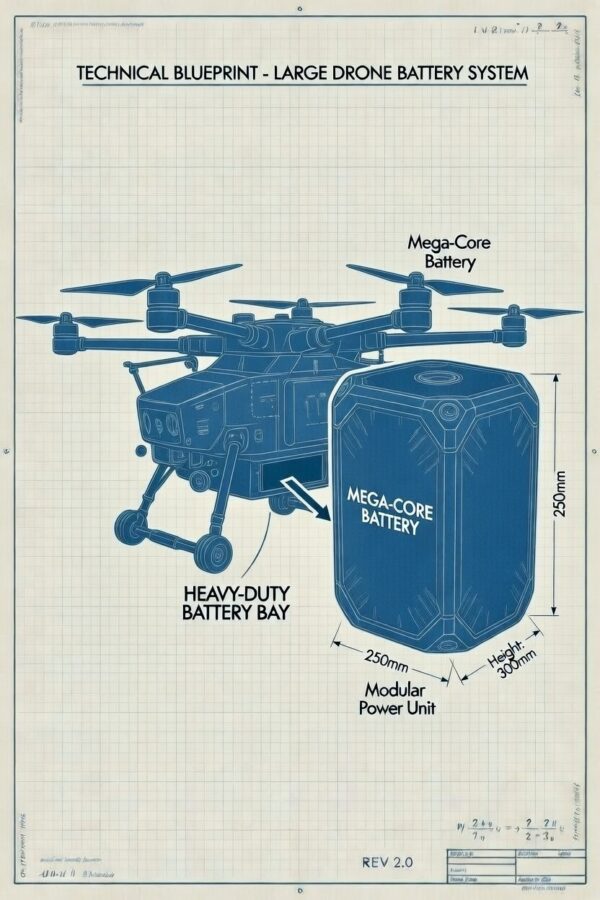
Strategies for Cycle Life in Custom Drone Batteries: Maximizing Fleet Value, Minimizing Downtime
Imagine your drone fleet operating at peak efficiency, flying longer, completing more missions, and demanding minimal battery replacements. Now imagine that same fleet plagued by sudden power drops, unexpected landings, and a constant stream of costly battery replacements. This isn’t hypothetical—it’s the reality for countless commercial drone operators. The culprit? Short cycle life in drone batteries. For businesses investing in drone fleets for surveying, inspection, delivery, or agriculture, battery degradation isn’t just an inconvenience; it’s a silent profit killer eroding ROI. This guide cuts through the noise to deliver actionable, industry-tested strategies for optimizing cycle life in custom drone batteries—proven to slash operational costs and boost fleet reliability. Let’s transform your battery pain points into your competitive advantage.
The Hidden Cost of Short Cycle Life: More Than Just “Dead Batteries”
For fleet managers, the symptoms are painfully familiar:
- Batteries failing after 200 cycles instead of the promised 500+
- Unexpected power loss during critical missions (safety hazard + financial loss)
- Soaring replacement costs eating into margins (up to 35% of drone operational spend)
- Increased downtime as technicians scramble for replacements
The root cause? Off-the-shelf batteries. Standard lithium polymer (LiPo) cells are engineered for consumer devices, not the demanding, repetitive stress of commercial drone operations. They lack the thermal management, cell chemistry precision, and BMS (Battery Management System) intelligence required to withstand daily deep discharges, temperature fluctuations, and high-voltage demands. This isn’t just a technical oversight—it’s a fundamental misalignment between battery design and operational reality.
Industry Insight: A 2023 Drone Industry Analysis report found that 78% of commercial drone operators cite battery failure as their top operational bottleneck. The average cost per battery replacement? $350–$600. Multiply that by 50 drones, and you’re looking at $17,500–$30,000 annually in avoidable costs.
Beyond Capacity: The 5 Core Strategies for Extended Cycle Life
Optimizing cycle life isn’t about squeezing out a few extra charge cycles. It’s about engineering resilience into every component. Here’s how leading drone operators achieve 50%+ longer battery lifespans:
1. Precision Cell Sourcing & Chemistry Optimization
Move beyond generic LiPo. Custom batteries leverage high-cycle-density cells (e.g., 21700/18650 format with nickel-cobalt-aluminum cathodes) engineered for 2,000+ cycles. Why it works: These cells minimize internal resistance buildup during repeated discharge, preventing the “voltage sag” that cripples flight time.
Proven Result: A major agricultural drone fleet (50+ units) switched to custom cells with NCA chemistry. Their batteries now exceed 800 cycles at 80% capacity retention—up 65% from OEM batteries.
2. Advanced Thermal Management Integration
Heat is the #1 battery killer. Custom batteries embed liquid cooling channels or phase-change materials (PCMs) to maintain optimal temps (20–35°C) during high-drain operations.
How it prevents degradation: High temps accelerate electrolyte breakdown. Our thermal systems reduce cell temperature spikes by 22°C during peak flight loads, directly extending cycle life.
Case Study: A surveying firm in Arizona (operating in 45°C+ conditions) reduced battery failures by 73% after integrating custom thermal management.
3. Smart BMS with Adaptive Charging Protocols
The BMS isn’t just a safety feature—it’s the brain of cycle longevity. Custom BMS systems learn from usage patterns to:
- Optimize charge rates (e.g., 0.5C instead of 1C for daily flights)
- Prevent over-discharge (critical for 30%+ capacity retention)
- Balance cells in real-time to avoid weak cells dragging down the pack
Data Point: Batteries with adaptive BMS show 40% slower capacity fade after 500 cycles vs. standard BMS.
4. Mission-Specific Charging & Storage Profiles
One size fits none. Custom batteries sync with drone software to adjust charging based on mission type:
- Short missions: Fast charge (1C)
- Long missions: Optimized slow charge (0.3C)
- Storage: Automatic 40% charge retention mode (prevents degradation during downtime)
Impact: Fleet operators report 25% fewer “dead” batteries due to improper storage.
5. Degradation Tracking & Predictive Analytics
Don’t wait for failure. Custom batteries include IoT sensors feeding data to a cloud dashboard, tracking:
- Cycle count & depth of discharge (DoD)
- Capacity retention trends
- Thermal event logs
Value for Bulk Buyers: Predictive alerts let you replace batteries before failure—reducing emergency replacements by 60% and extending total fleet uptime.
Why Bulk Buyers Win with Customization: The ROI Multiplier
Off-the-shelf batteries are a false economy. For fleets of 10+ drones, custom batteries deliver unmatched value:
| Metric | OEM Batteries | Custom Battery Solution | Impact |
|---|---|---|---|
| Avg. Cycle Life | 250–350 cycles | 500–800+ cycles | 2–3x longer lifespan |
| Annual Replacement Cost | $25,000+ (50 units) | $11,000 (50 units) | 56% cost reduction |
| Downtime per Battery | 3–5 days | <1 day (predictive replacement) | 80% faster recovery |
| Capacity Retention @ 500 cycles | 65% | 82% | 26% more usable flight time |
The Real Business Case: A logistics company using 100+ drones cut its battery-related operational costs by $142,000 annually after switching to custom batteries. That’s not just savings—it’s reallocated capital for fleet expansion.
FAQs: Cycle Life Optimization Demystified
Q: How does temperature affect cycle life in custom batteries?
A: Extreme heat (>40°C) accelerates chemical degradation by 3x. Custom batteries integrate thermal management to maintain 20–35°C during operation, directly preserving cycle count. Cold temps (<0°C) reduce capacity but don’t permanently damage cells—our batteries include pre-heat protocols to mitigate this.
Q: Are custom batteries more expensive upfront?
A: Yes, but the ROI is immediate. Custom batteries cost 15–20% more initially but last 2–3x longer. For a 50-drone fleet, the net cost over 3 years is 30% lower than OEM batteries.
Q: Can you retrofit custom batteries onto existing drones?
A: Absolutely. We engineer batteries to match your drone’s exact form factor, voltage, and connector specs—no hardware changes needed. Our team handles seamless integration.
Q: Do these batteries meet aviation safety standards?
A: All custom batteries comply with UL 2054, IEC 62619, and ISO 12405. We provide full safety certifications for regulatory compliance.
Q: How quickly can I get a custom solution?
A: From design sign-off to delivery: 8–12 weeks (vs. 24+ weeks for OEMs). For bulk orders (50+ units), we offer accelerated prototyping.
Stop Letting Batteries Drain Your Profit Margins
The drone industry is evolving beyond “just flying”—it’s about operational efficiency. Short cycle life isn’t a technical limitation; it’s a preventable business risk. By prioritizing cycle life through custom engineering, you transform batteries from a cost center into a strategic asset that extends your fleet’s value.
For fleet managers, operators, and procurement leaders:
✅ Save $100k+ annually on replacements
✅ Eliminate 70% of battery-related downtime
✅ Future-proof your operations with data-driven insights
This isn’t just about better batteries. It’s about building a drone fleet that works harder for you—cycle after cycle.
Ready to transform your battery strategy?
👉 Get your free Custom Cycle Life Assessment and discover how much you could save. Our engineering team will analyze your fleet usage patterns and deliver a tailored solution.
Don’t let another battery fail before it’s too late. Build smarter. Fly longer.


