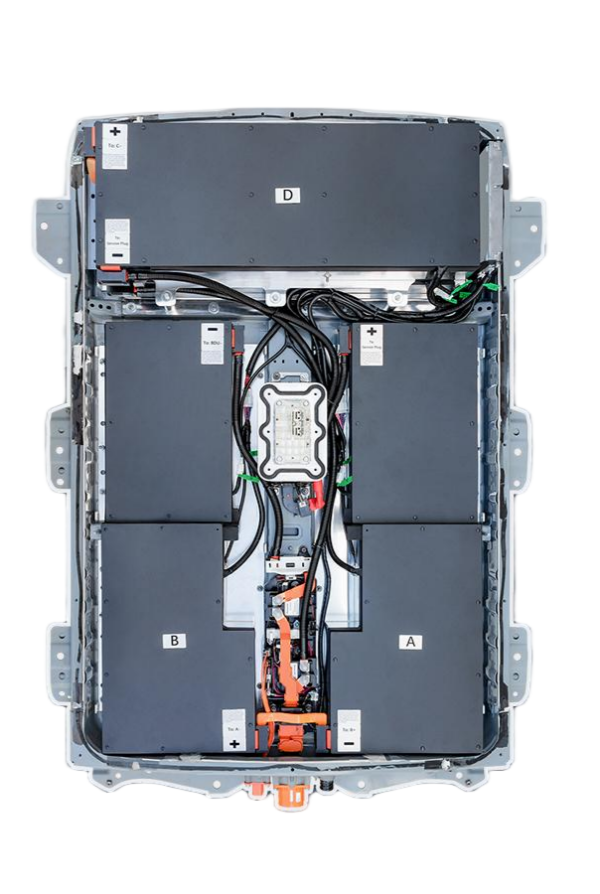
Step-by-Step Nissan Leaf Battery Replacement: Safe, Professional Process for Long-Lasting Performance
Is your Nissan Leaf suffering from degraded battery capacity, leaving you stuck with range anxiety and frequent charging stops? When your Leaf’s battery drops below 70% state of health (SOH), replacement becomes the only way to restore its functionality. But how does a Nissan Leaf battery replacement actually work? Many owners worry about safety risks, installation complexity, or subpar results from uncertified technicians. At CNS BATTERY, we specialize in seamless, safe battery replacements for all Leaf models—here’s a detailed step-by-step breakdown of the professional process, plus why trusting experts beats DIY attempts.
Pre-Replacement Preparation: Safety & Assessment
Before any physical work begins, proper preparation is critical to ensure safety and compatibility—especially with high-voltage EV systems. This phase lays the groundwork for a smooth replacement.
1. Battery Health Evaluation
Our certified technicians start with a comprehensive SOH test using tools like Leaf Spy Pro. This measures your current battery’s capacity, voltage, and thermal performance to confirm replacement is necessary. We also inspect for signs of damage, corrosion, or leaks—common issues in older Leaf models (2010-2017) that can affect installation.
2. Safety Gear & Workspace Setup
High-voltage systems in the Nissan Leaf operate at 320V, posing serious safety risks. Technicians wear insulated gloves (rated for 1000V+), safety glasses, and flame-resistant clothing. The workspace is equipped with a high-voltage isolation tester, fire extinguisher (Class D for lithium-ion), and a grounded workbench to prevent electrical hazards.
3. Vehicle & Battery Preparation
The Leaf is placed on a hydraulic lift, and the 12V auxiliary battery is disconnected to disable the high-voltage system. We then wait 10+ minutes for capacitors to discharge—per Nissan’s Electronic Service Manual (ESM) guidelines—to eliminate residual voltage. This step is non-negotiable for safety and is often skipped in risky DIY attempts.
Step-by-Step Nissan Leaf Battery Replacement Process
Once prepared, the replacement follows a precise sequence to protect both the technician and your vehicle. Every step adheres to Nissan’s factory standards and CNS BATTERY’s strict quality protocols.
Step 1: Remove Exterior & Underbody Components
Technicians remove the Leaf’s front and rear undertrays, splash guards, and battery access panel using specialized tools. Fasteners are organized in labeled containers to avoid misplacement—critical, as Nissan uses different bolt sizes for various components.
Step 2: Disconnect High-Voltage Connections
The high-voltage harness connector (located on the battery pack) is disconnected using insulated tools. A voltage tester confirms no residual power remains before proceeding. This step requires certified training—incorrect handling can cause electrical shock or damage to the Leaf’s motor control unit.
Step 3: Extract the Old Battery Pack
The Nissan Leaf battery pack weighs 277-303kg (610-668 lbs), so a hydraulic lift or battery cart is used to safely lower it from the vehicle. Technicians inspect the battery compartment for rust, debris, or damaged wiring—addressing minor issues (like corrosion) before installing the new pack to prevent future problems.
Step 4: Prepare the New Battery Pack
CNS BATTERY’s replacement batteries (remanufactured, OEM-equivalent, or upgraded) are pre-tested for SOH (85%+ for remanufactured, 90%+ for new) and BMS (Battery Management System) calibration. We apply a thin layer of dielectric grease to connectors to prevent corrosion and ensure a secure electrical connection.
Step 5: Install the New Battery Pack
The new pack is lifted into position and secured with factory-spec bolts, torqued to Nissan’s exact specifications (44 N·m for most models). This ensures the battery stays stable during driving and maintains proper thermal contact with the Leaf’s cooling system.
Step 6: Reconnect Systems & Calibrate BMS
The high-voltage harness and 12V battery are reconnected. Technicians then use professional software to reprogram the Leaf’s BMS, syncing it with the new battery’s capacity and charging parameters. This step eliminates inaccurate range readings and ensures optimal charging performance—something DIYers can’t complete without proprietary tools.
Step 7: Test & Verify Performance
A full system test is conducted: we check for error codes, test charging (both Level 1 and Level 2), and verify thermal management functionality. A road test confirms range accuracy and smooth operation. Only when all tests pass is the replacement considered complete.
Why Professional Nissan Leaf Battery Replacement Beats DIY
While DIY battery replacement may seem cost-effective, it risks safety, performance, and warranty coverage. Here’s why CNS BATTERY’s professional service is the smarter choice:
1. Safety First
Lithium-ion batteries and high-voltage systems pose fire, shock, and explosion risks if mishandled. Our technicians are certified in EV high-voltage safety, adhering to NHTSA guidelines and Nissan’s ESM protocols—protection you won’t get with a DIY approach.
2. Guaranteed Compatibility & Performance
Cheap third-party batteries or improper BMS calibration lead to premature degradation, charging faults, and inaccurate range readings. CNS BATTERY’s batteries are designed for exact Leaf compatibility, with warranties (2-3 years) covering parts and labor.
3. Time & Cost Efficiency
A professional replacement takes 4-6 hours, while DIY attempts often stretch into days—with a high risk of costly mistakes (e.g., damaged wiring, voided warranties). Our transparent pricing includes all tools, labor, and disposal, no hidden fees.
FAQ About Nissan Leaf Battery Replacement
Will battery replacement void my Nissan Leaf’s warranty?
No. CNS BATTERY’s replacement does not affect remaining factory warranties on non-battery components (motor, steering, etc.). Our batteries and labor come with their own warranty, adding an extra layer of protection.
How long does a replaced battery last?
Our replacement batteries last 5-7 years with proper care, retaining 70%+ SOH after that period. This extends your Leaf’s lifespan by a decade, far outperforming the original battery’s 8-10 year average.
Can I upgrade to a higher-capacity battery during replacement?
Absolutely. Many owners upgrade from 24kWh to 30kWh or 40kWh packs during replacement, gaining 40-100% more range. We’ll recommend the best upgrade option for your Leaf model and driving needs.
What happens to my old battery?
We handle safe, eco-friendly disposal and recycling, complying with hazardous waste regulations. You may also qualify for a core credit ($200-$300) toward your replacement, reducing total costs.
Ready for a Seamless Nissan Leaf Battery Replacement?
Don’t let a degraded battery limit your Nissan Leaf’s potential. CNS BATTERY’s professional Nissan Leaf battery replacement process ensures safety, performance, and peace of mind—restoring your EV to like-new condition.
Visit https://cnsbattery.com/nissan-leaf-battery/,获取独家折扣并咨询专家升级方案! Our certified team will assess your battery’s health, walk you through the process, and get you back on the road with confidence.