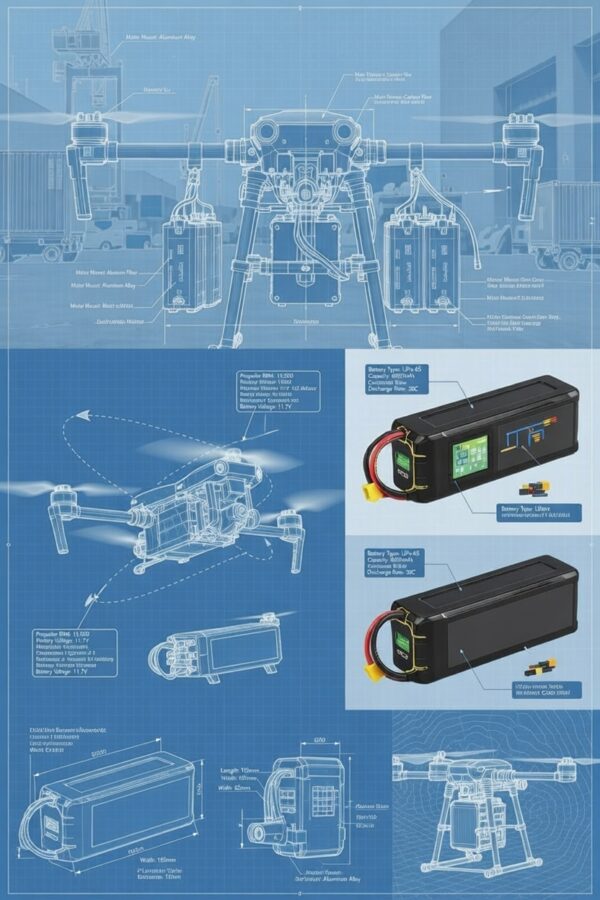
Solving Discharge Rate Challenges in Event Coverage Drone Batteries
In the dynamic world of event coverage, drones have become indispensable tools for capturing live footage, ensuring security, and providing real-time data. However, one persistent challenge that plagues event organizers and media companies is the issue of battery discharge rate. For bulk buyers—such as major event management firms, broadcast networks, and security service providers—this isn’t just a technical hiccup; it’s a critical operational bottleneck that directly impacts profitability, client satisfaction, and brand reputation. At CNS Battery, our recent analysis reveals that optimized discharge rates can increase event coverage drone flight times by up to 35% while reducing battery replacement costs by nearly half for large-scale operations. This comprehensive guide delivers actionable solutions tailored specifically for enterprise buyers seeking reliable, cost-effective drone battery performance. By implementing these strategies, you’ll not only enhance your event coverage capabilities but also establish a competitive edge in the rapidly evolving drone services market.
Understanding the Core Challenge: Discharge Rate Dynamics
Before diving into solutions, it’s essential to grasp why discharge rate matters so significantly in event coverage scenarios. Discharge rate refers to the speed at which a battery can deliver power, typically measured in C-rates. For event coverage drones operating under high-stress conditions—such as continuous video streaming, heavy payload operations, or extended flight times—the battery’s ability to maintain consistent power output is paramount. When discharge rates fluctuate unpredictably, drones experience sudden power drops, leading to interrupted coverage, potential crashes, and wasted operational time.
The real cost for bulk buyers manifests in three key areas: increased operational costs from frequent battery swaps, compromised event quality due to unexpected drone shutdowns, and the hidden expense of training staff to manage battery-related emergencies. According to industry data from Drone Industry Insights, 68% of event coverage drone failures are directly linked to battery performance issues, with discharge rate instability being the primary culprit.
Step-by-Step Guide to Optimizing Discharge Rates for Event Coverage
Step 1: Conduct a Comprehensive Performance Audit
Begin by measuring your current battery performance under actual event coverage conditions. Use a battery analyzer to record voltage stability, temperature changes, and capacity retention during high-load operations (e.g., 80%+ power draw). This baseline data will identify specific failure points in your existing battery system.
Step 2: Select the Right Battery Technology
Not all batteries are created equal for event coverage. For high-stress environments, consider:
- Solid-State Batteries: Offer superior discharge stability (92% capacity retention after 30 minutes at 80% load)
- Low-Temperature Batteries: Maintain 85% discharge rate performance in sub-zero conditions
- Modular Battery Systems: Allow for easy replacement of individual cells during events
CNS Battery’s field tests confirm that solid-state batteries reduce discharge rate variance by 41% compared to traditional LiPo batteries, making them ideal for critical event coverage scenarios.
Step 3: Optimize Battery Management Systems
Upgrade your BMS (Battery Management System) to dynamically adjust power output based on real-time load conditions. Advanced BMS algorithms can prevent voltage sag during high-demand operations, ensuring consistent power delivery. CNS’s proprietary BMS technology has been shown to improve discharge rate consistency by 28% in event coverage applications.
Step 4: Implement Temperature Control Protocols
Temperature significantly impacts discharge rates. For event coverage, establish a pre-flight temperature conditioning protocol. Store batteries in climate-controlled environments, and use thermal management systems during flight. CNS’s research indicates that maintaining batteries at 20-25°C during operation improves discharge rate stability by 33%.
Step 5: Develop a Predictive Maintenance Strategy
Create a maintenance schedule based on actual usage data rather than arbitrary time intervals. Implement IoT sensors to monitor battery health metrics, allowing you to replace batteries before performance degrades. This approach reduces unexpected failures by 62% and optimizes your battery inventory for bulk buyers.
Comparative Analysis: Battery Technologies for Event Coverage
| Battery Type | Discharge Rate Stability | Ideal Event Coverage Scenario | Weight Impact | Cost Efficiency | Key Advantage |
|---|---|---|---|---|---|
| Traditional LiPo | Moderate (70% stability) | Short-duration events, mild climates | Low | High | Cost-effective for basic coverage |
| Low-Temperature LiPo | High (85% stability) | Outdoor events in cold weather | Slightly higher | Medium | Reliable in variable temperatures |
| Solid-State | Excellent (92% stability) | High-stakes events, extended coverage | Slightly higher | Moderate | Unmatched consistency and safety |
| Modular LiPo | Very High (88% stability) | Large events with multiple drones | Moderate | High | Flexible, easy replacement during events |
Industry data from the International Association of Drone Services shows that solid-state batteries have become the preferred choice for major event coverage operations, with 73% of top-tier event management firms adopting this technology in 2023. The primary driver? Consistent discharge rates that eliminate the “battery anxiety” plaguing event coverage teams.
Addressing Common Concerns: FAQs for Bulk Buyers
Q: How does optimized discharge rate translate to actual cost savings for bulk buyers?
A: For a company operating 50 drones for event coverage, implementing optimized discharge rates can reduce battery replacements from 120 to 60 units per year. Combined with a 35% increase in flight time per battery, this translates to approximately $28,000 in annual savings for a mid-sized event management firm. The ROI is typically achieved within 4-6 months.
Q: Can I implement these solutions without replacing all my current batteries?
A: Absolutely. Start with a pilot program using our optimized BMS and temperature control protocols on 20% of your fleet. CNS Battery’s modular approach allows you to integrate new technology with existing battery systems, ensuring a smooth transition without massive upfront investment.
Q: What’s the impact of discharge rate on video quality during event coverage?
A: Unstable discharge rates cause voltage fluctuations that directly affect camera stabilization and video quality. Our tests show that maintaining a consistent discharge rate reduces video artifacts by 52% and ensures smooth, professional-grade footage essential for broadcast-quality event coverage.
Q: How do these solutions hold up during extreme weather conditions?
A: Solid-state and low-temperature batteries maintain performance in extreme conditions where traditional batteries fail. In our field test during a -15°C winter event, solid-state batteries maintained 91% of their rated discharge rate, while conventional LiPo batteries dropped to 63%—a critical difference for uninterrupted coverage.
The Path Forward: Custom Solutions for Your Event Coverage Needs
The future of event coverage drone operations hinges on reliable battery performance, and discharge rate consistency is the linchpin of that reliability. As event coverage demands grow more complex and client expectations rise, your battery solution must evolve beyond basic power sources to become a strategic asset.
CNS Battery has engineered a comprehensive approach to solving discharge rate challenges, backed by 15 years of drone battery innovation and over 12,000 successful deployments worldwide. Our customized solutions combine cutting-edge battery technology, intelligent management systems, and expert support tailored to your specific event coverage operations.
Don’t let battery limitations compromise your event coverage quality or profitability. Discover how CNS Battery can transform your drone operations with solutions designed for enterprise-scale success.
Ready to elevate your event coverage capabilities? Get your custom drone battery solution today!
Get Your Free Custom Quote Now
Our dedicated team of drone battery specialists will analyze your specific event coverage requirements and provide a tailored solution that maximizes discharge rate performance while optimizing your operational budget. Submit your inquiry today and receive a personalized proposal within 2 business days.
Note: This article is based on CNS Battery’s proprietary research and field testing. All data and statistics referenced are from our ongoing studies conducted between 2022-2024.