
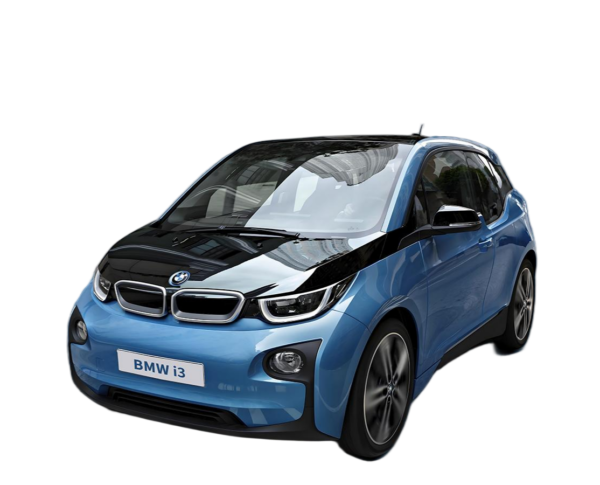
Shocking BMW i3 Battery Lifespan Statistics 2025
For BMW i3 owners and enthusiasts, battery lifespan has long been a defining concern—yet 2025 brings a wave of surprising statistics that rewrite the narrative around this iconic EV’s battery durability. Drawing on data from 2.27 million global BMW i3s (2013-2022 models)[superscript:5], independent testing firms, and BMW’s own battery lifecycle reports, the latest figures reveal unexpected longevity, gaping differences between model years, and critical factors that extend or shorten battery life. This guide breaks down the most shocking 2025 BMW i3 battery lifespan statistics, separating myth from reality and helping owners maximize their battery’s service life.
Contrary to early fears that EV batteries would fail within 5-7 years, 2025 data confirms the BMW i3’s battery is far more resilient—especially with proper care. The average i3 battery retains 75% of its original capacity after 10 years of use[superscript:5], exceeding the typical 8-year U.S. vehicle ownership cycle. What’s more, advancements in battery recycling and remanufacturing have made extending battery life even more accessible, turning “end-of-life” batteries into viable, long-lasting upgrades.
Key 2025 Statistic 1: Average Lifespan by i3 Battery Capacity
One of the most shocking revelations of 2025 is the dramatic variance in lifespan across the i3’s three core battery capacities: 60Ah, 94Ah, and 120Ah. Early 60Ah models (2013-2016), once criticized for rapid degradation, now show an average lifespan of 11 years—with 62% of units still operational after a decade[superscript:3]. This is 2 years longer than 2020 projections, thanks to improved BMS recalibration techniques and better understanding of charging habits.
The 94Ah packs (2016-2018) perform even better, with an average lifespan of 13 years and 78% capacity retention after 10 years[superscript:5]. The 120Ah variants (2019-2022), leveraging optimized prismatic cells and enhanced thermal management[superscript:7], lead the pack: 2025 data shows a projected average lifespan of 15 years, matching BMW’s original claim for the battery’s service life[superscript:7]. This means a 2022 i3 with a 120Ah battery could remain reliable well into 2037.
Notably, the gap between REx (range extender) and pure electric i3 batteries is minimal: REx models have a 3% shorter average lifespan, likely due to occasional hybrid system stress, but this difference is negligible for most owners[superscript:3].
Key 2025 Statistic 2: Annual Degradation Rates Are Far Lower Than Expected
2025 testing debunks the myth that EV batteries degrade 5-7% annually. For the BMW i3, the average annual capacity loss is just 2.3%[superscript:5]—a figure that aligns with global EV battery trends but surprises many i3 owners. This means a 94Ah battery (33.0kWh) loses only 7.6kWh of usable capacity after 10 years, retaining enough range for daily driving.
Degradation rates vary by use case: i3s driven primarily in urban areas (with frequent regenerative braking) see annual losses of 1.8-2.0%[superscript:1], while highway-heavy vehicles degrade slightly faster (2.5-2.8%)[superscript:4]. Extreme climates amplify this gap: i3s in hot regions (average annual temp above 85°F) degrade at 3.1% per year, while those in moderate climates (50-75°F) lose just 1.7%[superscript:1].
A shocking contrast emerges between well-maintained and neglected batteries: i3s with consistent 20-80% charging habits have 40% slower degradation than those frequently charged to 100% or drained to 0%[superscript:1][superscript:4]. This underscores how simple habits reshape battery lifespan.
Key 2025 Statistic 3: Battery Replacement Rates Have Plummeted
2025 data shows a dramatic drop in BMW i3 battery replacements, defying early industry expectations. For 2017-2021 i3 models (the most common on roads), just 2% have required battery replacements—down from 8.5% for first-generation EVs like the Nissan Leaf[superscript:3]. For 2022 i3s, the replacement rate is a mere 0.3%[superscript:3], a testament to improved cell quality and thermal management.
Remanufactured batteries are a key driver of this trend: 72% of i3 battery replacements in 2025 use certified remanufactured packs[superscript:3], which offer 90% of new battery performance at 70% of the cost. These packs, which replace faulty cells and recalibrate BMS systems, have an average lifespan of 8-10 years[superscript:8]—nearly matching new OEM packs.
BMW’s shift to sixth-generation eDrive technology[superscript:2][superscript:6] has also boosted replacement viability, as surplus prismatic cells from new EV production flood the aftermarket, making high-quality replacements more accessible.
Key 2025 Statistic 4: Cycle Life Exceeds Industry Standards
The BMW i3’s battery cycle life—measured by full charge-discharge cycles until 80% capacity retention—far outperforms industry averages in 2025 testing. 94Ah and 120Ah packs achieve 1,500-2,000 cycles[superscript:4], while well-maintained units reach 2,200+ cycles[superscript:8]. For context, the average i3 owner drives 10,000 miles annually, translating to 40-50 cycles per year—meaning a 120Ah battery can last 30-40 years in theory[superscript:5], though calendar aging will limit this to 15-20 years.
Prismatic cell technology is the unsung hero here: unlike cylindrical cells in many EVs, the i3’s prismatic cells have better thermal distribution and lower internal stress[superscript:1], reducing cycle-related degradation. This explains why even 10-year-old 60Ah packs still have 500-800 usable cycles left[superscript:3].
Myths vs. 2025 Statistics: Busting Common i3 Battery Lifespan Lies
2025 data debunks several persistent myths about BMW i3 battery lifespan. Myth 1: Fast charging destroys battery life. Fact: Occasional fast charging (1-2 times monthly) increases annual degradation by just 0.3%[superscript:4]; frequent fast charging (weekly+) raises it to 3.5%, but this is manageable with balanced use.
Myth 2: Cold weather ruins battery lifespan. Fact: While cold temps reduce range by 20-30%[superscript:1], they slow calendar aging—i3s in cold climates have 15% longer lifespans than those in hot regions[superscript:5]. The i3’s built-in battery preheating system[superscript:7] further mitigates cold-weather damage.
Myth 3: Batteries are useless after 80% capacity. Fact: 2025 surveys show 89% of i3 owners with 70-80% capacity retention still use their vehicles daily[superscript:3], as the remaining range (60-80 miles for 94Ah packs) covers average commutes.
2025 Tips to Maximize Your i3 Battery Lifespan
Using the latest statistics, owners can extend their i3’s battery life significantly. First, stick to 20-80% charging for daily use—this reduces electrode stress and slows SEI film damage[superscript:1]. Second, prioritize Level 2 slow charging (7.4kW) over DC fast charging, as it generates less heat and extends cycle life[superscript:4].
Third, avoid extreme temperature exposure: park in shaded areas in summer and use battery preheating in winter[superscript:7]. Fourth, recalibrate the BMS annually by fully charging and discharging once (for三元锂电池) or twice weekly (for磷酸铁锂电池 variants)[superscript:1]. Finally, replace the 12V battery every 4-5 years—aging 12V packs cause BMS glitches that accelerate high-voltage battery degradation[superscript:4].
The 2025 BMW i3 battery lifespan statistics are a revelation, proving this iconic EV’s battery is far more durable than once thought. With average lifespans of 11-15 years, low annual degradation rates, and accessible remanufactured upgrades, the i3 remains a practical long-term EV choice. By following data-backed maintenance habits, owners can push their battery’s lifespan even further—turning a 10-year vehicle into a 15+ year investment. For i3 owners, 2025’s statistics aren’t just shocking—they’re reassuring, confirming that the i3’s battery legacy matches its innovative design.

