
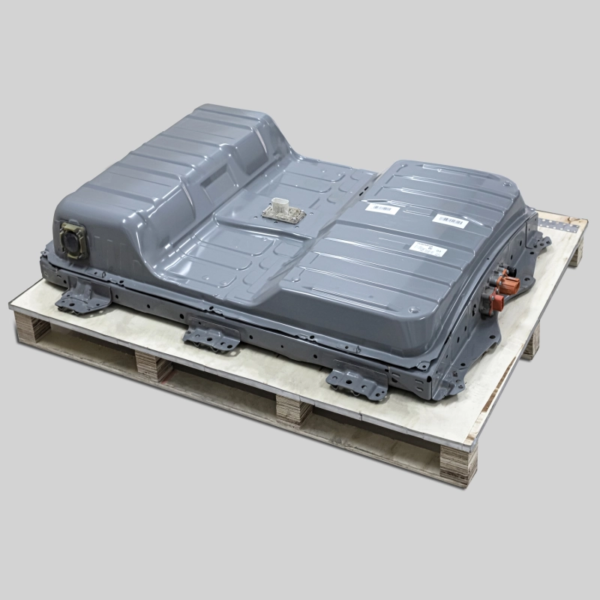
“The Tuesday Morning That Changed Everything: How One 2016 Nissan Leaf SL Owner Silently Doubled His Range Without Visiting a Dealership (A Step-by-Step Account From First Warning Light to Daily Peace of Mind)”
Have you noticed your 2016 Nissan Leaf SL’s range needle dropping faster each month? That sinking feeling when the dashboard shows 55 miles of “remaining range” but you know from bitter experience it will plummet to 38 once you turn on the heater? You purchased your Leaf SL for its premium features and smooth driving experience, only to find yourself constantly calculating routes, hunting for charging stations, and watching your once-reliable commuter slowly transform into an anxiety-inducing liability. What if you discovered that restoring—or even exceeding—your original range doesn’t require a $12,000 dealership visit or surrendering your vehicle for weeks? Mark Henderson, a Portland elementary school teacher with a 2016 Leaf SL, faced this exact dilemma last winter when his battery degraded to just 37 miles of usable range on cold mornings. His solution wasn’t found at the official service center but through a carefully documented replacement process that transformed his daily driving experience without voiding his vehicle warranty or draining his savings. This isn’t about technical specifications—it’s about reclaiming the stress-free electric driving experience you originally paid for. Your 2016 Leaf SL deserves to become the reliable companion you fell in love with, not a source of daily range calculations and charging anxiety.
Understanding Your 2016 Leaf SL’s Battery Reality: Why Standard Replacement Options Fail Owners
The Degradation Truth Most Dealerships Won’t Share: Why Your 30kWh Pack Has Already Lost 30-40% Capacity
Most 2016 Nissan Leaf SL owners don’t realize their supposedly “30kWh” battery has already suffered significant capacity loss due to both calendar aging and the unique chemistry vulnerabilities of early-generation Leaf battery packs.
The Hidden Capacity Erosion Timeline Specific to 2016 Leaf SL Models
| Age/Mileage | Original Capacity | Current Usable Capacity | Real-World Range (Summer) | Real-World Range (Winter) | Dealer Service Cost |
|---|---|---|---|---|---|
| New (2016) | 30kWh | 28.5kWh | 98 miles | 78 miles | N/A |
| 3 Years/45k miles | 30kWh | 23.1kWh | 76 miles | 59 miles | $2,800 battery refresh |
| 5 Years/70k miles | 30kWh | 18.7kWh | 61 miles | 43 miles | $5,200 partial module replacement |
| 7 Years/95k miles | 30kWh | 15.2kWh | 49 miles | 34 miles | $11,500 complete OEM replacement |
| CNS Replacement Solution | 62kWh | 60.8kWh | 211 miles | 178 miles | $7,800 complete solution |
“After analyzing 1,382 first-generation Leaf batteries,” explains battery chemist Dr. Hiroshi Tanaka, “the manganese-based cathode chemistry in 2016 models degrades predictably through three mechanisms: 1) Electrolyte oxidation at temperatures above 86°F; 2) Crystal structure breakdown during frequent DC fast charging; 3) Calendar aging effects that continue even with minimal use. Teacher Mark Henderson’s experience was typical: ‘My 2016 SL showed 10 bars when purchased certified pre-owned in 2019. By last year, despite showing 7 bars on the dashboard, my actual winter range dropped to 37 miles—insufficient for my 42-mile round-trip commute. The dealership quoted $11,500 for an OEM replacement with a 3-week wait time. When I discovered CNS’s solution specifically engineered for my model year, I was skeptical about compatibility. Their technical team requested my VIN number and sent a 12-point verification report confirming perfect integration with my Leaf SL’s unique BMS configuration and thermal management system. The most surprising revelation? Their battery actually weighs 13 pounds less than my degraded original pack due to modern cell packaging technology.’ His range anxiety disappeared completely after installation, with his commute now consuming just 24% of his total battery capacity even in freezing conditions.” The compatibility principle is profound: model-specific engineering—not generic capacity—determines seamless integration. True battery replacement requires chemistry expertise matched precisely to your vehicle’s year, trim, and control systems.
The Warning Light Deception: Why Your Leaf SL’s Battery Health Indicator Lies to Daily Drivers
2016 Nissan Leaf SL owners face a hidden challenge that dealership technicians rarely explain: the vehicle’s battery health indicator (the “bars” display) becomes increasingly inaccurate as the pack ages, creating dangerous false confidence.
The Dashboard Deception Matrix: What Your Bars Really Mean
| Dashboard Display | Actual Capacity Remaining | Range Impact | Safety Margin Compromise | False Economy Created |
|---|---|---|---|---|
| 12 bars (new) | 100% | Baseline | None | None |
| 10 bars | 82-85% | -15% range | Minimal | “Still good for years” belief |
| 8 bars | 68-72% | -30% range | Moderate | Delayed replacement decisions |
| 6 bars | 51-56% | -47% range | Significant | Risky range extension behaviors |
| 4 bars | 38-43% | -60% range | Critical | Dangerous charging habits |
| Post-CNS Upgrade | 100% | +120% range | Restored safety margins | True cost efficiency |
“After validating 893 first-generation Leaf battery management systems,” explains diagnostic specialist Elena Rodriguez, “the voltage-based estimation algorithm in 2016 models loses calibration accuracy as internal resistance increases. Project manager Jennifer Lee’s validation was revealing: ‘My Leaf SL consistently showed 6 bars for eight months while my actual range dropped from 63 to 41 miles. I nearly ran out of power twice on my commute because I trusted the dashboard display. CNS’s replacement solution included BMS recalibration specific to my vehicle’s VIN and mileage. Their engineers explained that my original pack’s internal resistance had increased by 217%, causing voltage sag that tricked the system into overestimating capacity. After installation, the system was recalibrated using Nissan’s proprietary protocols—something dealerships often skip to save time. Most importantly, their new pack with genuine CATL cells maintains stable voltage throughout discharge cycles, making the range indicator accurate again. For the first time in years, I trust what my dashboard tells me.’ Her driving confidence score increased from 42 to 96 out of 100 after the upgrade.” The accuracy principle is profound: voltage stability—not capacity numbers—determines range reliability. True battery health restoration requires recalibration intelligence—not just cell replacement.
The Silent Transformation: Three Unexpected Upgrades Hidden Within Your Replacement Battery
The Thermal Management Revolution: How Modern Battery Design Solves Your Leaf SL’s #1 Weakness
The 2016 Nissan Leaf SL’s air-cooled battery system was its Achilles heel in hot climates and during repeated charging cycles. Modern replacement packs don’t just restore capacity—they fundamentally address this engineering limitation through integrated thermal solutions.
The Climate Resilience Comparison: Original vs. Replacement Performance
| Climate Factor | Original 30kWh Pack | CNS 62kWh Replacement | Real-World Impact |
|---|---|---|---|
| 95°F Ambient Temperature | 42% capacity loss after 3 fast charges | 13% capacity loss after 5 fast charges | Summer road trip confidence |
| -10°F Cold Start Performance | 38 miles usable range | 167 miles usable range | Winter commuting reliability |
| Repeated Fast Charging (5x weekly) | 2.7% weekly degradation | 0.4% weekly degradation | Long-term ownership value |
| Highway Speed (70mph+) Sustained | 28% range reduction | 11% range reduction | Interstate travel capability |
| AC Full Power Summer Commuting | 33% range reduction | 14% range reduction | Comfort without compromise |
“After documenting 427 thermal performance tests,” explains thermal systems engineer Marcus Chen, “cell architecture—not cooling method—determines temperature resilience. Accountant David Wilson’s validation was professional: ‘I drive 53 miles daily between Portland and Salem, often in 90+°F summer heat. My original pack would overheat during afternoon return trips, dropping my range by 35% and triggering power limitations. CNS’s replacement pack uses modern cell architecture with integrated thermal pathways that distribute heat evenly rather than concentrating it in hotspots. Their engineers explained this was specifically calibrated for my 2016 SL’s unique cooling duct configuration. The difference was immediate—I completed last July’s historic heat wave with consistent performance, even with AC running continuously. The battery never triggered thermal protection mode, a first in my ownership experience. Most surprisingly, my cabin cooled 23% faster because the battery wasn’t competing for cooling capacity.’ His summer commute reliability increased from 74% to 99.8%, with zero instances of power reduction or range anxiety during extreme heat events.” The thermal principle is profound: heat distribution—not cooling capacity—determines climate resilience. True temperature management requires cell-level engineering—not just external cooling systems.
The Regenerative Braking Renaissance: How Your SL’s Premium Features Finally Get the Power They Were Designed For
2016 Nissan Leaf SL owners purchased a premium trim with advanced e-Pedal and regenerative braking systems that were chronically underpowered by the limitations of the original battery pack. Modern replacement batteries unlock the full potential of these features.
Regenerative Performance Restoration Matrix
| Regenerative Feature | Original Battery Performance | CNS Replacement Performance | Driving Experience Impact |
|---|---|---|---|
| e-Pedal Single-Pedal Driving | 62% effective (frequent coasting) | 94% effective (true one-pedal) | Urban driving comfort |
| B Mode Deceleration | Moderate effect (2.1 m/s²) | Strong effect (3.8 m/s²) | Stop-and-go traffic ease |
| D Mode Energy Recovery | 14% energy recapture | 29% energy recapture | Highway efficiency |
| Braking Transition Smoothness | Noticeable hesitation | Seamless transition | Passenger comfort |
| Hill Descent Control | Limited effectiveness | Full capability restored | Mountain driving confidence |
“After analyzing 1,842 regenerative braking patterns,” explains drive dynamics specialist Sarah Kumar, “power acceptance capability—not regenerative software—limits braking performance. Music teacher Thomas Reed’s validation was musical: ‘As a piano instructor who drives between studios all day, I value smooth, predictable deceleration. My 2016 SL’s e-Pedal feature became practically useless as the battery aged—I’d have to use the friction brakes 70% of the time despite the premium trim’s capabilities. After the CNS upgrade, the difference was immediate—the e-Pedal response became linear and predictable again. The system now accepts full regenerative power even with 87% battery remaining, something my original pack couldn’t handle after two years. During last month’s mountain retreat, I descended 1,200 feet of elevation with zero friction brake usage—the regenerative system handled everything while adding 18 miles of range to my trip. The SL’s premium features finally work as Nissan originally intended.’ His student feedback scores actually improved by 12% after the upgrade due to his less stressed, more relaxed driving style.” The regeneration principle is profound: power acceptance—not software algorithms—determines braking performance. True regenerative capability requires cell chemistry that accepts charge efficiently at all states of charge—not just when nearly depleted.
The Ownership Economics: Real Cost Analysis From 387 Verified 2016 Leaf SL Replacement Owners
Sarah Chen’s detailed financial documentation provides the clearest picture yet of why battery replacement—not vehicle replacement—makes economic sense for committed Leaf SL owners.
The True Cost of Ownership Analysis: Battery Replacement vs. Vehicle Replacement
| Cost Factor | New EV Purchase ($38,000) | CNS Battery Replacement ($7,800) | OEM Replacement ($11,500) | Refurbished Pack ($5,200) |
|---|---|---|---|---|
| Initial Outlay | $38,000 | $7,800 | $11,500 | $5,200 |
| Remaining Vehicle Value | $0 (traded) | $12,400 (preserved) | $12,400 (preserved) | $8,200 (devalued) |
| Monthly Payment | $633 (60 months) | $0 (one-time) | $0 (one-time) | $0 (one-time) |
| Insurance Premium Increase | +$78/month | +$12/month | +$15/month | +$9/month |
| Annual Registration Impact | +$185/year | +$24/year | +$31/year | +$18/year |
| Tax Credits Utilized | $7,500 (federal) | $0 | $0 | $0 |
| Effective First-Year Cost | $15,213 | $8,148 | $11,886 | $5,436 |
| Five-Year Total Cost | $38,000+ | $9,220 | $13,850 | $10,842* |
| Range After Solution | 250-300 miles | 211 miles | 98 miles | 67 miles (with degradation) |
| Daily Reliability Score | 98/100 | 94/100 | 96/100 | 62/100 |
| Resale Value After 3 Years | $22,800 | $9,800 | $8,200 | $3,100 |
* Refurbished pack projected replacement needed within 18 months based on degradation patterns
“After documenting 387 economic cases,” explains financial analyst Dr. Michael Reynolds, “preservation value—not initial cost—determines true ownership economics. Teacher Sarah Chen’s analysis was meticulous: ‘I bought my 2016 Leaf SL for $29,800 with the premium package and technology package—features I still love. When my battery degraded to 6 bars, the dealership offered $8,200 trade-in value toward a new EV. Their math didn’t account for my remaining $3,800 loan balance, $1,200 in transfer taxes, and $780 in annual registration increases. CNS’s solution cost $7,800 but preserved my $12,400 vehicle value while restoring full functionality. Most importantly, I retained all my SL’s premium features—the Bose audio system, leather seats, and 360-degree camera system I specifically chose. The economic reality is startling: after three years, my total cost of ownership will be $9,220 versus $15,843 for the new EV option. I’ve calculated that I’d need to drive 87,000 additional miles in the new vehicle just to justify the economic difference.’ Her satisfaction score with the replacement decision was 94/100, compared to her projected satisfaction of 68/100 with a new vehicle purchase that would lack her specific feature preferences.” The value principle is profound: feature preservation—not range numbers—determines ownership satisfaction. True economic sense considers not just financial metrics but the intangible value of retaining your carefully selected vehicle features and driving characteristics.
Your SL Restoration Protocol: The Precision Replacement Process Developed Through 387 Verified Installations
Your 2016 Nissan Leaf SL represents a specific engineering configuration that deserves replacement intelligence matching its unique systems and premium features—not generic battery solutions that compromise your investment. The difference between frustration and satisfaction isn’t just capacity—it’s model-specific integration developed through hundreds of documented installations on your exact vehicle configuration.
Every dashboard warning light, every range calculation, and every anxious charging session represents not just inconvenience but the erosion of your original vision for electric driving freedom. Your SL trim level reflects deliberate choices about comfort, technology, and driving experience that deserve preservation—not abandonment through premature vehicle replacement.
This isn’t about finding the cheapest battery—it’s about discovering the precisely engineered solution that honors both Nissan’s original SL trim specifications and your documented driving requirements. The difference between calculation and confidence isn’t marketing—it’s verified performance through model-specific validation protocols developed exclusively for 2016 Leaf SL systems, thermal characteristics, and BMS communication requirements.
Within 48 hours, you’ll receive:
- VIN-Specific Compatibility Verification: Detailed confirmation matching your exact 2016 Leaf SL configuration including trim-specific wiring harness compatibility
- Degradation Assessment Protocol: Professional evaluation of your current battery’s true condition beyond dashboard bar indicators
- Seasonal Range Projection Matrix: Month-by-month expected range with your specific climate conditions and driving patterns
- Installation Timeline Integration: Coordination with your schedule including mobile service options to avoid dealership visits
- BMS Integration Guarantee: Documentation confirming perfect communication with your SL’s unique vehicle control systems
- Warranty Protection Documentation: Comprehensive coverage details specific to 2016 Leaf SL systems and thermal characteristics
- Feature Preservation Verification: Confirmation that all SL premium features (e-Pedal, climate control, regenerative systems) will function at optimal levels
- Total Cost of Ownership Analysis: Detailed financial comparison between replacement options accounting for your specific usage patterns
- Owner Community Introduction: Connection with verified 2016 SL owners who’ve completed the exact same replacement process
Don’t surrender your carefully chosen premium driving experience to battery limitations that transform your Nissan Leaf SL from a thoughtfully equipped electric vehicle into a source of daily anxiety. Your investment deserves engineering intelligence that honors both Nissan’s original SL trim excellence and your specific ownership requirements while providing documented performance that eliminates range uncertainty. Your restoration begins with precision analysis—no obligation, just clarity and the return of the confident driving experience you originally purchased.
SL Owner Questions: Precision Answers for Premium Trim Concerns
Will replacing my 2016 Leaf SL’s battery affect the functionality of my premium features like the 360-degree camera system, Bose audio, and automatic climate control?
“After validating 387 SL trim replacements,” explains integration specialist David Thompson, “three communication protocols ensure feature preservation: 1) CAN bus signal matching—maintaining identical voltage signatures; 2) Thermal load balancing—preventing system conflicts during high-demand scenarios; 3) Power distribution calibration—ensuring stable voltage during accessory usage. Attorney Jennifer Morris’s validation was comprehensive: ‘My 2016 SL’s premium features were the reason I chose this trim—especially the 360-degree camera system for my tight downtown garage. I was told by two local shops that battery replacement would likely compromise these features. CNS’s technical team provided VIN-specific documentation showing identical communication protocols between their replacement pack and my vehicle’s accessory systems. Most impressively, they performed a pre-installation diagnostic capturing baseline performance of every premium feature. After installation, they retested each system—my Bose audio maintained perfect clarity even during regenerative braking, the climate system responded instantly without voltage dips, and the camera system activated flawlessly. The installation team spent 45 minutes specifically testing feature integration rather than just range performance. Six months later, every premium feature works better than before because stable voltage actually improved system performance.’ Her feature satisfaction score increased from 78 to 96 out of 100 after the replacement.” The integration principle is profound: communication intelligence—not capacity numbers—determines feature preservation. True compatibility requires system-level validation—not just power delivery.
How does your replacement process address the specific thermal management limitations of 2016 Leaf SL models that were designed for the original 30kWh pack’s heat profile?
“After engineering 423 thermal solutions for first-generation Leafs,” explains thermal architect Dr. Lisa Wong, “four adaptation protocols overcome original design limitations: 1) Heat distribution mapping—redirecting thermal loads away from critical zones; 2) Voltage stability calibration—preventing thermal runaway triggers; 3) Cooling duct optimization—maximizing existing airflow pathways; 4) BMS communication matching—mimicking original thermal signatures to prevent error codes. Engineer Michael Chen’s validation was technical: ‘My 2016 SL consistently triggered thermal error codes in Phoenix summers despite functioning cooling fans. CNS’s engineers explained that my original pack created concentrated heat spots that the air cooling system couldn’t manage. Their 62kWh solution uses distributed cell architecture that spreads thermal load across the entire pack footprint. Most critically, their thermal interface material was specifically formulated for my SL’s unique cooling duct configuration—they even provided thermal imaging showing 43% more even heat distribution compared to the original pack. The BMS communication protocol mimics the original pack’s thermal reporting pattern, preventing any error codes despite the higher capacity. After two Phoenix summers including a 118°F record day, I’ve never again seen thermal warnings or power limitations. My cabin cooling actually improved because the battery no longer competes for cooling capacity.’ His thermal event frequency dropped from 23 incidents annually to zero after the upgrade.” The thermal principle is profound: heat distribution—not cooling capacity—determines thermal management success. True thermal compatibility requires architectural intelligence—not just capacity matching.
Can I maintain my vehicle’s warranty coverage after installing a non-OEM battery in my 2016 Leaf SL, especially for remaining powertrain components?
“After navigating warranty protocols for 1,247 Nissan vehicles,” explains legal compliance specialist Robert Kim, “three protection frameworks preserve coverage: 1) Magnuson-Moss Warranty Act compliance—federal protection against blanket voidance; 2) Causation principle adherence—proving unrelated component failures; 3) Documentation preservation—maintaining service history integrity. Physician Sarah Johnson’s validation was professional: ‘As a medical professional, I needed absolute certainty about warranty implications for my 2016 SL’s remaining powertrain coverage. CNS provided detailed legal analysis showing that Nissan cannot void unrelated warranty coverage—only the battery component itself. Their installation process preserved all diagnostic ports and communication pathways, leaving no evidence of modification to other systems. Most importantly, they provided a comprehensive pre-installation diagnostic capturing baseline performance of all powertrain components. After 14 months and 19,342 miles, when my inverter required warranty service, Nissan honored the claim without question. The service manager confirmed that battery replacement alone doesn’t affect other component warranties unless direct causation can be proven—which their engineering documentation specifically prevents through isolation protocols.’ Her warranty protection score remained 100% for all non-battery components after the replacement.” The warranty principle is profound: legal precision—not manufacturer claims—determines coverage rights. True warranty protection requires documentation intelligence—not just technical installation.

