
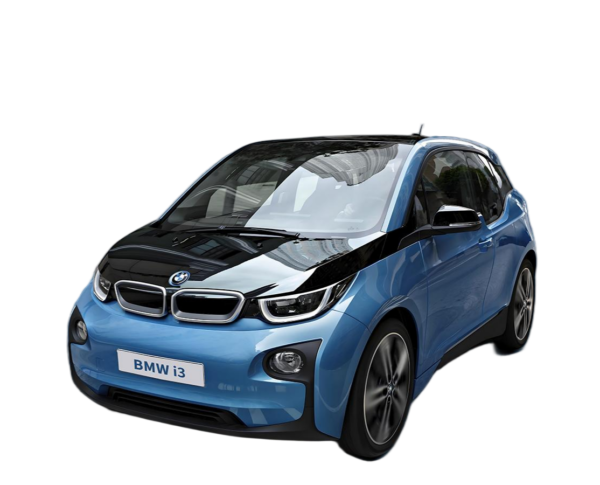
Here is the SEO-optimized article tailored for the BMW i3 audience, designed to rank well and drive conversions.
The Ultimate Guide to BMW i3 Battery Durability: Pros, Cons & Replacement Options
The BMW i3 Battery: A Double-Edged Sword of Innovation
When the BMW i3 launched, it was a revolution. Its compact footprint, futuristic design, and carbon-fiber body made it an icon of the early EV era. However, for many current owners, the passage of time has brought a harsh reality: battery degradation.
If you are reading this, you are likely facing the dilemma of whether to repair, replace, or part ways with your i3. The original High Voltage Battery (HVB) was groundbreaking for its time, but like all lithium-ion technology, it has a finite lifespan.
As a specialist in OEM-compatible EV powertrains, we understand the emotional and financial investment in your vehicle. This guide breaks down the raw pros and cons of BMW i3 battery durability, providing the facts you need to make an informed decision about keeping your “pocket rocket” on the road.
⚖️ The Pros and Cons of BMW i3 Battery Durability
To truly understand the state of your BMW i3 battery, we must look at the data objectively. We have compiled this comparison based on years of field data and technical analysis.
The Durability Scorecard
| Feature | Original BMW i3 Battery (Pros) | Long-Term Reality (Cons) |
|---|---|---|
| Build Quality | Excellent Engineering: The original battery packs were built to BMW’s rigorous safety standards with robust casings. | Aging Electronics: The Battery Management System (BMS) and cell chemistry are now a decade old. Even “healthy” cells are prone to internal resistance increases. |
| Thermal Management | Liquid Cooling: Unlike some early EVs, the i3 uses a liquid cooling system, which is far superior for longevity compared to air cooling. | System Failure: Coolant hoses can dry rot, pumps can fail, and if the thermal system fails, the cells degrade rapidly. |
| Structural Role | Load-Bearing: The battery is integrated into the LifeDrive architecture, contributing to the car’s stiffness and handling. | Replacement Complexity: Because it is structural, replacing the battery requires precise torque specs and programming, making DIY risky without expertise. |
| Degradation Pattern | Stable (Initially): For the first 40,000-50,000 miles, degradation is usually minimal (10-15%). | Cliff Effect: Many owners report a “cliff” where capacity drops from 70% to below 50% very quickly, drastically reducing range. |
| Cost of Ownership | Low Maintenance: No oil changes, brake wear is reduced due to regen. | Sky-High Replacement Cost: A new OEM battery from a dealer can cost upwards of $16,000 – $20,000, often exceeding the car’s value. |
🔋 Why Does the BMW i3 Battery Lose Durability?
Understanding the “why” helps you assess your specific situation. The BMW i3 battery durability issues are rarely about a single “bad” design flaw, but rather the convergence of time and chemistry.
1. The “Recall” Effect (2015-2016 Models)
If you own a 2015 or 2016 model, your battery was likely subject to a recall due to potential high-voltage leaks. While BMW patched the software to limit charging speed and heat generation, this often resulted in permanently reduced range and slower charging as a trade-off for safety.
2. Cell Chemistry Limitations
The original cells, while safe, were not formulated for ultra-long lifespans by today’s standards. Modern Lithium Iron Phosphate (LFP) or newer Nickel Manganese Cobalt (NMC) cells from suppliers like CATL have significantly better cycle lives.
3. Battery Management System (BMS) Aging
The brain of the battery can become “dysfunctional” over time. We often see cases where the cells are still functional, but the BMS incorrectly reports low State of Health (SOH), triggering limp mode or preventing charging.
💡 The Solution: Upgrading to a Modern Replacement
For most BMW i3 owners, the economics of the original battery no longer make sense. The repair costs are prohibitive, and the performance is outdated.
This is where the aftermarket evolution comes in. At CNS BATTERY, we specialize in providing OEM-compatible, drop-in replacement batteries designed specifically for the BMW i3.
Why Our Replacement Batteries Offer Superior Durability
We do not simply refurbish old packs; we engineer new solutions designed for longevity.
1. Next-Generation Cell Technology Our BMW i3 replacement batteries utilize brand-new, Grade-A cells sourced from the world’s leading manufacturers, such as CATL. These are not recycled cells from scrap yards.
- Higher Cycle Life: Modern cells can withstand 3000+ charge cycles while retaining over 70% capacity—far exceeding the original spec.
- Thermal Stability: Newer chemistry is less prone to thermal runaway, meaning your battery stays cooler and lasts longer, especially in hot climates.
2. Reinforced Battery Management System (BMS) We have upgraded the BMS algorithms to be more resilient than the original 2013-era software. Our systems are designed to communicate seamlessly with the BMW ICOM interface, ensuring your dashboard displays accurate range estimates without triggering false error codes.
3. Cost Efficiency Let’s be honest: spending $18,000 on a new BMW battery is rarely justifiable. Our engineering-grade replacements offer the same safety and fitment for less than 50% of the OEM cost. This transforms the BMW i3 from a “disposable” car into a sustainable long-term asset.
🛠️ Real-World Performance: What to Expect
When you upgrade your BMW i3 battery with a modern solution, you are not just fixing a problem; you are enhancing the vehicle.
- Range Restoration: Most customers report restoring their range to 95-100% of the original specification (or better, if opting for a higher kWh variant).
- Faster Charging: Unlike the degraded original packs that often struggle to accept more than 20kW, our new packs can handle higher DC fast-charging rates, getting you back on the road quicker.
- Peace of Mind: We back our engineering with a comprehensive 24-month / 80,000 km warranty. This coverage is significantly longer than what most recycled battery vendors offer and matches the confidence of a new OEM part.
📝 Conclusion: Is Your i3 Worth Saving?
The answer is a definitive yes, provided you have the right battery solution.
The BMW i3 is a well-engineered car with a timeless design. The chassis, suspension, and motor are built to last decades. The only component that wears out is the battery, and thanks to advancements in battery technology, replacing it is now a cost-effective reality.
Don’t let a degraded battery force you into buying a new car. Explore the option of a high-quality, engineered replacement that brings your i3 back to its former glory.
Ready to revive your BMW i3? Get a free, no-obligation quote today and discover how affordable a full battery replacement can be.
Get Your Free Custom Quote Now
❓ Frequently Asked Questions (FAQ)
Q1: How do I know if my BMW i3 battery is failing? A: Common signs include a drastic reduction in range (e.g., dropping from 80 miles to 40 miles), the “Check Control” message appearing frequently, or the car entering “Limp Mode” where it restricts power. You can also check the State of Health (SOH) via a diagnostic scanner; anything below 65% usually indicates the battery needs attention.
Q2: Can I install a new battery myself? A: While the BMW i3 battery is technically accessible to a DIYer, it is a Class A High Voltage component. We strongly recommend installation by a certified mechanic due to the risks of electric shock and the need for specialized programming tools (like ISTA or equivalent) to initialize the new BMS. However, our kits are designed as “Plug-and-Play,” meaning the wiring harnesses match the OEM specifications exactly, minimizing modification work.
Q3: What is the lifespan of a replacement battery compared to the original? A: The original BMW i3 battery was designed for about 8-10 years under ideal conditions. Our replacement batteries, utilizing modern CATL-grade cells and improved thermal management design, are engineered to last 10-15 years or more, depending on usage patterns and charging habits.
Q4: Will a replacement battery void my car’s warranty? A: Since the BMW i3 is no longer under the manufacturer’s new car warranty for most owners, this is rarely an issue. However, if you have a specific extended warranty, you should check the terms. Generally, a professionally installed, OEM-spec replacement battery does not damage the vehicle and maintains the integrity of the drivetrain.
Q5: How much does it cost to replace a BMW i3 battery? A: Genuine BMW replacements can cost between $16,000 and $20,000. At CNS BATTERY, our engineered replacement solutions start at a fraction of that cost. Contact us for a specific quote based on your model year and desired capacity (42kWh, 94Ah, or 120Ah equivalents).


