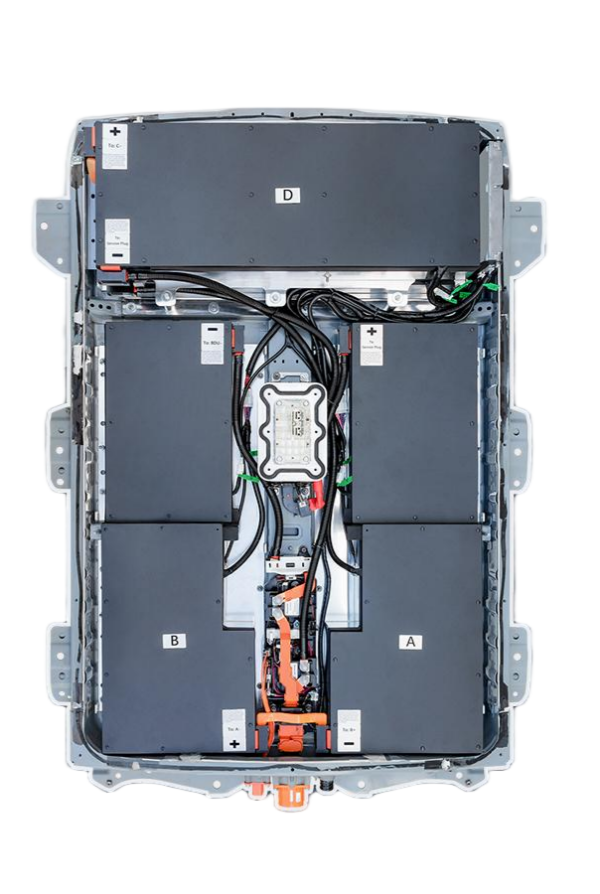
Nissan Leaf e+ 62kWh Battery Swap Guide: Safe Steps for Restored Performance
Is your Nissan Leaf e+ (2018-Present) suffering from faded range, slow charging, or overheating in extreme temperatures? The 62kWh battery that powers Leaf e+ models delivers impressive long-distance capability when new, but after 5-7 years of use, degradation can cut real-world range by 30% or more. A Nissan Leaf e+ 62kWh battery swap is the only way to fully restore your EV’s performance—but the model’s active thermal management system and high-voltage components demand precision and safety. As CNS BATTERY’s EV experts, we’ve crafted a step-by-step guide tailored to Leaf e+ models, covering pre-swap prep, tools, core steps, and critical precautions to ensure a successful, safe battery replacement.
Key Pre-Swap Essentials for Nissan Leaf e+ 62kWh Battery
The Leaf e+’s 62kWh battery features advanced active thermal management (unlike older Leafs’ passive cooling) and a complex BMS (Battery Management System). Proper preparation is non-negotiable to avoid electrical hazards, component damage, or voided compatibility.
Required Tools (Leaf e+-Specific)
• Insulated gloves (Class 00+, rated for 1000V) to handle 360V high-voltage components. • Torque wrench set (10mm, 14mm, 17mm, and 22mm sockets) for battery mounting and connector bolts. • Hydraulic jack and heavy-duty jack stands (rated for 4000+ lbs) to safely lift the vehicle. • Battery lifting slings and hoist (the 62kWh pack weighs 210kg—never attempt manual lifting). • Leaf e+-compatible BMS calibration tool (to sync the new battery with the vehicle’s thermal and charging systems). • Insulation resistance tester (to verify no short circuits post-installation). • Dielectric grease and high-voltage connector cleaner (to protect and maintain connectors).
Critical Safety Precautions
• Disconnect the 12V battery and high-voltage service plug, then wait 15 minutes to discharge residual power—this eliminates shock risk from capacitors. • Work in a well-ventilated garage with a Class D fire extinguisher (for lithium-ion fires) and non-conductive flooring (rubber mats over concrete). • Avoid metal jewelry, loose clothing, or uninsulated tools—these can cause short circuits. • Never work alone; have a helper assist with hoisting the heavy battery and verifying connections. • Use only OEM-equivalent 62kWh batteries (like CNS BATTERY’s remanufactured packs) to ensure compatibility with active thermal systems—generic batteries will fail to integrate, causing overheating or charging errors.
Battery Compatibility Check
Not all 62kWh batteries work with every Leaf e+ model. Confirm three key details before purchasing: 1) Voltage matching (must be 360V, identical to the original pack—never use a different voltage). 2) Thermal system compatibility (the battery must align with the Leaf e+’s liquid cooling lines). 3) BMS protocol compatibility (ensures the battery communicates with the vehicle’s charging and thermal management systems). CNS BATTERY’s remanufactured 62kWh packs are pre-tested for Leaf e+ compatibility, eliminating guesswork.
Step-by-Step Nissan Leaf e+ 62kWh Battery Swap
This guide is specific to Nissan Leaf e+ models with 62kWh batteries. Always reference your vehicle’s service manual for model-year-specific torque specs and connector locations.
Step 1: Disable High-Voltage System & Prep the Vehicle
Park the Leaf e+ on level ground, engage the parking brake, and turn off the ignition. Open the hood and locate the 12V battery (driver’s side). Disconnect the negative terminal (black cable) first, then the positive terminal (red cable). Remove the plastic cover near the 12V battery to access the high-voltage service plug—pull it straight out and set it aside. Wait 15 minutes to ensure residual power is fully discharged, then place a “High Voltage Work In Progress” sign on the vehicle.
Step 2: Lift the Vehicle & Access the Battery Pack
Use a hydraulic jack to lift the Leaf e+ at the designated underbody lift points, then secure it with heavy-duty jack stands. Never rely solely on the jack. Remove the underbody panels (10mm bolts) to expose the battery pack, which spans the vehicle’s floor. Take photos of the high-voltage connectors and liquid cooling lines—this ensures correct reinstallation later. Disconnect the cooling line quick-connect fittings (use a line wrench to avoid damage) and cap them to prevent fluid loss.
Step 3: Remove the Old 62kWh Battery Pack
Wear insulated gloves to disconnect the high-voltage connectors—press the release tabs and pull gently (do not force). Label each connector to avoid misalignment. Remove the battery mounting bolts (22mm socket) and set them in a labeled container. Attach lifting slings to the four designated points on the battery pack (refer to your service manual). Use a hoist to slowly lift the pack (keep it level to avoid spilling coolant) and place it on a non-conductive work mat.
Step 4: Inspect & Prep for New Battery Installation
Inspect the battery compartment for rust, corrosion, or damage to wiring harnesses and cooling lines. Clean corrosion from connector ports with high-voltage connector cleaner and let it dry completely. Check the cooling lines for cracks or leaks—replace if damaged. Apply a thin layer of dielectric grease to the connector seals to prevent moisture intrusion. For the new battery, ensure the cooling line fittings are clean and free of debris.
Step 5: Install the New 62kWh Battery Pack
Attach lifting slings to the new 62kWh battery (CNS BATTERY’s remanufactured pack) and use the hoist to lower it into the compartment, aligning with the mounting holes. Secure the pack with the original bolts, torquing to Nissan’s specification (48 N·m for Leaf e+ models). Reconnect the high-voltage connectors (match the photos and labels) and the liquid cooling lines. Reconnect the cooling line quick-connect fittings until they click into place—verify no leaks.
Step 6: Reconnect Systems & Calibrate the BMS
Reinstall the underbody panels, torquing bolts to 8 N·m. Reconnect the 12V battery (positive terminal first, then negative) and reinsert the high-voltage service plug. Use the Leaf e+-compatible BMS tool to recalibrate the system—this syncs the new battery with the vehicle’s active thermal management and charging systems. The calibration process takes 15-20 minutes; do not turn off the vehicle during this time. Refill the cooling system with Nissan-specified coolant and bleed any air bubbles.
Step 7: Post-Swap Testing & Verification
Turn on the Leaf e+ and check the dashboard for warning lights—none should appear. Use the insulation resistance tester to verify no short circuits (readings should exceed 1MΩ). Test charging with a Level 2 charger first, monitoring for abnormal heat or noise. Take a 15-20 mile test drive to confirm range accuracy, charging performance, and thermal system operation. The new battery should deliver 200-230 real-world miles, matching the Leaf e+’s original performance.
Why Choose CNS BATTERY for Your Leaf e+ 62kWh Swap
1. OEM-Equivalent Quality & Compatibility
Our remanufactured 62kWh batteries use OEM-grade CATL cells and undergo 15+ quality tests, including thermal stability and BMS compatibility checks. They integrate seamlessly with the Leaf e+’s active thermal system, avoiding the issues of generic packs.
2. Cost Savings vs. OEM
CNS BATTERY’s 62kWh remanufactured battery costs $8,000-$9,500 (all-inclusive), saving 35-45% vs. OEM’s $15,000-$17,000 price tag. We also offer a $800-$1,200 core credit for your old battery, further reducing costs.
3. Comprehensive Warranty & Support
Every swap includes a 2-year warranty covering defects and premature degradation. Our team of Leaf e+ specialists provides post-installation support, including BMS recalibration and troubleshooting.
FAQ About Nissan Leaf e+ 62kWh Battery Swap
Will a battery swap void my Leaf e+’s warranty?
No. Professional swaps with CNS BATTERY’s certified 62kWh packs do not affect warranties on non-battery components (motor, steering). Our packs include a 2-year warranty, adding protection for your investment.
Can I perform the swap myself, or need a professional?
While DIY is possible with the right tools and expertise, we recommend professional installation. The Leaf e+’s active thermal system and high-voltage components pose significant risks—our technicians specialize in Leaf e+ swaps, ensuring safety and accuracy.
How long does a 62kWh battery swap take?
Professional installation takes 3-4 hours, including BMS calibration and testing. DIY attempts often take 6+ hours and carry higher risk of errors.
Do I need to replace the charger after the swap?
No. The Leaf e+’s stock charger is compatible with our remanufactured 62kWh battery, as voltage remains 360V. We only recommend charger replacement if your existing unit is faulty.
Ready to Swap Your Nissan Leaf e+ 62kWh Battery?
A Nissan Leaf e+ 62kWh battery swap restores your EV’s long-distance capability, charging speed, and thermal performance—without the premium OEM price tag. Our team at CNS BATTERY provides everything you need, from a compatible remanufactured battery to professional installation and support.
Visit https://cnsbattery.com/nissan-leaf-battery/ to get exclusive discounts on your Leaf e+ 62kWh battery swap and consult our experts for personalized guidance. We’ll help you get back on the road with confidence and restored range.