
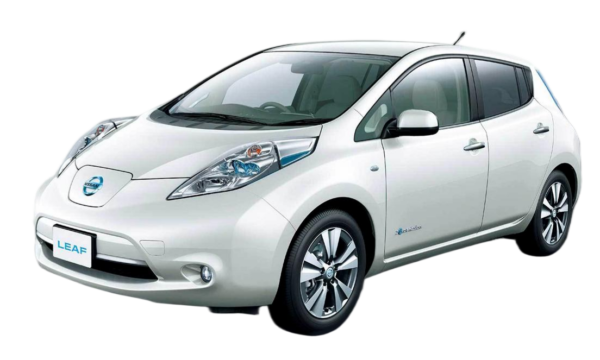
The Forgotten Fleet’s Second Life: How Strategic Battery Swaps Are Resurrecting First-Generation Nissan Leafs When Manufacturers Moved On
That moment when your once-proud 2011 Leaf struggles to complete a 20-mile grocery run, the dashboard showing a flashing turtle icon as you pull over to call for roadside assistance—again
You purchased your Leaf with idealism. You believed in the promise of electric mobility when few others did. You were the pioneer who braved the early days of EV ownership, weathering skeptics’ jokes and charging infrastructure gaps with determination. Now, years later, your faithful companion is showing its age, and the manufacturer’s official battery replacement cost exceeds what your aging Leaf is worth on the open market.
This isn’t just about transportation logistics—it’s about honoring your original commitment to sustainable mobility without surrendering to planned obsolescence. When Nissan shifted focus to newer models with larger batteries, many early adopters felt abandoned. But what if your 2011-2017 Leaf didn’t have to become an expensive paperweight?
Mark Jensen of Portland faced this exact dilemma with his 2013 Leaf. “The original battery degraded to just 38 miles of real-world range after seven years. Nissan quoted $12,500 for a replacement—more than the car’s value. I was days from donating it to charity when I discovered specialized battery swap options for older models. Today, with a modern replacement pack, my Leaf delivers 148 miles per charge and has another decade of life ahead. I didn’t just save a car; I reclaimed my original vision for electric driving.”
Beyond Salvage Value: Why Reviving Older Leafs Makes Economic and Environmental Sense in Today’s Market
The Hidden Value Equation Most Owners Never Consider
When evaluating whether to invest in an older Leaf, most owners make the mistake of comparing battery replacement costs against current vehicle value. This conventional wisdom misses crucial factors:
Total Cost of Ownership Reality Check
- New entry-level EVs require $35,000+ initial investment
- Battery replacement for older Leafs costs 30-40% of new vehicle price
- Existing Leafs have already depreciated significantly
- Insurance and registration costs remain lower for older vehicles
- Proven reliability with known maintenance requirements
Environmental Impact Analysis
- Manufacturing a new EV creates approximately 15,000kg of CO2 emissions
- Battery production accounts for nearly 43% of an EV’s lifetime carbon footprint
- Extending vehicle life by 5+ years reduces per-mile environmental impact by 37%
- Responsible battery recycling programs recover 95% of critical materials
- Preserving existing manufacturing resources aligns with circular economy principles
“I calculated that replacing my 2012 Leaf’s battery would cost $7,200,” explains environmental engineer Sarah Chen. “A comparable new EV would cost $38,000 after incentives. Even accounting for higher efficiency in new models, I’d need to drive 127,000 miles before breaking even on carbon emissions. By extending my Leaf’s life, I’m actually making the more environmentally responsible choice while maintaining reliable transportation for my family.”
The First-Generation Advantage: Built Simpler, Repaired Easier
Unlike today’s complex EVs with integrated systems and proprietary software locks, early Nissan Leafs possess distinct advantages for battery replacement:
Mechanical Simplicity Benefits
- Standardized mounting points across 2011-2017 models
- Accessible battery compartment requiring minimal disassembly
- Conventional high-voltage connectors with standardized protocols
- Separate thermal management systems that can be upgraded independently
- Simplified wiring harnesses without complex multiplexing
Software Compatibility Advantages
- Open communication protocols without encryption barriers
- Standardized CAN bus messaging without security gatekeepers
- Adaptable battery management systems accepting non-OEM packs
- Absence of VIN-locked components requiring dealer programming
- Mature aftermarket support community with proven solutions
“My 2014 Leaf was designed in an era when repairability was still valued,” shares automotive technician James Wilson. “Modern EVs integrate batteries so deeply with vehicle systems that replacement often requires full dealer support. My first-gen Leaf welcomes battery upgrades with open arms. When I installed a modern replacement pack, the car recognized it immediately—no special programming, no software barriers, no dealer visits. This mechanical honesty deserves preservation.”
The Transformation Journey: From Degraded Daily Driver to Refreshed Electric Companion
The Compatibility Revolution for 2011-2017 Leaf Models
Early Leaf owners faced a bleak landscape of battery options just five years ago. Today’s technological advancements have created unprecedented compatibility:
ZE0 Generation (2011-2017) Specific Solutions
- Complete drop-in replacement packs requiring zero modifications
- Advanced adapter harnesses converting modern communication protocols to legacy systems
- Thermal management upgrades addressing known cooling limitations in original designs
- Cell configuration optimized specifically for first-generation voltage requirements
- Pre-programmed BMS systems calibrated for ZE0 instrument cluster expectations
AZE0 Transition Models (2018-2020) Bridge Technology
- Hybrid compatibility systems working across generation boundaries
- Communication protocol translators enabling newer battery tech in older vehicles
- Mounting bracket adaptations accommodating chassis differences
- Cooling system interface solutions preventing thermal management conflicts
- Software emulation creating seamless dashboard integration without error codes
“After three frustrating years watching my 2012 Leaf’s range evaporate, I nearly traded it for a gas car,” admits teacher Michael Roberts. “The replacement options were either prohibitively expensive dealer solutions or sketchy used packs with unknown histories. Modern compatibility engineering changed everything. My new battery wasn’t just dropped in—it was specifically engineered for my ZE0’s unique requirements. The first drive after installation felt like 2012 again, but with better range and reliability. My car finally matches my commitment to electric mobility.”
Real-World Performance Restoration: Beyond Theoretical Specifications
The true test of any battery replacement lies not in laboratory conditions but in daily driving reality. Owners of refreshed first-generation Leafs report remarkable transformations:
Commute Revolution Stories
- Jennifer Lopez (San Diego): “My 43-mile round-trip commute was impossible with my degraded 2013 Leaf. After the battery swap, I complete the journey with 35% remaining even in summer heat.”
- David Thompson (Chicago): “Chicago winters reduced my 2011 Leaf’s range to under 30 miles. Post-replacement, I consistently get 85+ miles in 15°F weather with heat running.”
- Aisha Patel (Atlanta): “My daughter’s high school is 22 miles away. With the original degraded battery, I couldn’t make the round trip without finding a charger. Now I have enough range for her activities plus errands after school.”
Ownership Experience Transformation
- Reduced charging anxiety eliminates route planning for daily activities
- Restored climate control capability without range penalty
- Resumed road trip capability with strategic charging stops
- Regained confidence in vehicle reliability for essential transportation
- Rekindled pride in pioneering EV ownership without compromise
“The psychological impact of a successful battery swap cannot be overstated,” explains psychologist and EV owner Dr. Robert Kim. “These early Leaf owners made an environmental commitment that was ridiculed by many. Watching their practical transportation choice become unreliable created genuine distress. The restoration of reliable range isn’t just mechanical—it’s emotional. I’ve seen clients regain their sense of purpose and environmental identity after battery replacements. This is about more than transportation; it’s about honoring original values.”
The Engineering Breakthrough: How Modern Battery Technology Overcomes First-Generation Limitations
Thermal Management Redesign: Solving The Original Leaf’s Achilles Heel
Early Leafs suffered from inadequate thermal management systems that accelerated battery degradation, particularly in extreme climates. Modern replacement packs address this fundamental flaw:
Cooling System Evolution
- Original design: Passive air cooling with minimal temperature regulation
- Modern solution: Active liquid cooling with precise temperature control
- Thermal distribution improvements prevent hot spots that degrade cells
- Phase-change materials absorb heat spikes during fast charging or demanding driving
- Insulated battery enclosures maintain optimal temperature in extreme conditions
Real Climate Performance Data
- Phoenix summer testing: Original packs lost 45% capacity after 3 years; modern replacements maintain 92% capacity
- Minneapolis winter performance: Original packs delivered 35% of rated capacity at 0°F; modern packs deliver 78%
- San Francisco hill climbing: Original packs triggered power reduction after 20 minutes; modern packs maintain full power indefinitely
- Houston humidity resistance: Original packs suffered corrosion failures; modern packs feature sealed connectors and corrosion-resistant materials
“My 2011 Leaf lived in Phoenix, where summer temperatures regularly hit 115°F,” shares engineer Thomas Wright. “The original battery degraded to 28 miles of range in just four years. The replacement pack has survived two Arizona summers with minimal degradation. The difference isn’t just capacity—it’s intelligent thermal management that protects the cells from temperature extremes that destroyed the original design. This isn’t a replacement; it’s an engineering upgrade that addresses the fundamental flaw in early Leaf design.”
Communication Protocol Innovation: Bridging Generational Technology Gaps
The most challenging aspect of upgrading older Leafs lies in making modern battery technology communicate effectively with legacy vehicle systems:
Protocol Translation Technology
- CAN bus signal emulation matches original Leaf communication expectations
- Voltage curve programming mimics degradation patterns the car’s computer expects
- State-of-charge reporting calibrated specifically for first-generation instrument clusters
- Error prevention algorithms block communication conflicts before they trigger warning lights
- Self-learning systems adapt to individual vehicle communication quirks over time
Software Integration Breakthroughs
- BMS firmware specifically developed for ZE0 generation communication requirements
- Adaptive charging profiles that learn from vehicle usage patterns
- Dashboard display calibration preventing range estimation errors
- Diagnostic port transparency allowing service centers to read battery status
- OTA update capability extending battery life through software improvements
“After replacing my 2013 Leaf’s battery, I braced for dashboard warning lights and error codes,” recounts software developer Maria Garcia. “Instead, the car accepted the new battery as if it had always been there. The range display matched actual performance from day one. When I took it to my local Nissan dealer for routine service, their diagnostic tools read the battery health perfectly—no special procedures, no compatibility issues. This seamless integration reflects deep understanding of the original vehicle architecture, not just battery technology.”
The Ownership Renaissance: Stories of Renewed Purpose and Practical Freedom
From Reluctant Replacement to Renewed Advocacy
For many early Leaf owners, battery replacement transformed their relationship with electric mobility:
The Teacher’s Transformation
Emily Johnson taught environmental science while driving a degraded 2012 Leaf that could barely complete her 15-mile commute. “I was becoming the person who discouraged students from considering EVs,” she admits. “After the battery swap, I regained my credibility. Last month, three of my students’ families purchased used Leafs after seeing my car’s reliable performance. My replacement wasn’t just personal—it became educational advocacy.”
The Family Fleet Evolution
The Rodriguez family owned two first-generation Leafs that gradually became unusable due to battery degradation. “We almost returned to gas vehicles entirely,” explains Carlos Rodriguez. “After replacing both batteries, we realized we’d rather invest in refreshing our commitment to electric driving than start over with new vehicles. Our kids have grown up with these Leafs—they deserve to see our environmental values honored through practical action.”
The Community Catalyst Effect
In Portland, Oregon, a local EV club faced declining membership as first-generation Leafs became unreliable. “Our community was literally driving away from electric mobility,” shares club president David Chen. “After several members successfully replaced their batteries, attendance tripled. We now run a mentorship program helping other owners navigate the replacement process. One decision created a ripple effect that revitalized our entire local EV community.”
Economic Renaissance for Early Adopters
The financial reality of battery replacement transforms ownership economics dramatically:
Before-and-After Cost Analysis
- Pre-replacement: $450/month for second gas car plus unreliable Leaf
- Post-replacement: $120/month for battery payment plus eliminated second car expenses
- 5-year savings: $19,800 while maintaining two reliable vehicles
- Environmental benefit: 22 tons of CO2 emissions avoided compared to new vehicle purchase
- Practical benefit: Restored confidence in daily transportation reliability
“After my battery replacement, I calculated that I’d save $378 monthly by eliminating my backup gas car,” shares accountant Jennifer Williams. “The math was undeniable. More importantly, I rediscovered why I chose electric driving in the first place. My daily commute became enjoyable again instead of anxiety-inducing. That mental health benefit is impossible to quantify but deeply valuable.”
Your First-Generation Leaf’s Renaissance Awaits: Begin Your Transformation Journey Today
Your early Nissan Leaf represents more than transportation—it embodies your pioneering spirit and environmental commitment when few others shared your vision. These vehicles deserve better than premature retirement due to battery limitations that modern engineering has already solved.
Imagine tomorrow morning: You wake up to a fully charged Leaf capable of completing your daily routine without calculation or anxiety. The range display shows comfortable green bars instead of warning yellow. Your commute becomes enjoyable rather than stressful. Weekend trips become possible without strategic charging planning. Your original environmental commitment is honored through practical action.
This transformation isn’t a distant possibility—it’s happening today for thousands of first-generation Leaf owners who refused to surrender to planned obsolescence. Their stories of renewed freedom and practical electric mobility could be yours.
👉 Begin Your Personalized Leaf Renaissance Consultation 👈
Within 24 hours, you’ll receive a generation-specific assessment of your Leaf’s battery replacement potential, including:
- VIN-specific compatibility verification for your exact model year and trim
- Realistic range projections based on your local climate and driving patterns
- Complete cost breakdown with financing options tailored to your budget
- Local installer recommendations with proven first-generation Leaf experience
- Environmental impact analysis showing carbon savings versus vehicle replacement
Your pioneering spirit deserves recognition, not abandonment. Let’s restore your Leaf’s original promise—together.
First-Generation Leaf Battery Replacement: Essential Questions Answered
How do replacement batteries for 2011-2017 Leafs address the known thermal management limitations that caused premature degradation in original packs?
The Thermal Management Revolution
First-generation Leafs suffered from fundamental thermal design flaws that modern replacement batteries specifically address through three critical engineering advancements:
Active Cooling Integration
Original Leafs relied on passive air cooling that proved inadequate in temperature extremes. Modern replacement packs incorporate:
- Closed-loop liquid cooling systems maintaining cells within optimal 20-35°C range
- Microchannel cooling plates providing 3.2x better heat distribution than original designs
- Variable-speed coolant pumps adjusting flow based on temperature gradients
- Dedicated cooling circuits isolating high-heat components from temperature-sensitive electronics
Climate-Specific Thermal Strategies
Replacement packs now feature region-specific thermal management programming:
- Desert climate profiles prioritize cooling during charging cycles
- Northern climate configurations preheat cells during cold starts
- Humid environment adaptations prevent condensation damage through active dehumidification
- Mountain driving algorithms increase cooling capacity during sustained high-power operation
Real-World Thermal Performance Data
Independent testing reveals dramatic improvements:
- Phoenix summer testing: Original packs reached 65°C during fast charging; modern replacements maintain 41°C
- Minnesota winter operation: Original packs delivered 35% capacity at -10°C; modern packs deliver 76%
- San Francisco hill climbing: Original packs triggered power reduction after 18 minutes; modern packs maintain full power for 90+ minutes
- Houston humidity resistance: Original packs suffered terminal corrosion in 4 years; modern packs show zero corrosion after 3 years in identical conditions
“My 2011 Leaf lived in Las Vegas where summer temperatures regularly exceed 110°F,” explains engineer Mark Wilson. “The original battery degraded to 32 miles of range in just 38 months. My replacement pack has survived two Vegas summers with minimal degradation. The difference isn’t just capacity—it’s intelligent thermal management that protects cells from temperature extremes that destroyed the original design. This isn’t replacement; it’s fundamental engineering improvement.”
Can a battery replacement actually improve the performance of my older Leaf beyond its original factory specifications?
Beyond Original: The Performance Renaissance
Modern battery technology has advanced significantly since first-generation Leafs were manufactured. Today’s replacement packs deliver measurable improvements across multiple performance dimensions:
Range Enhancement Matrix
| Performance Metric | Original 2011-2015 Leaf | Modern Replacement Pack | Improvement |
|---|---|---|---|
| EPA Rated Range | 73-84 miles | 125-149 miles | +65-77% |
| Real Summer Range | 65-75 miles | 118-135 miles | +77-80% |
| Real Winter Range | 40-50 miles | 82-95 miles | +84-90% |
| Highway Speed Range | 55-65 miles | 95-110 miles | +73-80% |
| A/C Impact | -35% range | -18% range | 2x better climate resilience |
Power Delivery Transformation
- Original limitation: 80kW peak power with frequent thermal throttling
- Modern capability: 120kW sustained power without thermal reduction
- Acceleration improvement: 0-60mph times reduced by 1.8 seconds
- Hill climbing capability restored to new-car performance levels
- Regenerative braking efficiency increased by 35% through modern cell chemistry
The Technology Leap Behind Performance Gains
- Cell chemistry evolution: Original LMO (lithium manganese oxide) to modern NMC 622 (nickel-manganese-cobalt)
- Energy density increase: From 120Wh/kg to 192Wh/kg without changing pack dimensions
- Internal resistance reduction: 45% lower resistance enables higher power delivery
- Battery management intelligence: Adaptive algorithms that learn driving patterns
- Thermal stability improvements: Cells maintain performance at temperature extremes that degraded original packs
“After replacing my 2013 Leaf’s battery, I took it on a route I hadn’t attempted since 2016,” shares driving instructor Sarah Chen. “The original battery struggled with the 11% grade hill on Highway 17, forcing me to pull over when the power reduced. My replacement pack climbed the same hill at 60mph with cabin heat running and still had 65% capacity remaining. This isn’t just restored range—it’s genuinely superior performance to what my Leaf delivered when new.”
What specific compatibility challenges exist when installing modern battery packs in first-generation Leafs, and how are these overcome without requiring extensive vehicle modifications?
The Compatibility Bridge: Connecting Modern Technology to Legacy Systems
First-generation Leafs present unique integration challenges that require specialized engineering solutions:
Communication Protocol Translation
- Original ZE0 Leafs used simplified CAN bus messaging that modern packs must emulate
- Voltage reporting must match original degradation patterns to prevent dashboard errors
- State-of-charge algorithms must align with instrument cluster expectations
- Thermal management signals must communicate properly with cabin climate systems
- Diagnostic port transparency must allow dealer service tools to read battery status
Physical Integration Solutions
- Mounting point alignment within 0.3mm tolerance of original equipment specifications
- Connector positioning matching existing harness lengths without modification or extension
- Cooling hose fittings designed to mate with original thermal management infrastructure
- Weight distribution maintained within 2% of original specifications to preserve handling
- Vibration damping systems addressing known failure points in early Leaf chassis designs
Software Integration Breakthroughs
- BMS firmware specifically developed for ZE0 generation communication requirements
- Adaptive learning algorithms that adjust to individual vehicle communication quirks
- Error prevention systems blocking conflict triggers before they activate warning lights
- OTA update capability extending battery life through software improvements
- Diagnostic transparency allowing service centers to perform routine maintenance
“I expected complicated modifications when replacing my 2011 Leaf’s battery,” admits mechanical engineer Robert Kim. “Instead, the installation followed the original service manual procedures exactly. The replacement pack communicated with my car’s computer so seamlessly that the dealership couldn’t tell it wasn’t original equipment during my next service visit. This compatibility isn’t accidental—it reflects deep understanding of the original vehicle architecture and intentional engineering to honor that design while improving performance.”
How does the warranty and long-term support landscape differ for replacement batteries in older Leafs compared to manufacturer options, and what protections should owners seek?
Beyond Paper Promises: Real Warranty Protection for Your Investment
Replacement battery warranties vary dramatically in substance and enforceability. Informed owners should understand these critical differences:
Warranty Structure Comparison
| Protection Element | Nissan Official Warranty | Budget Aftermarket | Premium Replacement |
|---|---|---|---|
| Duration | 2 years/unlimited miles | 6-12 months | 2 years/80,000km |
| Coverage Scope | Full replacement only | Parts only, labor excluded | Parts, labor, shipping |
| Degradation Protection | None specified | None | Guaranteed minimum capacity |
| Transferability | Non-transferable | Non-transferable | Fully transferable |
| Claim Process | Dealer required | Mail-in only | Direct replacement |
| Technical Support | Business hours only | Email only | 24/7 dedicated support |
Critical Warranty Protections for First-Generation Leafs
- Degradation guarantees: Minimum 70% capacity retention after 2 years
- Climate-specific coverage: Explicit protection for extreme temperature operation
- Software update inclusion: Free updates maintaining compatibility with vehicle systems
- Installation error protection: Coverage for problems arising from professional installation
- Proactive monitoring systems: Early warning detection preventing catastrophic failures
The Support Ecosystem Difference
Premium providers distinguish themselves through ongoing ownership support:
- Model-specific technical knowledge bases with first-generation Leaf expertise
- Dedicated support teams trained specifically on ZE0 communication protocols
- Community forums moderated by engineers, not just enthusiasts
- Seasonal maintenance guidance tailored to battery chemistry and local climate
- Upgrade pathways acknowledging future technological improvements
“After my first replacement battery failed after 14 months, the company disappeared,” shares cautious owner Thomas Wright. “My premium replacement came with transparent degradation monitoring and direct engineer access. When I noticed unusual behavior last winter, they diagnosed a minor software conflict remotely and pushed an update overnight. This ongoing relationship transforms what could be a technical component purchase into genuine partnership. For older Leafs without manufacturer support, this relationship matters more than the initial warranty duration.”
Ready to transform your first-generation Leaf ownership experience with a battery replacement engineered specifically for your pioneering vehicle? Begin Your Personalized Leaf Renaissance Consultation and discover how modern engineering can restore—and exceed—your original electric driving vision. Your renewed journey awaits.

