Here is the SEO-optimized article tailored for the BMW i3 electric vehicle market, designed to address user intent, build trust, and drive conversions.
The Ultimate Checklist: Must-Have Features for Your BMW i3 Battery Replacement
If you own a BMW i3, you know the feeling. The “Check Control” message appears, or the range has dropped significantly. The official dealer quote is astronomical, and the fear of buying a “lemon” from the aftermarket keeps you up at night.
You are not alone. Thousands of BMW i3 owners are facing this crossroads. The good news is that replacing your high-voltage battery doesn’t mean choosing between financial ruin and poor quality. However, navigating the aftermarket requires knowing exactly what features to look for to avoid costly mistakes.
As an industry expert specializing in premium EV powertrains, I have seen the market evolve. Based on years of technical data and customer feedback, here is your definitive guide to the must-have features for a BMW i3 battery replacement that guarantees performance, safety, and value.
1. Genuine Tier-1 Cells: The Non-Negotiable Core
The heart of any EV battery is the cell chemistry. Many budget replacements on the market use recycled, repurposed, or low-grade cells. While this might save money upfront, it is a gamble on safety and longevity.
The Must-Have Feature: Brand-New CATL (Contemporary Amperex Technology) Cells.
Why? The original BMW i3 batteries utilized high-quality prismatic cells. To match or exceed OEM performance, you need cells from a Tier-1 manufacturer. CATL is the world’s largest battery producer and supplies major OEMs globally.
- Performance: New CATL cells ensure the advertised kWh (42.2kWh or 59.9kWh) is delivered, restoring your range to near-new levels (up to 200+ miles).
- Safety: Counterfeit or degraded cells are prone to thermal runaway. Genuine cells have rigorous quality control, ensuring the Battery Management System (BMS) can manage them effectively.
2. OEM-Level BMS & Software Integration
A battery is more than just cells; it is a computer. The worst nightmare for an EV owner is installing a battery only to find the car’s dashboard doesn’t recognize it, or the charging logic is broken.
The Must-Have Feature: Plug-and-Play Compatibility with BMW’s K-CAN Bus.
Your replacement battery must speak the same language as your BMW’s computer. This means:
- Zero Coding/Modifications: The battery should connect directly to the existing harness without requiring “dongles” or hardware modifications.
- BMS Calibration: The internal BMS must be pre-programmed to communicate the State of Charge (SoC) and State of Health (SoH) accurately to the Instrument Cluster (IC) and Digital Motor Electronics (DME).
- Real-World Example: A professional-grade replacement will allow you to use the original charging cable, see the correct range on the dashboard, and trigger the “12V battery charging” function without aftermarket workarounds.
3. Robust Mechanical Design & Protection
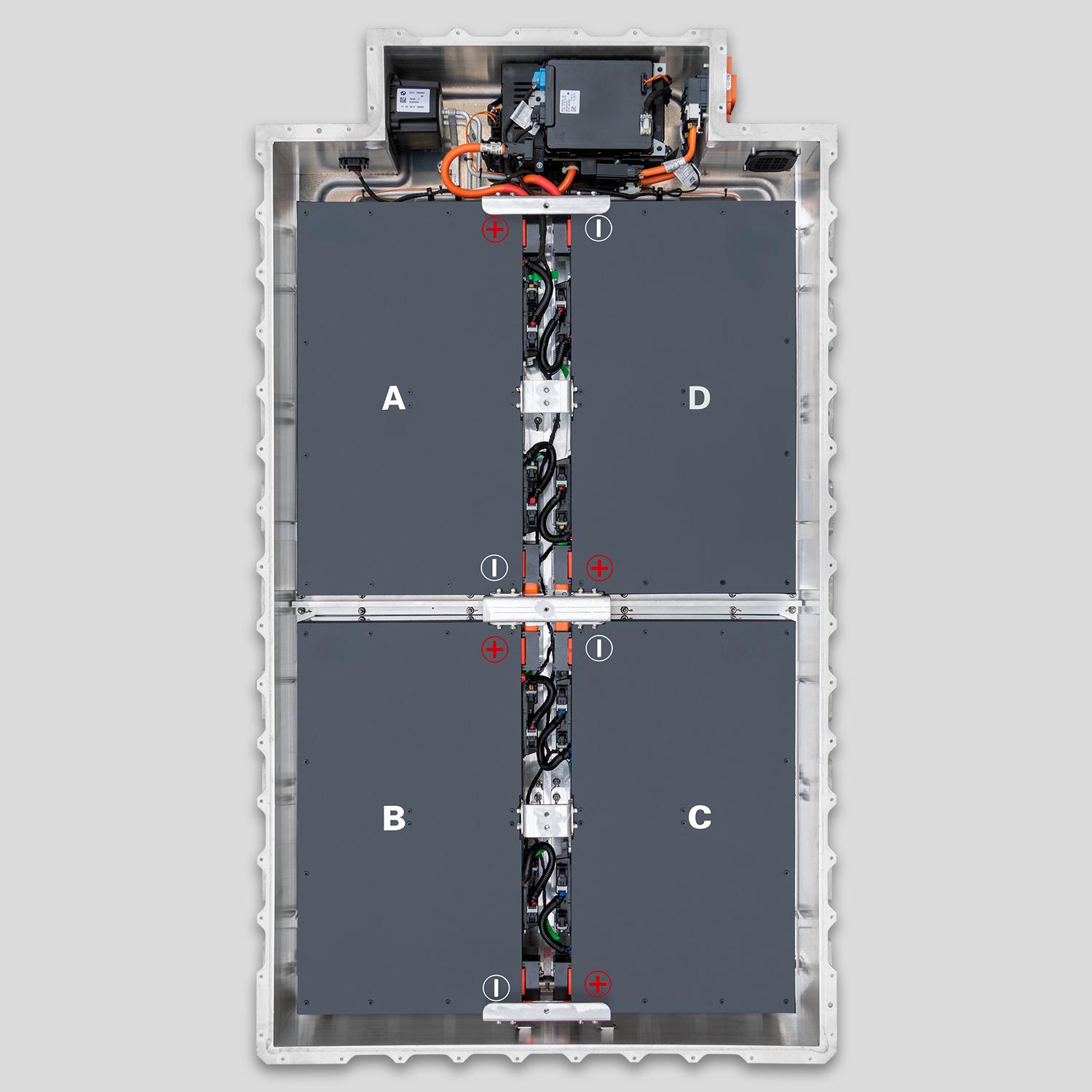
The BMW i3 has a unique life module (CFRP body) and drive module (aluminum chassis) construction. The battery sits underneath the passenger compartment. This means the casing must withstand road debris, moisture, and structural stress.
The Must-Have Feature: Reinforced Aluminum Enclosure with IP67 Rating.
- Structural Integrity: The casing should be thick-gauge aluminum, not thin plastic or fiberglass. It needs to handle the torque of the mounting bolts just like the original.
- Sealing: An IP67 rating ensures the internal components are protected against dust and temporary water submersion—critical for a vehicle driven in varied climates.
- Thermal Management: While the i3 relies on the car’s thermal system, the battery pack must have proper contact surfaces for the cooling plates to ensure even temperature distribution.
4. A Warranty That Actually Protects You
This is where most “too good to be true” deals fall apart. The EV battery is a high-voltage, high-cost component. Buying without a substantial warranty is risky.
The Must-Have Feature: Minimum 2-Year / 80,000 km Coverage.
Most generic electronics or small aftermarket brands offer 1 year or less. For a vehicle battery, you need a warranty that reflects the expected lifespan of the component.
- Coverage: Look for warranties that cover “Defects in Materials and Workmanship” as well as “Capacity Fade” (e.g., guaranteeing the battery retains at least 70% capacity during the warranty period).
- Support: Ensure the manufacturer has a dedicated technical support team that can assist with installation or diagnostics if a fault code appears.
5. Transparent Supply Chain & Technical Support
Unlike buying a phone case, replacing an EV battery is complex. You need a partner, not just a vendor.
The Must-Have Feature: Pre-Sales VIN Compatibility Check & Post-Sales Guidance.
Before you buy, a reputable supplier should verify the exact fitment for your specific i3 model year and trim (e.g., 94Ah vs. 120Ah variants). After purchase, access to technical documentation, installation videos, and remote support is essential, especially if you are a DIY mechanic or a small repair shop.
Why These Standards Matter: A Cost-Benefit Analysis
Let’s break down why settling for less is not an option.
| Feature | Low-Quality Replacement | Professional-Grade Replacement (e.g., CNS BATTERY) |
|---|---|---|
| Battery Cells | Recycled, mixed batches, or unknown brands. High risk of swelling. | Brand-New CATL cells. Consistent chemistry, high energy density. |
| Warranty | 6 months to 1 year. Often no support for BMS errors. | 2 Years / 80,000 km. Covers capacity loss and manufacturing defects. |
| Installation | May require hardware “hacks,” dongles, or coding. Risk of error codes. | Plug-and-Play. Direct fit, no modifications, seamless software handshake. |
| Total Cost of Ownership | High. Risk of failure means you pay again in 1-2 years. | Low. 50% cheaper than OEM, but lasts just as long. |
The Bottom Line: Restoring Your i3’s Glory
Replacing the battery in your BMW i3 is an investment in extending the life of a fantastic car. The i3’s chassis and driving dynamics are timeless; the battery technology just needs an update.
By insisting on Brand-New CATL Cells, OEM Software Integration, and a Solid Warranty, you are not just buying a part—you are buying peace of mind. You are ensuring that your car drives safely, charges efficiently, and retains its value.
Don’t let the fear of the unknown stop you from getting back on the road. If you are ready to explore a replacement that meets all these standards, verify your specific model fitment today.
Ready to Revive Your BMW i3? Get a free, no-obligation quote and compatibility check for your vehicle.
Frequently Asked Questions (FAQ)
Q1: Can I install the BMW i3 battery myself, or do I need a mechanic? A: While the physical installation (disconnecting the old pack and bolting in the new one) can be done by a skilled DIYer with the right tools, we strongly recommend involving a professional. Working with high-voltage systems is dangerous. Furthermore, ensuring the BMS communicates correctly with the car’s software often requires specific diagnostic knowledge. If you do DIY, please follow the provided installation video meticulously and wear appropriate PPE.
Q2: How long does the BMW i3 battery replacement process take? A: For a professional technician, the physical replacement usually takes about 1 to 2 hours. This involves lifting the car, disconnecting the HV and LV connectors, removing the undertray, swapping the modules, and remounting. However, the entire process, including diagnostics and software handshake verification, might take longer to ensure everything is functioning perfectly.
Q3: Will a replacement battery void my car’s remaining warranty? A: Generally, replacing the battery with an aftermarket unit means that specific component is covered under the new supplier’s warranty, not the original BMW warranty. However, a high-quality replacement that meets OEM voltage and communication standards should not interfere with other vehicle systems. Always check your local lemon laws, as manufacturers cannot void unrelated warranties simply because an aftermarket part is installed.
Q4: What is the expected range after installing a new battery? A: With a brand-new 42.2kWh or 59.9kWh pack using premium cells, you can expect to restore the range to specifications very close to a brand-new BMW i3. Real-world range depends on driving style and weather, but you should see a significant improvement over a degraded original battery—often regaining 120-160 miles of range on a full charge.