The adoption of unmanned aerial vehicles (UAVs) has revolutionized the security and surveillance industry. From perimeter monitoring of critical infrastructure to rapid response in emergency scenarios, drone fleets offer unparalleled situational awareness. However, for security firms, the initial excitement of deployment often gives way to the harsh reality of operational economics. Many organizations focus heavily on the upfront purchase price of hardware, neglecting the long-term financial implications that truly dictate profitability. In 2026, where technology evolves rapidly, understanding the Total Cost of Ownership (TCO) is not just an accounting exercise—it is a strategic imperative for survival and growth.
Security firms face unique challenges when scaling drone operations. High-frequency usage leads to accelerated wear and tear, particularly on power systems. Regulatory compliance adds layers of administrative cost, while data management requires robust software infrastructure. Without a clear TCO strategy, firms risk eroding their margins through unexpected maintenance bills, premature hardware replacement, and operational downtime. This article explores actionable strategies to minimize TCO and maximize Return on Investment (ROI) for security and surveillance drone fleets, focusing on the critical components that drive long-term value.
Decoding TCO in Drone Operations
To optimize ROI, security firms must first understand what constitutes the true cost of a drone fleet. TCO extends far beyond the invoice price of the aircraft. It encompasses every expense incurred throughout the asset’s lifecycle. Industry analysts suggest that operational costs can exceed acquisition costs by a factor of three over a five-year period. A comprehensive TCO model for security drones includes four primary pillars:
- Acquisition Costs: This includes the drone hardware, sensors (thermal, optical, LiDAR), spare parts, and initial training for pilots.
- Operational Costs: Daily expenses such as energy consumption, software subscriptions for fleet management, data storage, and pilot salaries.
- Maintenance and Repair: Routine inspections, part replacements, firmware updates, and unexpected repairs due to crashes or environmental damage.
- End-of-Life Costs: Disposal, recycling, and the residual value of the equipment.
For example, a security firm purchasing ten high-end surveillance drones might budget $150,000 for hardware. However, without accounting for battery replacements every 18 months, insurance premiums, and cloud storage for 24/7 footage, the actual five-year cost could approach $500,000. Recognizing these hidden costs early allows firms to allocate resources more effectively and avoid budgetary shocks.
The Battery Factor: The Heart of ROI
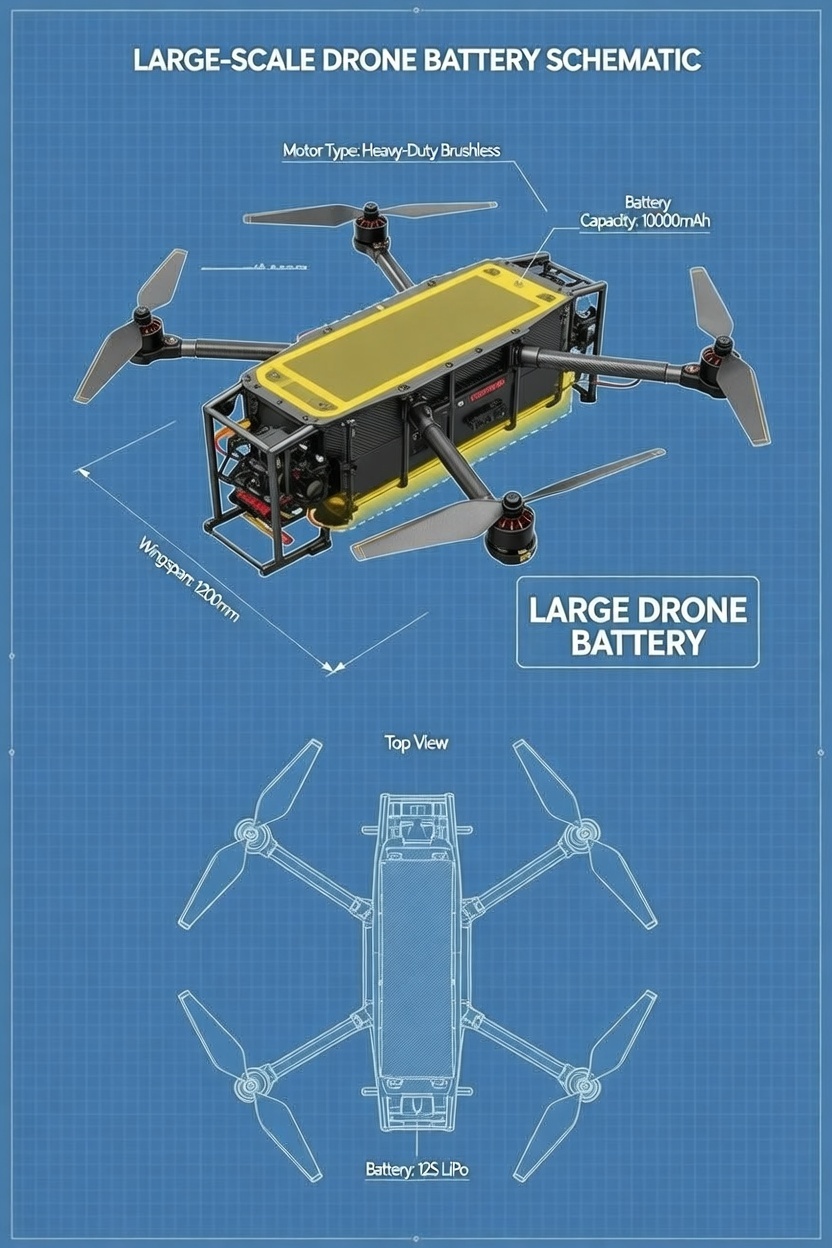
In the context of UAV operations, the battery is arguably the most critical component influencing TCO. For security firms operating continuous patrols, battery lifecycle management is directly correlated with operational uptime and cost efficiency. Lithium-polymer (LiPo) and emerging solid-state batteries degrade over charge cycles. A battery that loses capacity forces drones to return to base more frequently, reducing coverage area and increasing the number of batteries needed per shift.
Strategic battery management can significantly reduce TCO. Here are key strategies for optimizing battery lifecycle:
- Smart Charging Infrastructure: Utilizing intelligent charging hubs that balance cells and prevent overcharging extends battery life. Fast charging should be used sparingly to avoid thermal stress.
- Storage Protocols: Batteries stored at full charge or completely depleted degrade faster. Maintaining a storage voltage of around 50% when not in use preserves chemical stability.
- Cycle Tracking: Implementing a Battery Management System (BMS) to track charge cycles ensures batteries are retired before they become safety hazards or operational liabilities.
- Temperature Control: Operating and storing batteries in extreme temperatures accelerates degradation. Climate-controlled storage units are a small investment that yields high returns in battery longevity.
Consider a scenario where a firm replaces batteries every 300 cycles versus one that optimizes care to reach 500 cycles. The latter reduces battery procurement costs by 40% over the fleet’s life. Furthermore, reliable batteries reduce the risk of mid-flight failures, which can lead to costly crash recoveries or liability issues. As energy density technology advances in 2026, integrating high-cycle-life batteries is no longer optional—it is a competitive advantage. Firms that prioritize energy system health see a direct improvement in their bottom line.
Maintenance and Lifecycle Management
Predictive maintenance is another cornerstone of reducing TCO. Traditional “fix-it-when-it-breaks” models lead to unplanned downtime, which is catastrophic for security contracts that guarantee 100% coverage. By shifting to a predictive model, firms can schedule maintenance during low-activity periods.
- Automated Health Checks: Modern drones come equipped with diagnostic tools that monitor motor health, ESC (Electronic Speed Controller) performance, and structural integrity. Integrating these diagnostics into a central fleet management dashboard allows managers to spot trends before failures occur.
- Firmware Management: Keeping software up to date ensures security patches are applied and performance optimizations are utilized. However, updates should be tested on a single unit before fleet-wide deployment to avoid bugs that ground the entire fleet.
- Modular Repairs: Choosing drones with modular designs allows for quick swapping of damaged components (like arms or gimbals) rather than sending the entire unit for service. This reduces turnaround time and keeps assets in the air.
Training also plays a vital role in maintenance costs. Well-trained pilots are less likely to crash drones. Investing in comprehensive simulation training and certification programs reduces accident rates. According to industry data, firms with rigorous pilot training programs report 30% lower repair costs annually. This highlights that human capital investment is just as important as hardware investment in the TCO equation.
Regulatory Compliance and Insurance
The regulatory landscape for commercial drones is becoming increasingly complex. In 2026, compliance with aviation authorities (such as the FAA in the US or EASA in Europe) requires meticulous record-keeping and adherence to evolving airspace rules. Non-compliance can result in hefty fines that severely impact ROI.
- Licensing and Certification: Ensuring all pilots hold valid Remote Pilot Certificates is mandatory. Lapses in certification can ground operations and void insurance policies.
- Insurance Coverage: Specialized drone insurance is essential. Policies should cover hull damage, third-party liability, and data breach risks. Shopping for policies that offer flexibility based on flight hours can reduce premiums for fleets with variable usage patterns.
- Data Security: Security firms handle sensitive surveillance data. Compliance with data protection regulations (like GDPR or local equivalents) requires secure transmission and storage solutions. Investing in encrypted data links and secure cloud servers prevents costly legal repercussions.
Integrating compliance costs into the TCO model ensures that these necessary expenses are budgeted correctly. Viewing compliance as an investment in risk mitigation rather than a burden helps firms maintain operational continuity and protect their reputation.
Actionable Steps for Maximizing ROI
To truly maximize ROI, security firms must adopt a holistic approach to fleet management. It requires shifting the mindset from buying assets to managing capabilities. Here is a summary of actionable steps:
- Conduct a TCO Audit: Before expanding the fleet, calculate the projected five-year cost including batteries, maintenance, and software.
- Standardize Hardware: Reducing the variety of drone models in the fleet simplifies maintenance, training, and spare parts inventory.
- Invest in Energy Management: Prioritize high-quality batteries and charging infrastructure. This is where the most significant operational savings can be found.
- Automate Reporting: Use fleet management software to automate compliance logging and maintenance scheduling.
- Review Vendor Partnerships: Establish relationships with suppliers who offer favorable terms on consumables like batteries and propellers.
Conclusion and Next Steps
The path to maximizing ROI for security and surveillance drone fleets lies in the details. While the allure of advanced sensors and autonomous flight is strong, the financial health of the operation depends on disciplined management of costs, particularly regarding energy systems and maintenance. By understanding the true Total Cost of Ownership, firms can make informed decisions that enhance profitability and service reliability.
As we move further into 2026, the efficiency of your drone fleet will increasingly depend on the efficiency of its power source. Optimizing battery lifecycle is not just about keeping drones in the air; it is about keeping your business profitable. If you are looking to enhance your fleet’s energy performance and reduce operational costs through superior battery solutions, it is time to consult with experts who understand the unique demands of security surveillance.
Take control of your fleet’s TCO today. For specialized consultation on high-performance drone battery solutions and lifecycle management strategies tailored for security firms, reach out to our team. We are ready to help you power your operations efficiently.
Contact us now to explore how optimized battery strategies can transform your drone fleet’s ROI: https://cnsbattery.com/drone-battery-home/drone-battery-contact