
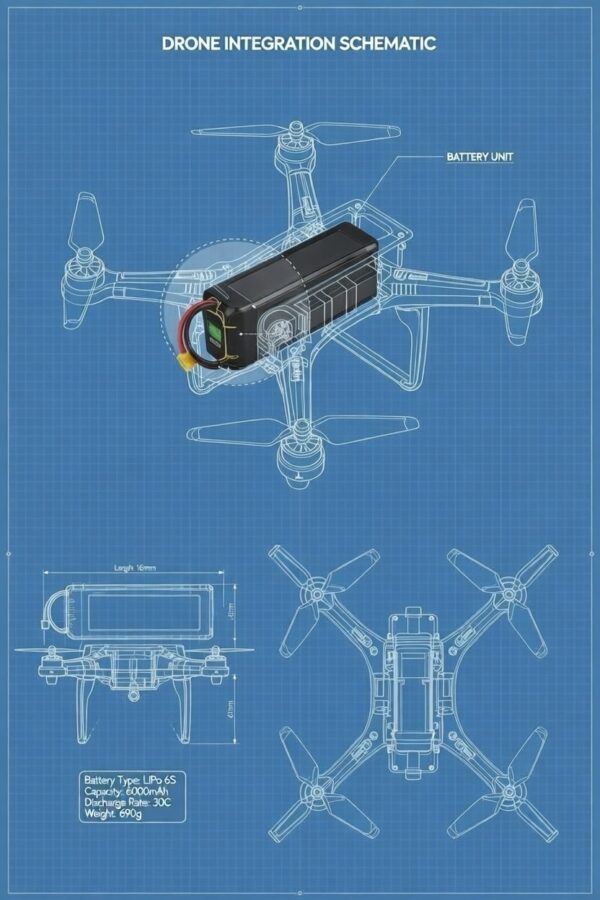
In the critical infrastructure sector, pipeline monitoring firms rely heavily on advanced drone fleets to ensure integrity, safety, and operational efficiency. These unmanned aerial vehicles (UAVs) provide real-time data across vast and often inaccessible terrains, reducing the need for manned inspections and minimizing environmental disruption. However, as the industry scales, a hidden operational challenge has emerged: the lifecycle management of drone batteries. With 2026 marking a pivotal year for global environmental regulations, pipeline operators must pivot from viewing batteries as mere consumables to treating them as regulated assets. Maximizing Return on Investment (ROI) now depends not just on flight hours, but on rigorous recycling compliance strategies.
This article outlines the strategic necessity of aligning drone fleet operations with emerging 2026 compliance standards. We will explore the intersection of pipeline monitoring efficiency and sustainability, detail the new regulatory landscape affecting lithium battery transport and disposal, and provide actionable management tips to mitigate risk while enhancing profitability. By integrating compliance into your fleet management protocol, firms can avoid costly logistical bottlenecks, protect brand reputation, and unlock long-term value through sustainable practices.
The Regulatory Landscape: 2026 Compliance Shifts
The operational environment for drone fleets is undergoing a significant transformation. Historically, battery disposal was an afterthought, often handled through general waste channels. Today, that approach poses severe legal and financial risks. The year 2026 has introduced stringent mandates that directly impact how pipeline monitoring firms manage their energy assets.
IATA DGR 67th Edition and Transport Safety
Effective January 1, 2026, the International Air Transport Association (IATA) Dangerous Goods Regulations (DGR) 67th Edition enforces stricter controls on lithium battery transportation. For pipeline firms that deploy drones across international borders or rely on air freight for battery replacement, compliance is non-negotiable. A key requirement is the State of Charge (SoC) mandate. Lithium batteries must now be transported at no more than 30% of their rated capacity. Failure to adhere to this can result in cargo rejection, shipment delays, and substantial fines. Furthermore, the UN classification system has been updated; the legacy UN3171 code for battery-powered vehicles is being replaced by more specific identifiers like UN3556 for lithium-ion driven units. Pipeline operators must update their shipping documentation immediately to avoid customs滞留 (detention).
The EU Battery Regulation and Digital Passports
Simultaneously, the European Union’s Battery Regulation has entered its substantive execution phase in 2026. This regulation introduces the concept of a “Battery Passport,” a digital record containing data on chemical composition, carbon footprint, and recycling content. For pipeline monitoring firms operating in or sourcing equipment from EU markets, this means every drone battery must be traceable. The regulation mandates that industrial batteries and those used in light means of transport (which can encompass heavy-lift inspection drones) carry a unique QR code linked to this data. Non-compliance restricts market access and can lead to penalties that erode project margins.
Extended Producer Responsibility (EPR) Fees
Beyond transport, disposal costs are rising. Regions like the UK and parts of the EU are enforcing Extended Producer Responsibility (EPR) schemes. As of 2026, overseas entities selling electronic equipment, including drone fleets, may be liable for e-waste recycling fees. Pipeline firms that do not account for these end-of-life costs in their initial ROI calculations will find their projected savings diminished by unexpected compliance expenditures.
Strategic Framework for ROI Maximization
Integrating recycling compliance into your drone fleet strategy is not merely about risk avoidance; it is a lever for financial optimization. A robust compliance framework transforms potential liabilities into competitive advantages.
Cost Mitigation Through Logistics Optimization
Non-compliant shipments are expensive. When a battery shipment is flagged due to incorrect UN labeling or excessive SoC, the costs include storage fees, return shipping, and potential penalties. By implementing a pre-flight logistics check that ensures all batteries are discharged to compliant levels before transport, firms can streamline their supply chain. This reduces downtime, ensuring that drone fleets are ready for pipeline inspection tasks without waiting for cleared cargo. Efficient logistics directly correlate to higher billable hours and improved ROI.
Asset Recovery and Value Retention
Recycling compliance opens avenues for asset recovery. Partnering with certified recycling vendors allows firms to recover valuable materials such as lithium, cobalt, and nickel. In 2026, the market for recycled battery materials is maturing, offering rebates or credits for returned cells. Instead of paying for hazardous waste disposal, pipeline firms can negotiate contracts where recyclers compensate for the raw material value. This turns a cost center into a minor revenue stream, enhancing the overall financial performance of the drone division.
Brand Reputation and Contract Eligibility
Major pipeline owners and government contractors are increasingly prioritizing Environmental, Social, and Governance (ESG) criteria in their bidding processes. A documented strategy for battery recycling and compliance demonstrates a commitment to sustainability. Firms that can prove their drone operations adhere to the EU Battery Passport standards and IATA safety rules are more likely to win high-value contracts. In this context, compliance is a marketing asset that differentiates your firm from competitors who lag in sustainability practices.
Management Tips for Fleet Operators
To successfully navigate these changes, fleet managers must adopt a proactive approach. The following tips provide a roadmap for integrating compliance into daily operations:
- Implement Battery Tracking Software: Utilize fleet management tools that track the lifecycle of each battery. Record purchase dates, cycle counts, and disposal dates to ensure no battery exceeds its safe operational life before recycling.
- Standardize SoC Protocols: Train all field technicians on the 30% State of Charge rule for transport. Create checklists that mandate battery discharge before any drone or battery is packed for shipping.
- Audit Recycling Partners: Regularly audit third-party recycling vendors to ensure they hold valid certifications for hazardous waste processing. Request documentation proving that batteries are processed according to local and international laws.
- Update Shipping Documentation: Review all air waybills and dangerous goods declarations. Ensure the new UN numbers (e.g., UN3556) are correctly applied and that labels match the 2026 IATA DGR specifications.
- Budget for EPR Fees: Incorporate estimated e-waste recycling fees and battery passport compliance costs into the initial project budget. This prevents margin erosion when regulations tighten further.
- Conduct Quarterly Compliance Training: Regulations evolve rapidly. Schedule quarterly training sessions for logistics and operations staff to stay updated on changes in transport laws and environmental standards.
- Leverage Data for Reporting: Use the data from your battery passports to generate sustainability reports. Share these with stakeholders to highlight your firm’s commitment to responsible operations.
Conclusion
The era of treating drone batteries as disposable components is over. For pipeline monitoring firms, the path to maximizing ROI in 2026 is inextricably linked to recycling compliance strategies. The convergence of stricter transport regulations, digital tracking requirements, and environmental fees means that negligence is no longer an option. However, for those who adapt, the rewards are significant. By optimizing logistics, recovering asset value, and enhancing brand reputation through sustainability, firms can secure a competitive edge in the infrastructure monitoring market.
The transition requires diligence, but it offers a clear opportunity to future-proof operations. Pipeline monitoring is about safeguarding critical assets; today, that responsibility extends to the assets used to perform the monitoring. Embracing these compliance strategies ensures that your drone fleet remains not only airborne but also legally and financially sound.
Take Action Today
Don’t let regulatory changes ground your operations or erode your margins. Ensure your drone fleet is equipped with compliant, high-performance energy solutions that meet the rigorous standards of 2026. Whether you need guidance on battery lifecycle management or require advanced power systems designed for regulatory adherence, expert support is available.
Contact our specialized team to discuss how we can support your fleet’s compliance and efficiency goals. Visit our contact page at https://cnsbattery.com/drone-battery-home/drone-battery-contact to initiate a consultation and secure your operational future.


