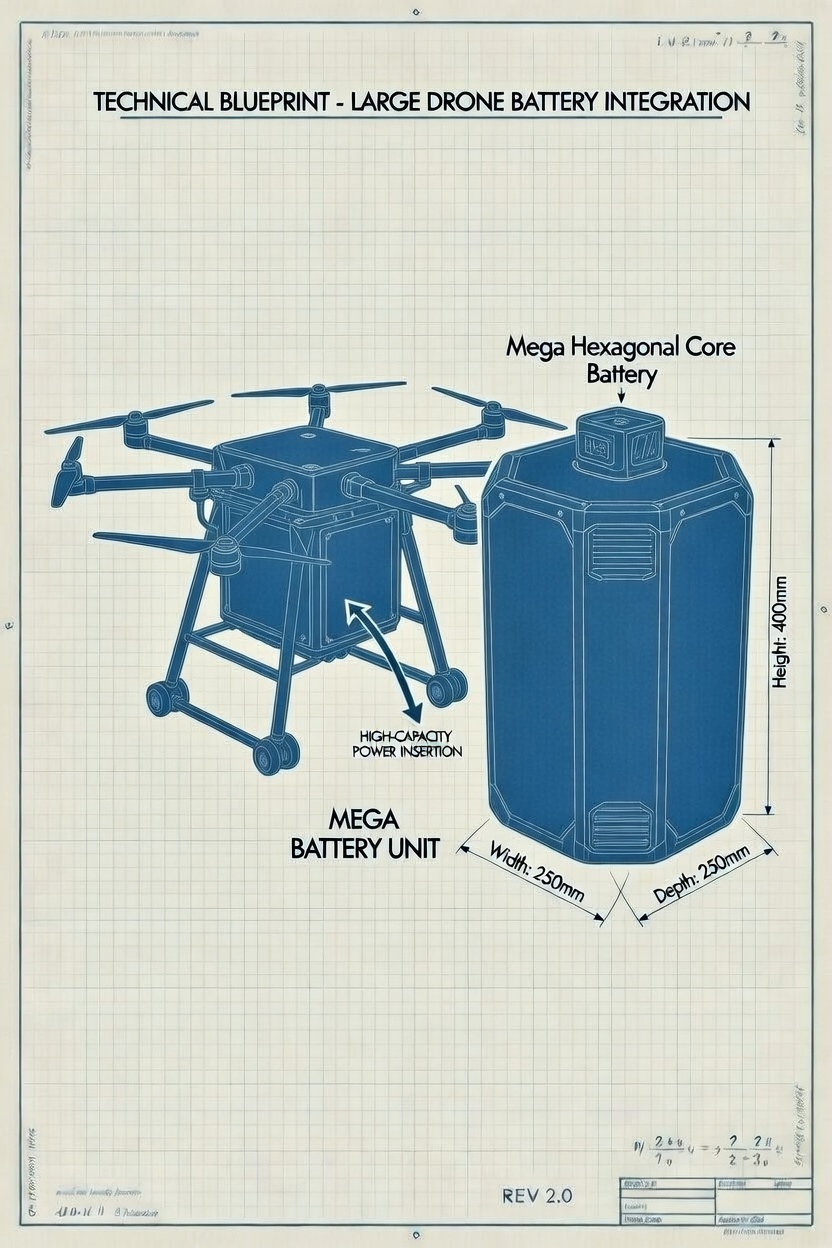
Maximize ROI: BMS Features Strategies for Security and Surveillance Firms Drone Fleet
Introduction
In 2026, security and surveillance companies increasingly rely on drone fleets to deliver comprehensive monitoring solutions across commercial, industrial, and public safety sectors. However, the operational success of these drone fleets hinges on one critical component often overlooked: the Battery Management System (BMS). As drone operations scale, maximizing Return on Investment (ROI) becomes paramount, and intelligent BMS features stand as the cornerstone of fleet efficiency, safety, and cost optimization.
This article explores strategic BMS implementations that security firms can adopt to enhance drone fleet performance, reduce operational costs, and extend battery lifecycle—ultimately driving superior ROI in an increasingly competitive surveillance landscape.
Understanding BMS: The Intelligence Behind Drone Fleet Performance
A Battery Management System serves as the neural network of any drone battery pack. It monitors, controls, and protects battery cells throughout charging and discharging cycles. For security and surveillance firms operating multiple drones simultaneously, BMS functionality directly impacts:
- Mission readiness – Ensuring drones are available when needed
- Operational safety – Preventing battery failures during critical surveillance operations
- Cost efficiency – Reducing battery replacement frequency and downtime
- Data continuity – Maintaining uninterrupted surveillance coverage
Core BMS Features That Drive ROI for Security Drone Fleets
1. Real-Time Cell Monitoring and Balancing
Advanced BMS continuously monitors individual cell voltage, temperature, and current. This capability prevents the “weakest cell” phenomenon where one underperforming cell limits overall battery capacity.
Key Benefits:
- Extends battery lifespan by 30-40%
- Prevents unexpected mid-mission power failures
- Enables predictive maintenance scheduling
Implementation Tip: Choose BMS solutions with cell-level monitoring granularity of at least 1mV accuracy for optimal performance tracking.
2. Intelligent State of Charge (SOC) Estimation
Accurate SOC estimation allows fleet managers to plan missions precisely, knowing exactly how much flight time remains before battery replacement is necessary.
Comparison: Traditional vs. Advanced SOC Estimation
| Feature | Traditional BMS | Advanced BMS |
|---|---|---|
| Accuracy | ±10-15% | ±2-3% |
| Algorithm | Voltage-based | Multi-parameter AI-driven |
| Temperature Compensation | Limited | Full range adjustment |
| Learning Capability | None | Adaptive over cycles |
Strategic Advantage: Security firms using advanced SOC estimation report 25% fewer aborted missions due to power miscalculations.
3. Thermal Management Integration
Battery temperature directly affects performance and safety. BMS with integrated thermal management prevents overheating during intensive surveillance operations and ensures optimal charging in varying environmental conditions.
Best Practices:
- Implement active cooling for high-drain operations
- Set temperature thresholds between 15°C-35°C for optimal performance
- Enable automatic power reduction when temperature exceeds safe limits
4. Predictive Health Analytics
Modern BMS incorporates machine learning algorithms that analyze historical battery data to predict potential failures before they occur.
ROI Impact:
- Reduces unexpected battery failures by up to 60%
- Lowers emergency replacement costs
- Enables scheduled maintenance during low-demand periods
Strategic Implementation Steps for Security Firms
Step 1: Audit Current Fleet Battery Performance
Begin by collecting baseline data on your existing drone batteries:
- Average cycle count before degradation
- Mission abort rates due to power issues
- Replacement costs per quarter
- Downtime hours attributed to battery problems
Step 2: Define BMS Requirements Based on Operational Needs
Different surveillance scenarios demand different BMS capabilities:
Perimeter Security Operations: Require long-endurance batteries with stable discharge rates
Rapid Response Missions: Need high-drain capability with quick-charge support
24/7 Surveillance: Demand exceptional cycle life and reliable SOC estimation
Step 3: Select BMS Solutions with Scalability
Choose BMS platforms that can grow with your fleet. Key considerations include:
- Centralized fleet monitoring dashboard
- API integration with existing security management systems
- Multi-drone simultaneous charging capabilities
- Remote firmware updates for continuous improvement
Step 4: Implement Data-Driven Maintenance Protocols
Leverage BMS data to create intelligent maintenance schedules:
Maintenance Trigger Points:
- Cell voltage deviation > 50mV
- Capacity degradation > 15% from original
- Temperature anomalies during charging
- Cycle count approaching manufacturer limits
Step 5: Train Operations Team on BMS Insights
Ensure your drone pilots and fleet managers understand:
- How to interpret BMS warnings and alerts
- Optimal charging practices for battery longevity
- When to retire batteries based on health metrics
Cost-Benefit Analysis: BMS Investment vs. Operational Savings
Initial Investment:
- Advanced BMS-equipped batteries: 15-20% premium over standard batteries
- Fleet management software integration: Variable based on fleet size
- Training programs: One-time cost per team member
Annual Savings (Based on 50-Drone Fleet):
- Reduced battery replacements: $45,000-60,000
- Decreased mission aborts: $30,000-40,000 in recovered revenue
- Lower maintenance downtime: $25,000-35,000
- Extended battery lifecycle: 40% reduction in annual battery procurement
ROI Timeline: Most security firms achieve full ROI within 12-18 months of BMS implementation.
Common Pitfalls to Avoid
- Ignoring temperature management – Leading to accelerated battery degradation
- Overlooking cell balancing – Causing capacity loss across the fleet
- Delayed firmware updates – Missing critical safety and performance improvements
- Inconsistent charging practices – Creating battery health disparities within the fleet
Future-Proofing Your Drone Fleet BMS Strategy
The surveillance industry continues evolving with AI-powered analytics, autonomous operations, and extended mission requirements. Your BMS strategy should accommodate:
- 5G connectivity for real-time fleet-wide battery monitoring
- AI-driven optimization that learns from operational patterns
- Modular battery designs allowing component-level replacements
- Sustainability metrics tracking carbon footprint and energy efficiency
Key Takeaways
- BMS is not optional – It’s a strategic investment that directly impacts operational ROI
- Data-driven decisions – Leverage BMS analytics for maintenance and replacement planning
- Scalability matters – Choose solutions that grow with your fleet expansion
- Training is critical – Ensure your team understands and utilizes BMS capabilities fully
- Regular audits – Continuously evaluate BMS performance against operational metrics
Call to Action
Ready to transform your security and surveillance drone fleet operations with advanced BMS technology? Our team specializes in custom battery management solutions designed specifically for professional drone fleets in the security sector.
Contact us today to discuss how optimized BMS features can maximize your fleet ROI, enhance operational safety, and extend battery lifecycle.
Visit our contact page at: https://cnsbattery.com/drone-battery-home/drone-battery-contact
Our battery experts will provide a complimentary fleet assessment and recommend BMS strategies tailored to your specific operational requirements. Don’t let outdated battery management limit your surveillance capabilities—take the first step toward fleet optimization today.
This article provides general guidance on BMS implementation for security drone fleets. Specific recommendations should be evaluated based on your operational requirements, fleet size, and budget constraints. Consult with battery management specialists before making significant infrastructure investments.