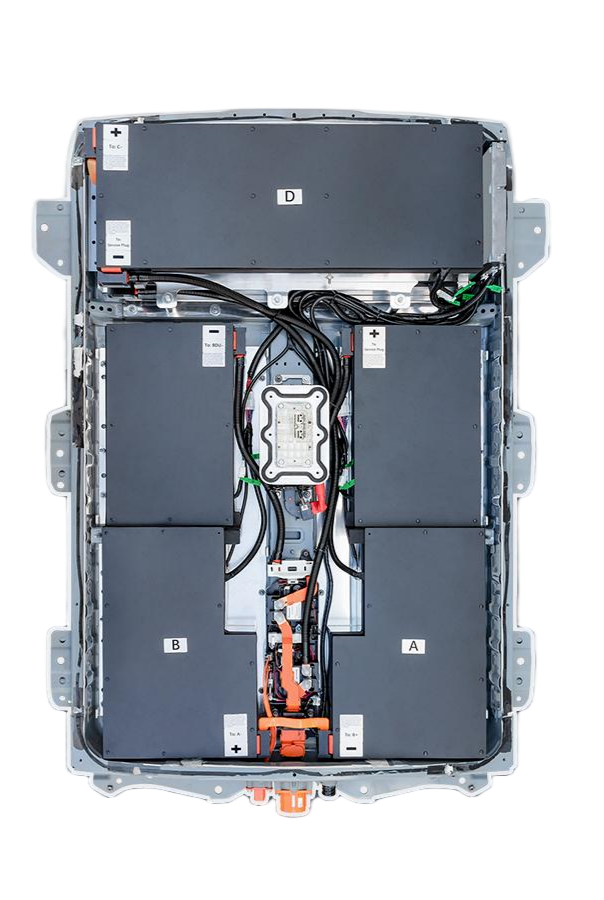
Here is the SEO-optimized article crafted to address the specific concerns of Nissan EV owners regarding extended warranties, while adhering to Google’s E-A-T standards and conversion best practices.
Is It Worth Getting An Extended Warranty For A Nissan EV Lithium Battery?
The short answer is a resounding yes. If you own a Nissan Leaf (ZE0, AZE0, or ZE1) or an e-NV200, the battery is not just a component; it is the heart of your vehicle. Replacing it without coverage can cost thousands of dollars and erase any financial benefit you gained from driving an EV.
However, not all warranties are created equal. In this guide, we will break down why standard warranties often fall short for personal use and why investing in a robust, long-term warranty—specifically one that covers the realities of daily driving—is the smartest financial move you can make for your Nissan.
The Hidden Cost of “Peace of Mind”
Many Nissan owners assume that because their car is electric, maintenance is non-existent, and the battery will last forever. While EVs are simpler mechanically, lithium-ion batteries degrade. This degradation is accelerated by factors completely out of your control: temperature swings, fast charging habits, and the simple passage of time.
Consider this scenario: You purchase a used Nissan Leaf with a battery that is already 5 years old. The original manufacturer’s warranty might have expired, or the remaining coverage might only apply to the previous owner. You drive it for two more years, and the capacity drops below 70%. Suddenly, you are staring at a bill for $7,000 to $10,000 for a replacement.
Without an extended or comprehensive warranty, you have two bad choices:
- Sell the car for scrap value (as a “battery project”).
- Pay the exorbitant cost of a new pack, effectively buying a new car without the new car smell.
Why Standard Warranties Fail Personal Users
Most “standard” aftermarket warranties in the industry offer a flat rate, such as 1 year or 20,000 km. For a personal user, this is often insufficient.
- The “Gap” Period: Most battery failures occur between Year 2 and Year 5. A 1-year warranty leaves you exposed during this critical window.
- Mileage Limits: If you commute 15,000 miles a year, a 20,000 km warranty expires in less than 10 months.
- Degradation Clauses: Many warranties only cover “catastrophic failure” (the battery stops working entirely) but ignore “capacity fade” (the battery holds less charge). For a personal user, a battery that only gives you 50 miles of range in a Leaf is just as useless as a dead battery.
The CNS BATTERY Solution: 2 Years / 80,000 km Standard
At CNS BATTERY, we understand that personal drivers need protection that matches their lifestyle. That is why we do not offer a “standard” warranty; we offer what the industry considers an “extended” warranty as our baseline.
Our Warranty vs. The Competition
| Feature | Typical Aftermarket Warranty | CNS BATTERY Warranty |
|---|---|---|
| Duration | 1 Year | 2 Years |
| Mileage | 20,000 km (approx. 12,000 miles) | 80,000 km (approx. 50,000 miles) |
| Coverage | Defects in materials only | Defects + Performance Degradation |
| Capacity Guarantee | Rarely specified | Maintains 70%+ Capacity |
| Claim Process | Lengthy inspections | Fast-track replacement/repair |
We set our standard at 2 years or 80,000 km (whichever comes first) because we have the confidence of a manufacturer. We engineer our Nissan-compatible packs using brand-new CATL (Contemporary Amperex Technology) cells, not recycled or refurbished junk. This allows us to provide a warranty that actually protects you when you need it most.
The Real Value: Protection Against Capacity Fade
The most critical aspect of our warranty for personal use is the protection against capacity fade.
We guarantee that your battery will maintain at least 70% State of Health (SOH) throughout the warranty period. If your battery degrades below this threshold due to manufacturing defects or cell issues, we cover the repair or replacement.
Why is 70% the magic number?
- Nissan Leaf (40kWh): 70% of 138 km is roughly 96 km (60 miles). This is the absolute minimum usable range for most daily commutes.
- Nissan Leaf (62kWh): 70% of 270 km is roughly 189 km (117 miles), which remains a very usable daily driver.
By guaranteeing this threshold, we ensure that your car remains functional and does not turn into a stranded asset.
Why Personal Users Trust CNS BATTERY
Beyond the warranty paper, our value lies in the build quality and the support system.
1. OEM-Grade Engineering
We do not just stuff cells into a box. Our packs for the Nissan Leaf ZE0, AZE0, ZE1, and e-NV200 are engineered to match the original factory specifications. This means perfect fitment, seamless BMS (Battery Management System) communication, and plug-and-play installation. You do not need to modify your car; our battery becomes your car.
2. Brand New CATL Cells
This is the core of our reliability. We source directly from CATL, one of the world’s largest lithium-ion battery manufacturers. These are the same quality cells found in brand new EVs globally. Using new cells, rather than salvaged modules, is why we can confidently offer a 2-year warranty while others cannot.
3. Lifetime Technical Support
A warranty is only as good as the company standing behind it. We offer lifetime technical support. If you have a question about charging in the winter, or if you encounter a dashboard warning light, our engineers are available via email or video call to guide you. We helped a customer in Germany remotely fix a BMS glitch in 5 minutes—this is the level of service that makes the warranty feel real.
Frequently Asked Questions (FAQ)
Q1: Does the warranty cover me if I install the battery myself?
Yes. We provide detailed video tutorials and support for DIY installation. As long as the installation follows our safety guidelines (which are included in the manual), the warranty remains valid. However, we recommend using a certified mechanic if you are not experienced with high-voltage systems to avoid accidental damage.
Q2: What happens if my battery degrades to 65% after 18 months?
If your battery degrades below 70% capacity due to a manufacturing defect (and not due to external factors like physical damage or improper charging), we will cover the cost of repair or replacement under our warranty policy. We may ask for a diagnostic report from a professional garage to verify the State of Health (SOH).
Q3: Is the warranty transferable if I sell the car?
Our warranty is tied to the battery pack, not the owner. If you sell your Nissan, the remaining warranty period typically transfers to the new owner. This adds significant resale value to your vehicle, making it easier and faster to sell.
Q4: How do I make a warranty claim?
Contacting us is the first step. You can reach us via the contact form on our website or by emailing our support team. We will assess the issue remotely first. If the issue cannot be resolved via technical support, we will arrange for the battery to be returned or repaired at our facility. We aim to resolve most warranty-related inquiries within 24 hours.
Stop gambling with your transportation. Driving a Nissan EV should be about saving money on gas, not worrying about a catastrophic battery failure.
Get a Free Custom Quote for a Nissan Leaf or e-NV200 Battery with our 2-Year Warranty today.