
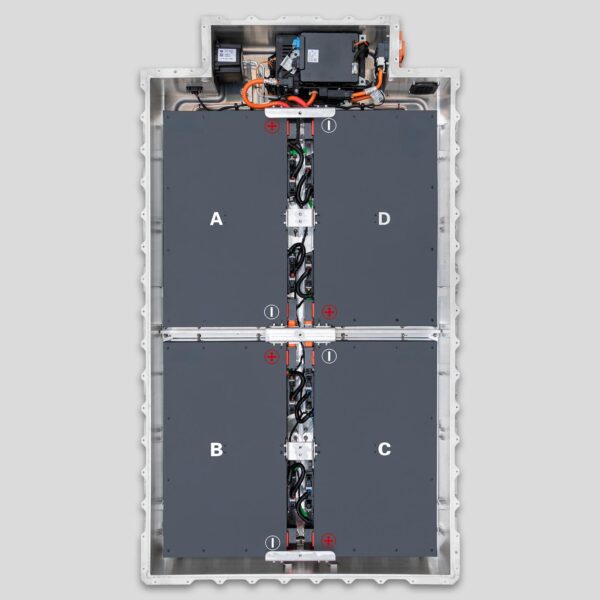
How to Test BMW i3 Battery Insulation Resistance (Pro) – The $200 Test That Saves a $20,000 Disaster
The tow truck drops off a silent 2016 BMW i3. The driver’s complaint is chilling: “It just shut off on the highway. The dashboard says ‘High Voltage System Malfunction’ and warns of an electrical fault.” You scan the vehicle and retrieve code CD6902: Insulation Resistance Low.
In the world of gasoline cars, an electrical fault might mean a bad ground strap. In the high-voltage realm of the BMW i3, this code means 400 volts of electricity are leaking directly to the car’s chassis. This is not a glitch; it is a critical safety failure. It poses an immediate risk of fatal electrocution to anyone touching the vehicle and a high probability of thermal runaway (fire).
Many technicians make the fatal mistake of trying to “reset” this code or assuming it’s a sensor error. But in 2026, with thousands of aging i3s on the road, a low insulation reading is almost always a physical breach: coolant inside the pack, cracked casing, or degraded internal shielding.
How do you professionally diagnose the source of the leak without putting your team at risk?
What specific megohm values determine if a pack can be saved or must be condemned?
And when the test confirms an internal leak, how do you pivot from a “dead car” diagnosis to a profitable, life-saving upgrade?
At CNS BATTERY, we partner with leading independent shops to establish the gold standard in EV safety diagnostics. We know that accurate insulation resistance testing is the gatekeeper between a safe repair and a catastrophic liability. This guide details the professional methods for testing BMW i3 battery insulation, explains how to interpret the data, and reveals why replacing a compromised pack with a certified upgrade is the only ethical path forward.
Why Standard OBDII Scanners Aren’t Enough
Your generic scan tool can tell you that the BMS has detected an insulation fault. It cannot tell you where the leak is or how severe it is. Relying solely on digital codes is dangerous because:
- False Negatives: A failing sensor might report “normal” while a slow leak develops.
- Lack of Quantification: You need to know the exact resistance value (in kΩ or MΩ) to assess safety, not just a “Pass/Fail” light.
- Isolation Issues: You cannot determine if the leak is in the battery, the motor, the compressor, or the cabling without physical isolation testing.
To diagnose like a pro, you must move beyond the screen and use high-voltage measurement tools.
The Professional Toolkit: Essential Gear for Detection
Before touching a single bolt, ensure your shop is equipped with:
- Digital Megohmmeter (Insulation Tester): Capable of outputting 500V or 1000V DC. Brands like Fluke or Hioki are industry standards.
- CAT III / CAT IV Multimeter: For verifying zero voltage before testing.
- Class 00 Insulated Gloves & Face Shield: Mandatory PPE for any HV interaction.
- BMW ISTA or Equivalent Bidirectional Tool: To manually open/close contactors for component isolation.
Step-by-Step: The Professional Insulation Test Protocol
Follow this rigorous workflow to safely and accurately diagnose insulation failures in the BMW i3.
Step 1: Safety Depower
- Disconnect the 12V auxiliary battery.
- Remove the High Voltage Service Plug (MSD).
- Wait 10 minutes for capacitor discharge.
- Verify 0 Volts at the main terminals before touching any connectors.
Step 2: Isolate the Battery Pack
The goal is to test the battery independently from the rest of the drivetrain.
- Disconnect HV Cables: Unplug the orange high-voltage cables connecting the battery to the motor and power electronics.
- Cap the Connectors: Immediately cover exposed HV terminals with insulated caps to prevent accidental contact or contamination.
Step 3: Perform the Megger Test
- Setup: Set your Megohmmeter to 500V DC (standard for 400V systems).
- Connect Leads: Attach the negative lead to the chassis ground (clean metal point). Attach the positive lead to the HV+ terminal of the disconnected battery pack.
- Run Test: Activate the tester. Record the resistance value after 60 seconds (stabilized reading).
- Repeat: Move the positive lead to the HV- terminal and repeat.
- Cross-Check: Finally, test between HV+ and HV- (though this tests internal shorts, not insulation to ground).
Step 4: Interpret the Results
BMW and industry standards define specific thresholds for safety:
- > 500 kΩ/V (Safe): For a 400V system, you want to see > 200 kΩ (0.2 MΩ), ideally > 1 MΩ. The pack is electrically isolated. The fault lies elsewhere (cables, motor, compressor).
- < 100 kΩ/V (Critical Failure): If readings are below 40 kΩ (0.04 MΩ), the insulation is compromised. The pack is unsafe.
- The “Infinity” Reading: A healthy, dry pack should often read “OL” (Over Limit) or several Megaohms. Anything dropping into the kilo-ohm range indicates a conductive path (liquid or carbon tracking).
The Diagnosis: What the Numbers Mean for Your Customer
Once you have the data, the path forward becomes clear.
Scenario A: External Leak (The Good News)
If the battery tests Safe (>1 MΩ) but the car still throws a code when reconnected, the leak is likely in the HV cables, electric compressor, or heater.
- Action: Inspect orange cables for rodent damage or chafing. Test individual components by isolating them one by one.
- Outcome: Repairable. Replace the damaged cable or component.
Scenario B: Internal Battery Leak (The Bad News)
If the battery itself tests Low (<100 kΩ), the breach is internal.
- Common Causes:
- Coolant Intrusion: The #1 cause in aging i3s. Internal cooling plates corrode or seals fail, allowing conductive glycol to touch live cells.
- Physical Damage: A previous impact cracked the casing or internal modules.
- Thermal Degradation: Years of heat cycling have carbonized internal insulation materials.
- The Verdict: The battery pack is condemned. You cannot “dry out” a pack that has had conductive coolant inside. The corrosion is permanent, and the risk of sudden short-circuit or fire is extreme. Opening the pack to “fix” it violates safety protocols and exposes your shop to massive liability.
The CNS BATTERY Solution: Turn a Condemned Pack into Profit
When you deliver the news that a battery is internally leaked and unsafe, the customer faces a crisis. The dealer will quote $20,000+ for a remanufactured unit that may still have aging issues.
This is your opportunity to be the hero. Instead of sending them away, offer the CNS BATTERY High-Capacity Upgrade—a solution that is safer, better, and more affordable than the OEM alternative.
Why Upgrading Is the Only Safe Option
- Guaranteed Integrity: Our BMW i3 Series Battery upgrades are brand-new, factory-sealed units. They come with certified insulation resistance values well above safety limits (often >10 MΩ).
- Zero Leak Risk: New casings and advanced sealing technology eliminate the corrosion issues plaguing 10-year-old OEM packs.
- Plug-and-Play Safety: No risky disassembly of the old leaking pack. You swap the entire unit in 4-6 hours, minimizing technician exposure to hazardous fluids.
- Double the Range: Customers don’t just get a fixed car; they get 130–200+ miles of range, transforming their i3 into a modern, viable EV.
- Profitable Resolution: Secure an $8,000–$14,000 sale (parts + labor) with healthy margins. You solve a critical safety issue and earn a customer for life.
- Warranty Peace of Mind: Backed by our 3–5 Year Warranty, you eliminate the fear of future leaks or failures.
Real Story: From “Condemned” to “Certified Safe”
“Metro EV Repair” in Chicago recently diagnosed a 2015 i3 with a CD6902 code. Their Megger test showed 12 kΩ resistance on the battery pack—critically low. Further inspection revealed sweet-smelling coolant seeping from the pack’s vent valve.
“The dealer told the owner to scrap the car; the repair cost was too high,” says the shop owner. “We explained that the leak made the pack a fire hazard and offered the CNS upgrade. We installed a 150 Ah unit the next day. The new pack tested at >5 MΩ. The customer paid $11,500, got 170 miles of range, and drove away safely. We turned a potential lawsuit into our best job of the quarter.”
Stop Guessing, Start Testing
BMW i3 battery insulation tests are not optional; they are mandatory for safety. A low resistance reading is a red flag that demands immediate action. Do not attempt to patch a leaking high-voltage system.
Equip your shop with the right tools, follow the professional protocol, and when a leak is found, offer the solution that guarantees safety and performance.
Is your shop ready for professional EV leak diagnostics?
Don’t risk safety or reputation. Contact CNS BATTERY today to become a certified partner. Access our technical guides, wholesale pricing, and training, and start turning dangerous battery failures into profitable, safe upgrades.
👉 Become a Certified Diagnostic Partner Today
Frequently Asked Questions (FAQ) for Technicians
1. What is the minimum acceptable insulation resistance for a BMW i3 battery?
BMW generally requires a minimum of 500 kΩ/V. For a ~400V system, this means >200 kΩ (0.2 MΩ). However, professional best practice dictates that anything below 1 MΩ warrants investigation, and anything below 100 kΩ indicates a critical failure requiring immediate pack replacement.
2. Can I reset the insulation fault code and drive the car?
Absolutely NOT. An insulation fault means the chassis could be energized at 400V. Driving the vehicle risks fatal electrocution to the driver/passengers and potential fire. The vehicle must be towed and diagnosed immediately.
3. What causes low insulation resistance in older i3s?
The most common cause is internal coolant leakage due to corroded cooling plates or failed seals. Other causes include physical damage to the casing, rodent-chewed HV cables, or moisture intrusion from flooding.
4. Can a battery with low insulation be repaired?
No. If the low resistance is caused by internal coolant contamination or degraded internal insulation, the pack is unrepairable. The conductive fluid creates permanent paths for electricity. Attempting to dry or clean it is unsafe and unreliable. The pack must be replaced.
5. How do I isolate the battery from the rest of the car for testing?
You must physically disconnect the high-voltage orange cables at the battery terminals. Ensure the 12V is disconnected and the service plug is removed before touching any HV components. Test the battery terminals directly against the chassis.
6. Does CNS BATTERY provide insulation test reports with their upgrades?
Yes. Every upgrade undergoes rigorous quality control, including insulation resistance testing, before shipping. We provide documentation confirming the pack meets or exceeds all safety standards upon installation.
7. What PPE is required for insulation testing?
Technicians must wear Class 00 (1000V) insulated gloves with leather protectors, arc-flash rated face shields, and non-conductive footwear. Always verify your multimeter and Megohmmeter are rated for CAT III 1000V or higher.


