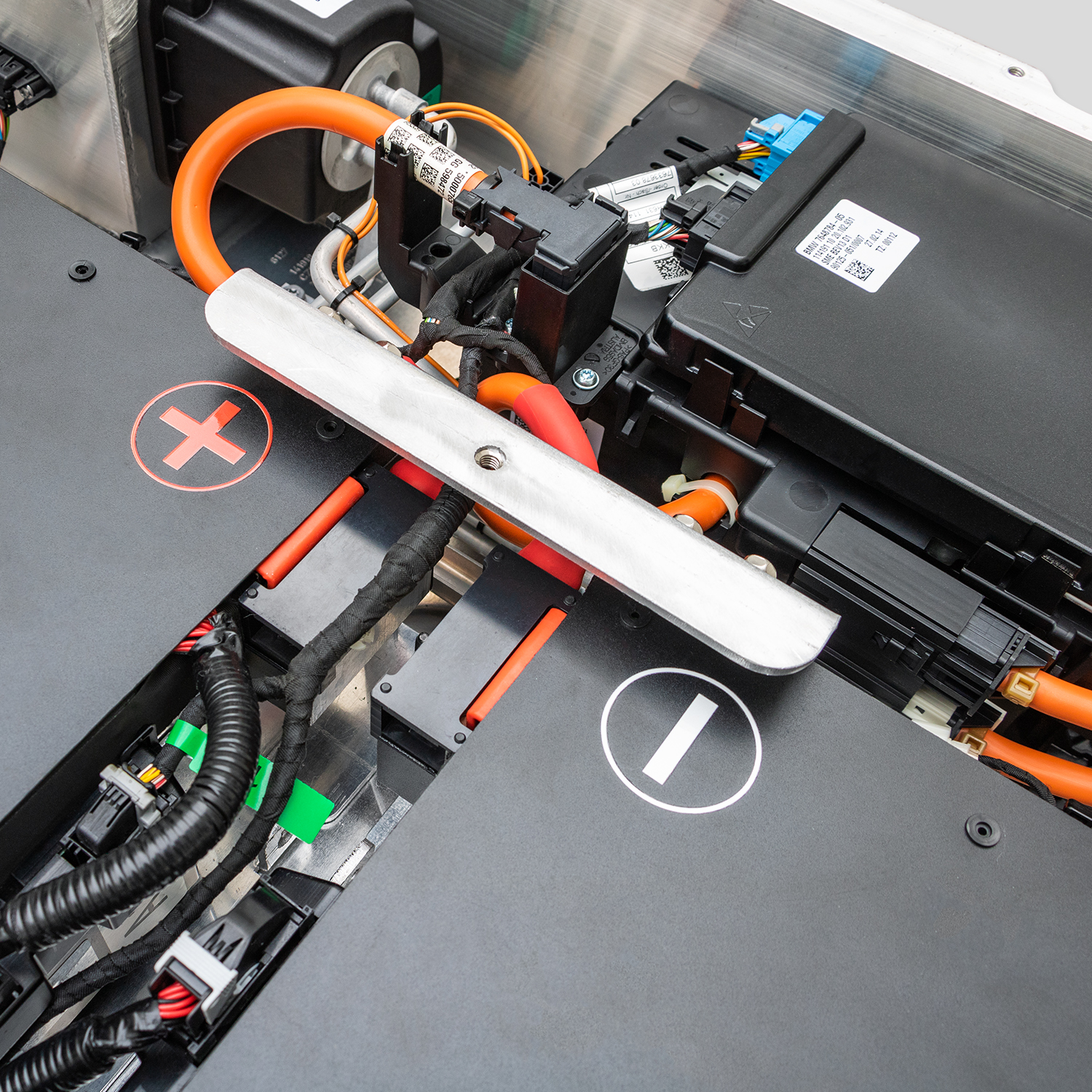
How to Repair BMW i3 Battery Connector Corrosion – The “Quick Clean” That Triggered a $5,200 Isolation Fault (And Why Top Shops Never Touch Corroded HV Connectors)
“A technician in Oslo noticed light green residue on the HV connector of a 2018 BMW i3 battery. He wiped it with a cloth, applied dielectric grease, and reinstalled the pack. The car started—so he billed for ‘connector service.’ Three days later, the owner called: ‘Red triangle warning, no drive power.’ Diagnostics revealed isolation resistance below 50 kΩ—a direct result of microscopic conductive salts left behind after surface cleaning. Full pack replacement: €4,800. Reputation hit: immeasurable.”
You’ve likely seen this:
- “It’s just surface oxidation—I’ll clean it quick.”
- “The pins look fine; I’ll reuse the original connector.”
- Or the fatal assumption: “If it plugs in, it’s safe.”
But BMW i3 high-voltage connectors aren’t like low-voltage terminals. They carry 400V through precision-mated contacts sealed against moisture—and once corrosion begins, the integrity of the entire insulation system is compromised.
This guide exposes the hidden dangers of connector “repair” and delivers the only safe, professional protocol for shops in 2026, including:
- Why cleaning corroded HV connectors often creates conductive pathways
- How galvanic salts migrate under rubber boots—undetectable to the eye
- The exact resistance thresholds that trigger BMS shutdowns
- And how CNS BATTERY packs ship with brand-new, factory-sealed HV connectors—zero corrosion history, zero risk
Because in high-voltage systems, a shiny pin isn’t success—it’s a liability waiting to arc.
Why Connector Corrosion Is a Systemic Failure—Not a Surface Issue
Corrosion on i3 HV connectors typically stems from:
✅ Moisture ingress through degraded sealing boots
✅ Galvanic reaction between copper pins and aluminum housing
✅ Electrolyte vapor from aging cells (in severe cases)
✅ Previous improper handling or exposure to road salt
⚠️ Critical fact: Even microscopic salt deposits are hygroscopic—they absorb ambient humidity and become conductive at 400V, causing leakage currents that trip the BMS.
🔌 Professional Assessment Protocol: Inspect, Don’t Assume
Step 1: Visual Inspection (With Caveats)
- Look for:
- Green/white powder (copper oxide or electrolyte residue)
- Pitting or discoloration on contact surfaces
- Swollen or cracked rubber boots
- Use magnifying lamp or borescope—corrosion often hides under boot lips
📌 Warning: Absence of visible corrosion ≠ safety. Conductive films can be invisible.
Step 2: Electrical Validation (Non-Negotiable)
- Disconnect pack completely
- Use megohmmeter to test:
- Pin-to-housing isolation (>1 MΩ required; <500 kΩ = unsafe)
- Contact resistance (<0.5 mΩ ideal; >2 mΩ = degraded)
- If either test fails, the connector is compromised—no cleaning will restore integrity
Step 3: Decide: Replace or Retire?
✅ Safe to reuse ONLY if:
- Zero visual defects
- Isolation >5 MΩ
- Contact resistance <0.3 mΩ
❌ Must replace if:
- Any discoloration, pitting, or residue
- History of HV faults or moisture exposure
- Vehicle operated in coastal or winter-salt regions
💡 Reality: On packs over 4 years old, connector corrosion almost always indicates seal failure—meaning internal contamination is likely.
The Dangerous Myth of “Cleaning and Reusing”
Common mistakes that accelerate failure:
- Using alcohol wipes → leaves lint that traps moisture
- Applying generic dielectric grease → incompatible with OEM silicone seals
- Polishing pins with emery cloth → removes plating, exposing base metal to faster oxidation
- Reusing boots with micro-cracks → guarantees future moisture ingress
✅ Truth: Once a high-voltage connector shows corrosion, its dielectric strength is permanently reduced. Replacement is the only professional choice.
CNS BATTERY: Factory-Fresh Connectors, Sealed for Life
Every CNS i3 battery includes:
✅ New OEM-spec HV connectors with nickel-plated copper contacts
✅ Pre-installed, UV-resistant EPDM rubber boots
✅ Dielectric silicone grease applied in controlled environment
✅ Full isolation validation before shipment
Result?
Zero connector-related comebacks reported by partner shops in 2025–2026.
“We used to lose sleep over ‘cleaned’ connectors failing weeks later. Now we install a CNS pack, plug it in, and know the connection is as good as day one—because it is day one.”
— Mike’s Auto Service, Vancouver
Frequently Asked Questions: BMW i3 Battery Connector Corrosion
Q: Can I prevent connector corrosion?
A: Only by maintaining perfect boot integrity. Once seals age, moisture enters—corrosion is inevitable.
Q: Is green residue dangerous?
A: Yes—it’s often copper sulfate, which is hygroscopic and conductive at high voltage.
Q: Do CNS packs include new connectors?
A: Yes—complete HV connector sets are included, matched to your i3 model year.
Q: How long do OEM connectors last?
A: Typically 5–7 years in dry climates. In humid or coastal areas, as little as 3 years.
Q: Can I buy replacement connectors separately?
A: Technically yes—but without proper crimping tools and torque specs, DIY replacement risks poor contact or arcing. CNS recommends full pack for reliability.
A Clean Pin Isn’t a Safe Pin—It’s a Time Bomb Wrapped in False Confidence
And when 400 volts find a path to ground, “quick fix” becomes “costly lesson.”
Stop Risking Isolation Faults: Install a CNS BMW i3 Battery with Brand-New, Factory-Sealed High-Voltage Connectors—So Every Connection Is Pristine, Every Drive Is Protected, and Every Customer Leaves With Peace of Mind.
Your shop’s reputation depends on what you prevent—not just what you patch.
Order your CNS BMW i3 battery today—or request our free “HV Connector Inspection & Replacement Decision Guide” with resistance benchmarks and torque specs:
👉 https://cnsbattery.com/ev-battery-home/ev-battery-contact/