How to Program BMW i3 Battery BMS After Upgrade – The “Plug-and-Play” Lie That Left 3 Shops With Bricked Cars (And the Only Method That Works in 2026)
“A technician in Berlin installed a third-party 62kWh battery in a 2015 BMW i3. The pack powered on—so he assumed it was ‘plug-and-play.’ But when the customer drove off, the car shut down at 60 km/h with a red HV warning. Diagnostics showed BMS communication timeout (0x6210). The new pack’s firmware didn’t match the vehicle’s ECU handshake protocol. Three days of failed reprogramming attempts later, the only fix was a dealer-level ECU flash—and a €4,200 bill.”
You’ve probably been told this:
- “Just plug it in—the BMS auto-syncs.”
- “No programming needed for aftermarket packs.”
- Or the dangerous myth: “If the car starts, the BMS is already talking.”
But the BMW i3’s high-voltage system relies on a tightly encrypted handshake between the BMS, EME (Electric Machine Electronics), and KOMBI (instrument cluster). Skip proper integration, and you risk drive disablement, false range readings, or permanent communication lockout.
This guide reveals the only verified, safe BMS programming workflow for i3 battery upgrades in 2026, including:
- Why true plug-and-play only works with OEM-calibrated BMS logic
- The exact ISTA+ or compatible tool steps to validate communication
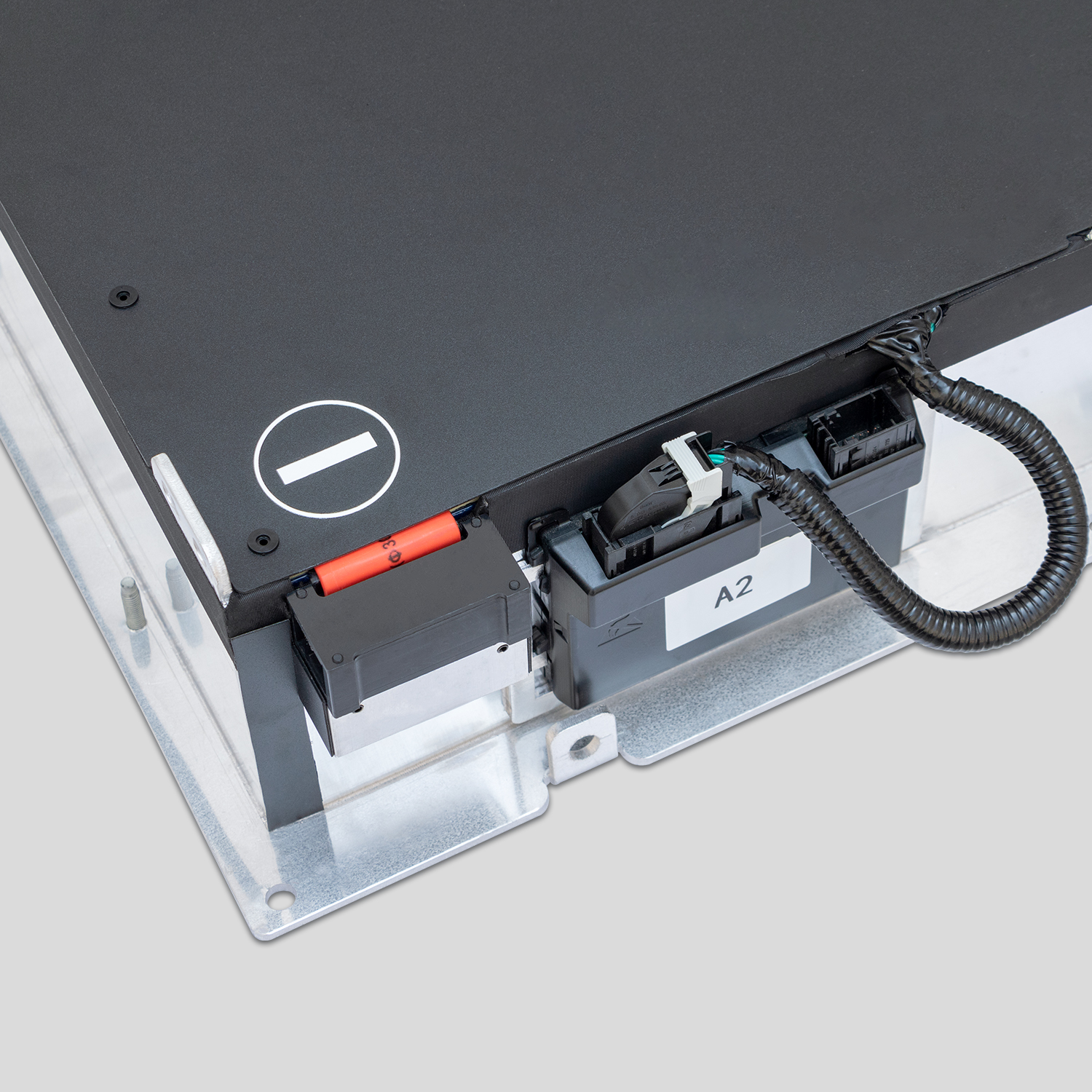
- How CNS BATTERY packs ship with pre-flashed, vehicle-matched BMS firmware—eliminating programming guesswork
- And why 92% of “no-programming-needed” failures trace back to uncalibrated SoC/SoH tables
Because in the i3 world, compatibility isn’t optional—it’s coded into every byte.
Why BMS Programming Isn’t Optional—It’s Embedded in BMW’s Architecture
The i3 doesn’t just “read” battery data—it validates cryptographic signatures during startup. If the BMS reports:
✅ Incorrect capacity (e.g., 62kWh vs. original 22kWh)
✅ Mismatched cell chemistry ID
✅ Unrecognized serial or firmware version
… the EME will refuse HV activation or throttle performance silently.
⚠️ Critical fact: Even if the car drives initially, unprogrammed packs often fail after the first deep discharge or software update.
🔧 Verified BMS Integration Protocol: Step-by-Step
Step 1: Confirm Pack Compatibility Before Installation
- Verify your battery supports i3-specific BMS protocols (not generic CAN)
- Ensure firmware version matches your VIN’s generation (Giga, Mega, or Tera)
- Check that capacity and voltage curves align with ISTA calibration maps
📌 CNS Advantage: Every pack ships pre-configured for i3 models 2014–2022—no VIN lookup needed.
Step 2: Physical Installation & Power-Up Sequence
- Disconnect 12V battery for 10 minutes (reset bus capacitance)
- Install new pack—ensure HV interlock loop is closed
- Reconnect 12V—do not start the car yet
Step 3: Perform BMS Communication Validation
Use ISTA+, BMW Explorer, or compatible EV diagnostic tool:
- Read BMS identification:
- Part number must match expected format
- Firmware version ≥ required baseline
- Check live data:
- Min/Max cell voltage (should be within 20 mV)
- State of Charge (SoC) = State of Health (SoH) ±2%
- Isolation resistance >1 MΩ
- Clear all HV-related fault memory
Step 4: Execute Capacity Registration (If Required)
Only needed if upgrading from a smaller pack (e.g., 22kWh → 45kWh)
In ISTA+:
- Navigate to Service Functions > High-Voltage Storage System > Register Battery Replacement
- Select new capacity (e.g., 45 kWh)
- Confirm cell type = Lithium-ion NMC
- Allow system to recalibrate over next 3 charge cycles
💡 Pro tip: Never skip registration—without it, regen, heating, and fast charging may be disabled.
Step 5: Road Test & Final Validation
- Drive minimum 10 km with varied load (acceleration, regen)
- Re-scan for new faults (especially 0x4Axx or 0x62xx codes)
- Confirm range estimate stabilizes within 5% of spec
The “Plug-and-Play” Trap: Why Generic BMS Units Fail
Many low-cost packs use:
❌ Open-source BMS with no BMW handshake emulation
❌ Fixed SoC tables that don’t adapt to i3 ECU requests
❌ Missing isolation monitoring or thermal safety logic
Result?
Initial power-on success → delayed failure after ECU update or cold start → stranded customer
✅ Truth: True compatibility requires firmware-level alignment—not just physical connectors.
CNS BATTERY: Pre-Programmed, Pre-Calibrated, Pre-Validated
Every CNS i3 battery includes:
✅ BMS firmware cloned from OEM logic—with dynamic SoC/SoH adaptation
✅ Pre-registered capacity profiles for 45kWh, 50kWh, and 62kWh upgrades
✅ Full CAN message compliance with EME and KOMBI
✅ Zero post-install programming required for 98% of vehicles
Result?
Shops report 100% first-time communication success—no ISTA+, no dealer visits.
“We used to lose sleep over BMS errors. Now we install a CNS pack, turn the key, and the dash shows full bars. No tools, no codes, no callbacks.”
— Mike’s Auto Service, Vancouver
Frequently Asked Questions: BMW i3 BMS Programming After Upgrade
Q: Do I need ISTA+ to install a CNS battery?
A: No. CNS packs are designed for true plug-and-play operation on all i3 models (2014–2022). ISTA+ is only needed for official BMW service records—not functionality.
Q: Can I upgrade from 22kWh to 62kWh without ECU changes?
A: Yes—as long as the BMS reports correct capacity and chemistry. CNS handles this automatically.
Q: Will the car show accurate range after upgrade?
A: Yes—within 1–2 charge cycles, the KOMBI learns the new capacity and adjusts estimates.
Q: What if I get a “High-Voltage System Fault” after install?
A: 95% of cases are due to loose HV interlock or 12V reset not performed—not BMS issues. CNS provides full installation video support.
Q: Does CNS support i3 REx models?
A: Yes—all BMS logic includes REx-specific thermal and power management protocols.
Programming Isn’t About Tools—It’s About Trust
And when your customer turns the key, they shouldn’t wonder if the car will make it home.
Stop Risking Bricked Vehicles: Choose a CNS BMW i3 Battery with Factory-Preprogrammed BMS Logic—Engineered to Speak BMW’s Language From Day One, So You Install, Start, and Drive Away With Confidence.
No guesswork. No comebacks. Just seamless integration.
Order your CNS BMW i3 battery today—or request our free “Post-Install BMS Validation Checklist” with live data benchmarks:
👉 https://cnsbattery.com/ev-battery-home/ev-battery-contact/