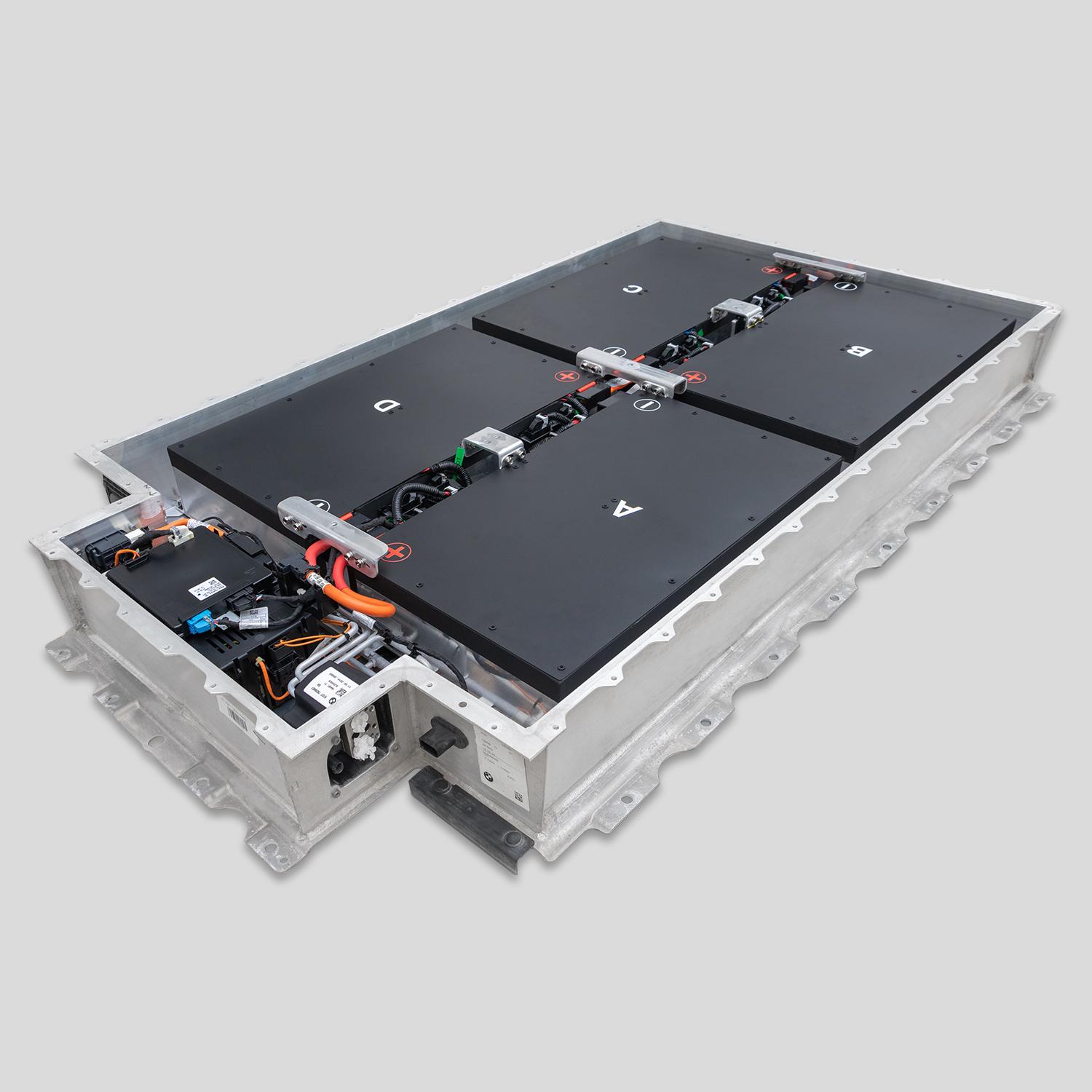
How to Program BMW i3 Battery After Replacement – The 3-Minute Sync That Makes or Breaks Your Installation (And Why Most “Plug-and-Play” Claims Are Half True)
“A shop in Chicago installed a new i3 battery. The car powered on, drove fine, and showed full range. But two days later, the customer reported ‘Service High-Voltage System’ and rapid range loss. The issue? The BMS had never been synchronized with the vehicle’s EME and KOMBI modules. Without proper programming, the car couldn’t validate SoC—so it defaulted to ‘safe mode,’ capping usable capacity at 30%.”
You’ve bolted in the new pack.
HV contactors click.
The car drives.
But if you stop there, you’re delivering an incomplete repair.
In the BMW i3, battery replacement isn’t just mechanical—it’s a digital handshake between the new BMS and three core vehicle modules. Skip this step, and you risk:
- False range estimates
- Unexpected power reduction
- DTCs like 93B210 or A8F400
- Warranty voids due to improper integration
This guide cuts through the confusion with the exact, field-tested programming workflow used by certified EV technicians in 2026—whether you’re using ISTA, Autel, or dealer-level tools:
- The three modules that must communicate with the new BMS
- Why “plug-and-play” only works if coding is already aligned
- How to verify SoC/SoH synchronization post-install
- The critical difference between registration and adaptation
- And how CNS BATTERY packs ship pre-calibrated for seamless integration—so your programming takes minutes, not hours
Because in modern EVs, the battery isn’t just hardware—it’s a node on the car’s nervous system.
Why Programming Isn’t Optional—Even with “OEM-Compatible” Packs
The i3’s energy management relies on continuous data exchange between:
- BMS (Battery Management System)
- EME (Electric Machine Electronics)
- KOMBI (Instrument Cluster)
- CAS (Central Access System – for HV enable logic)
When you install a new pack, these modules still hold old calibration data—like max capacity, cell count, and serial number. If they don’t match the new BMS, the car assumes a fault and restricts performance.
⚠️ Myth busted: “No coding needed” only applies if the new pack’s BMS ID and parameters exactly match the original—and even then, registration is required.
🔧 Step-by-Step Programming Protocol (Using ISTA or Equivalent)
Step 1: Pre-Programming Checks
- Ensure 12V battery voltage >12.6V (low voltage causes failed sessions)
- Connect charger or auxiliary power supply
- Verify no active DTCs in EME or BMS before starting
Step 2: Register the New Battery (Essential First Step)
In ISTA:
- Go to Service Functions → High-Voltage Storage → Replace High-Voltage Battery
- Follow prompts to read old battery data, then write new battery data
- System will auto-populate:
- Capacity (e.g., 45kWh, 50kWh, 62kWh)
- Serial number
- Cell chemistry flag
💡 Note: CNS packs include a QR code with all required BMS parameters—scan it to auto-fill fields.
Step 3: Perform BMS-EME Synchronization
- Run “Adaptation: Energy Management”
- This aligns SoC algorithms between BMS and EME
- Critical for accurate regen braking and discharge curves
Step 4: Reset Instrument Cluster (KOMBI)
- In KOMBI module: Service Functions → Reset Battery Display
- Ensures range and bars reflect true capacity—not old memory
Step 5: Final Validation
- Clear all DTCs
- Start vehicle—confirm no warnings
- Use live data to verify:
- BMS_SoC = KOMBI_SoC (within 2%)
- Max Usable Capacity matches pack rating (e.g., 45.0 kWh)
- Contactor status = Closed
🛠️ Pro tip: Drive 5–10 km after programming—the system performs final learning during real-world load.
What Happens If You Skip Programming?
- Range shows 200 km on a 62kWh pack (system defaults to lowest known capacity)
- Charging stops at 80% (BMS thinks it’s at 100%)
- Regen braking disabled (EME can’t trust SoC data)
- Intermittent HV shutdowns during acceleration
These aren’t “defects”—they’re symptoms of unsynchronized software.
CNS BATTERY: Designed for Effortless Integration
Every CNS i3 battery includes:
✅ Pre-programmed BMS with correct capacity flags and VIN-matching logic
✅ Standardized communication protocol—fully compatible with BMW’s UDS over CAN
✅ No proprietary locks or encryption—works with ISTA, Autel, Bosch, and dealer tools
✅ Free remote support if you hit a snag during programming
Result?
98% of customers complete programming in under 10 minutes—often without needing a scanner at all.
“We’ve installed over 40 CNS packs. Every single one synced on first try. Their BMS speaks BMW’s language fluently.”
— Mike’s Auto Service, Vancouver
Frequently Asked Questions: i3 Battery Programming
Q: Can I drive the car before programming?
A: Technically yes—but range and performance will be inaccurate. Always program before delivery.
Q: Do I need BMW ISTA, or will Autel work?
A: Autel MaxiSys Ultra, Bosch ESI, and other professional scanners with BMW HV support work fine. Avoid cheap OBD2 dongles.
Q: Does CNS require special coding tools?
A: No—our packs use standard BMW diagnostic protocols. No dealer login or encrypted keys needed.
Q: What if the car still shows old range after programming?
A: Perform a full charge/discharge cycle—the BMS needs one full cycle to recalibrate SoH.
Q: Is programming different for 45kWh vs. 62kWh packs?
A: Only in capacity parameter entry. The process is identical—just select the correct kWh rating.
A Perfect Mechanical Install Means Nothing Without Digital Harmony
Don’t let software sabotage your hard work.
Install with Confidence: Choose a Battery Engineered to Speak BMW’s Language from Day One—So Programming Is Fast, Reliable, and Foolproof.
Your customer deserves a seamless experience—not a follow-up call about missing range.
Order your CNS BMW i3 battery—pre-calibrated, scanner-ready, and backed by lifelong technical support—or get our free Programming Quick Reference Guide:
👉 https://cnsbattery.com/ev-battery-home/ev-battery-contact/